1917 Penny Error List with Pictures

The extra outlines on a 1917 FS-101 penny can be worth a close look. An exceptional example sold for $120,000 in March 2019.
That result sits at the top of a wide 1917 penny error list, which also includes peeling metal and small tool cracks. Estimated values range from $3 to $120,000, depending on the feature and condition.
Read on to see which marks belong to a known variety and which require a different explanation.
1. 1917 Lincoln Wheat Penny Lamination
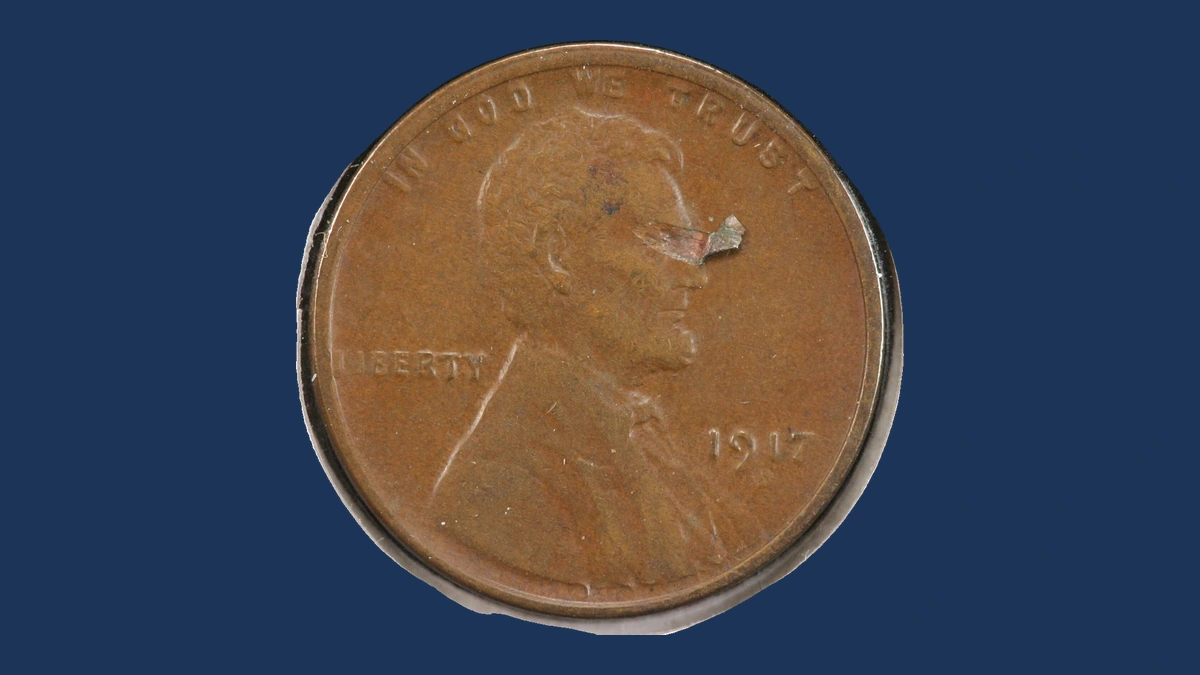
The face of a penny may have a thin loose flap or an irregular area where metal has peeled away. Lamination is separation within the alloy itself.
Year-specific accounts report this defect on Denver and San Francisco cents. The affected area can vary because each blank may contain a different internal weakness.
An online discussion of a 1917-S coin also questions whether marks near the 7 are later damage. That particular photograph does not settle every 1917-S lamination claim.
The important feature is a separating metal layer, not simply a rough patch beside the date.
Estimated Value
A reasonable estimated range for 1917 laminations is $10–$300. Tiny worn patches generally offer less collector interest than a clear attached layer on a well-preserved coin.
A 1941-S retained back lamination graded PCGS MS66 Red sold for $69 in April 2020. This other-year example was unworn, with few marks and original copper color.
Use its sale as context for visible peeling, while judging the 1917 coin’s mint, wear, and any damage separately.
How to Identify
A 1917 cent is solid bronze, not a copper coating over zinc. Its normal alloy is 95 percent copper, with tin and zinc making up the rest.
Weigh a loose coin against 3.11 g on a scale. Missing metal can lower the reading, while an attached flap may leave it nearly unchanged.
Use calipers only on sound areas when checking the 19.05 mm width. Keep the tips clear of a loose sheet.
Side lighting and a 10× magnifier can show the space beneath that sheet. Leave it untouched; lifting it would create damage.
Around the date, follow the boundary across the 7. A thin layer separating beneath existing detail differs from a later cut across the finished digit.
2. 1917 Lincoln Wheat Penny Repunched D and S Mintmarks
A second curved stroke around the D or S may come from the way the mintmark was added. Workers punched these small letters into the die, the steel stamping tool, by hand.
If the punch moved between blows, part of its earlier position could remain. A Denver report describes a tilted D over D.
San Francisco accounts describe an extra S impression beneath the main letter. The two mints therefore need different letter comparisons.
This process affected the tool before it struck coins; it did not require the penny itself to pass through the press twice.
Estimated Value
For clearly matched 1917-D or 1917-S repunched mintmarks, estimate $5–$300. Obvious earlier strokes and better-preserved surfaces support stronger comparisons than a worn bump beside the letter.
These are estimated prices for the reported patterns, not confirmed sales of a specific numbered Denver or San Francisco example. The condition of the full coin still matters.
A premium requires extra detail that fits an earlier D or S shape; shadows, damage, and ordinary surface lumps do not establish that pattern.
How to Identify
Keep the date and the entire mintmark in view through a 10× magnifier, rather than enlarging one isolated bump. For the tilted Denver report, compare the smaller curve with the main D’s upright side and curved outer edge.
The San Francisco report instead places extra S detail below the main letter, so examine that lower area in changing light. A shadow moves with the lamp; a genuine extra stroke remains part of the metal.
A scale and calipers check the loose bronze cent against 3.11 g and 19.05 mm, although these cannot identify a punch pattern. In the close-up photograph, trace enough of the extra curve to show how it fits an earlier D or S.
3. 1917 Lincoln Wheat Penny Die Cracks and Rim Cuds
A raised line and a broad patch joined to the rim can both result from a failing stamping tool. A narrow crack allows a thin line of copper to enter the opening.
If a larger piece breaks away at the tool’s edge, a lump replaces some of the normal design. That rim-connected feature is called a cud.
The 1917 year listing reports cracks and cuds without assigning every example a fixed location. Their size and shape must be read from the coin.
A small bump deep inside the design is not automatically a rim cud.
Estimated Value
Small cracks on circulated 1917 cents can fit an estimated $3–$50. Larger genuine rim cuds can be estimated around $40–$500, depending on how much design is replaced and the coin’s condition.
As a substantial-break comparison, a 1946-S Wheat cent with a major break sold for $288 in March 2021. That sale concerns another year’s coin, not a named 1917 tool break.
A clear rim connection is more useful than treating every raised speck as a major error.
How to Identify
Follow the suspected break to the rim under a 10× magnifier. A cud should replace normal design with raised metal joined to the edge, while a narrow raised line may simply record a crack.
A loose cent normally measures 19.05 mm with calipers and weighs 3.11 g on a scale. If a lump seems added, inspect its base for a joint, solder, or a different metal color.
Move the lamp across any thin line to distinguish raised copper from a scratch cut below the surface. A line that continues naturally across the design differs from metal pushed aside by a later tool.
For a rim patch, turn the coin over. Squeezing or hammering may leave a corresponding impact on the opposite face or edge.
4. 1917 Lincoln Wheat Penny Off-Center Strike
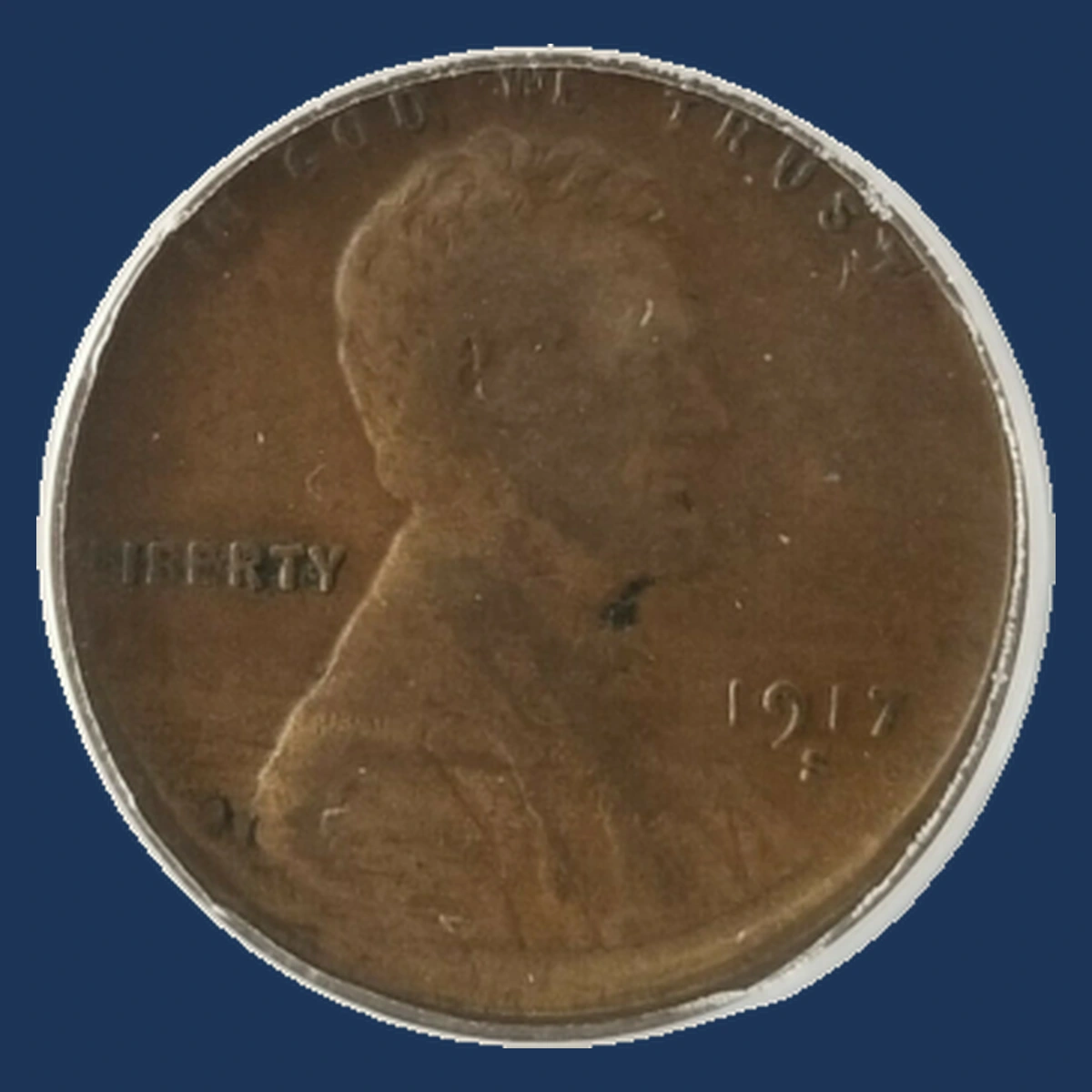
An off-center penny has a design that partly missed its blank. Metal remains bare on one side while letters or other design elements run beyond the opposite edge.
Year reports include a Denver example described as thirty-five percent off-center. A separate San Francisco example is described at twenty-five percent.
Those figures describe different coins, not two stages of the same strike. A Philadelphia year listing also includes off-center cents without one fixed percentage.
The position of the blank determines which parts survive, including whether the date and mintmark remain readable together.
Estimated Value
A year guide reports $960 for a 1917-D thirty-five-percent off-center cent graded PCGS MS64 Brown in September 2019. It also reports $360 for a separate 1917-S twenty-five-percent example graded AU55.
The Denver grade indicates an unworn coin, while AU55 indicates light wear. These are guide-reported comparisons for different mints and conditions.
An estimated $40–$1,500 covers modest through more dramatic dated examples, with cleaning, scratches, and missing digits affecting the price.
How to Identify
Read the year and the mintmark together before using either reported comparison. A D with a large shift is not the same coin as the smaller-shift S example.
On a loose cent, note its actual weight and shape with a scale and calipers. A complete unstruck blank normally starts at 3.11 g and 19.05 mm; displacement does not by itself remove copper.
Inspect the bare area with a 10× magnifier for sanding or tool marks. Compare the two faces to see whether their missing design fits the same misplaced blank.
A photograph of only one face can hide a different alignment problem. Turn the coin over and check that both designs lose space at corresponding parts of the edge.
5. 1917 Lincoln Wheat Penny Doubled Die Obverse FS-101
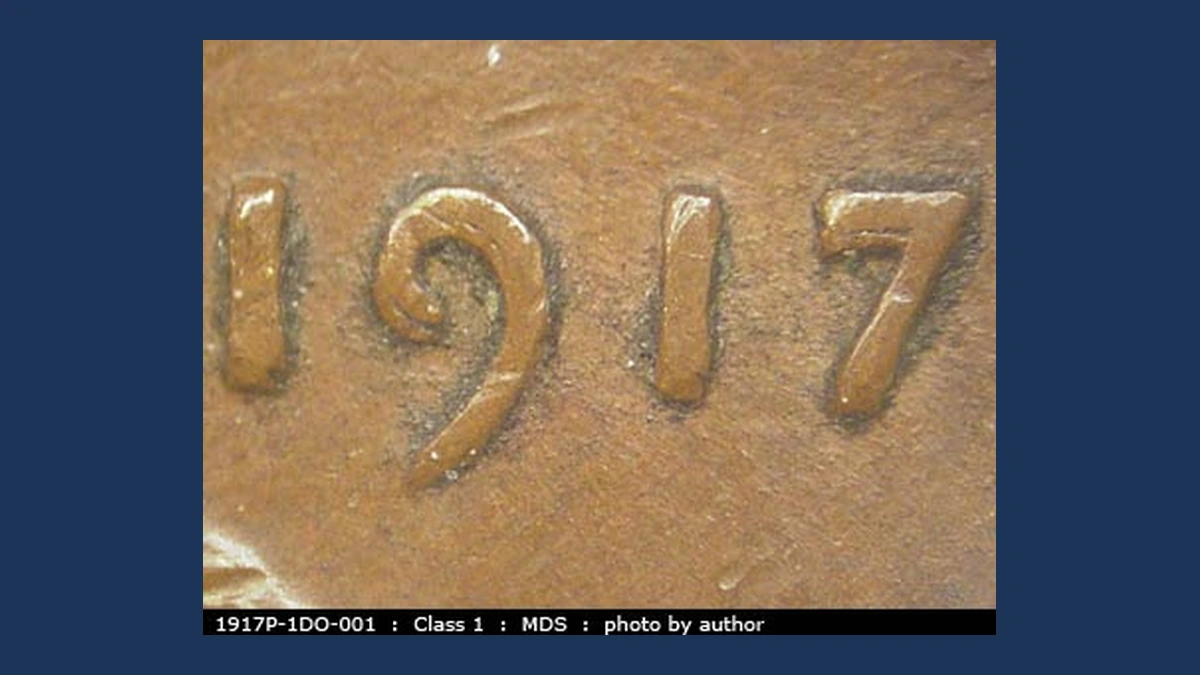
The digits of 1917 and letters in GOD WE TRUST show distinct extra outlines on FS-101. This Philadelphia variety has no mintmark below the date.
The doubled pattern was already present in the stamping tool. It repeats on coins struck from that tool, even though each coin received its design in the normal way.
That explains why collectors compare the positions of several repeated details. One flattened edge on an otherwise ordinary letter does not identify this variety.
Wear can soften the smaller lines, but the date and motto remain the main areas to compare.
Estimated Value
The PCGS auction record lists $120,000 for an MS67+ Red FS-101 at Stack’s Bowers in March 2019. Its grade describes an exceptional unworn coin with almost no marks and original red copper color.
Estimate about $150–$3,000 for circulated examples, with unworn pieces spanning roughly $3,000–$120,000 across very different grades and colors. The famous result belongs to the exceptional end.
A worn brown example should be compared with similar worn coins.
How to Identify
Use the date as the starting point, then move up to GOD WE TRUST. With a 10× magnifier, compare both groups with clear FS-101 photographs rather than accepting one doubled-looking digit.
The lack of a mintmark agrees with Philadelphia production. Normal loose-coin checks are 3.11 g on a scale and 19.05 mm with calipers, but those readings cannot prove the variety.
Change the light angle over the letters. A low, flat shelf from movement during striking differs from the fuller repeated outlines of this doubled tool.
Check multiple letters for the same pattern before considering condition or price. The date and motto should support each other, with extra outlines in the positions shown on a confirmed FS-101.
Conclusion
The date and motto are the key areas for the famous 1917 FS-101, but other errors leave very different clues. Peeling metal, displaced designs, and extra mintmark strokes each need their own checks.
Estimated prices range from $3 for modest cracks to $120,000 for an exceptional red doubled-die penny. Match the feature first, then compare mint, wear, and surface quality before applying a price.