1924 Penny Error List with Pictures

Two different problems can leave a 1924 penny with a broken-looking surface: a crack in its metal or a break in the tool that stamped it. One creates an opening; the other can create raised metal.
This 1924 penny error list covers estimated values of $5–$3,000. A worn Philadelphia cent struck 10% off center sold for $76 in January 2022, offering an affordable example from this year.
Follow the visible feature below to separate these errors and find the relevant price range.
1. 1924 Lincoln Penny Lamination (Estimated Up to $250)
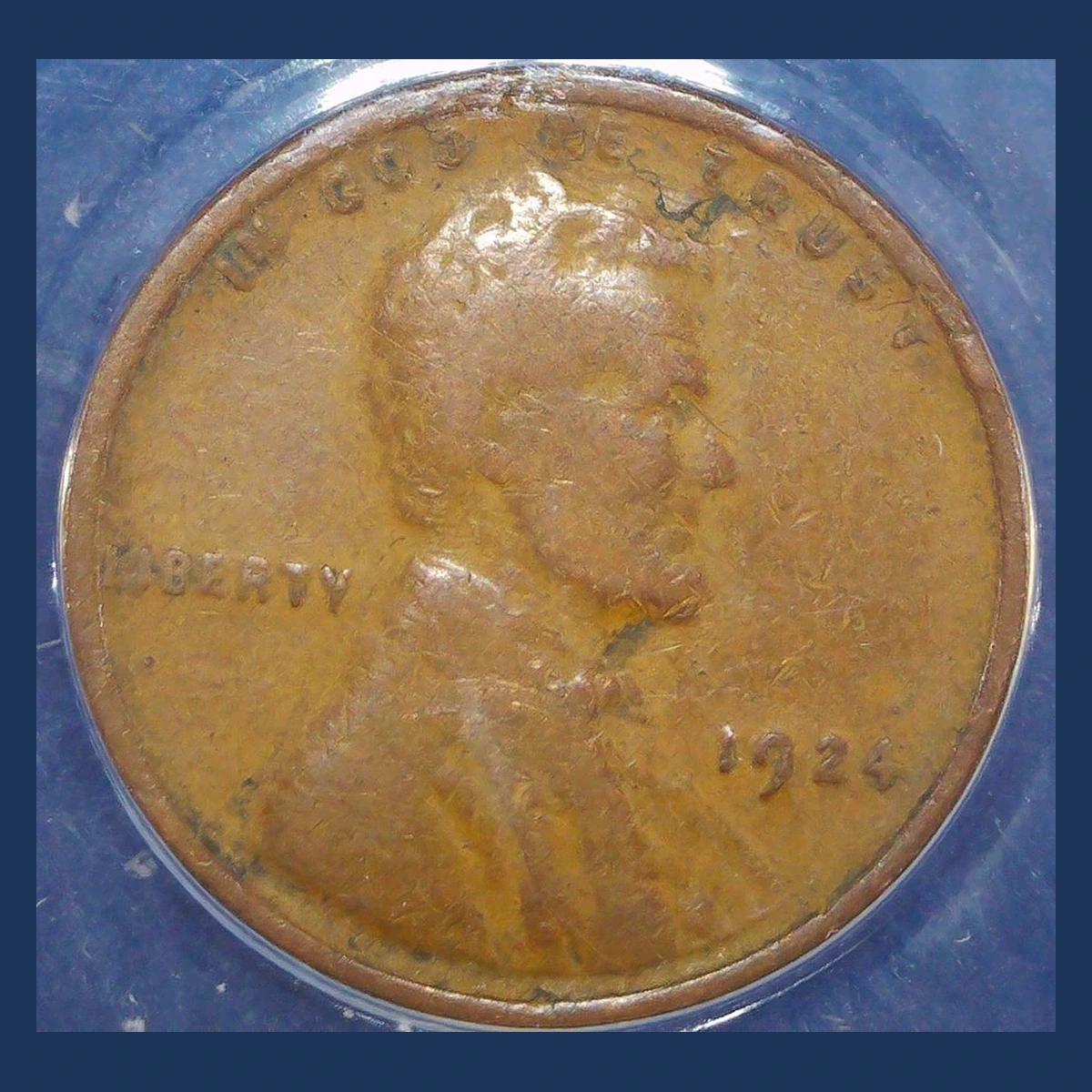
A thin layer of the penny can separate from the metal beneath it. It may stay attached at one side or fall away, exposing a rough area.
Collectors call this lamination. Weakness inside the alloy allows the metal to separate along a layer rather than remain a solid disc.
The 1924 reports do not establish one standard location or mintmark. A peeling front on one coin would not identify a similar-looking back on another.
These pennies are copper-rich alloy throughout. Their surface is not the thin copper coating found over the zinc center of a modern cent.
Estimated Value
A small original separation can fit an estimated $5–$75. Larger, clear examples may reach approximately $75–$250, depending on preservation and the amount of visible peeling.
A 1952-D front lamination sold for $35 in July 2013. This is an older comparison from the same Wheat-cent design family, not a transaction involving the reported 1924 type.
An untouched flap explains the error better than a cleaned patch. Missing metal, corrosion, or scraping can change both its appearance and appeal.
How to Identify
Photograph a loose layer before moving the coin again. Leave it attached and keep fingers, calipers, and cleaning tools away from its edge.
A low lamp can reveal a seam beneath the flap. Use a magnifier to follow that seam where it enters the solid alloy.
A rough spot without a layered boundary may instead need checking for corrosion or scraping. Look at how the patch interrupts nearby struck detail.
The normal weight is about 3.11 grams and width 19.05 millimeters. Use a scale when handling is safe, and measure only sound areas with calipers.
If the separation reaches the normally smooth edge, photograph that connection too; it may show the depth more clearly than a straight-on view.
2. 1924 Lincoln Penny Repunched Mintmark (Estimated Up to $300)
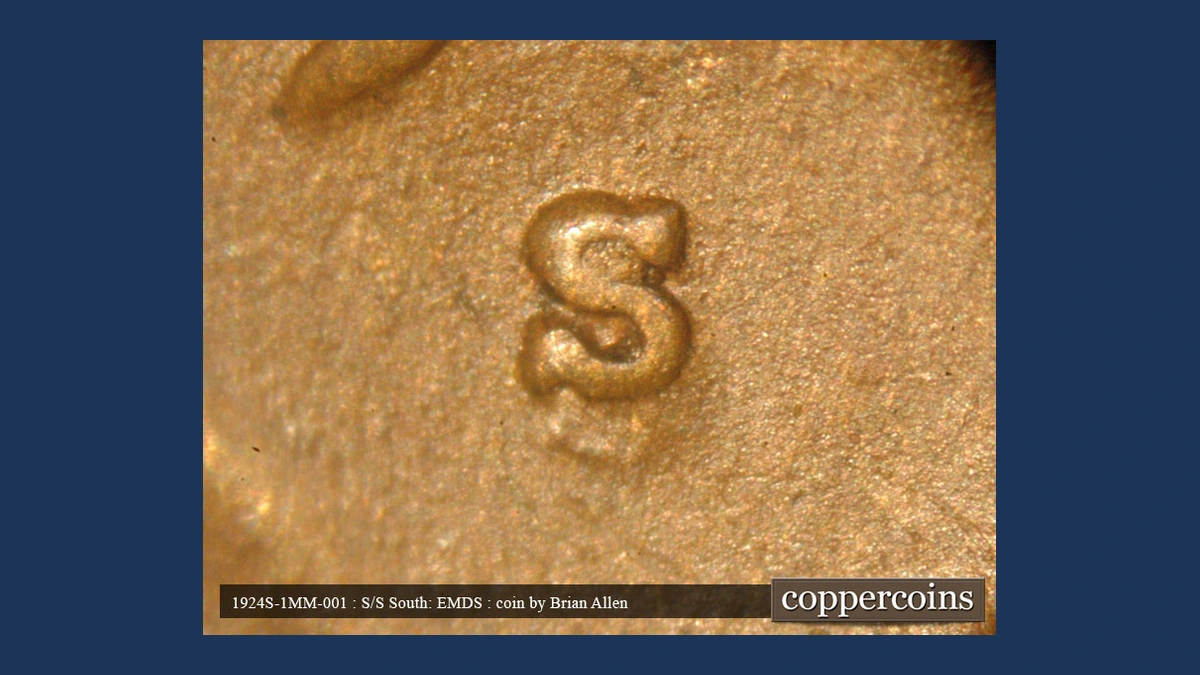
Below the date, an S can show part of another S in a lower position. This is more than a mintmark that merely looks wide.
Workers punched mint letters into the steel stamping tools by hand. A second placement could leave an earlier outline visible on the coins made from that tool.
San Francisco research describes a clearly separated downward repunch for 1924. Denver repunches are also reported, but that S-shaped pattern cannot be transferred to a D.
Normal differences in mintmark position are not enough. The extra metal must follow the shape of a repeated letter.
Estimated Value
An estimated $5–$300 covers minor identified repunches with different clarity and condition. The stronger part of that range requires a readable extra letter outline.
For the San Francisco form, compare the separation below the S. A worn letter with an uneven edge does not offer the same detail.
The range follows comparable Wheat-cent repunches rather than a quoted 1924 auction result. A Denver example needs its own matching D shape before an S-based comparison becomes useful for price.
How to Identify
For the San Francisco pattern, put your close-up beside a correctly identified 1924-S example. Under a 10× magnifier, trace the extra outline below the main S.
Compare the curve and its ends, not just the distance between two bright edges. Tilting the lamp helps separate a raised stroke from a reflection.
If the coin has a D, start again with a Denver comparison. The letter cannot inherit the S example’s direction simply because both are called repunches.
Confirm the date and inspect the smooth edge for alteration. For an accessible coin, a scale and calipers check about 3.11 grams and 19.05 millimeters; these ordinary measurements support identity but do not prove a second punch.
3. 1924 Lincoln Penny Struck Through Material (Estimated Up to $350)
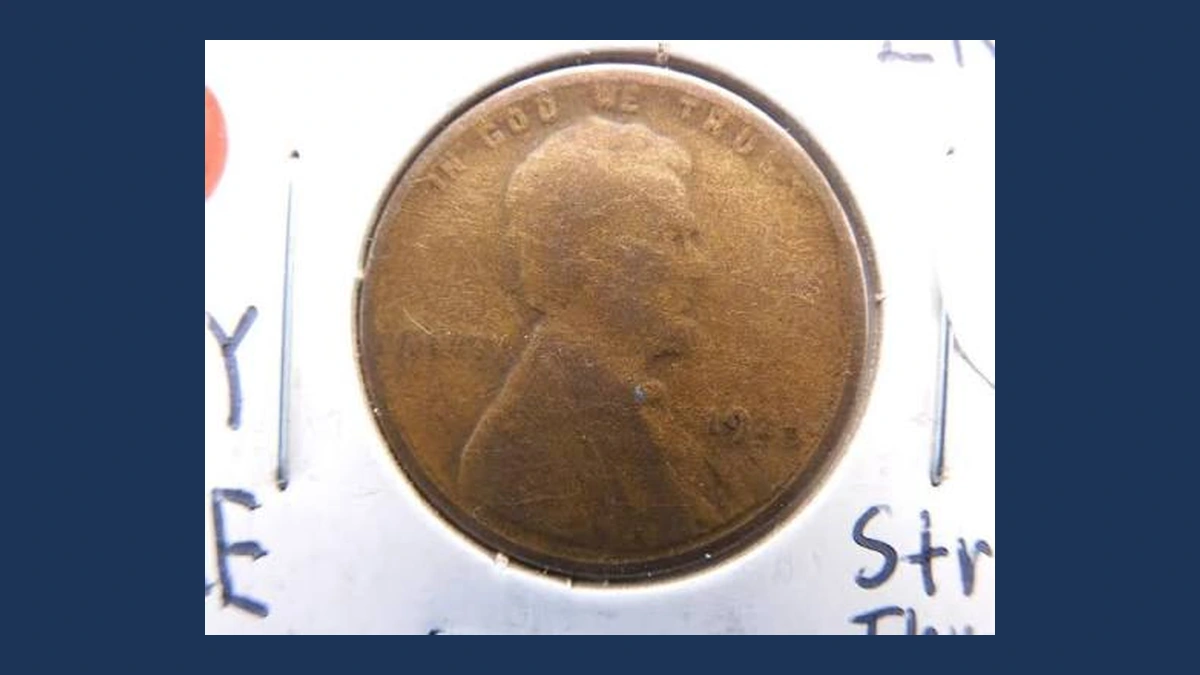
Something between the blank and a stamping tool can interrupt the design. The finished coin may retain a depression or an area where the expected detail never formed.
A certified 1924 Philadelphia example has a front-side struck-through error. A separate older listing describes a small back-side example.
They are not two views of one coin. Their affected faces must remain separate when comparing photographs.
The reported descriptions do not identify the material or its exact position. A narrow mark should not automatically be called wire, and a weak patch should not automatically be called grease.
Estimated Value
Use an estimated $10–$350 for original struck-through examples, with the size and clarity of the interruption guiding the comparison. Small worn impressions belong toward the lower end.
A certified 1924 front example appeared in a five-coin lot sold for $54 in December 2020. That total covers all five coins, not this penny alone.
The group result supports an affordable worn example. It cannot supply a separate price for the small back error or a much larger impression.
How to Identify
Decide which face you are comparing before inspecting the mark. The certified front example and the separately reported back example should not share one assumed location.
Look at the boundary under a magnifier. Nearby letters may show how the design formed around material caught in the press.
A later gouge cuts through a completed surface and may push up metal along its sides. Side lighting can make that difference easier to examine.
A struck-through coin can retain a normal weight. When accessible, check 3.11 grams with a scale and 19.05 millimeters with calipers, then inspect the smooth edge for other damage.
Photograph the impression as found rather than cleaning it or guessing what object made it.
4. 1924 Lincoln Penny Clipped Planchet (Estimated Up to $500)
A missing section can begin when the blank is cut from the end of a metal strip. There is not enough metal at that point to form a complete disc.
A collector’s 1924-D example is described as this end-of-strip type. Other 1924 reports use the broader term clipped planchet, meaning an incomplete prepared blank.
The shape matters. An end-of-strip boundary should not be replaced by a familiar curved-clip picture.
The incomplete blank can still enter the press and receive the cent design. Cutting a section from a finished penny later leaves a different relationship between its edge and struck detail.
Estimated Value
Allow an estimated $20–$500 for a genuine 1924 clipped blank. The remaining date, gap size, condition, and mint all affect the comparison.
A later 1967 cent with a 13% straight clip sold for $39 in July 2021. It offers a general missing-blank comparison, not confirmation or a price for the collector-reported 1924-D end-of-strip piece.
Do not price every gap as a dramatic rarity. A filed edge or a later cut removes metal without creating a mint error.
How to Identify
Record the whole outline before enlarging the missing section. On a proposed Denver end-of-strip example, the boundary needs to fit that type of incomplete blank rather than an assumed curved bite.
Weigh the accessible coin against the normal 3.11 grams. With calipers, compare an intact span against 19.05 millimeters instead of measuring across the gap.
Under a magnifier, follow where the missing edge meets the struck rim. The letters nearby should fit metal that was absent before the design formed.
Look for cuts through completed detail, fresh burrs, and file marks along the surviving smooth edge. Preserve both the full-outline photo and the close-up when asking for an assessment of the blank’s shape.
5. 1924 Lincoln Penny Cracked Planchet (Estimated Up to $500)
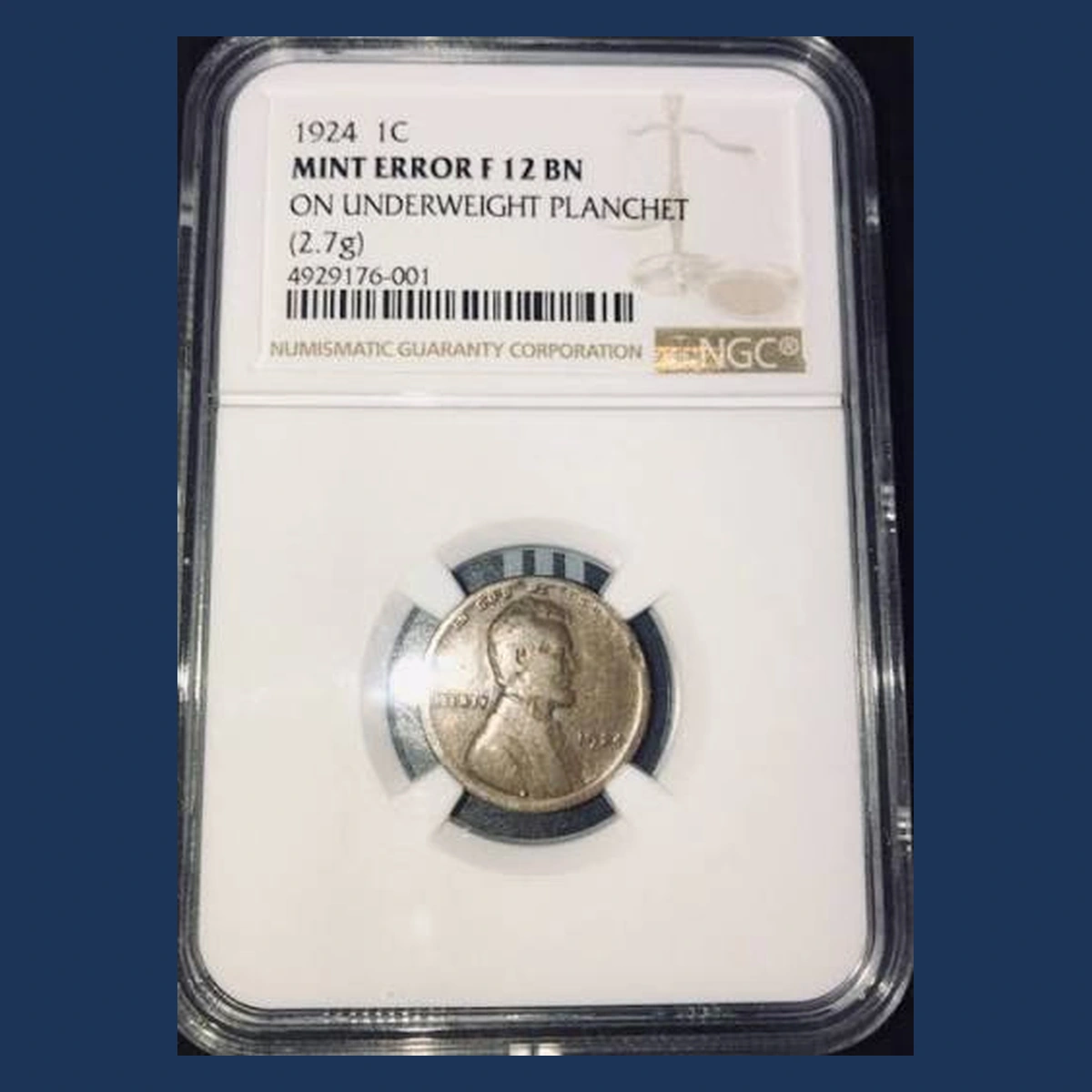
A dark opening can run into the penny itself. This is a cracked planchet: a crack in the prepared blank, rather than a raised line copied from a damaged tool.
The distinction changes what to look for. The metal on either side belongs to the coin, with an opening between it.
Year-specific reports include cracked blanks for 1924 without fixing a mint or direction. A shallow scratch and a peeling surface layer are different forms of damage or failure.
A crack may make the coin fragile. Opening it wider would destroy evidence of how the original metal separated.
Estimated Value
An original cracked blank can fit an estimated $25–$500. A visible opening that can be distinguished from later damage supports more than a surface line.
This is a comparison range for copper-alloy cent blank defects. It is not a reported 1924 sale, and it does not include a premium for an unproven foreign or unusually thin blank.
Keep the separation untouched. A cut, corrosion channel, or deliberately widened crack should not receive the same valuation as an original material failure.
How to Identify
Do not flex the coin to check whether the line opens. Start with side lighting and a magnifier, looking for an actual separation into the metal.
A raised ridge points toward a cracked stamping tool instead. A thin peeling sheet suggests lamination, while a sharp groove crossing finished letters needs checking as a later cut.
Follow the opening toward the edge if it reaches that far. Photograph each visible side without pushing anything into the gap.
Normal dimensions are 3.11 grams and 19.05 millimeters. A scale and calipers may record departures when handling is safe, but do not clamp a fragile area.
Keep the smooth edge and crack boundary visible in the photographs used for professional examination.
6. 1924 Lincoln Penny Doubled Die (Estimated Up to $600)
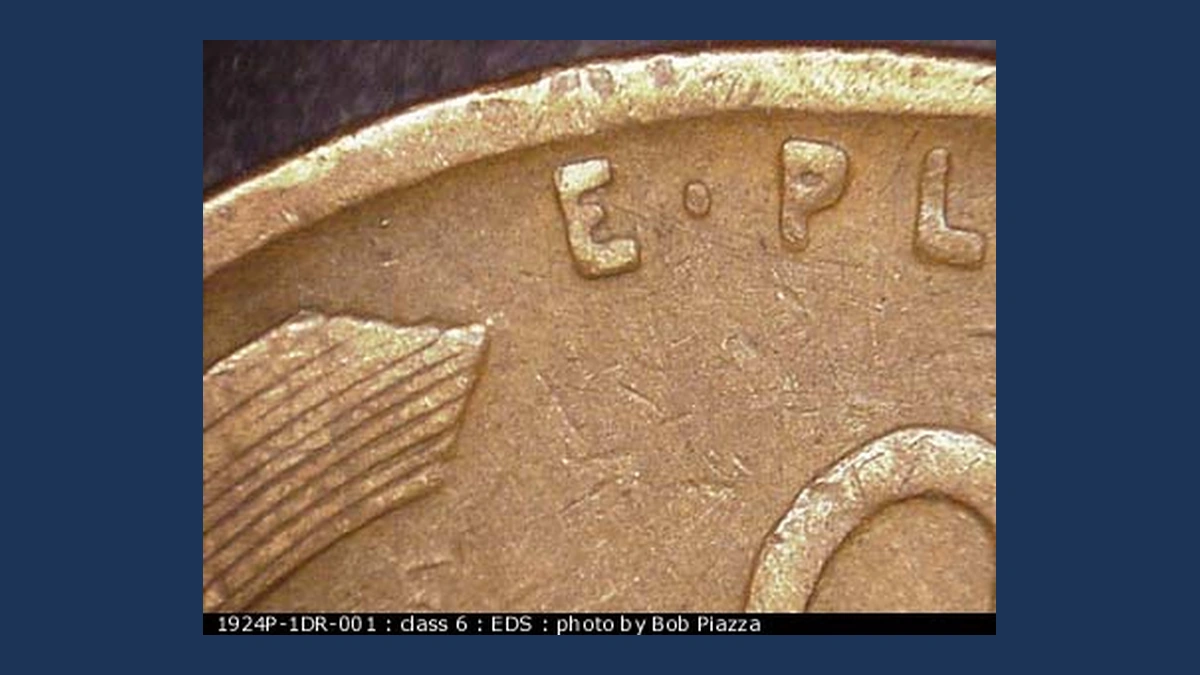
Letters can look swollen rather than showing two outlines. On a Philadelphia back variety, the motto and Wheat details thicken, and separating dots can appear oval.
This comes from a repeated design in a die, the steel tool that stamps coins. Some forms enlarge parts of the design without making two complete letters.
San Francisco back examples involve Wheat details, ONE, and OF AMERICA. Front-side doubled designs are also reported for Philadelphia and San Francisco.
Each needs its own matching photograph. The Philadelphia back pattern should not be applied to every mint or to the date on the front.
Estimated Value
Minor matched doubled designs can fit an estimated $10–$600. Strength and preservation matter, but each mint and affected face needs a suitable comparison.
For scale, a different 1936 doubled-front cent sold for $70 in June 2024. Its ANACS MS63 Brown grade means an unworn coin with marks and brown color.
That later-year transaction does not establish the price of the 1924 thickened-back form. Avoid treating every widened letter as a major doubled die, especially when the photographs do not match.
How to Identify
Choose the face and mint before choosing a magnified detail. For a Philadelphia back, compare the motto, Wheat features, and shape of the small separating dots with a normal coin.
The dots can become oval without splitting into two dots. Under a 10× magnifier, judge the whole pattern rather than demanding a second complete letter.
For San Francisco backs, turn to Wheat details, ONE, and OF AMERICA. Front examples require their own reference pictures; the back’s locations do not identify them.
Weigh an accessible coin against 3.11 grams, measure against 19.05 millimeters with calipers, and inspect its smooth edge. Blurred photographs and wear can imitate thick lettering, so request sharper close-ups before deciding the variety.
7. 1924 Lincoln Penny Rim Cud (Estimated Up to $800)
A lump at the border can replace part of the normal design. When it connects to the rim and lacks the intended detail, collectors call it a cud.
A section broke away from the stamping tool. Coin metal then entered that empty space during striking, leaving a raised patch instead of the missing design.
Cataloged 1924 examples include Philadelphia and Denver coins. Their individual locations need to be matched from photographs rather than assigned one common clock position.
An isolated small chip inside the design is different. So is a lump added to the finished coin with solder or glue.
Estimated Value
A small genuine rim cud can fit an estimated $25–$150. Larger examples that remove more of the design can reach roughly $150–$800, with condition also affecting value.
A 1946-S major break sold for $288 in March 2021. That later Wheat-cent sale offers a broad comparison, not a price attached to a particular 1924 catalog entry.
Follow the actual size and rim connection. An added lump or a minor internal chip does not belong in the same price comparison.
How to Identify
Inspect the edge beside the lump before studying its outline from above. A join, added material, or damage on the opposite face may explain a raised patch after striking.
Use a 10× magnifier and side lighting without scraping the surface. The coin’s normally smooth edge should remain part of the examination.
Then follow the patch inward. A full cud reaches the rim and replaces normal detail, unlike a small isolated chip farther inside the design.
If letters remain within a shifted area, consider a broken tool piece that stayed in place instead. For an accessible coin, record weight and width with a scale and calipers against 3.11 grams and 19.05 millimeters before matching its Philadelphia or Denver photograph.
8. 1924 Lincoln Penny Off-Center Strike (Estimated Up to $1,000)
A worn Philadelphia penny shows its design displaced toward eleven o’clock, leaving part of the blank unused. Its error was described as a 10% off-center strike.
That means the blank did not sit fully beneath the stamping tools. Some intended design fell outside the metal rather than appearing around the whole disc.
A San Francisco example is also reported, without the same measured shift established here. The Philadelphia direction does not identify every 1924 off-center cent.
Both faces must agree with the blank’s position. A shifted tool affecting only one face can create a different uneven-border appearance.
Estimated Value
The Philadelphia 10% example, graded ANACS VG8, sold for $76 in January 2022. VG8 describes a heavily worn coin with its main design still recognizable.
An estimated $40–$1,000 allows for different shifts and preservation among genuine dated examples. The upper end requires more than the modest displacement of that worn auction coin.
The separately reported San Francisco piece needs its own comparison. Its mintmark alone does not establish a particular percentage, direction, or auction price.
How to Identify
Find the date and mintmark before comparing percentages. For the Philadelphia auction example, the recorded shift is 10% toward eleven o’clock; a different coin may point elsewhere.
Place matching front and back photos side by side. The incomplete designs should fit the same blank displaced in the press.
If only one face shifts while the other stays centered, examine tool misalignment instead. Also inspect the plain area under a magnifier for grinding that removed finished detail.
A simple off-center strike need not lose metal. When accessible, use a scale against 3.11 grams and calipers against the normal 19.05-millimeter width, then follow the smooth edge around the unused part of the blank.
9. 1924 Lincoln Penny Flipover Double Strike (Estimated Up to $3,000)
Lincoln’s portrait and the Wheat back can occupy the same face after a coin turns over and is struck again. The second blow places the opposite design over the first.
This is a flipover double strike. A 1924-D example graded ANACS VG8 appeared in a GreatCollections auction, showing that heavy wear does not rule out this error.
Its exact surviving outlines need to be read from the coin. A doubled letter alone does not show that the entire piece flipped.
Both faces can preserve clues to the sequence. Pressing two finished coins together later is not the same mint process.
Estimated Value
For a genuine 1924-D flipover double strike, use an estimated $400–$3,000. The amount of recognizable overlapping design is especially important on a worn example.
The ANACS VG8 auction listing establishes a heavily worn specimen, but its public page does not provide a sale price used here. A cleaned 1956-D flipover sold for $456 in June 2024 as a later-year comparison.
Clear opposite-face remnants and original surfaces can support more than a difficult-to-read overlap.
How to Identify
Separate the visible designs on paper or in marked copies of photographs. Identify which lines belong to Lincoln’s front and which belong to the Wheat back.
A flipover requires evidence of opposite-face features together, not simply two nearby dates or a shadow beside a letter. With a magnifier, follow the older lines where the later design crosses them.
Compare both faces without inventing a direction of rotation from one small fragment. Heavy wear may leave only part of each earlier feature.
Check the smooth edge for a join between separate pieces. Use recorded measurements for a sealed coin rather than opening its holder.
When safely accessible, a scale and calipers can compare the coin with the normal 3.11 grams and 19.05 millimeters.
Conclusion
A raised patch, an open crack, and a peeling layer point to different failures. Even when two coins look damaged at first glance, their edges and surviving design can tell different stories.
The estimated $5–$3,000 ranges include small material flaws through flipover double strikes. The $76 off-center result is a real 1924 sale; other-year comparisons remain separate.
Keep fragile metal untouched and use both faces when deciding which description fits.