1929 Penny Error List with Pictures

The small S below the date can be the most valuable place to look on a 1929 penny. PCGS records a $3,565 auction result for the FS-501 repunched-mintmark variety.
This 1929 penny error list also covers peeled metal, incomplete blanks, and several ways a coin can sit incorrectly in the press. Estimated values span $3–$5,000.
Compare the shapes below, then use the checks to match your own coin.
1. 1929 Lincoln Wheat Penny Struck-Through Design
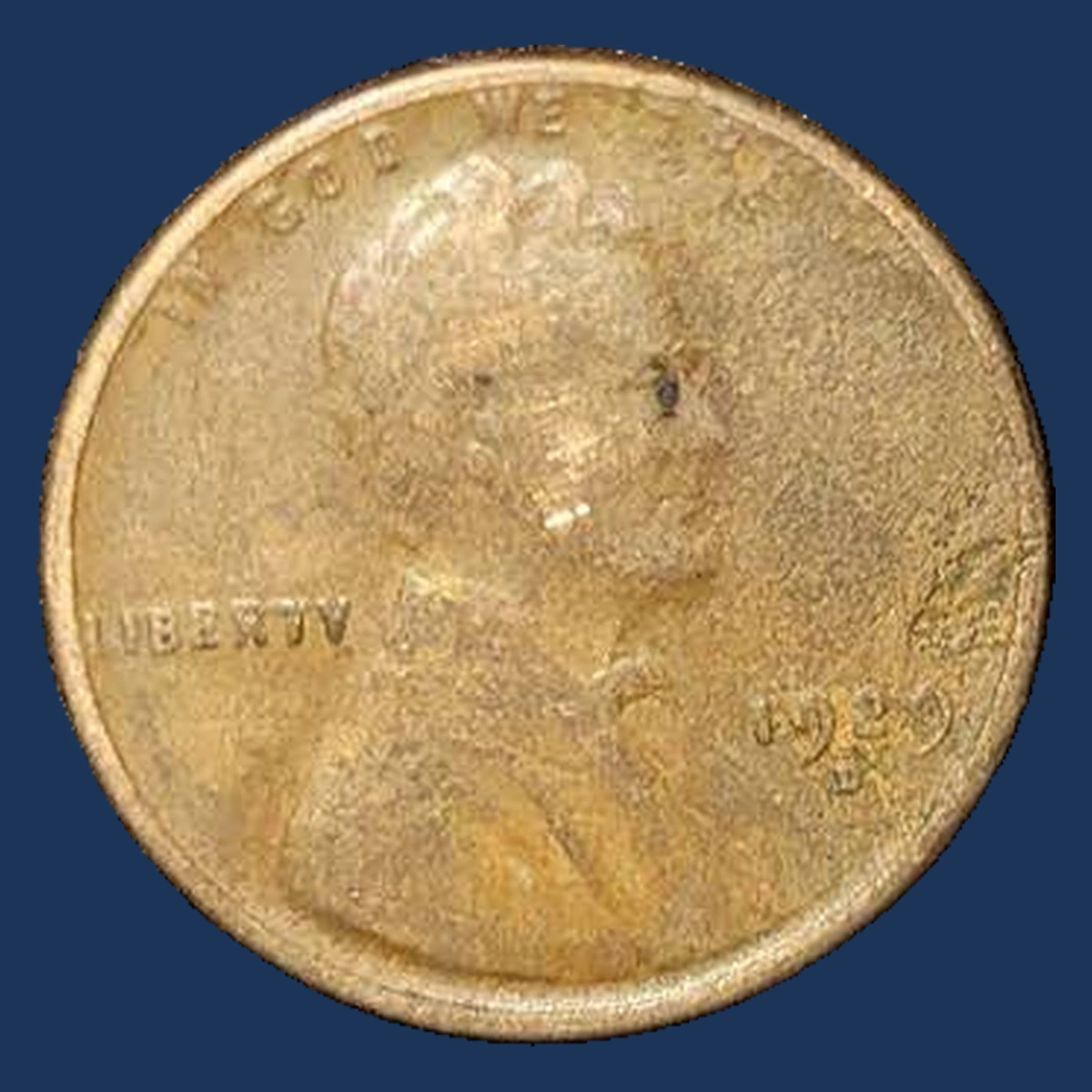
An area of weak or missing design may show where something blocked the strike. Material caught between the blank and the die, the steel stamping tool, stopped that detail from forming normally.
The reported 1929 examples are described generally as struck-through errors. The available descriptions do not identify a particular piece of cloth, wire, or grease.
Those materials can leave different marks, so their names should follow the visible evidence. A broad shallow patch does not prove that an object remains on the coin.
The surrounding undamaged design helps show what the press failed to produce.
Estimated Value
For an identifiable 1929 struck-through feature, estimate $5–$150 according to its size, clarity, and condition. A small weak patch belongs below an obvious shaped impression.
A 1933-D cent with a back struck-through mark sold for $30 in October 2022, graded PCGS VG10 for considerable wear. That is a nearby-year comparison, not a 1929 result.
The type of obstruction should be identified before paying a premium for a supposedly rare material.
How to Identify
First compare the affected patch with equally high details elsewhere on the coin. Wear may erase many raised areas together, whereas an obstruction can leave a localized interruption.
A 10× magnifier shows whether the boundary has sharp cuts or displaced metal from a later blow. Look across the patch under light from different directions.
The usual loose penny weighs 3.11 g on a scale and measures 19.05 mm with calipers. These measurements help identify the coin but cannot tell you what blocked the tool.
If the impression contains no recognizable texture, keep the description simple. Record where the original design fades or stops instead of assigning an unsupported object to the mark.
2. 1929 Lincoln Wheat Penny Lamination
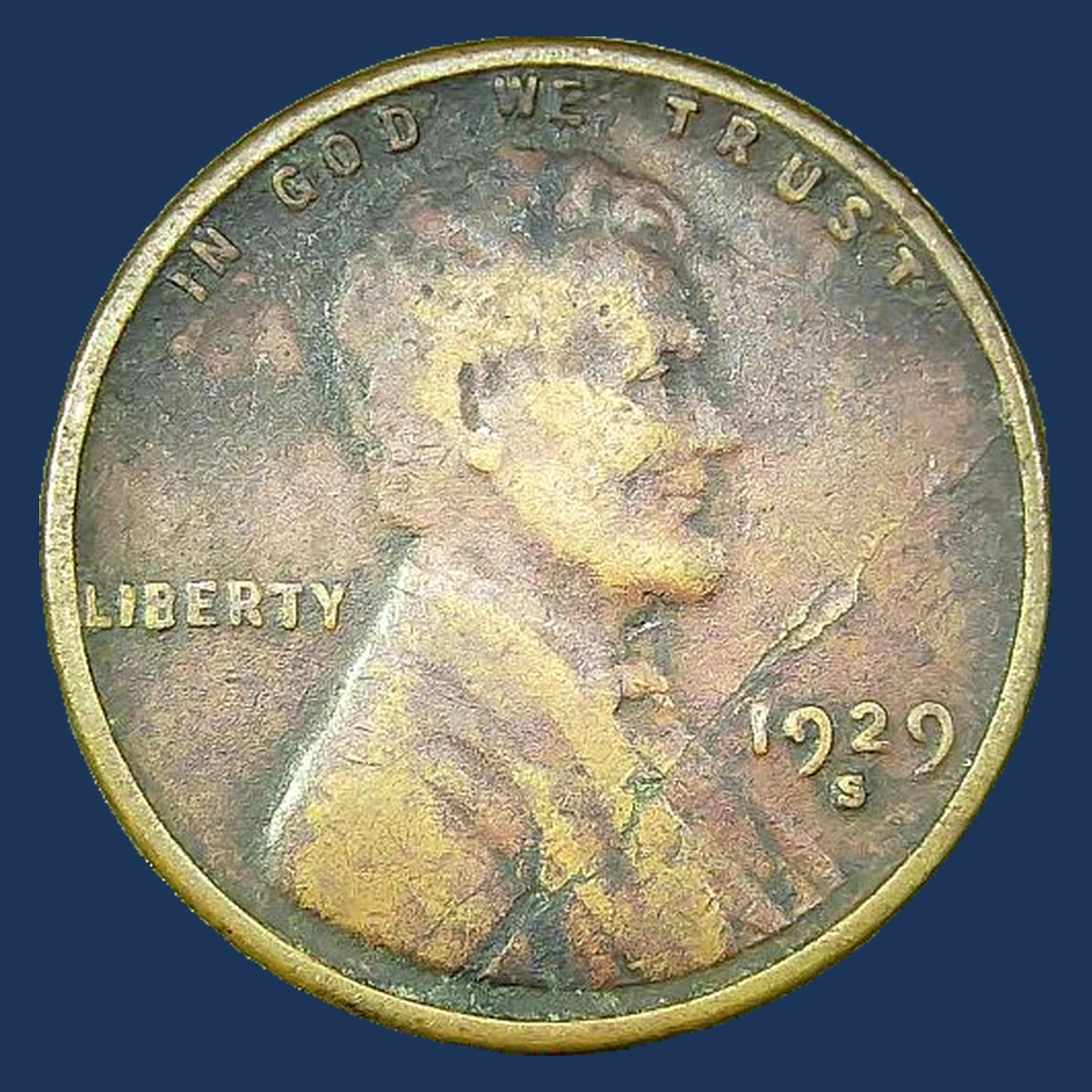
A thin layer can lift or fall away from the bronze of a 1929 cent. This lamination begins at a weak area inside the metal rather than a separate plated outer coating.
One 1929-S coin combines peeling with a five-percent off-center strike. A different San Francisco example has front lamination and was sold within a group of five coins.
Another reported 1929 piece has cracks or peeling visible on both faces. That description alone does not establish a complete split through the blank.
The visible layer and its attachment show how much metal actually separated.
Estimated Value
The 1929-S cent combining five-percent off-center striking and lamination brought $124 in March 2025. PCGS graded it MS64 Brown, an unworn coin with some marks and brown surfaces.
Estimate $10–$250 for 1929 laminations, depending on the visible separation and overall quality. The $124 result paid for the combined coin, not its peeling alone.
A five-coin auction total cannot establish the separate price of the other San Francisco example.
How to Identify
Check which face has the peeling before comparing photographs.
The front-lamination San Francisco coin is different from the example with both peeling and a small off-center strike.
For a loose coin, use a scale to compare its weight with 3.11 g. A missing flake may reduce that figure, while an attached layer can leave the weight close to normal.
At 10×, examine the thin edge of the separating sheet without lifting it. Calipers can compare the surviving diameter with 19.05 mm if the coin is safe to handle.
Photograph cracks on both faces individually. Only an edge view showing their connection can establish that they belong to a deeper split.
3. 1929 Lincoln Wheat Penny Curved, Straight, and Ragged Clips
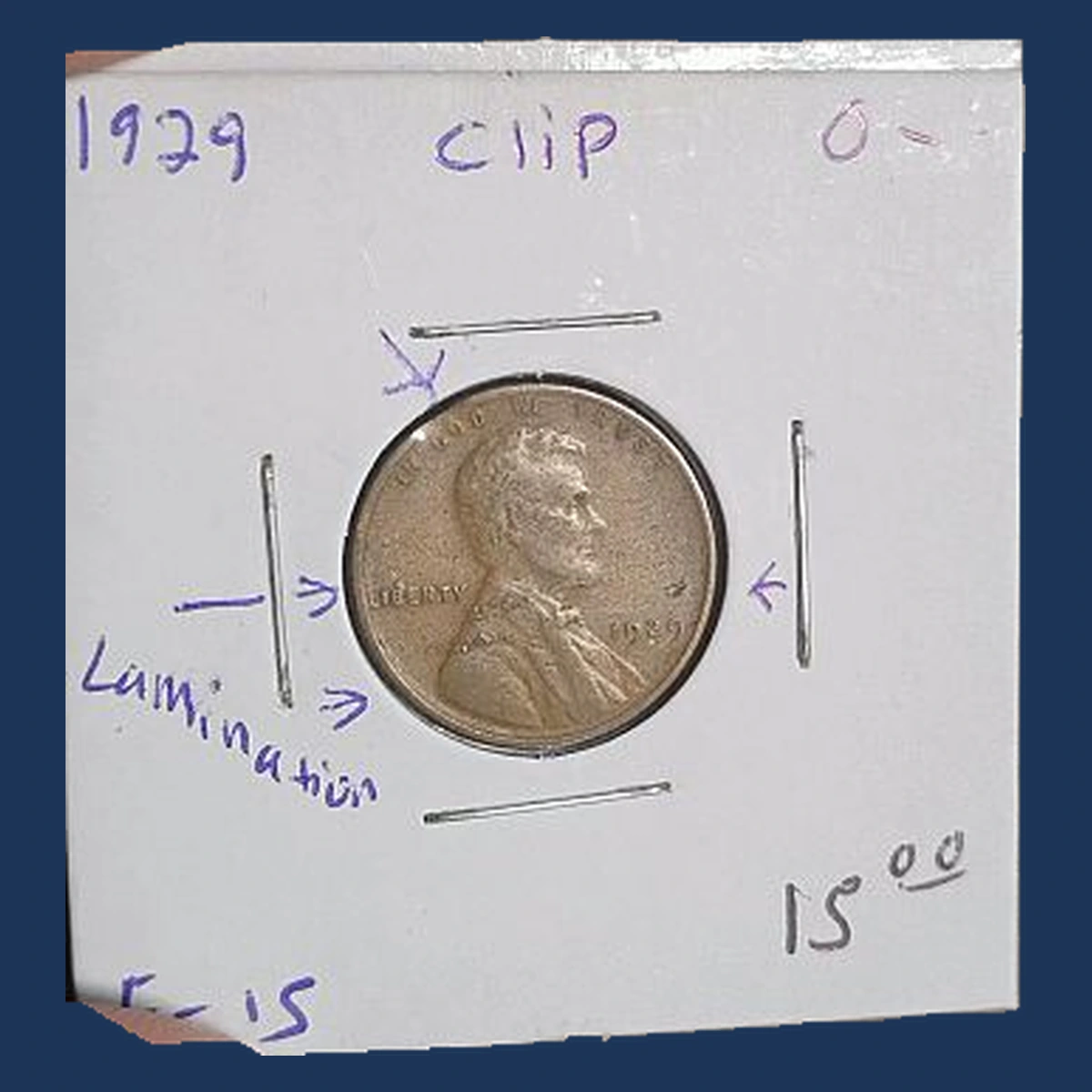
Incomplete blanks produced several different 1929 outlines. A curved gap comes from cutting across an earlier hole, while a straight or ragged gap can come from the metal sheet’s edge.
A Philadelphia curved-clip example weighs 2.87 g. A San Francisco straight-clip example weighs 3.00 g; both were graded ANACS XF40, showing noticeable wear.
Denver also has a recorded thirteen-percent ragged end clip. A separate older listing describes a ten-percent straight gap near the upper-left edge.
Each shape belongs to its own coin, so the weights and positions should not be mixed.
Estimated Value
The 1929-D thirteen-percent ragged clip graded PCGS MS63 Brown sold for $55 in April 2020. This actual price shows that an obvious irregular gap need not cost hundreds.
An estimated $15–$300 covers these different clips across wear levels and sizes. Better preservation and clear original edges can lift a coin above a modest worn example.
A gap cut or filed into a finished cent does not qualify, regardless of its size.
How to Identify
Use a scale to keep the examples apart: the listed curved clip is 2.87 g, and the San Francisco straight clip is 3.00 g. Both are below the normal 3.11 g standard.
Measure an intact span with calipers against 19.05 mm. A measurement across the gap would understate the surviving coin’s normal width.
Now examine the boundary with a 10× magnifier. Smoothly weakened letters or rim detail near the gap can show that the metal was missing before striking.
Look for fresh cuts, parallel file lines, or sharp folds that suggest later removal. Compare a curved example with a curved-gap photograph rather than borrowing the ragged clip’s irregular edge.
4. 1929 Lincoln Wheat Penny Partial Collar
An edge with two levels may show that the blank sat only partly inside the collar. This ring normally keeps the metal from spreading too far during the strike.
The section inside the ring stayed restrained, while metal above it could move outward. The result can resemble a small ledge running around part of the edge.
A 1929-S example graded ICG MS63 Brown appears in a Heritage auction listing. The grade describes an unworn coin with visible marks.
Its identifying feature lies on the edge, so a front-only photograph can miss the most useful detail.
Estimated Value
Use an estimated $50–$350 for a clearly identified 1929-S partial collar, depending on the edge step and preservation. This is an estimate rather than a quoted price for the listed ICG coin.
A ledge that is obvious in a side photograph is easier to judge than a tiny uneven rim. Dents or squeezed metal can make the same area confusing.
The normal 3.11 g catalog weight is not a recorded measurement of this specimen.
How to Identify
View the side of the coin at eye level, then slowly turn it. The edge should reveal where one section was restrained differently from the adjacent metal.
Do not expect a ring of normal grooves. Lincoln cents have plain edges.
A 10× magnifier helps show whether the apparent ledge is part of the struck edge or a lip crushed over afterward. Inspect the nearby face for damaged letters that accompany squeezing.
Weigh an accessible coin against 3.11 g and measure several spans with calipers against 19.05 mm. Keep a sealed example in its holder.
Photograph the transition between the narrower and wider sections, where the collar’s uneven restraint should be visible.
5. 1929 Lincoln Wheat Penny Cracked Planchet
A crack in the coin itself is different from a raised line left by a cracked stamping tool. Here, the opening runs into the metal of the blank.
A dealer listed a 1929-S cent graded NGC MS64 Red as struck on a defective cracked planchet. A planchet is the prepared metal blank used for a coin.
The description indicates that the weakness existed when the design was struck. It does not give a reliable clock position for the opening.
This deeper break should be compared with its own edge view, rather than a photograph of thin surface peeling.
Estimated Value
The dealer listed the NGC MS64 Red coin at $189. That was an asking price, not evidence that a buyer paid that amount.
An estimated $75–$400 suits confirmed 1929 cracked-planchet examples with differing depth, visibility, and condition. The listed grade indicates an unworn coin with some marks and original red copper color.
A crack caused by bending or cutting a completed penny would be later damage and would not receive this error estimate.
How to Identify
Keep the opening untouched because flexing the coin can widen the crack and destroy evidence of its earlier condition. With a 10× magnifier, inspect how the design meets the gap and whether the strike shaped the metal beside it.
A scale and calipers can document a loose coin against the normal 3.11 g and 19.05 mm standards. Do not force the gap shut to take measurements, and leave a certified specimen inside its holder.
Thin peeling confined to the surface is different from a crack running into the blank. Follow the opening toward the edge to distinguish a genuine gap from a raised line left above the surface by a cracked tool.
6. 1929 Lincoln Wheat Penny BIE Chips, Mouth Cracks, and Rim Cuds
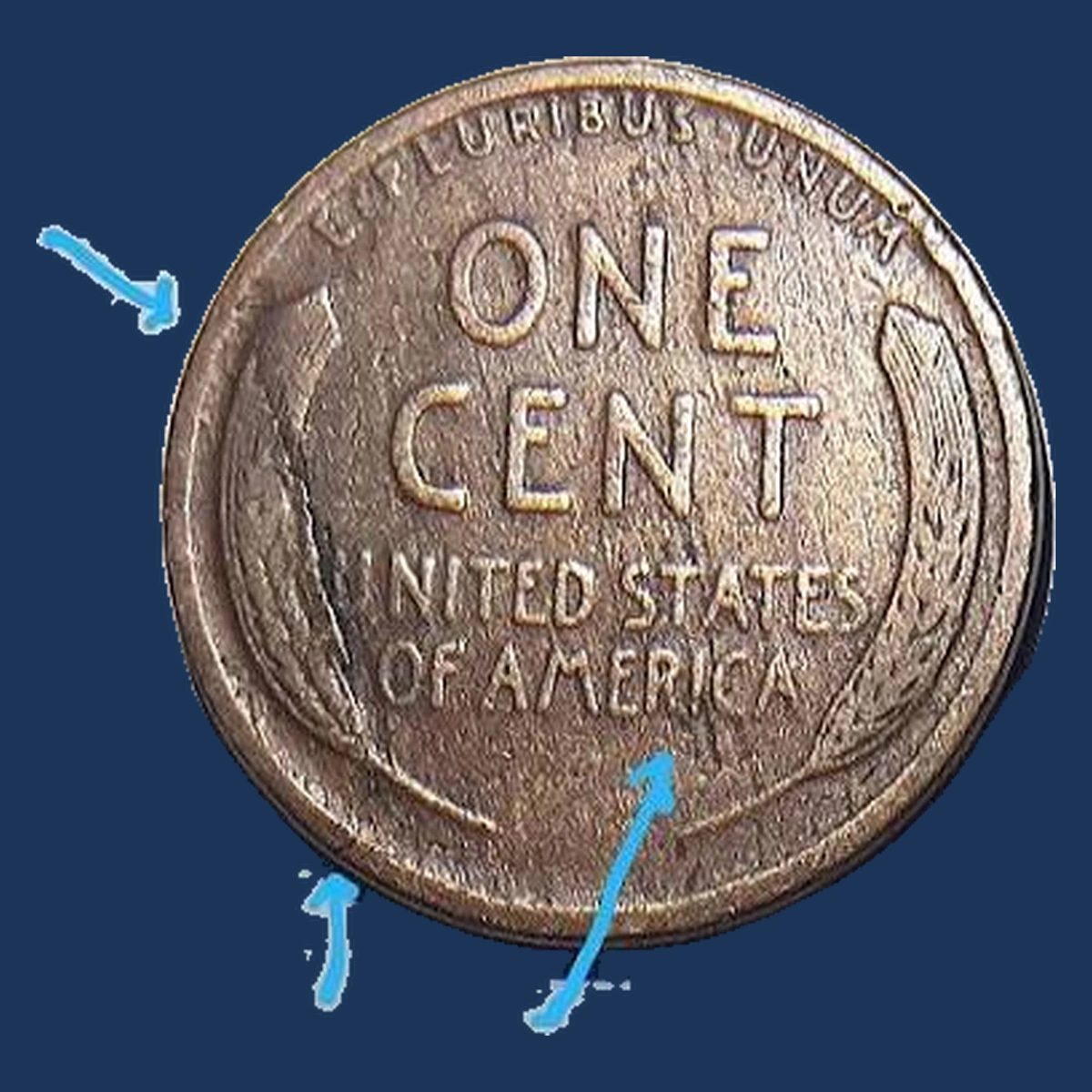
Different tool breaks can add different raised shapes to a 1929 penny. A small break between B and E can leave a bar resembling an extra I.
A reported line extending from Lincoln’s mouth or chin is nicknamed Spitting Lincoln. Its position differs from the BIE letter-space feature.
A larger San Francisco break reaches the back rim beside the left wheat ear. This is a cud: a piece of the stamping tool broke away, leaving a raised patch on later coins.
The three appearances come from separate reports, not one coin carrying every feature.
Estimated Value
Small BIE bars or mouth-area cracks have an estimated $3–$40 range. For a clear 1929-S rim cud, estimate about $40–$500 according to size and preservation.
The larger break replaces more design and can be easier to appreciate in a photograph. These ranges are estimates for the visible features, not auction prices for every reported shape.
The Spitting Lincoln nickname alone does not establish a rare variety or a specific mint.
How to Identify
Read the exact letter gap before using the BIE name. A lump between I and B is not the same location as the bar between B and E.
Use a 10× magnifier and side lighting to check that a suspected mouth crack is raised. A scratch crossing Lincoln’s face is cut into the metal instead.
For the San Francisco cud, turn to the back and inspect the rim beside the left wheat ear. Compare the shape with the cataloged 1929-S example.
On loose coins, a scale and calipers check about 3.11 g and 19.05 mm. At the cud’s outer edge, look for natural continuity with the rim rather than a seam from attached metal.
7. 1929 Lincoln Wheat Penny Broadstrike
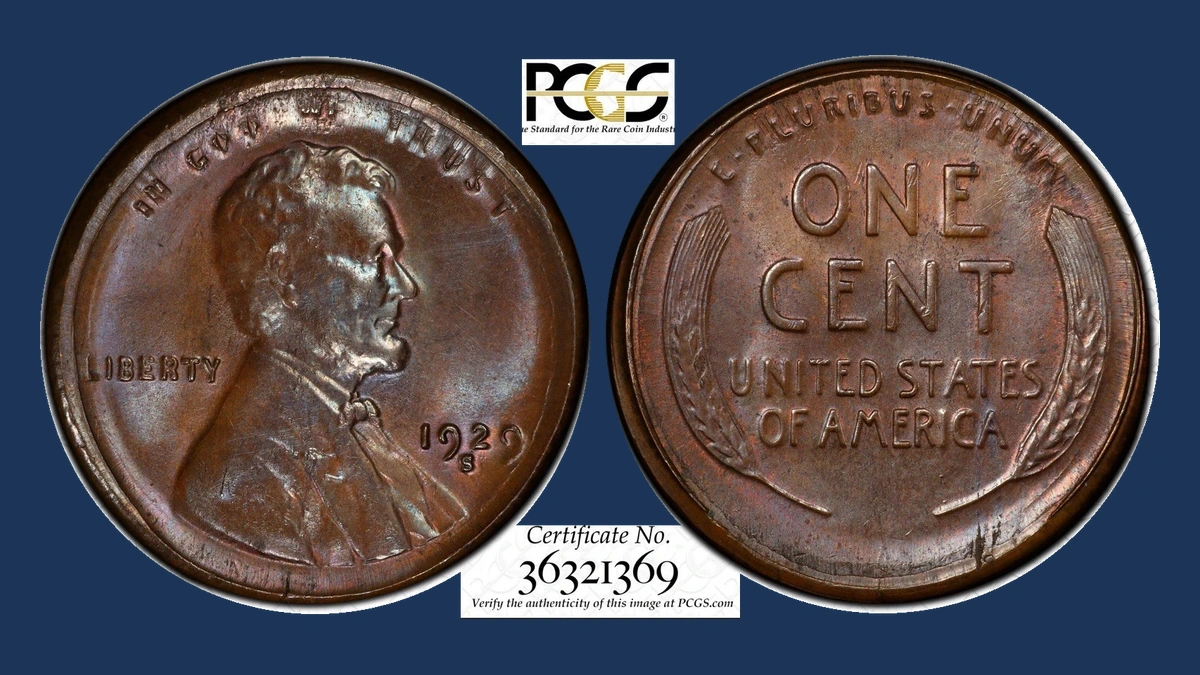
A design can sit unevenly inside a wide penny without any letters being lost beyond the edge. That appearance may be an uncentered broadstrike.
The blank spread because the collar did not fully control its width. As long as the intended design remains on the metal, the uneven border is not automatically an off-center strike.
Recorded 1929 examples include a worn Denver coin and an unworn San Francisco coin. Another San Francisco broadstrike has light wear and was cleaned.
Cleaning changes the surface after minting, while the expanded shape comes from the original striking problem.
Estimated Value
A 1929-S broadstrike graded PCGS MS64 Brown sold for $288 in August 2020. It provides a completed-sale comparison for an unworn coin with some marks.
Estimate $50–$600 for 1929 broadstrikes across different mints, wear levels, and degrees of spread. The cleaned example should be compared with other problem-surface coins, not priced as untouched.
An uneven border can be attractive, but a complete readable design remains central to the identification.
How to Identify
An off-center-looking coin may still contain every intended letter, so trace the full design before naming the error. Pay particular attention to the narrowest border.
Calipers can record different widths across the coin compared with the ordinary 19.05 mm diameter. Check the loose coin on a scale against 3.11 g; broadstriking spreads metal rather than adding it.
At 10×, inspect the expanded edge for crushed details or hammer marks. Later flattening can widen a penny but damage its finished design.
For the cleaned San Francisco specimen, inspect the surface separately from the shape. Sharp cleaning lines do not explain the original expanded outline, although they can reduce the coin’s value.
8. 1929 Lincoln Wheat Penny Doubled Die
An extra eyelid can appear on a 1929 Philadelphia cent, while another Denver variety affects the motto above Lincoln. These differences come from separate stamping tools carrying doubled designs.
Back varieties can thicken E PLURIBUS UNUM, the dots, wheat ears, and stems. The strongest area depends on the particular tool.
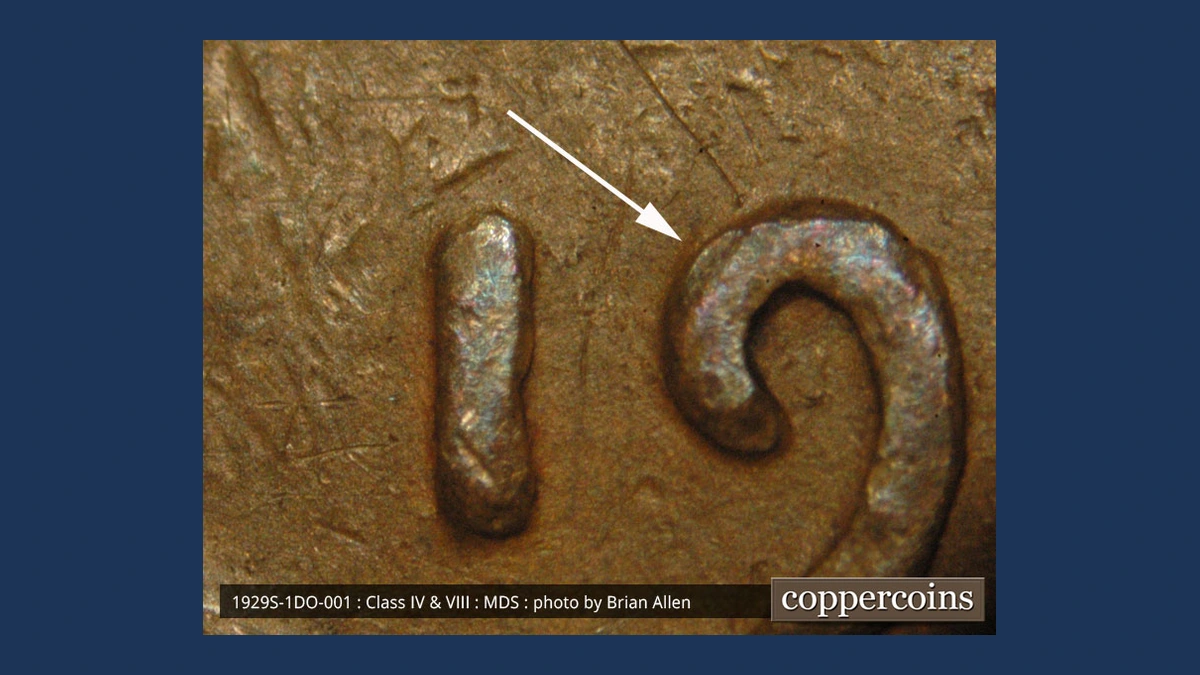
One San Francisco example combines doubled date details with an S repunched toward the right. Its slight motto doubling has a different, shared tool origin.
A separate San Francisco pattern affects the 9 and part of TRUST. Each pattern has its own details to compare.
Estimated Value
For identified 1929 doubled dies, estimate $5–$750 depending on the pattern, its visibility, and the coin’s preservation. This is a broad comparison range, not a recorded result for each catalog number.
A faint extra eyelid on a worn coin offers less visible detail than a sharp, well-preserved doubled design. An excellent ordinary coin can also carry substantial condition value.
On the San Francisco combination variety, the repunched S contributes to one overall coin price.
How to Identify
For the Denver motto variety, inspect IN GOD WE TRUST with a 10× magnifier. Another Denver listing instead emphasizes R, T, and Y in LIBERTY, so match the photographed feature before selecting a number.
A scale and calipers can establish the normal 3.11 g and 19.05 mm measurements on loose coins. Normal dimensions cannot identify a doubled tool.
Philadelphia’s reported extra eyelid lies above and toward the right of the main eyelid. Back varieties require a different examination of the motto and wheat details.
On the San Francisco combination coin, inspect the 19 separately from the S. A repunched mintmark cannot by itself prove the doubled date.
9. 1929 Lincoln Wheat Penny Multiple Strike
A penny can receive another strike if it fails to leave the press correctly. More than one impression may then survive as overlapping dates, portrait outlines, or lettering.
The 1929 reports identify this general multiple-strike error. They do not establish a particular number of blows, mintmark, or displacement for a certified example.
The visible overlap must therefore determine how an individual coin is described. A coin with two impressions should not become a claimed triple strike merely because its outline looks complicated.
Flat edges caused by later crushing also do not establish a second Mint strike.
Estimated Value
Estimate $150–$1,500 for a genuine 1929 multiple strike with readable overlapping details. The range is conditional on identifying a real striking error, rather than damage to an ordinary coin.
A separate 1945 flipover double-strike cent graded NGC MS65 Brown sold for $675.63 in January 2016. That different-year example illustrates collector demand for a clear additional strike.
Its flipover arrangement and grade should not be assigned to the general 1929 report.
How to Identify
Choose a repeated letter or date fragment and map its position against the first design. A second strike should form another recognizable arrangement, not a random series of dents.
A 10× magnifier helps follow the overlap where one impression crosses another.
Photograph both faces so a claimed additional strike can be checked across the whole coin.
Weigh the loose coin on a scale against 3.11 g and use calipers to record its outline relative to 19.05 mm. Repeated blows can reshape the coin without adding metal.
Do not count every flattened edge as another strike. Count only separate, coherent groups of design that can be traced to additional impressions.
10. 1929 Lincoln Wheat Penny Off-Center Strike
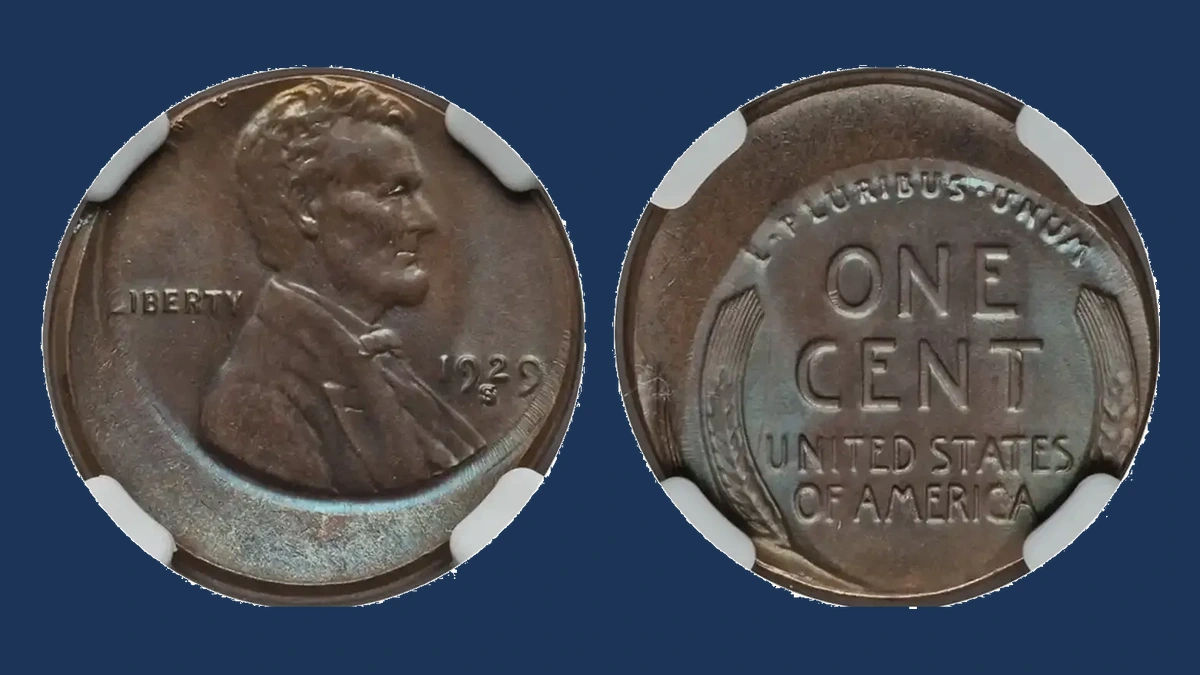
A 1929 off-center strike leaves part of the blank unused while some design misses the metal entirely. The resulting crescent makes the press mistake easy to see.
One Philadelphia example is described as ten percent off-center. San Francisco examples include fifteen- and twenty-five-percent shifts, with different directions and grades.
On the twenty-five-percent coin shifted toward two o’clock, the final 9 is faint. The other examples should not inherit that date weakness.
How much of the coin remains identifiable matters alongside the size of the blank area, especially when collecting by year and mint.
Estimated Value
A 1929-S fifteen-percent off-center cent graded NGC MS66 sold for $1,320 in December 2023. A twenty-five-percent example graded PCGS MS61 Brown brought $360 in September 2019.
Those results show how preservation can outweigh the larger displacement percentage. Both grades describe unworn coins, but MS66 has far fewer distracting marks.
An estimated $40–$2,000 covers slight, worn examples through stronger, better-preserved pieces with enough date and mintmark remaining.
How to Identify
On the twenty-five-percent San Francisco example, examine the final 9 carefully before accepting the date. Most of the right wheat ear and the front motto fall beyond the struck area.
A normal 1929 blank weighs 3.11 g and spans 19.05 mm. A scale and calipers document the loose coin, but its struck outline may differ after metal spreads unevenly.
Use a 10× magnifier at the boundary of the unused crescent. Grinding a finished design away leaves a different surface from metal that never received the design.
For a fifteen-percent example, establish its own direction from both faces. The two-o’clock direction belongs to the separate twenty-five-percent coin.
11. 1929 Lincoln Wheat Penny Repunched Mintmark
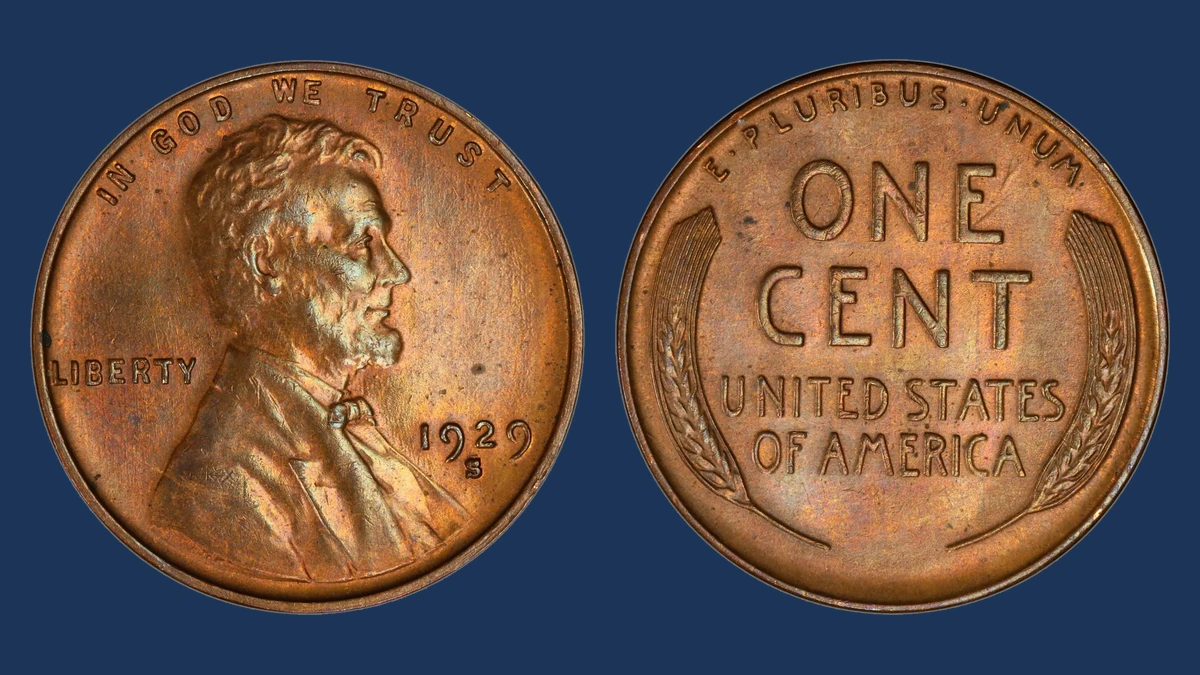
The famous FS-501 has more than a simply thick S. Early examples can show remnants of earlier punches above and toward the upper left of the main mintmark.
The hand punch moved while workers prepared the stamping tool. That tool then repeated the extra outlines on the coins it struck.
Wear to the tool can weaken those smaller traces on later coins. Other San Francisco varieties point in different directions or show split letter ends.
Denver has its own repunched D patterns. Their small letter curves should be compared separately from the San Francisco S.
Estimated Value
PCGS records a $3,565 June 2010 auction result for an FS-501 graded MS65 Red. That grade describes an unworn coin with strong preservation and original red copper color.
For the broader mintmark group, estimate $5–$5,000, separating modest worn varieties from exceptional named examples. GreatCollections lists brown FS-501 sales between about $124 and $389 across several grades.
The expensive red coin’s result is not a price for every extra mintmark stroke.
How to Identify
For FS-501, use a 10× magnifier above the S and toward its upper-left side. Remnants there should curve like portions of the mintmark, and their strength can decrease as the stamping tool wears.
A loose ordinary cent weighs 3.11 g and measures 19.05 mm on a scale and calipers. Those normal figures will not identify FS-501, so compare the entire small pattern with photographs from the appropriate tool stage.
Denver varieties need a separate examination of the D’s curved side and short ends. When two examples both show northward repunching, compare the small marks around LIBERTY or TRUST that distinguish their numbered tools.
Conclusion
The 1929 penny errors here range from small $3 tool-break features to exceptional mintmark varieties estimated near $5,000. Visible detail and surface preservation can matter more than the apparent size of an error.
Keep the weight, mint, and position of each example together when comparing photographs. A coin combining peeling and off-center striking still receives one overall price.
Examine fragile metal without moving it, and check tiny mintmark outlines under steady light.