1932 Penny Error List with Pictures

The small D under a 1932 penny’s date is normal. Extra metal beside it, a peeling layer, or an incomplete outline calls for a different check.
This 1932 penny error list has estimated values from $2 to $600. For comparison, a 1946-S Wheat cent with a major tool break sold for $288 in March 2021; that was a different year’s coin.
Start with the matching feature below. The examples explain what a genuine error must show before a price applies.
1. 1932 Lincoln Penny Reported Repunched D Mintmark (Estimated Up to $200)
The Denver mintmark is a small D, and its size alone is not an error. A repunched mintmark would instead show part of an earlier D impression beside the main letter.
Workers added mintmarks to the steel stamping tools by hand. A shifted repeated punch could leave that extra letter shape on later coins.
Repunched D is reported as a candidate for 1932, but a specific matched example is needed before applying the label. A seller’s general error tag does not establish it.
Philadelphia cents have no mint letter to repunch.
Estimated Value
For a genuine, matched 1932-D repunched mintmark, estimate $10–$200. This is a conditional range based on comparable minor Wheat-cent mintmark varieties.
It is not a reported auction result for an established 1932-D specimen. The extra D outline must first be demonstrated.
A clear, preserved second curve would support more than a worn trace. A normal small D, a stained letter, or a bump unrelated to another punch does not receive this estimated premium.
How to Identify
Use an ordinary 1932-D as your first comparison. Its small mintmark is normal, so establish the letter’s usual shape before looking for an extra outline.
Trace the D with a 10× magnifier. A second curve should continue part of another D rather than end as an isolated bump.
Move the light and photograph the same spot again. If the apparent extra line disappears or changes shape, a reflection may explain it.
For an accessible coin, check weight and width with a scale and calipers against 3.11 grams and 19.05 millimeters. Inspect the smooth edge as well.
Keep the close-ups with your normal-coin comparison when asking a specialist to examine the mintmark; a general seller’s label cannot make that match.
2. 1932 Lincoln Penny Lamination (Estimated Up to $250)
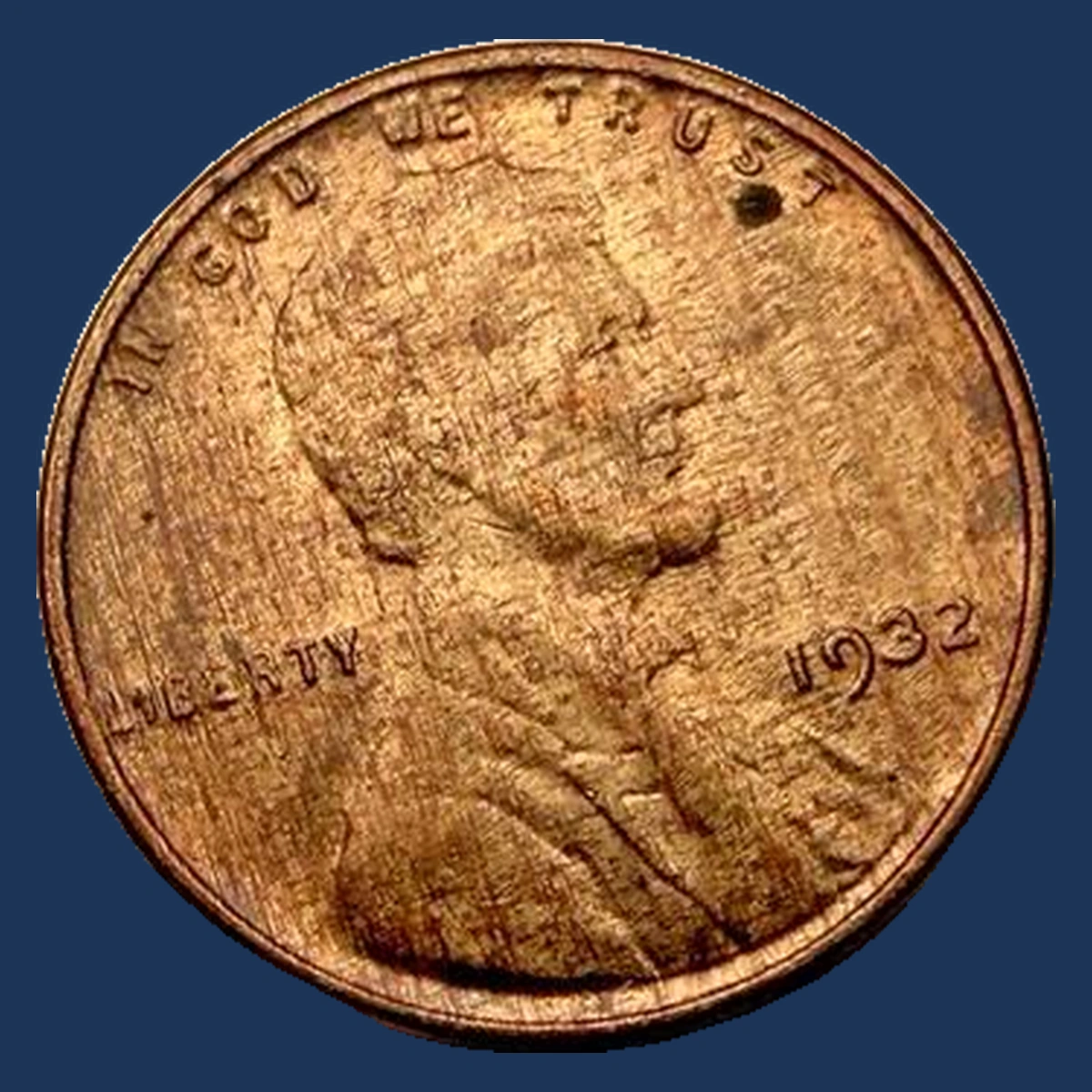
A penny’s surface can lift along a weak layer inside its metal. The separation may leave an attached flap or a rough exposed patch where the flap fell away.
This is lamination. Reports for 1932 include Philadelphia pieces found or offered by collectors, rather than a single standard peeling pattern.
The position needs to be read from the actual coin. A front-side patch on one example does not establish the location of another.
Normal 1932 cents are a copper-rich alloy throughout. Their surface failure is not the copper coating coming off a modern zinc center.
Estimated Value
A modest lamination may fit an estimated $5–$75, with larger clear separations extending to roughly $75–$250. These estimates require original alloy failure.
A 1952-D front lamination sold for $35 in July 2013. That older sale offers a later Wheat-cent comparison rather than a price assigned to a collector-reported 1932 piece.
An untouched boundary helps explain the peeling. Cleaning, corrosion, or a scraped area can change both the appearance and what a buyer will pay.
How to Identify
Protect a loose flap before taking measurements. Do not lift, scrape, or press it back onto the coin.
Use side lighting and a magnifier to look beneath the edge that is already raised. Follow any visible seam into the solid metal instead of judging the rough center alone.
A scraped patch may cut across completed detail without exposing a connected layer. Corrosion can leave pits rather than a thin sheet separating within the alloy.
A missing flake can reduce the normal 3.11-gram weight, so record the scale reading when handling is safe. The usual width is 19.05 millimeters; keep calipers away from fragile areas and photograph the smooth edge if the separation reaches it.
3. 1932 Lincoln Penny Clipped Planchet (Estimated Up to $350)
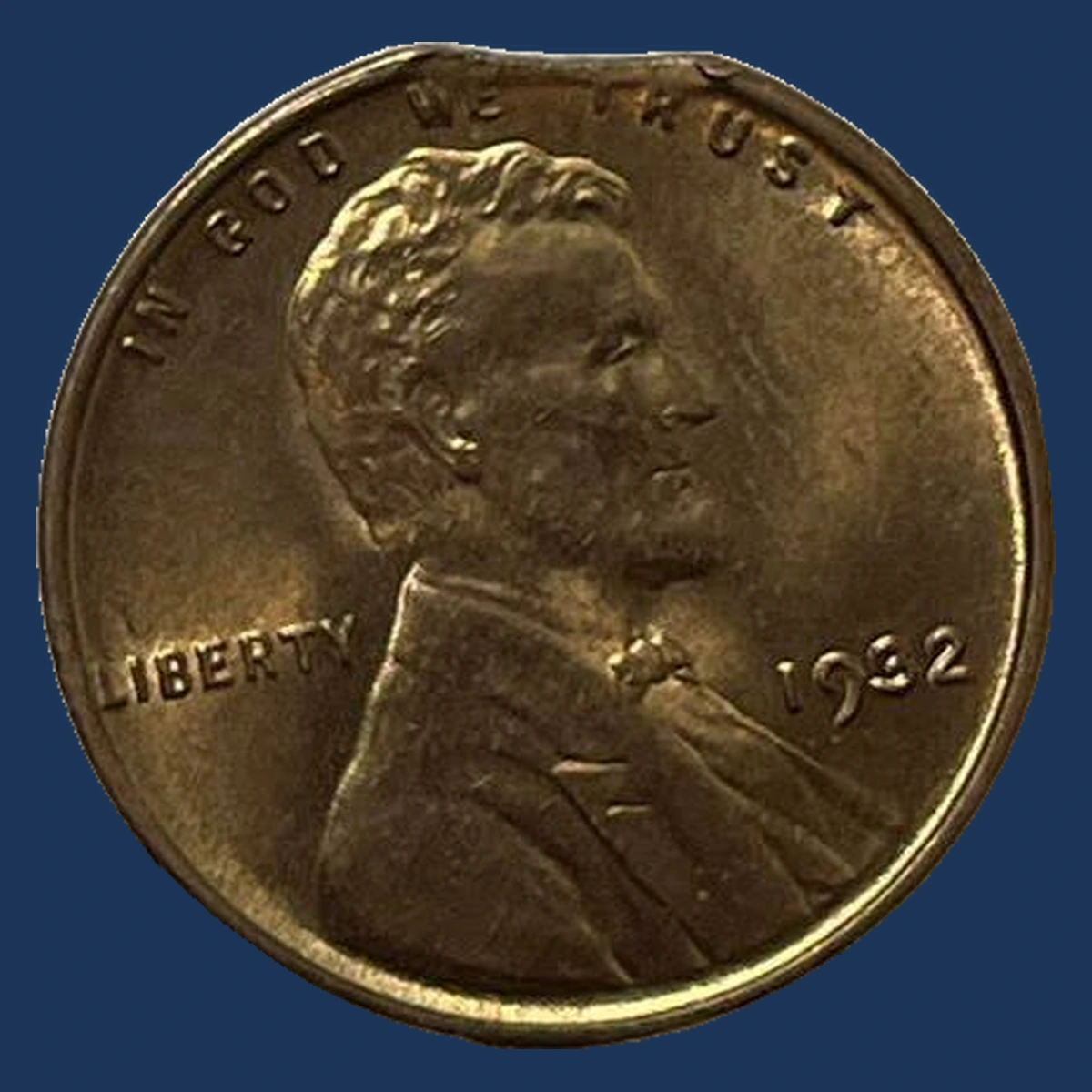
A gap in the outline can start before the coin has any letters or portrait. The blank may be cut from an incomplete part of the metal strip and then struck normally.
This is called a clipped planchet, with planchet meaning the prepared blank. Reports include clipping among 1932 cent errors without establishing one particular gap shape or mint.
That means the actual boundary must guide the identification. A curved clip should not be assumed simply because it is familiar.
A later cut through a finished coin removes metal too, but disturbs an already formed design.
Estimated Value
Allow an estimated $15–$350 for a genuine 1932 clip, depending on its size, date clarity, and condition. The amount missing is only one part of the assessment.
A 1967 straight clip covering 13% of the blank sold for $39 in July 2021. That later Memorial cent is a general clipping comparison, not proof of the shape reported for 1932.
A sound original edge matters more than a seller’s percentage. Tool-cut or corroded gaps do not earn the same premium.
How to Identify
Weigh the accessible coin first, recording how far it falls below a normal cent’s 3.11 grams. Use calipers across an intact span to compare with 19.05 millimeters.
A low reading alone does not establish a clip. Now examine the missing section under a 10× magnifier, including both ends where the gap meets the rim.
The nearby design should fit a blank that lacked this metal before striking. A cut through already completed letters points to later damage instead.
Follow the surviving smooth edge for filing marks and fresh burrs. Weakness opposite the gap can help, but some genuine clips show it more clearly than others; it should not replace examining the gap itself.
4. 1932 Lincoln Penny Reported Doubled Die Obverse (Estimated Up to $500)
A repeated raised letter edge can come from a doubled design in the stamping tool. The tool is called a die, so collectors use the term doubled die.
An auction category records a 1932-D doubled-front cent. That establishes a Denver report, not a reason to label every no-mintmark 1932 penny the same way.
The exact repeated feature should be matched on the coin. The date, LIBERTY, and the motto are inspection areas, not a claim that each is doubled on one specimen.
A flat shelf beside a letter can arise during striking instead.
Estimated Value
An estimated $10–$500 gives a working range for a correctly identified minor 1932-D doubled-front variety. The strength of its repeated design and its condition matter.
A different 1936 FS-103 doubled-front cent sold for $70 in June 2024. Its ANACS MS63 Brown grade describes an unworn coin with marks and brown color.
That comparison has its own tool and visible features. It is not a sale of the 1932-D report, which needs a matching raised design before that price comparison applies.
How to Identify
Begin with the D under the date. The reported doubled-front category concerns Denver, so a Philadelphia coin needs different evidence.
Look at the candidate’s actual extra lines before choosing comparison pictures. The date, LIBERTY, and IN GOD WE TRUST are places to inspect, not three features already proven doubled together.
Use a 10× magnifier to compare the shape of one affected letter. A rounded second outline differs from a low, flat shelf created by movement during striking.
Check the smooth edge and, when accessible, use a scale and calipers against 3.11 grams and 19.05 millimeters. Photograph the specific raised detail beside a matched example; do not assign a variety merely because the whole word looks thick.
5. 1932 Lincoln Penny Die Cracks, BIE Chips, and Cuds (Estimated Up to $600)
A line crossing the surface may actually stand above it. Coin metal can enter a crack in the stamping tool and leave a raised ridge.
When a small tool piece breaks away between B and E in LIBERTY, the coin can gain an extra bar. Collectors call that a BIE.
A larger missing section at the rim leaves a raised, design-free patch called a cud. Reports include these tool-break forms for 1932 cents.
Their positions are not interchangeable. A tiny bar inside the word is not a rim cud, and a scratch is not a raised crack.
Estimated Value
Estimate $2–$50 for small cracks and BIE chips. A clear larger cud can fit roughly $50–$600, depending on how much design the break replaces.
A 1946-S major break graded ANACS AU50 sold for $288 in March 2021 in Heritage’s auction archive. That is a later Wheat-cent comparison with light wear.
It does not set the value of a tiny 1932 crack. Compare the actual raised area and its condition before choosing the appropriate range.
How to Identify
Find where the raised shape sits before choosing its name. A little bar between B and E is different from a large patch that reaches the rim.
Move a lamp across the area to see whether it stands up or sinks into the surface. A scratch cuts downward, while a crack in the stamping tool normally leaves a raised line.
For a larger rim patch, inspect the opposite face and smooth edge for squeezing. A 10× magnifier can reveal glue or solder without scraping the metal.
When safely accessible, weigh against 3.11 grams and measure width against 19.05 millimeters with calipers. Save close-ups showing both the feature and its place within the full design.
6. 1932 Lincoln Penny Off-Center Strike (Estimated Up to $600)
A crescent of plain metal can remain when the blank is not fully beneath the stamping tools. Part of the intended design falls beyond the disc’s edge.
This is an off-center strike. Reports include the type for 1932 Lincoln cents, without fixing one direction or mintmark for all examples.
The surviving date must identify the year. A dramatic undated Wheat cent cannot simply be assigned to 1932 because it looks like a nearby example.
Both faces matter as well. The same displaced blank should explain the incomplete front and back designs, rather than only an uneven front border.
Estimated Value
An estimated $30–$600 applies to genuine dated 1932 off-center cents of different shifts and preservation. Smaller errors can still be useful finds when the year is clear.
A 1936 cent struck 15% off center sold for $63 in January 2022. Its ANACS MS60 Brown grade describes an unworn coin with noticeable marks.
That nearby-year result is a comparison, not a 1932 transaction. Loss of the date, cleaning, or damage across the blank area can reduce interest.
How to Identify
A penny with a plain crescent still needs a readable date. Photograph the whole front first, checking that the final digit really identifies 1932.
Then compare both faces at the same size. Their missing design portions should agree with the position of one blank in the press.
If the back is centered and complete while only the front shifts, consider a misaligned stamping tool. That is different from a blank sitting off center.
An intact blank starts near 3.11 grams and 19.05 millimeters, so record scale and caliper readings when accessible. Under a magnifier, follow the smooth edge and unused crescent for cuts or grinding that removed an already struck design.
Conclusion
A normal small D should stay a normal mintmark until an extra letter outline can be shown. The same careful comparison separates scratches from raised cracks and cut edges from original clips.
The estimated $2–$600 range covers the reported 1932 error types. Prices for other years serve as comparisons, not sales assigned to these pennies.
Keep the coin uncleaned and save full front, back, and edge photographs before focusing on one tiny mark.