1933 Penny Error List with Pictures

A worn 1933-D cent with a struck-through back sold for $30. Its missing detail offers an affordable example of something interrupting the strike.
This 1933 penny error list covers blocked designs, extra mintmark strokes, peeling metal, and changes to the coin’s outline. Estimated values range from $3 to $500.
Start with the mark you can see, then use the checks below to decide which explanation fits.
1. 1933 Lincoln Wheat Penny Grease-Filled Design and Struck-Through Marks
A faint letter beside sharper letters can point to a blocked stamping tool. Grease or other debris may have filled the hollow space that normally forms the letter.
Collectors describe this as a grease-filled die or a struck-through error. A die is the steel tool that stamps the design onto the blank.
Year guides report grease-related weakness on 1933 pennies. A separate auctioned 1933-D coin has a struck-through area on the back, without a stated material.
Neither description means that a piece of grease or debris remains attached to the finished coin.
Estimated Value
The 1933-D back struck-through coin sold for $30 in October 2022. PCGS graded it VG10, indicating considerable circulation wear with the main design still recognizable.
Use an estimated $3–$100 for small blocked-design or struck-through features on this date. The $30 result concerns an unspecified obstruction, not proof that grease caused every similar mark.
A barely faded letter adds little, while a clear affected area can be easier to collect.
How to Identify
Compare the weak letter with nearby raised details before reaching for a scale. If everything at the same height is rubbed smooth, circulation may explain the missing detail.
A 10× magnifier and light from the side help reveal cuts or scraping. An original blocked area should not require sharp removal marks through finished letters.
A normal 1933 cent measures 19.05 mm with calipers and weighs 3.11 g on a scale. These supporting checks can reveal an altered coin but cannot identify grease.
For the auctioned Denver example, inspect the back rather than assuming the weak area lies on Lincoln’s face. Describe the actual missing design without naming grease unless the surface supports that cause.
2. 1933 Lincoln Wheat Penny Repunched D Mintmark
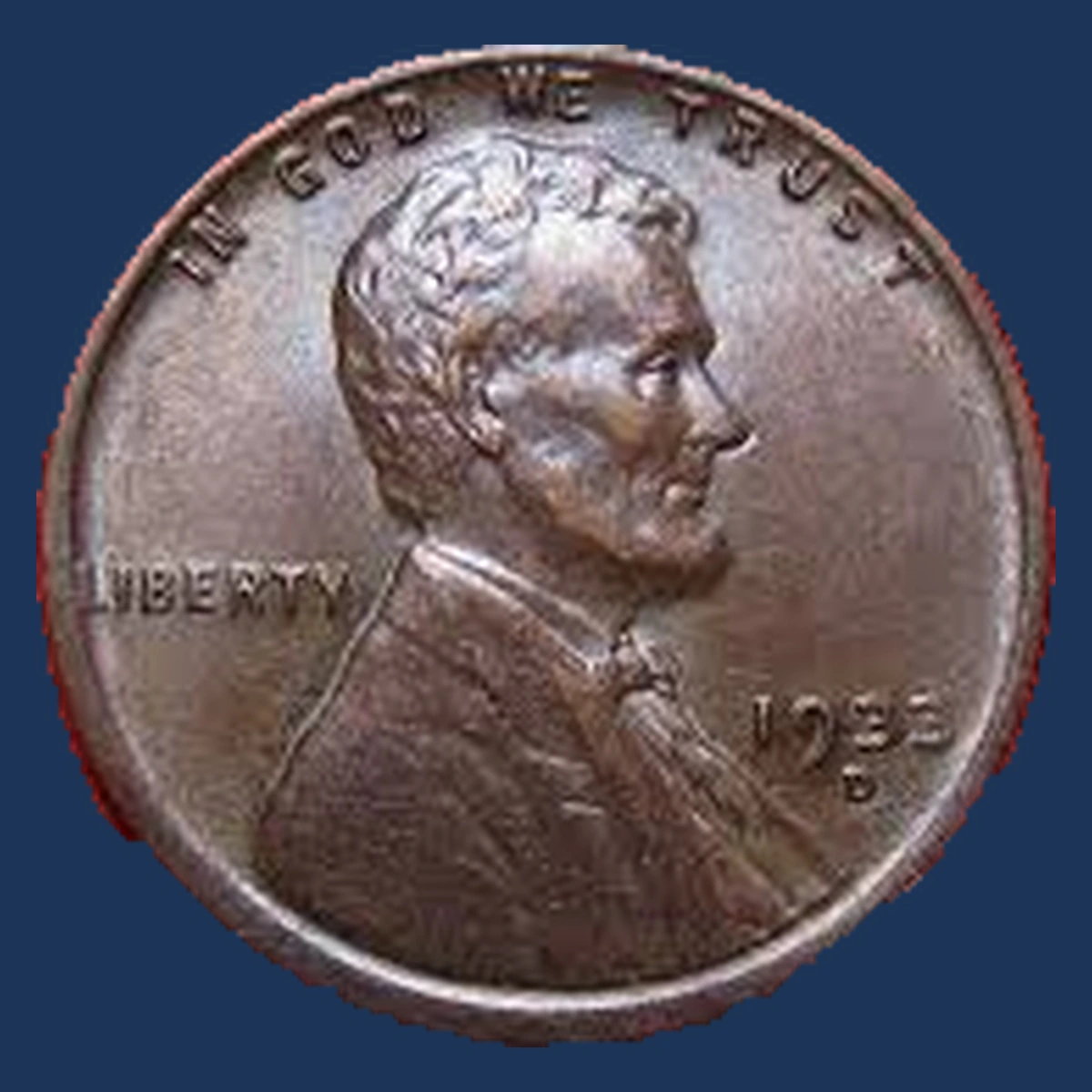
A second edge beside the small D may be a remnant of an earlier punch position. The mintmark was added separately when the stamping tool was prepared.
If the punch moved between blows, part of the first D could remain. Coins made with that tool would then repeat the same extra outline.
A 1933-D year guide reports this doubled-D feature. It does not give a catalog number or a reliable direction for the extra stroke.
The report therefore calls for checking the D itself, rather than borrowing another year’s upward or sideways pattern.
Estimated Value
For a confirmed 1933-D repunched mintmark, estimate $5–$150. This is a comparison range for small early Wheat-cent mintmark varieties, not a recorded sale of a named 1933 tool.
Readable extra curves and attractive surfaces give collectors more to examine. A heavily worn mark may be genuine but show little of its original separation.
A thick D without a distinct second outline should not automatically receive the upper price.
How to Identify
Check that the date reads 1933 and that the small letter is D before enlarging it. There was no regular 1933-S cent, so an S would raise a different identification question.
At 10×, follow the D’s rounded side and short ends under changing light. A second punch should leave recognizable parts of another D, while a chip may simply fill an open space.
A scale and calipers can compare the loose coin with 3.11 g and 19.05 mm, but normal measurements do not prove repunching. Because the report gives no direction, photograph the entire mintmark instead of searching only above or below it.
3. 1933 Lincoln Wheat Penny Lamination
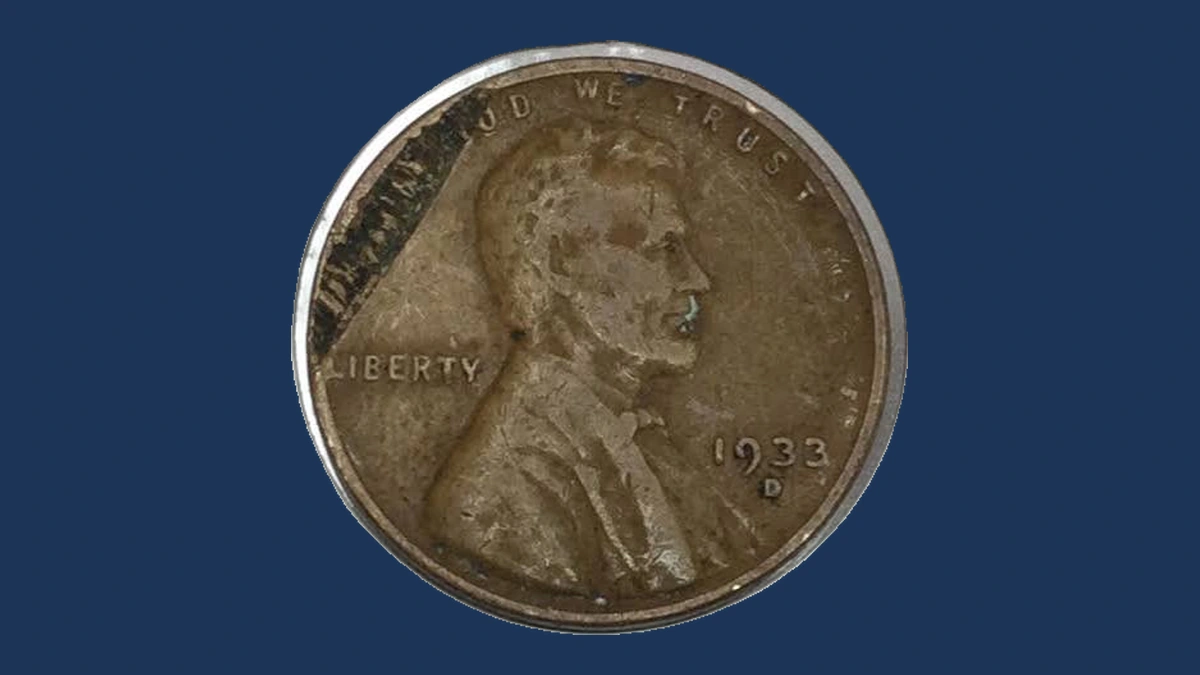
A flake lifting from the surface can look like damage, yet the weakness may have begun inside the original metal. A lamination forms when a thin layer separates within the alloy.
Both Philadelphia and Denver 1933 cents have lamination reports. A piece may remain attached, peel partly away, or leave a rough patch after falling off.
These pennies were made from bronze containing 95 percent copper. They did not have a separate outer layer over a different metal core.
Calling the effect missing plating would therefore describe the wrong construction for an ordinary 1933 cent.
Estimated Value
A shallow, worn lamination may fit an estimated $10–$40, while larger attractive examples can reach about $200. The extent of visible peeling and the coin’s condition guide the comparison.
For another-year example, a 1941-S retained back lamination graded PCGS MS66 Red sold for $69 in April 2020. That was an unworn coin with few marks and original copper color.
An attached flap should remain attached, regardless of its estimated price.
How to Identify
Inspect the metal layer without trying to lift it. A 10× magnifier held at a low angle can show the sheet’s thickness and where it joins the coin.
If the flake is gone, study the shallow patch left behind. A narrow gouge with metal piled along its sides is a different appearance.
Use a scale for a loose coin; a missing flake can reduce the normal 3.11 g weight. Calipers compare its remaining diameter with 19.05 mm.
Do not open a grading holder to obtain these measurements.
Look across the peeling boundary for a thin natural layer, and leave any fragile edge untouched while taking photographs.
4. 1933 Lincoln Wheat Penny Curved Clip
The outline of a clipped penny can resemble a circle with a bite removed. The gap began when the machine cut a blank across part of an existing hole in the metal sheet.
That incomplete blank still reached the coining press. The design was stamped onto the metal that remained.
A curved clip appears in published 1933 error lists, without a fixed clock position or mint. The gap on an individual coin needs its own close-up showing where the surrounding design ends.
It differs from a piece cut out of an already finished penny.
Estimated Value
Estimated values of $15–$250 allow for small worn clips through larger, well-preserved examples. Size helps, but an undamaged edge and a readable date also matter.
A 1920 cent with a seven-percent curved clip sold for $49 in March 2025, graded PCGS AU55 for light wear. It provides an early Wheat-cent comparison, not a 1933 auction result.
Do not use its clip size or weight as measurements of a different coin.
How to Identify
Begin at either end of the gap, where the original rim approaches the missing arc. A 10× magnifier can show whether the rim formed beside an incomplete blank.
The nearby lettering may be weak, and the opposite rim can also show weakness. Neither clue needs to be equally strong on every genuine clip.
Calipers should measure an intact span rather than across the missing piece. Compare that span with 19.05 mm and use a scale to check how much weight remains below 3.11 g.
Then examine the cut-looking surface for parallel grooves or folded metal. Those marks can expose a later cut even when the gap has a convincing curved shape.
5. 1933 Lincoln Wheat Penny BIE Chips and Rim Cuds
A small raised bar between B and E can make LIBERTY seem to contain an extra letter. This familiar BIE feature comes from a tiny break in the stamping tool.
Copper fills the missing tool space during the strike. The result rises above the coin rather than cutting into it.
A larger tool break at the rim creates a cud, a raised patch that replaces normal design. The location and size differ from a letter-space chip.
The 1933 reports include both appearances, but do not establish that they occur together on one particular coin.
Estimated Value
A small 1933 BIE has an estimated $5–$25 range. A clearly identified rim cud can be worth an estimated $25–$400, depending on how much design it replaces and the coin’s preservation.
These figures describe two sizes and locations of tool failure, not two premiums to add to every penny. A bold shape that photographs clearly is easier to compare.
Ordinary scratches, squeezed rims, and attached metal do not qualify for these estimates.
How to Identify
Read LIBERTY directly rather than judging a cropped lump alone. A BIE bar belongs in the gap between B and E, not between any two letters.
Under a 10× magnifier, move the light until you can see whether the bar rises above the surface. A scratch cuts downward.
For a rim cud, follow the raised patch all the way to the edge and check which normal detail it replaces. Solder can create a false lump, so inspect for a seam or different metal color.
Weigh a loose coin against 3.11 g and measure against 19.05 mm with a scale and calipers. An unexplained weight increase deserves closer inspection for added metal around the supposed break.
6. 1933 Lincoln Wheat Penny Off-Center Strike
An off-center penny has metal that never received its share of the design. The blank was partly outside the proper position when the stamping tools met.
One side of the coin may show an empty crescent while letters disappear beyond the opposite edge. That is different from missing metal: the crescent is still part of the original blank.
Sources report off-center 1933 cents without establishing a single displacement percentage for every example. A quoted price cannot supply that missing measurement.
A readable date helps establish the year even when a large part of the design is absent.
Estimated Value
Allow an estimated $20–$500 for 1933 off-center cents across different shifts and conditions. A slight displacement usually belongs near the lower end, while a clear dated example with a large blank area can command more.
A twenty-percent off-center 1937 cent graded PCGS MS64 Brown sold for $126 in September 2019. That unworn other-year example offers a useful comparison.
Its percentage and preservation should not be assumed for an ungraded 1933 coin.
How to Identify
Make sure enough of 1933 survives to identify the date before estimating the shift. A genuine error with an unreadable date cannot automatically be assigned to this year.
A normal blank starts at 3.11 g and 19.05 mm, so a scale and calipers help document a loose example. The strike can change its outline without removing copper.
Now compare the two faces with a 10× magnifier. The unused crescent and missing design should fit the blank’s position between both stamping tools.
A filed surface can imitate missing detail. Turn light across the bare area to check for sanding marks, especially where the remaining design meets the supposedly untouched metal.
Conclusion
Estimated 1933 penny error values run from $3 for modest blocked detail to around $500 for stronger off-center examples. The shape of the feature matters more than an impressive label.
Examine letter gaps for raised chips, inspect flakes without lifting them, and compare incomplete edges with the surrounding strike. A D mintmark needs its own close-up.
Use auction comparisons that match the error and condition, even when the comparison comes from a different year.