1934 Penny Error List with Pictures

One worn 1934 penny brought $4,080 in September 2024 because it had been struck on a silver disc intended for a dime. Other examples show a second strike nearly hiding the first, or a metal layer opening like a shell.
The 1934 penny error list below separates these mistakes from small mintmark and lettering varieties. Estimated whole-coin values range from $3 to $8,000.
Read on to find the feature that matches your penny and the checks that help explain it.
1. 1934 Lincoln Penny Uneven Alloy Mixing (Estimated Up to $100)
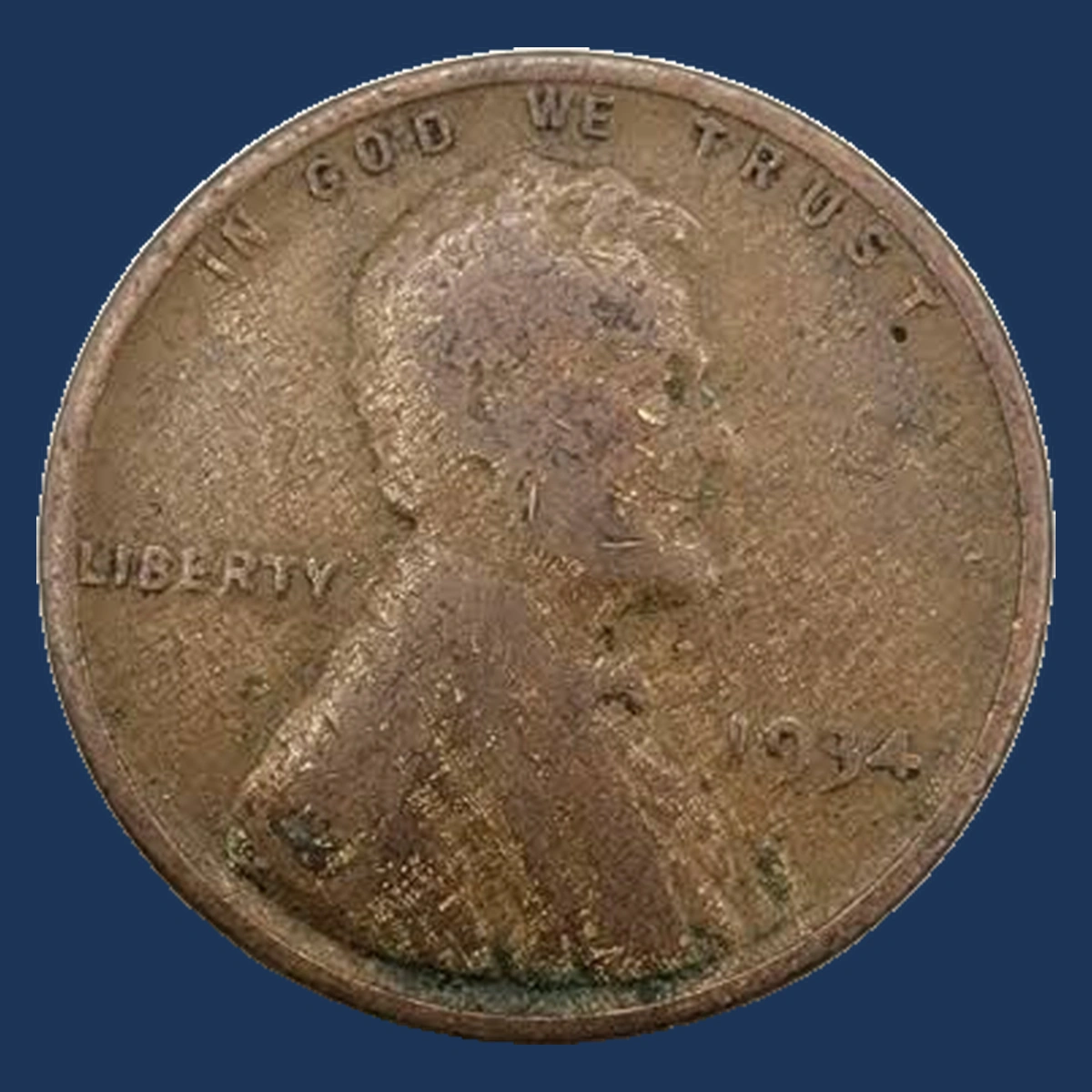
Long color bands can make the copper surface resemble wood grain. Uneven mixing of the metals in the alloy can leave streaks that change color differently over time.
CONECA illustrates this effect with a 1934 cent. The appearance concerns the metal’s mixture, rather than a second design stamped onto the penny.
Not every striped coin has this cause. Cleaning, chemical treatment, and ordinary surface color can create misleading patterns.
A natural streak should be considered alongside the original surface, especially where its path crosses letters and open areas without cutting into them.
Estimated Value
For an attractive, original example of this streaked alloy, estimate $3–$100. The visual appeal and the penny’s condition usually matter more than the nickname woodgrain.
This range compares modest copper-alloy surface varieties. It does not give every brown stripe an error premium or assign a sale to the illustrated 1934 coin.
A scratched or chemically changed surface needs a different assessment. Fine parallel cleaning lines can look striking in photographs without reflecting uneven alloy mixing.
How to Identify
Follow one band across an open area and into a letter under a 10× magnifier. A color change within intact metal differs from a groove crossing completed design.
Move the lamp, keeping the coin in place. Cleaning lines often become bright as their angle changes; take photographs from several lighting positions before judging the streaks.
Check the plain edge for filing and use a scale and calipers against 3.11 grams and 19.05 millimeters when accessible. Normal dimensions do not establish the alloy’s mixing history.
Compare the pattern with the documented 1934 illustration rather than assuming every striped penny is the same type, and leave the surface uncleaned.
2. 1934 Lincoln Penny Lamination (Estimated Up to $300)
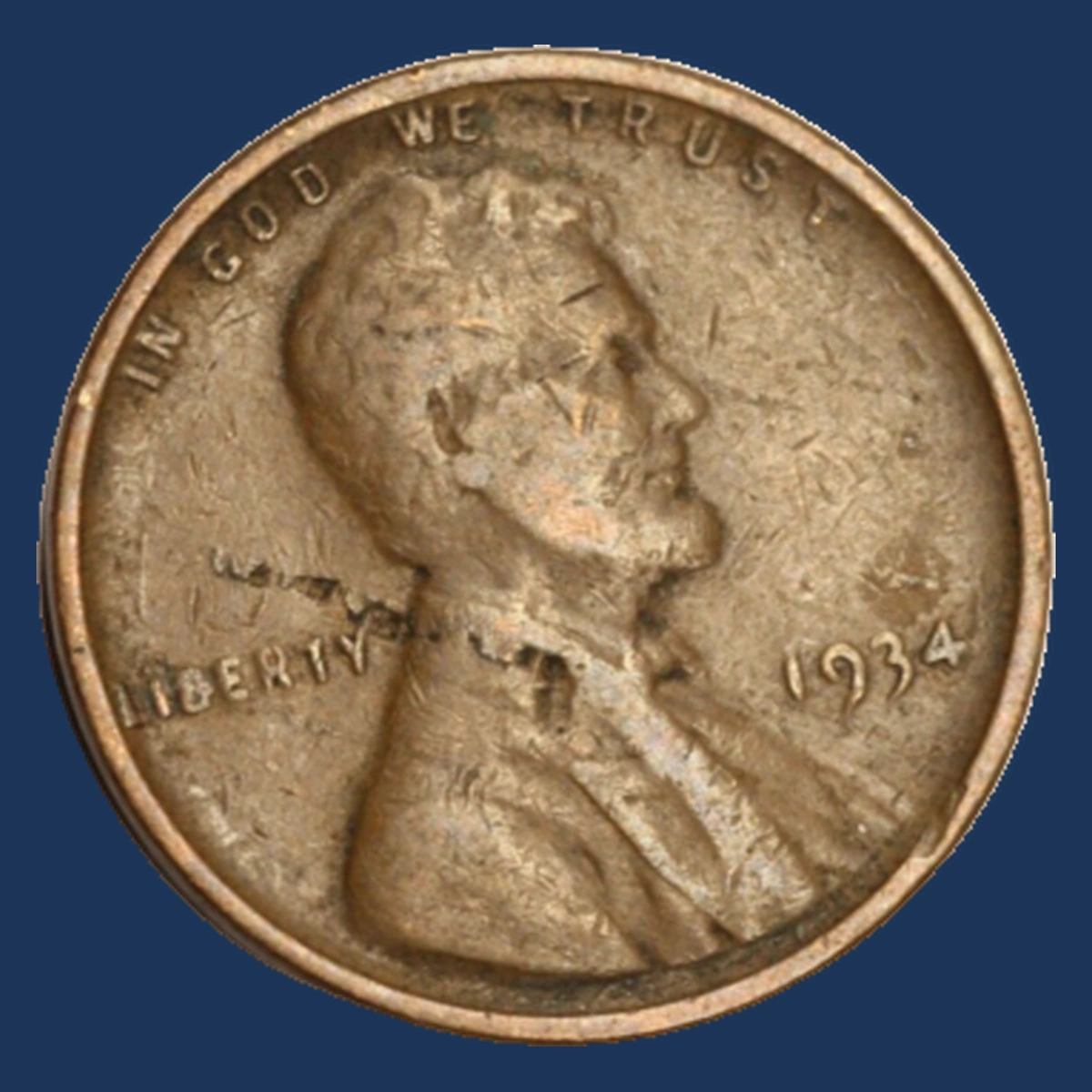
A weak layer can separate inside the bronze and lift as a thin sheet. It may stay attached or leave an irregular patch after falling away.
This is called lamination, and the type is reported for 1934. The report does not fix one face or peeling path for every coin.
A 1934 penny is solid copper-rich alloy. Its layers are not the copper coating and zinc center found in modern cents.
A thin peel also differs from a deeper split opening much of the blank. The size and depth of the separation help distinguish those appearances.
Estimated Value
Estimate $5–$300 for genuine surface laminations, with the affected area, remaining layer, and condition guiding the comparison. Tiny peels can add little to an ordinary worn coin.
A 1941-S retained back lamination sold for $69 in April 2020, graded PCGS MS66 Red. That describes a well-preserved unworn coin retaining red copper color.
The other-year sale offers context for an attached layer. It is not a transaction for every 1934 peeling pattern.
How to Identify
Support the coin before examining an attached layer. A low lamp and 10× magnifier can show the seam already open beneath it, without using a tool to lift it.
If metal has fallen away, trace the irregular boundary into the surrounding surface. A gouge may instead cut a sharp path through finished lettering and push copper up beside the cut.
Weigh the coin against 3.11 grams only when handling is safe, and keep calipers away from loose layers while comparing sound areas with 19.05 millimeters. Photograph any opening at the plain edge as well: the existing depth helps separate a thin surface peel from a metal disc opening farther through its body.
3. 1934 Lincoln Penny Clipped Blank (Estimated Up to $350)
Part of the round blank can be absent before the press stamps its design. The resulting penny has a gap in its outline while the remaining metal carries the portrait and lettering.
Clipped blanks are reported for 1934 without one established shape or clock position. A candidate therefore needs its own edge examined.
A curve can form when the blank-cutting punch overlaps an earlier hole in the sheet. Other incomplete outlines require different comparisons.
A piece cut from a finished coin is later damage, even if its missing area resembles a familiar mint clip.
Estimated Value
Use an estimated $15–$350 for a genuine 1934 clipped blank, depending on size, condition, and the original missing boundary. A readable year makes the coin easier to place in a dated collection.
A 1925 curved clip weighing 2.92 grams sold for $56 in March 2023. Its ANACS VF20 grade describes noticeable circulation wear.
That comparison does not establish the shape or weight of a reported 1934 clip, which must be assessed individually.
How to Identify
A low scale reading is a useful starting observation, but it cannot tell when metal disappeared. Compare it with 3.11 grams, then measure an intact span with calipers against 19.05 millimeters.
Inspect the surviving plain edge and the two ends of the gap under a 10× magnifier. Saw marks, fresh burrs, or cuts through completed letters suggest later removal.
Look at how the nearby rim formed beside the missing metal. Opposite-rim weakness can offer another clue, although it does not appear equally on every genuine clip.
Record the actual outline before choosing a comparison. The general 1934 report does not justify giving every candidate the same curved shape.
4. 1934 Lincoln Penny Clamshell Split Planchet (Estimated Up to $500)
A penny can open like a partly closed shell when a weakness splits deeply through the blank. The metal remains connected along part of the edge.
Collectors call this a clamshell split planchet; planchet means the prepared blank. It differs in depth and extent from a small surface lamination.
A Philadelphia 1934 example is recorded with a PCGS VF30 grade. That describes a circulated coin with clear remaining detail.
The opening must remain as found. Prying the sides farther apart changes the original metal connection and can turn a connected piece into separate fragments.
Estimated Value
The recorded PCGS VF30 clamshell example sold for $54 in December 2024. Use an estimated $40–$500 for comparable genuine splits, allowing for preservation and how clearly the opening survives.
A dramatic name does not automatically make the error expensive. This actual result concerns a worn penny with its own internal separation.
The connection between the sides is part of the feature. Damage from bending or opening it farther can reduce both its evidence and appeal.
How to Identify
Begin with an edge-on photograph rather than pressing on either face. A 10× magnifier should show the existing opening and the portion where the sides still join.
Compare the depth with a thin peeling flap. A small surface sheet does not by itself establish a clamshell split.
If safe to handle, weigh the coin against the normal 3.11 grams; a connected split need not have lost much metal. Use calipers only on sound areas when comparing width with 19.05 millimeters.
Examine the plain edge for tool marks or forced bending. Keep the natural opening unchanged so its interior and the connection can be assessed together.
5. 1934 Lincoln Penny Broadstrike (Estimated Up to $500)
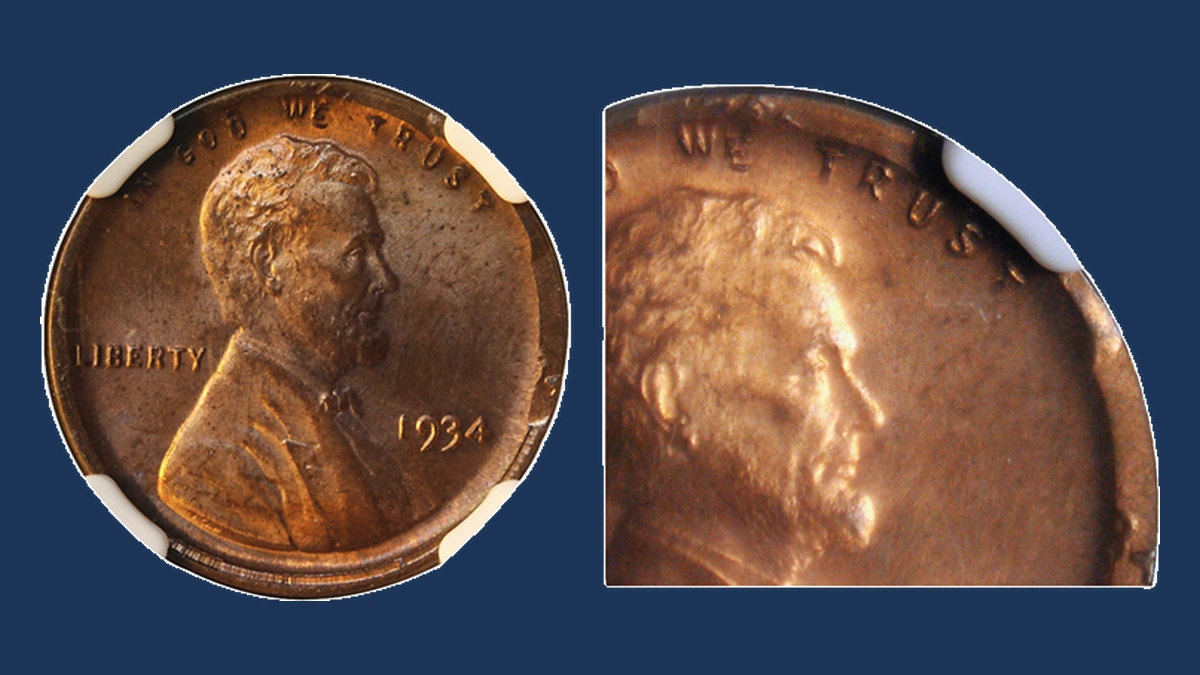
A broadstrike can leave the complete design within a wider outline. The collar, the ring that normally controls the edge, did not fully restrain the metal during the blow.
A Philadelphia 1934 example has an NCS AU Details description with a front wheel mark. AU detail means much of the design remains, with light wear.
The wheel mark is a separate surface problem from later mechanical contact. It is not another original Mint error.
A widened shape alone does not settle the cause, because flattening after minting can also enlarge a penny and damage its design.
Estimated Value
The broadstruck coin with a front wheel mark sold for $39 in March 2021. Its later damage matters when comparing that result with an untouched example.
Estimate $25–$500 for genuine 1934 broadstrikes across different degrees of spread and preservation. Clear original margins offer stronger evidence than a battered wide outline.
The price concerns the whole damaged coin; it does not establish what an otherwise similar penny would bring with its original surface intact.
How to Identify
Carefully trace the outside lettering before measuring the coin. A broadstrike keeps the intended design on the metal, even if its surrounding margin is uneven.
Use calipers in several directions against the normal 19.05-millimeter width. A scale compares weight with 3.11 grams because outward spreading does not add copper.
Inspect the plain edge and widened area under a 10× magnifier for a join or later hammering. Follow the outer lettering as it approaches that area.
Examine the front roller mark separately and note where it crosses finished detail. A genuine broadstrike can also have later surface damage, so photograph both features clearly.
6. 1934 Lincoln Penny Die Cracks, Chips, and Rim Cuds (Estimated Up to $750)
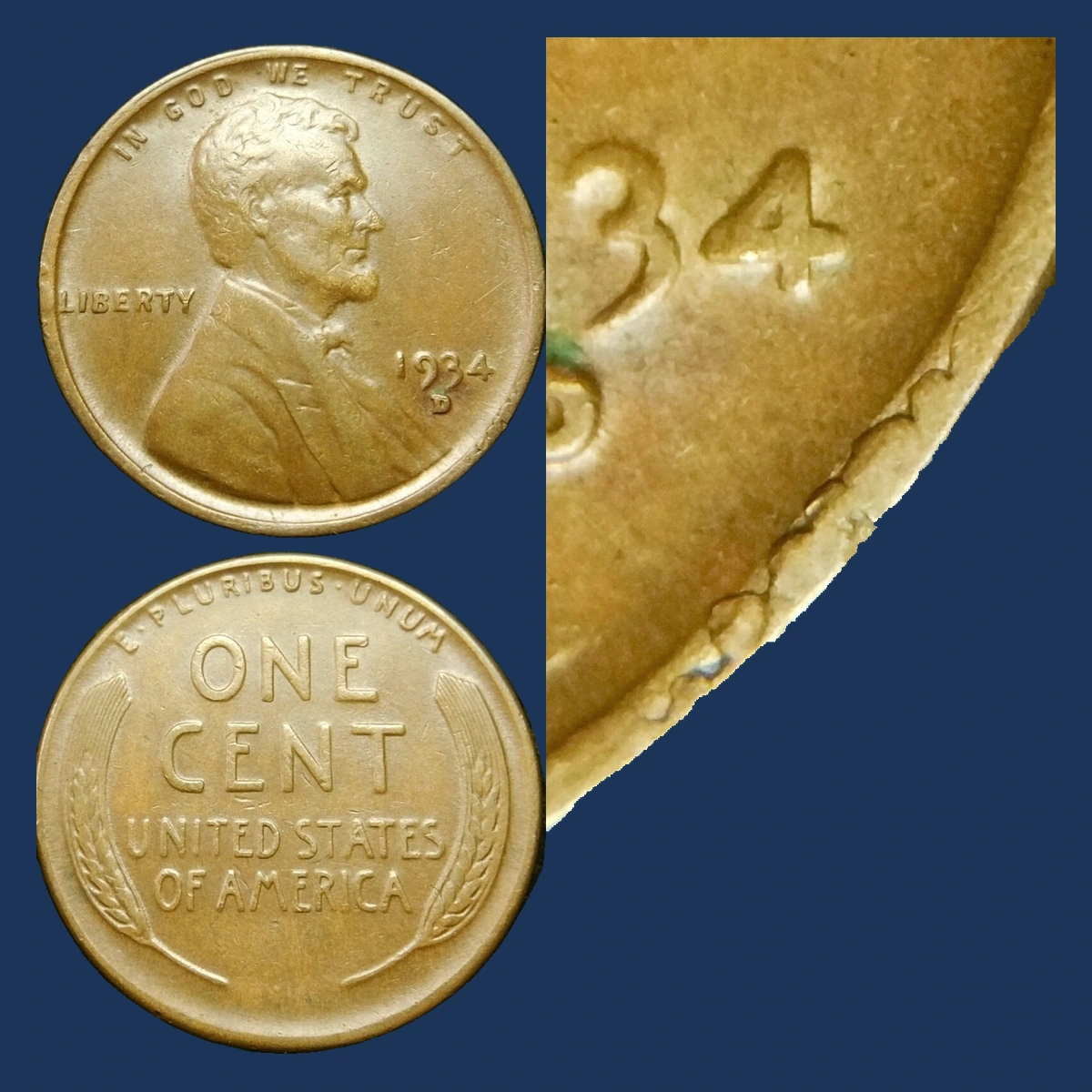
A steel stamping tool is called a die. When it cracks, copper entering the opening can leave a raised line on the coin.
If a piece breaks away at the edge, a raised patch called a cud replaces part of the design. A broken section that stays in place can still stamp some detail, producing a retained break.
Philadelphia and Denver have several recorded 1934 rim breaks and earlier crack stages. Each has its own boundary.
Small BIE chips instead form a bar between B and E in LIBERTY. Their size and appearance differ from a large rim failure.
Estimated Value
Small cracks and BIE chips fit an estimated $3–$50. For larger genuine rim breaks, estimate roughly $40–$750, depending on the visible patch and condition.
A 1934 major-break example graded ANACS F12 sold for $41 in August 2021. F12 indicates substantial circulation wear, which limits comparison with a sharper unworn coin.
An earlier crack, a retained section, and a fully missing piece are stages to identify, not separate maximum prices to add together.
How to Identify
For a large patch, establish whether it touches the rim and whether normal design remains inside it. At 10×, surviving letters within a shifted area can support a retained break rather than complete tool loss.
A thin raised line joining two rim points may show an earlier crack stage. It should not be described as a whole piece already missing from the tool.
Inspect the plain edge for squeezing or added material. A scale and calipers can compare accessible measurements with 3.11 grams and 19.05 millimeters.
If the feature is a small letter-gap bar instead, read LIBERTY across it. The B-to-E position identifies a BIE more usefully than a broad comparison with large cuds.
7. 1934 Lincoln Penny Repunched Denver Mintmark (Estimated Up to $1,500)
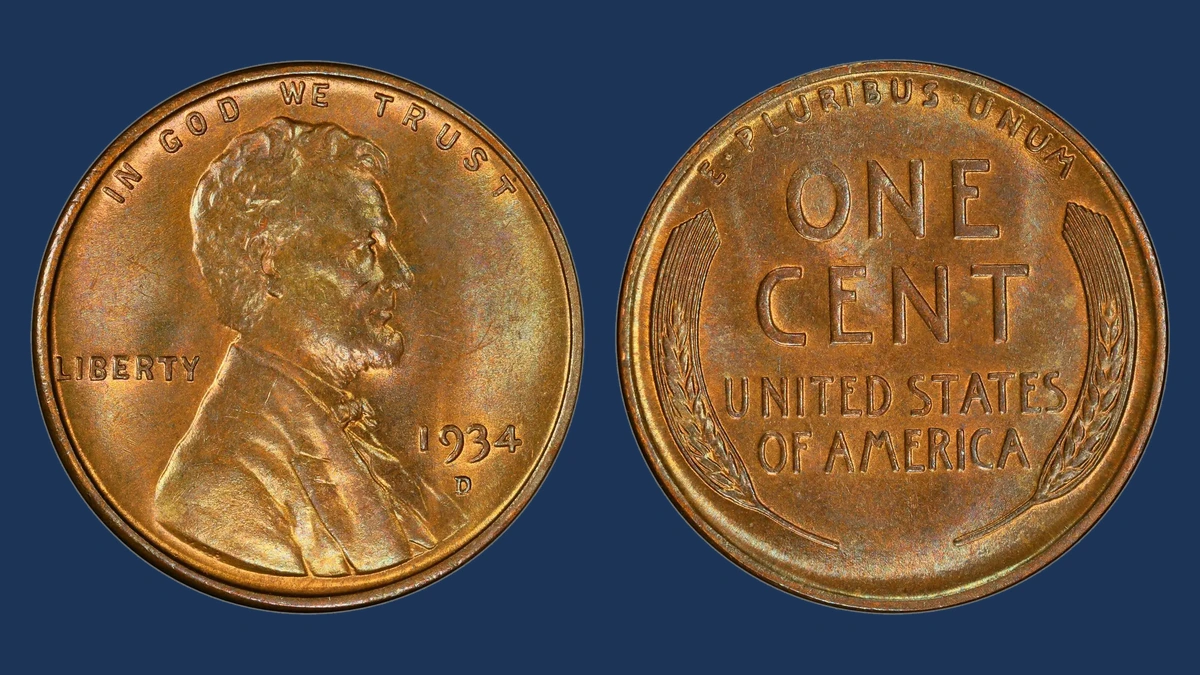
An earlier D can leave its upright or curved side visible within the final mintmark. Workers punched the letter into the stamping tool by hand, sometimes in several positions.
Denver’s FS-504 can show nearly a complete earlier D inside and above the main letter. Other varieties shift the earlier outline left or downward.
FS-503 has several earlier punch positions, with more traces visible on early coins. Tool wear can leave only a weaker lower remnant later.
The different positions describe how the letter was added to the tool. They do not count separate blows received by the coin.
Estimated Value
Estimate $5–$250 for modest matched Denver repunches and up to roughly $1,500 for stronger named varieties in excellent condition. Clear leftover letter strokes support better comparisons than an unexplained thick D.
The estimates follow collectible Wheat-cent repunches rather than assigning one auction result to every 1934 tool. Original color, wear, and the particular variety all contribute.
An early sharp pattern and its later worn-tool appearance should be compared as different visible conditions of the same variety.
How to Identify
Keep the date upright and locate the D before choosing a catalog photograph. Under a 10× magnifier, trace an extra upright or curved side as part of an earlier letter.
For FS-504, inspect inside and above the main D. For FS-503, compare early and later examples because some of its multiple punch traces fade as the tool wears.
A scale and calipers establish the usual 3.11-gram and 19.05-millimeter checks on a loose coin, while the plain edge and letter base should show no added metal. When two varieties both shift left, compare the D’s position beneath the date and the smaller nearby marks instead of relying on direction alone.
8. 1934 Lincoln Penny Doubled Die (Estimated Up to $2,500)
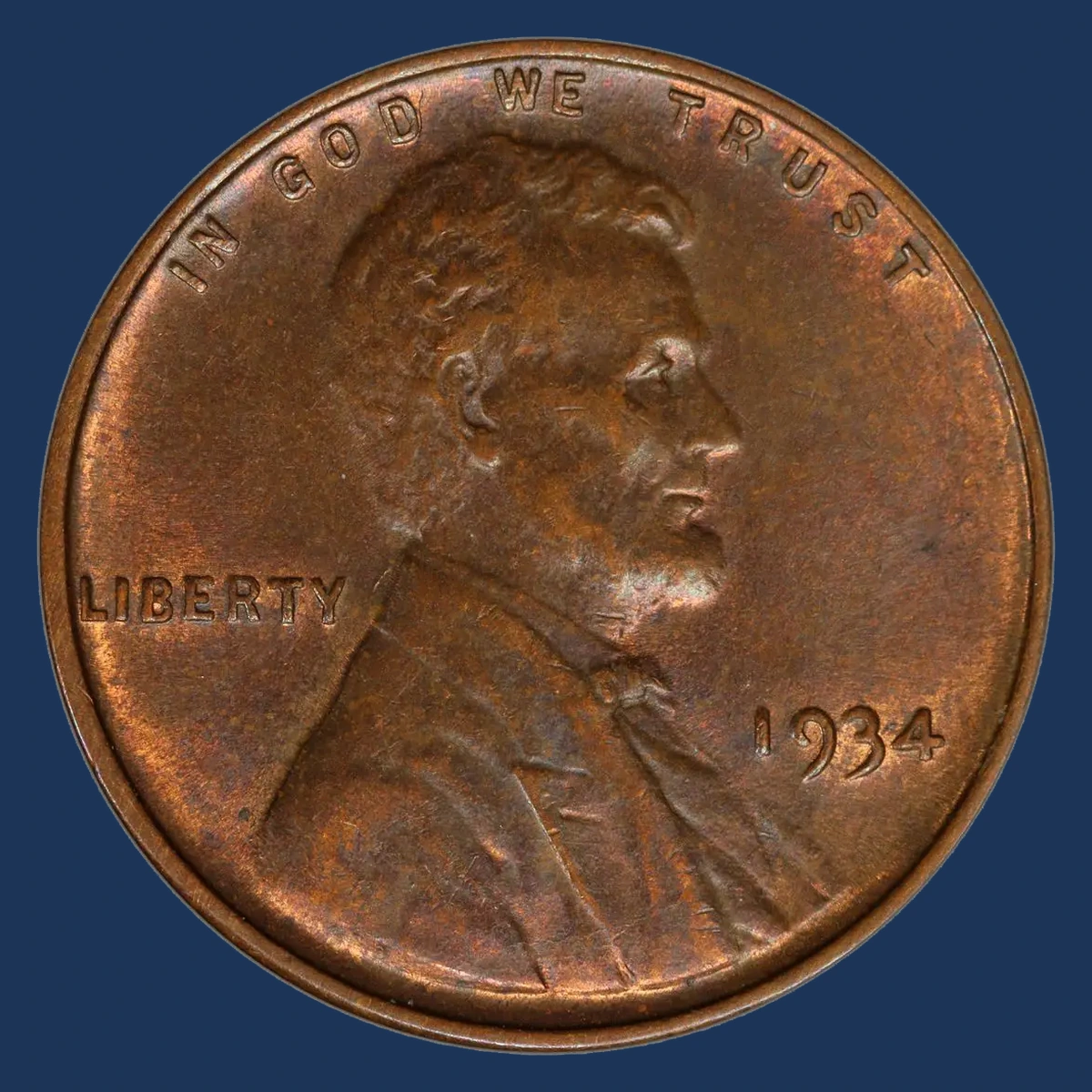
Philadelphia FS-101 has faint earlier date shapes displaced toward the lower right. Their spacing can be wide even though the repeated impression is shallow.
Denver’s FS-101 is a different variety, known for thickening that is strongest in the date. The shared catalog number does not make their designs identical.
A doubled die carries the repeated design before striking coins. Other 1934 tools affect an eyelid, motto, or Wheat detail on the back.
The front and back forms belong in the same general category, but each needs its own match. A thick letter alone cannot choose the variety.
Estimated Value
For minor matched doubled designs, use an estimated $5–$250. Clear named examples with stronger preservation can range around $100–$2,500.
A Philadelphia FS-101 graded PCGS VF35 brought $129 in July 2015. The grade describes a circulated coin retaining considerable design detail.
That sale provides a modest same-year comparison, rather than a price for every doubled date or back. A better-preserved Denver coin and a small Philadelphia eyelid variety need separate assessments.
How to Identify
Find the mint identity before comparing FS-101 photographs. Philadelphia has no mintmark, while Denver’s D lies below the date.
Use a 10× magnifier and low light to look for Philadelphia’s shallow lower-right date remnants. On Denver’s named form, compare the thickened date with a normal Denver coin at the same scale.
For an eyelid or back variety, choose its own photographed detail instead. A date match cannot establish a separate Wheat-stem pattern.
The normal standards are 3.11 grams, 19.05 millimeters, and a plain edge, checked with a scale and calipers when safe.
Keep the coin and the correct mint’s reference image at the same magnification. Align several repeated details point by point, changing the light to exclude shadows.
9. 1934 Lincoln Penny Off-Center Strike (Estimated Up to $2,500)
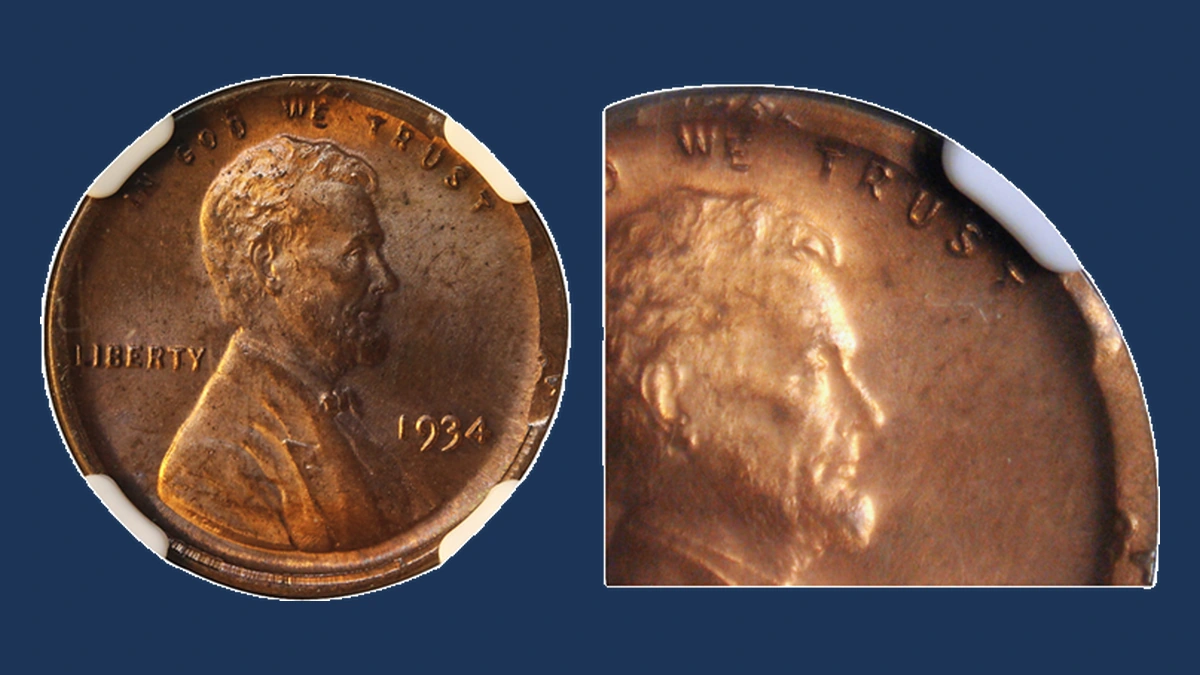
A shifted blank receives only part of the intended design, leaving unused metal elsewhere. Different 1934 examples preserve different amounts of portrait, lettering, and date.
One coin is recorded 20% off center toward twelve o’clock, while an older example is 25% toward eight. Another has a much stronger 55% shift toward twelve.
A separate worn example is described as 10% off center without a fixed direction supplied here. These are individual coins, not stages of one repeated strike.
A plain crescent remains part of the blank. It should not be mistaken for metal that has been clipped away.
Estimated Value
The 20% ANACS XF40 example brought $79 in March 2025, while a 55% PCGS MS64 Brown coin sold for $576 in September 2019. The first has visible wear; the second is unworn with some marks.
Estimate $40–$2,500 across genuine dated off-center examples, considering displacement and surface quality. These two results do not make percentage the only factor.
The surviving date and original unused metal remain central to a useful comparison.
How to Identify
Read the date on the actual coin rather than filling in digits from the listing. A large shift can remove part of the year along with the outer motto.
Then place both face photographs together and check whether their incomplete designs fit the same blank position. One shifted face with a centered opposite face can have another cause.
Weigh against 3.11 grams and record the outline with calipers against 19.05 millimeters when accessible. An off-center strike can change shape without removing metal.
Through a 10× magnifier, inspect the plain edge and unused crescent for grinding. Keep each recorded percentage and clock position attached to its own specimen.
10. 1934 Lincoln Penny Double Strike (Estimated Up to $4,000)
A second strike can preserve two visible designs or largely erase the first. One Philadelphia 1934 coin has its second blow 15% off center.
An older example has an 85% second strike toward seven o’clock, with incomplete edge-ring contact during both blows. It is a different coin.
A third example began 50% off center, then received a centered broadstrike. That later blow removed most of the earlier design, leaving an outer half-ring of its detail.
The order matters: the centered strike came last on that third coin. An extra rim image does not always mean it was the later impression.
Estimated Value
The 15% second-strike coin, graded PCGS MS64 Brown, sold for $360 in August 2020. Its grade describes an unworn coin with some marks and brown color.
Estimate $200–$4,000 across genuine 1934 double strikes, with the visible sequence, preservation, and unusual combinations affecting value. The 85% and centered-second-strike examples need their own comparisons.
A nearly erased first image can still be important when its remaining details explain how the coin moved between blows.
How to Identify
On the usual overlapping form, trace letters that moved together into a second design position. A 10× magnifier helps show where the later blow covered earlier detail.
For the centered-second-strike example, instead follow the outer half-ring left from the first off-center image. Do not reverse the sequence merely because that outer image is smaller.
Inspect the plain edge for joins or later pressing, then use a scale against 3.11 grams and calipers against 19.05 millimeters when accessible. Two strikes can reshape one blank without adding another coin’s weight, so the surviving design relationship matters more than an unusual outline by itself.
11. 1934 Lincoln Penny Struck on a Silver Dime Blank (Estimated Up to $8,000)
The Lincoln cent design can land on a blank prepared for a different denomination. In this case, the Philadelphia press used silver metal intended for a dime.
A 1934 example has a PCGS VF30 grade, meaning a worn coin with clear remaining detail. It still carries the cent design rather than the ordinary Mercury dime design.
A silver dime blank begins smaller and lighter than a normal cent blank. Striking can spread it and leave some outer details weak or incomplete.
Silver-colored plating can imitate the appearance, but it does not change the original bronze into a silver dime blank.
Estimated Value
The PCGS VF30 silver-blank cent sold for $4,080 in September 2024. The recorded result concerns a worn but identified wrong-blank coin.
Estimate $2,000–$8,000 for comparable authenticated 1934 examples, with the actual grade and surfaces guiding comparison. A sharper coin can differ greatly from one with scratches or cleaning.
The price is for the whole error cent. A normal 1934 Mercury dime or a plated penny does not share that identity.
How to Identify
Check that the design is Lincoln’s cent before interpreting the silver color. A genuine Mercury dime of the same date belongs to another coin type.
Use a precise scale and calipers on an accessible coin. A silver dime blank’s standards are 2.50 grams and 17.91 millimeters, compared with a cent’s 3.11 grams and 19.05 millimeters.
Those figures describe the normal blanks, not a newly measured weight for every error specimen. Metal can spread beyond its starting diameter during the cent strike.
Inspect the plain edge at 10× for coating or filing, and use professional nondestructive metal testing to distinguish silver alloy from plated bronze before comparing prices.
Conclusion
Peeling metal, an opened blank, and a cracked stamping tool can all produce lines, but those lines tell different stories. Start by checking whether the feature is a separating layer, a deeper opening, or a raised mark copied from the tool.
Estimated values span $3–$8,000, including ordinary small varieties and the $4,080 silver-blank sale. Preserve fragile metal and compare the whole coin, including any cleaning or other surface damage.