1946 Penny Error List with Pictures

An S hiding traces of a D helped one 1946 penny sell for $3,172.50 in September 2019. Its excellent condition mattered, but the small mintmark was the feature that made it a named variety.
The 1946 penny error list below also covers peeling copper, missing edges, and a cent struck on silver. Estimated values range from $5 to $6,000.
Start with the visible feature and follow the checks for that particular error.
1. 1946 Lincoln Penny Repunched Mintmark (Estimated Up to $200)
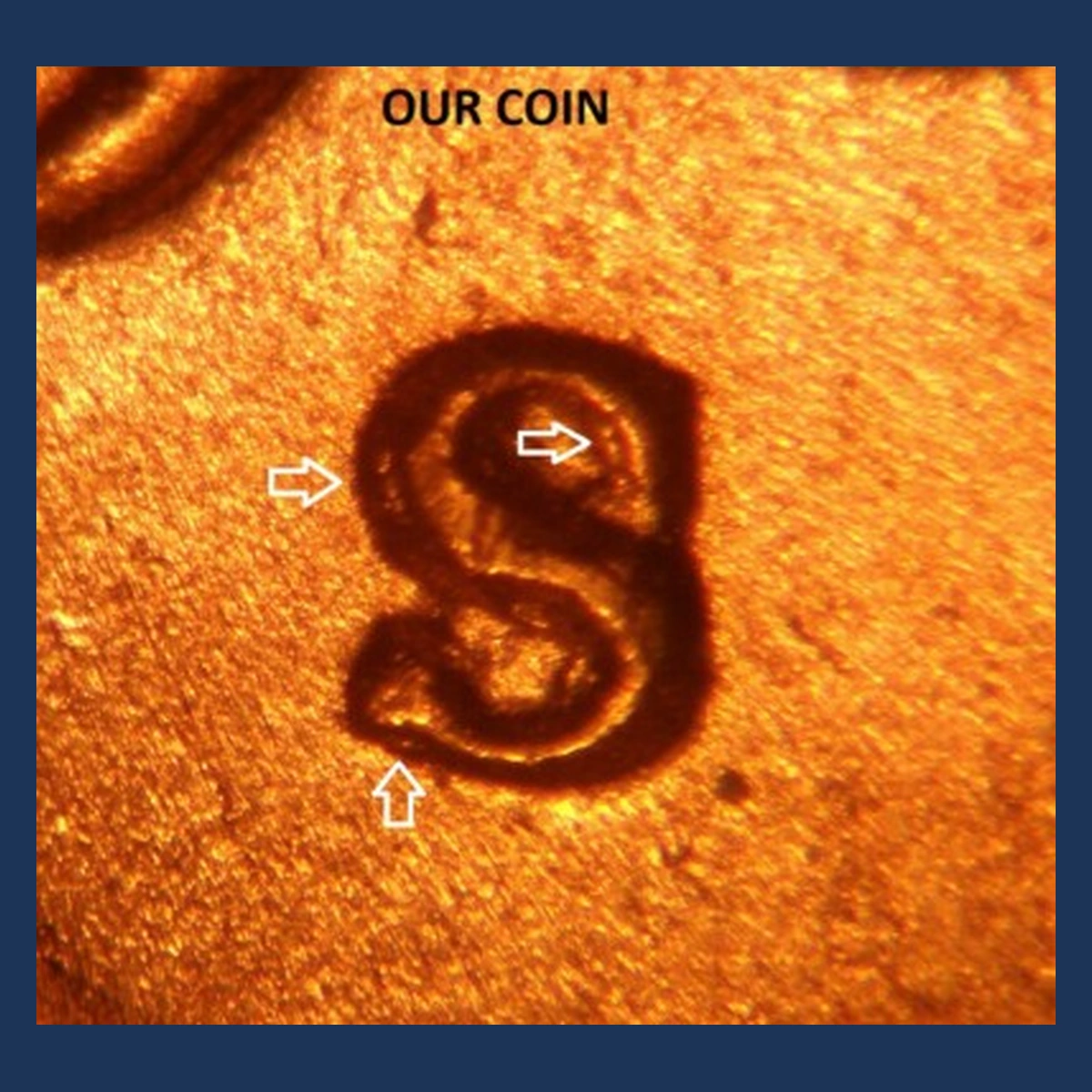
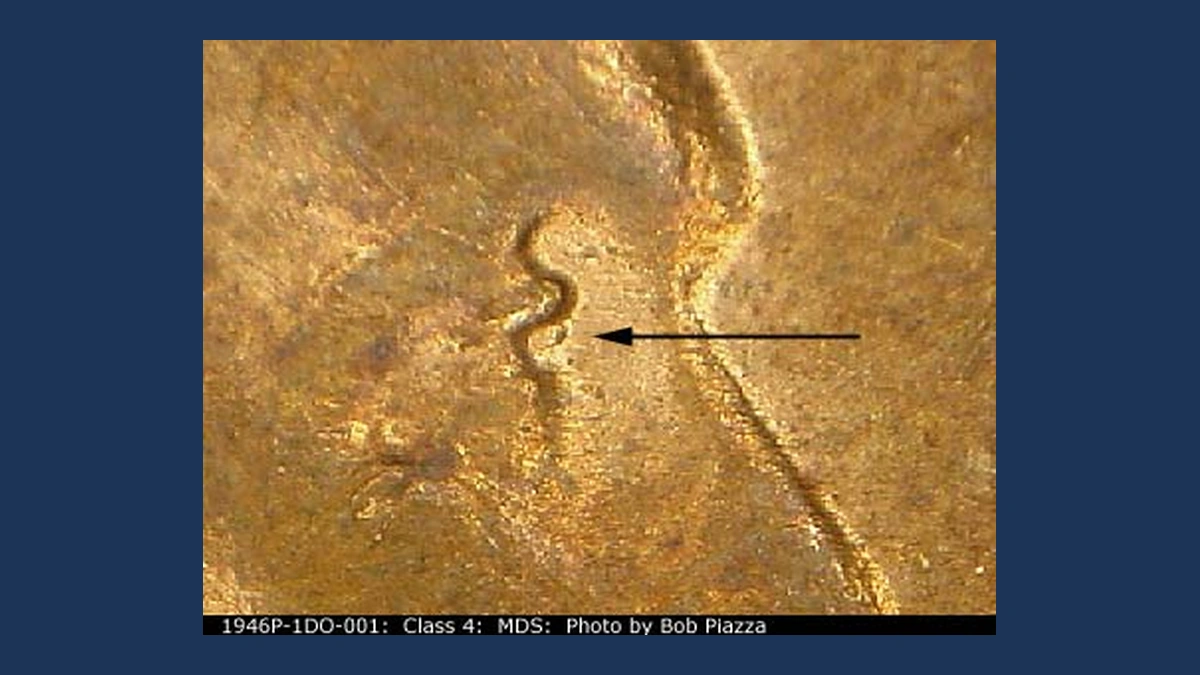
Two traces of the same mint letter can survive below the date. Workers punched the D or S into the stamping tool by hand, and repeated blows could land in slightly different positions.
The tool then copied those overlapping strokes onto coins. Collectors call this a repunched mintmark.
Both Denver and San Francisco repunches are reported for 1946. One published S example has the earlier impression above the main letter.
That San Francisco coin also has a doubled back design. The extra S and the back’s repeated detail have different causes, even though both appear on one penny.
Estimated Value
For modest identified repunches, estimate $5–$200. A clear extra letter stroke on an attractive coin offers more to examine than a faint bump lost in wear.
This range compares minor Wheat-cent mintmark varieties. It does not assign the much higher S-over-D price to an ordinary S-over-S.
The published coin that also has a doubled back needs one whole-coin assessment. Its two features do not automatically add two maximum estimates together.
How to Identify
Identify the main letter, then select photographs of that same mintmark variety. For the published S-over-S example, examine the area above the S through a 10× magnifier.
A leftover S curve should fit an earlier position of that letter. The D-over-D forms require their own comparison rather than the same upper-S clue.
A scale and calipers can check the basic 3.11-gram weight and 19.05-millimeter diameter on a loose coin. Inspect its plain edge and the mintmark’s base for added metal.
Keep the date upright as you align the two close-ups. A thick patch inside a letter may come from a chipped tool, so follow its shape before calling it another punch impression.
2. 1946 Lincoln Penny Lamination and a Folded Flap (Estimated Up to $300)
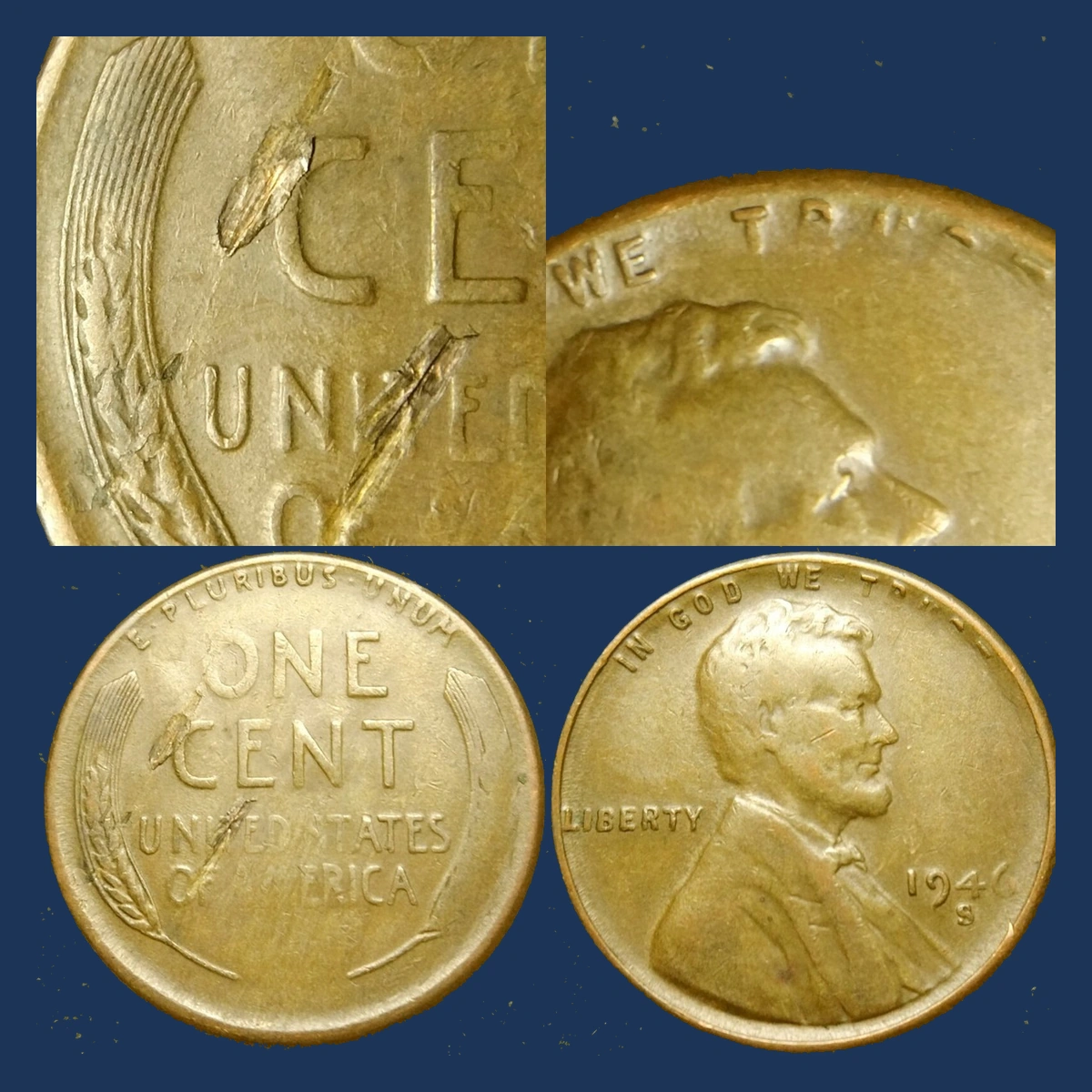
A thin sheet of copper alloy can loosen and fold across the surface. If it lies there during striking, the press may impress the design into the folded layer.
A collector reports this sequence on a 1946-S penny, with weak back detail opposite the affected area. The loose layer remains part of that coin’s own metal.
Other records include an unworn San Francisco lamination graded ANACS MS65 Red and Brown. A Philadelphia coin instead shows severe peeling across the front.
These are layers separating within solid alloy, rather than copper plating peeling from zinc.
Estimated Value
Estimate $5–$100 for modest peeling and $50–$300 for a clearly preserved, struck folded flap. The natural connection and surviving design help explain the stronger feature.
A 1941-S retained back lamination graded PCGS MS66 Red sold for $69 in April 2020. That other-year sale is a comparison for an attached layer.
It does not establish the price of the 1946 folded piece, which needs its own condition and striking evidence assessed.
How to Identify
Leave a flap in place and photograph it from the side. A 10× magnifier can show where the thin layer still joins the original surface without lifting it.
For the reported folded example, compare the impression on the flap with the surrounding design, then inspect the corresponding area on the back. Weakness there may support the reported striking sequence, but should not be expected on every lamination.
Use a scale against 3.11 grams only when handling is safe; avoid catching the flap with calipers while comparing width with 19.05 millimeters. Inspect the plain edge where the seam reaches it, and check for prying or cuts that would suggest the layer was moved later.
3. 1946 Lincoln Penny Clipped Blank (Estimated Up to $350)
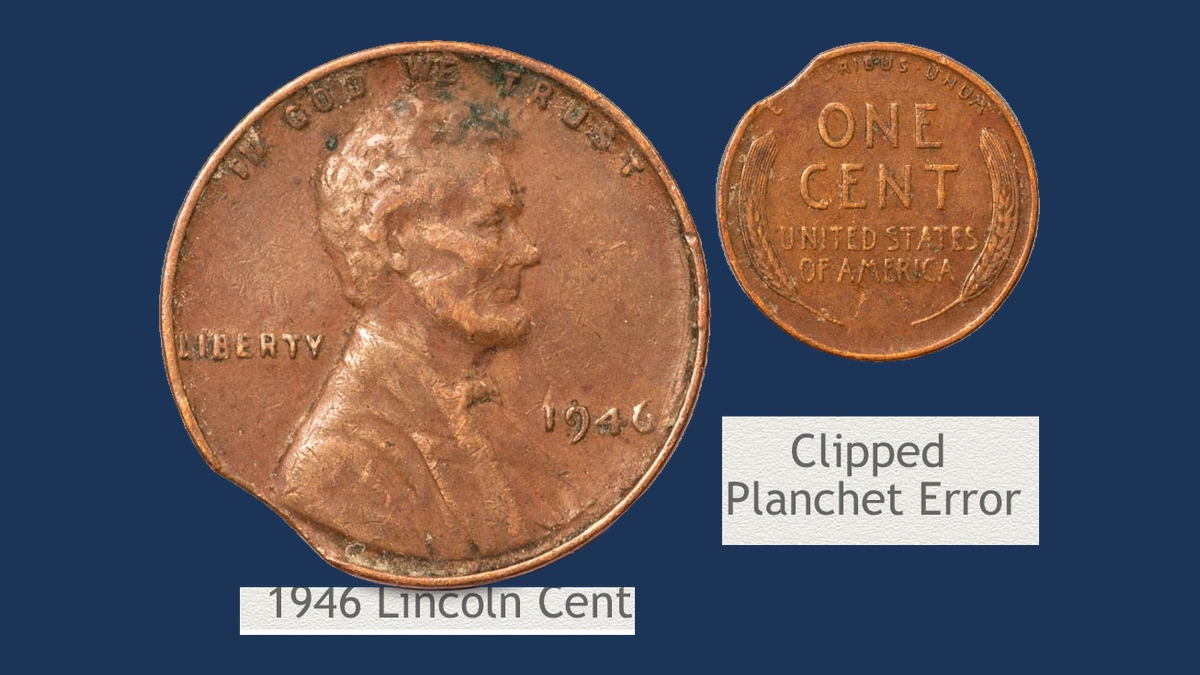
A notch can be present before the penny receives its portrait and lettering. The incomplete blank still passes into the press, which stamps the metal that remains.
A 1946-S example has a clip near six o’clock and an NGC MS66 Red grade. That grade describes an unworn coin with few marks and original red copper color.
An older catalog separately records a Philadelphia cent with a 5% curved clip. Its amount and shape should not be assigned to the San Francisco example.
Later cutting can imitate a missing segment, but disturbs an edge and design that were already finished.
Estimated Value
An estimated $15–$350 covers genuine clips with different size and preservation. A modest worn gap belongs below an attractive unworn example with a clear original boundary.
A 1953-D curved clip weighing 2.68 grams brought $51 in March 2022. It provides a nearby-year comparison, not a weight or sale result for either 1946 coin.
The six-o’clock location and the 5% figure belong to different records, so keep them separate when comparing prices.
How to Identify
For the San Francisco coin, start at the bottom of the outline with the date upright. The recorded clip is located near six o’clock.
Check each end of the gap through a 10× magnifier. The nearby rim and letters should fit a blank that was already incomplete, rather than a saw cut through completed detail.
Weigh the accessible coin against 3.11 grams and measure an intact span against 19.05 millimeters with calipers. The stated Philadelphia 5% clip does not supply a weight for the S specimen.
Examine the surviving plain edge for filing and look across the gap for possible rim weakness. That opposite-rim clue can help, but does not establish a genuine clip by itself.
4. 1946 Lincoln Penny Doubled Die (Estimated Up to $400)
Extra letter edges or Wheat details can be built into a stamping tool before it makes a coin. This is a doubled die, with die meaning the steel tool that carries the design.
Front and back varieties are reported for Philadelphia, Denver, and San Francisco. Each mint has its own repeated details to compare.
A described San Francisco back shows doubling toward the center around the upper Wheat ears, E PLURIBUS UNUM, and its dots. The same coin has an S-over-S mintmark.
That mintmark feature does not identify every doubled-back penny.
Estimated Value
Minor matched 1946 doubled designs can fit an estimated $5–$200. Stronger, clearly identified examples with excellent preservation may extend toward $400.
The estimates compare modest Wheat-cent tool varieties rather than quoting a transaction for every mint and face. A 1936 FS-103 doubled-front coin graded MS63 Brown brought $70 in June 2024, as a different-year comparison.
Choose the actual repeated design before choosing a price; general thick lettering is not enough.
How to Identify
Keep the full date and mintmark visible in your first photograph. A Philadelphia front comparison cannot establish the doubled details on a San Francisco back.
For the described S back, examine the tops of the Wheat ears and E PLURIBUS UNUM at 10×. Compare the inward extra shapes around both the letters and the small dots.
For a front variety, use its own date, motto, or portrait close-ups instead. A flat shelf caused during striking differs from a repeated raised design already present in the tool.
Normal coin checks are about 3.11 grams and 19.05 millimeters with a scale and calipers, plus a plain-edge inspection. Return to several matching features in the same reference image before assigning the variety.
5. 1946 Lincoln Penny Broadstrike (Estimated Up to $450)
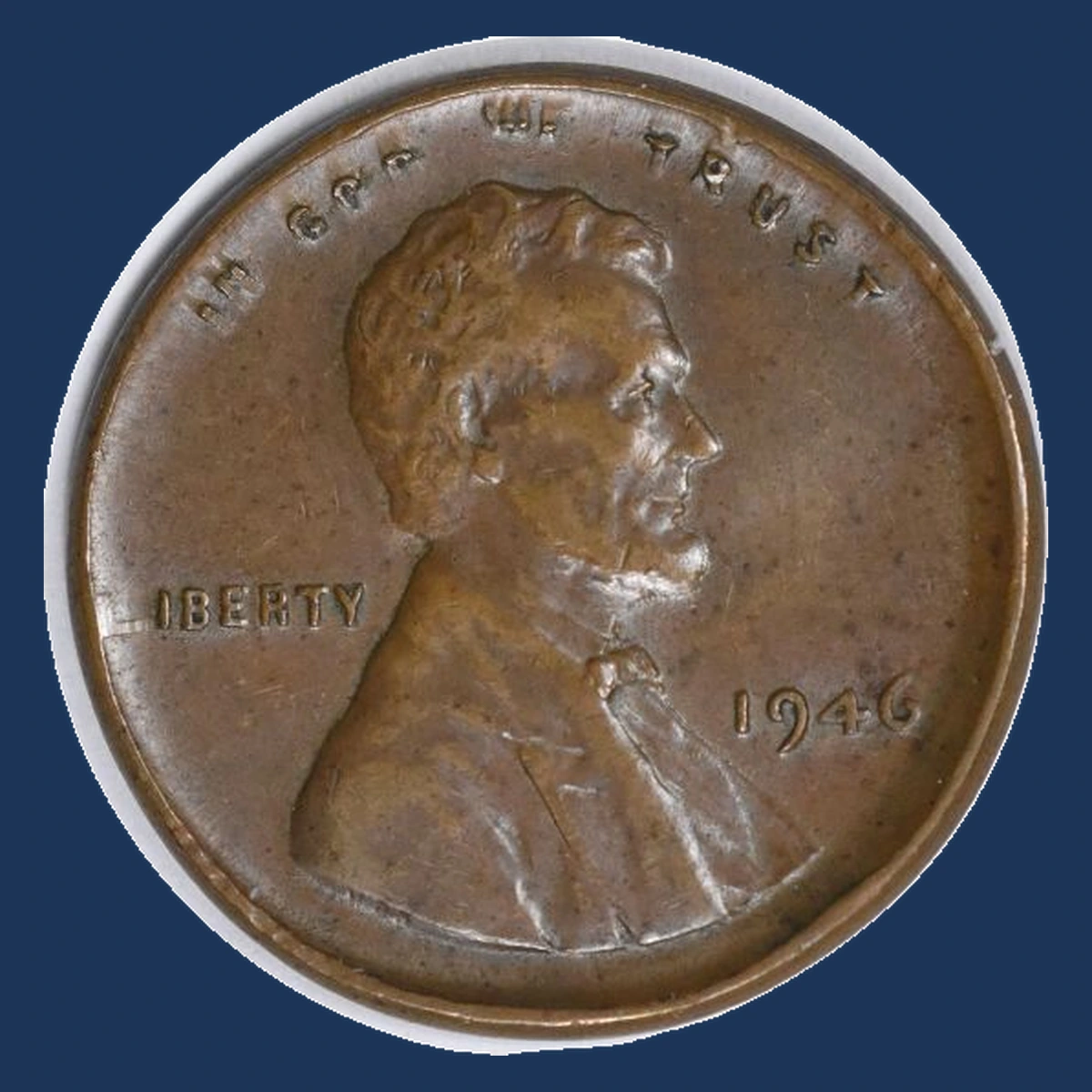
A penny can spread outward when the collar, the ring controlling its edge, fails to contain the blank. The resulting broadstrike has an expanded outline around the design.
Philadelphia and San Francisco examples are recorded for 1946. One San Francisco piece has a PCGS label describing unworn detail with cleaning.
That label separates its surviving design from a later surface problem. Cleaning is not part of the broadstriking process.
The complete intended design should remain on the metal even if the expanded border is uneven. If part of the design falls beyond the blank, off-center striking needs consideration.
Estimated Value
The cleaned San Francisco broadstrike is recorded at $29 in February 2024 in PCGS auction data. Its unworn detail did not erase the condition problem.
Estimate $25–$450 for genuine 1946 broadstrikes with differing spread and preservation. An original, well-preserved example can be a stronger comparison than a cleaned one.
The Philadelphia report has its own condition history; the San Francisco price should not be treated as its transaction.
How to Identify
Use calipers to record both the widest and narrowest spans, comparing them with the regular 19.05-millimeter cent. A scale should remain near 3.11 grams if the full blank is present.
Then follow the outer lettering on each face. A complete design inside a widened border supports broadstriking; missing portions beyond the blank require checking a displaced strike.
Inspect the plain edge under a 10× magnifier for a join or added ring. Hammering a finished cent may widen it while crushing already formed detail.
Finally, look across the surfaces under moving light. Cleaning lines affect condition even when the expanded shape is genuine, so record them separately from the mint error.
6. 1946 Lincoln Penny Inverted S Mintmark (Estimated Up to $800)
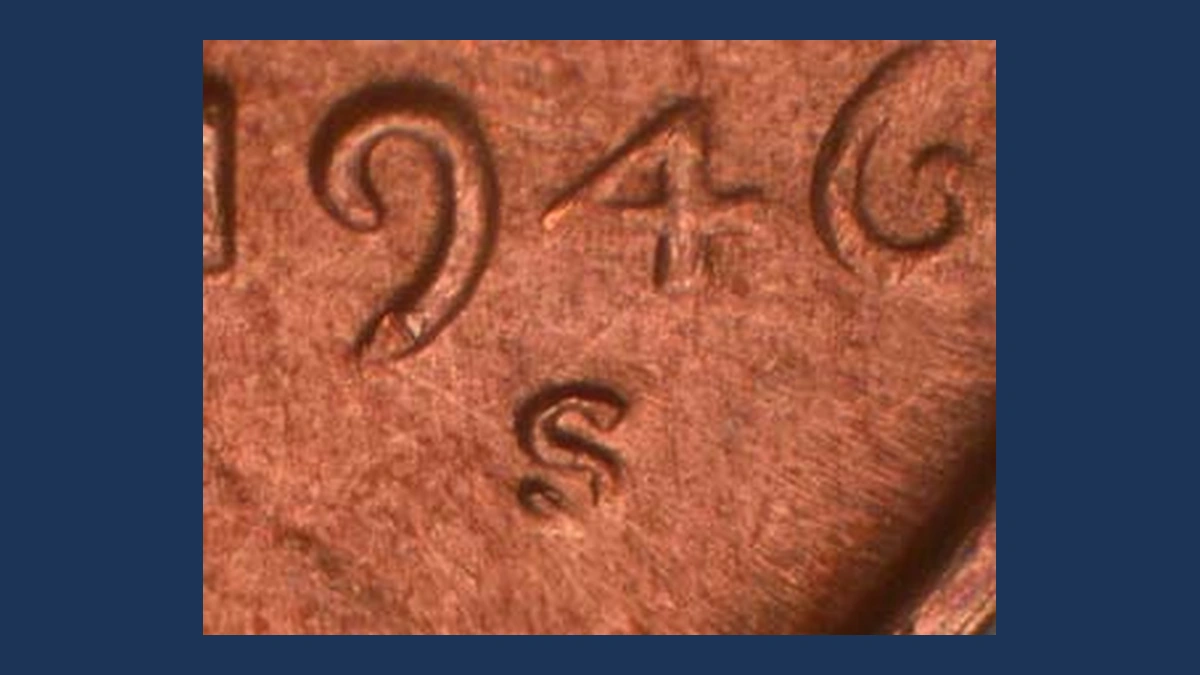
An upside-down S may still look like an S until its two ends are compared. The punch was placed upside down when the stamping tool received its mint letter.
The identified 1946-S form uses the Ball Serif S style. On the normal version, its top end is rounded and its bottom end is flatter.
Inversion reverses those positions. The error does not require a second S impression alongside the first.
Other normal S shapes were used that year, including a trumpet-like lower end. Those different styles should not be called inverted simply because they differ from one comparison coin.
Estimated Value
Use an estimated $50–$800 for correctly identified inverted-S examples. Clear letter ends and strong preservation make the orientation easier to demonstrate.
PCGS records a brown MS62 example at $179 in July 2019. MS62 describes an unworn coin with noticeable marks; this result offers context for a modest preserved specimen.
The range does not apply to a normal alternative S style. Match the upside-down Ball Serif form before paying a variety premium.
How to Identify
Place a normal Ball Serif S beside the candidate’s enlarged mintmark. The Wexler comparison shows why the two ends matter more than the overall S outline.
Under a 10× magnifier, locate the rounded end and the flatter end. An inverted example exchanges their normal top and bottom positions.
Do not rotate the photograph until it seems to match. Keep the date upright throughout the comparison.
A loose cent should compare with 3.11 grams and 19.05 millimeters on a scale and calipers, with a plain edge. Check the mintmark’s surface for damage that could reshape an end.
A trumpet-ended normal S needs its own reference picture, so identify the underlying letter style before deciding its orientation.
7. 1946 Lincoln Penny Reported Off-Center Strike (Estimated Up to $800)
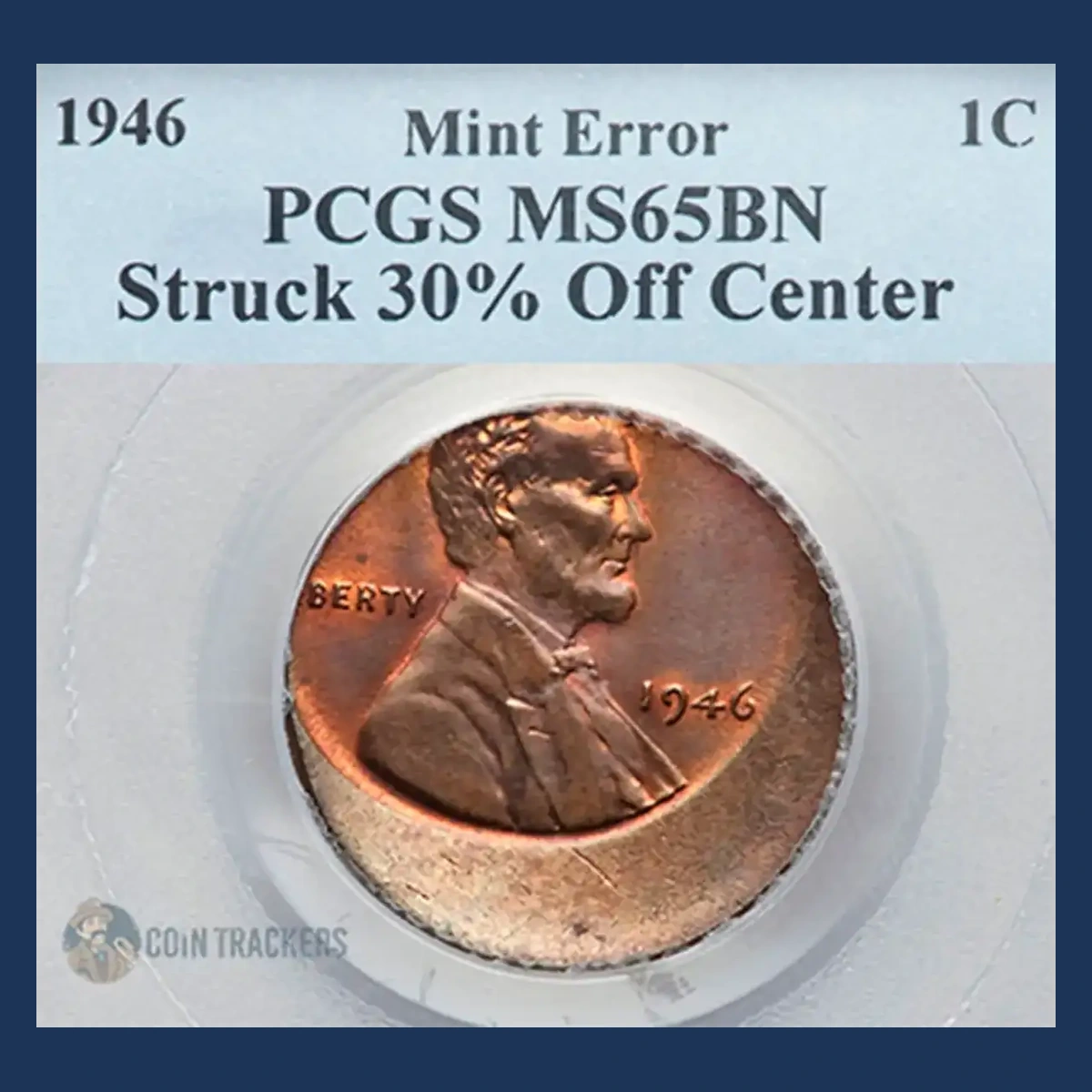
A smooth crescent beside a partial design can show that the blank sat too far to one side in the press. Some of the intended image missed the metal entirely.
Off-center striking appears in the year-specific 1946 error reports. Those reports do not establish one mint, percentage, or direction for every example.
The blank may still be complete even though its design is not. This distinguishes unused metal from metal missing through a clip.
A readable 1946 date is needed to assign a particular coin to this year. A similar undated Wheat cent cannot supply that identity.
Estimated Value
For a genuine dated 1946 off-center cent, estimate $25–$800. A readable date, original blank surface, and clear displacement help buyers compare it.
A 1950-D 35% example brought $192 in October 2021, while a separate 65% example brought $264 in July 2022. Both were graded MS63 Brown, describing unworn coins with marks.
Those nearby-year sales supply comparisons, not percentages or sale amounts for the general 1946 report.
How to Identify
Look for the full date before measuring how far the design moved. Missing date digits can prevent an otherwise genuine off-center coin from being assigned to 1946.
Use a scale to record weight against the normal 3.11 grams. Calipers can compare the complete outline with a 19.05-millimeter cent, while the plain crescent may remain original blank metal.
Photograph both faces at matching size. If only one design shifts and the other remains centered, compare tool misalignment rather than assuming the whole blank moved.
Inspect the unused area and plain edge at 10× for grinding or cuts. Then trace where each face’s design ends to see whether both fit the same displaced blank.
8. 1946 Lincoln Penny Struck Through Material or Another Blank (Estimated Up to $1,000)
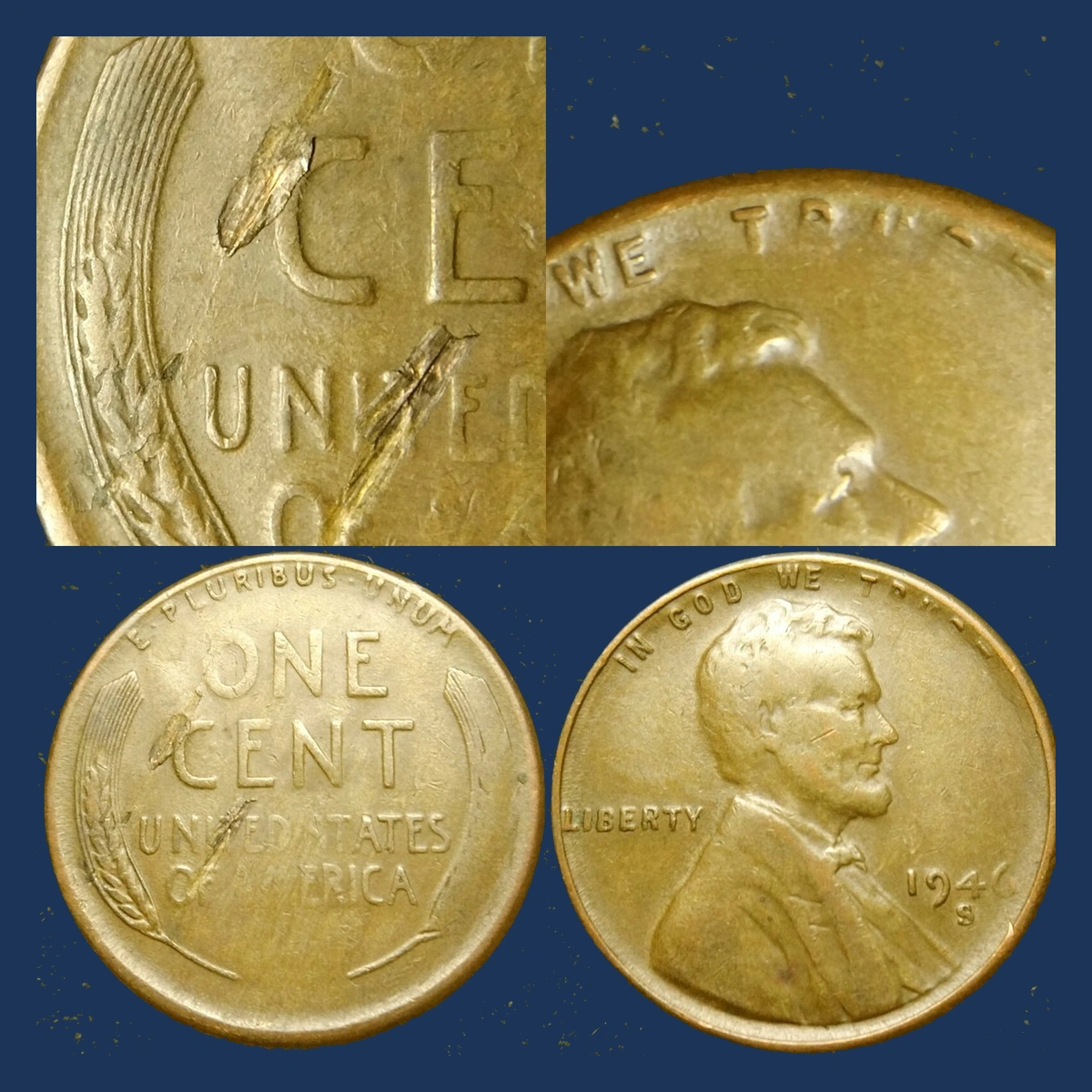
An overlapping blank can block a broad part of the coin’s design and leave a recessed impression. The upper blank presses into the lower one as the tools close.
An older catalog describes this on the right side of a 1946 Philadelphia front. The effect is often called an indent.
A separate 1946-S auction record describes a back-side struck-through error without identifying the material. That could leave a different shape and should not inherit the Philadelphia blank’s outline.
Both involve something interrupting the strike. Neither description establishes that an object remains attached to the finished penny.
Estimated Value
Estimate $15–$200 for modest struck-through marks and $75–$1,000 for a substantial, clearly identified blank indent. Visibility and preservation influence both ranges.
A 1964 broadstrike with a 7% indent sold for $54 in March 2025. That later small combination is a related comparison, not the sale of either reported 1946 coin.
The upper estimate requires a convincing original overlap impression rather than a deep dent created afterward.
How to Identify
The Philadelphia report concerns a broad area on the front’s right side. Compare its curved boundary with the shape of a blank rather than looking for a thin scratch.
At 10×, inspect how nearby letters meet the depression. A later impact can push up a sharp lip or cut across already completed design.
Turn to the back only when comparing the separate San Francisco record. Its description does not supply an object or exact position, so photograph the actual interruption before naming the material.
Use a scale and calipers against 3.11 grams and 19.05 millimeters, and inspect the plain edge for separate damage. Leave anything still attached in place instead of removing it to reveal the impression.
9. 1946 Lincoln Penny S over D Mintmark (Estimated Up to $4,000)
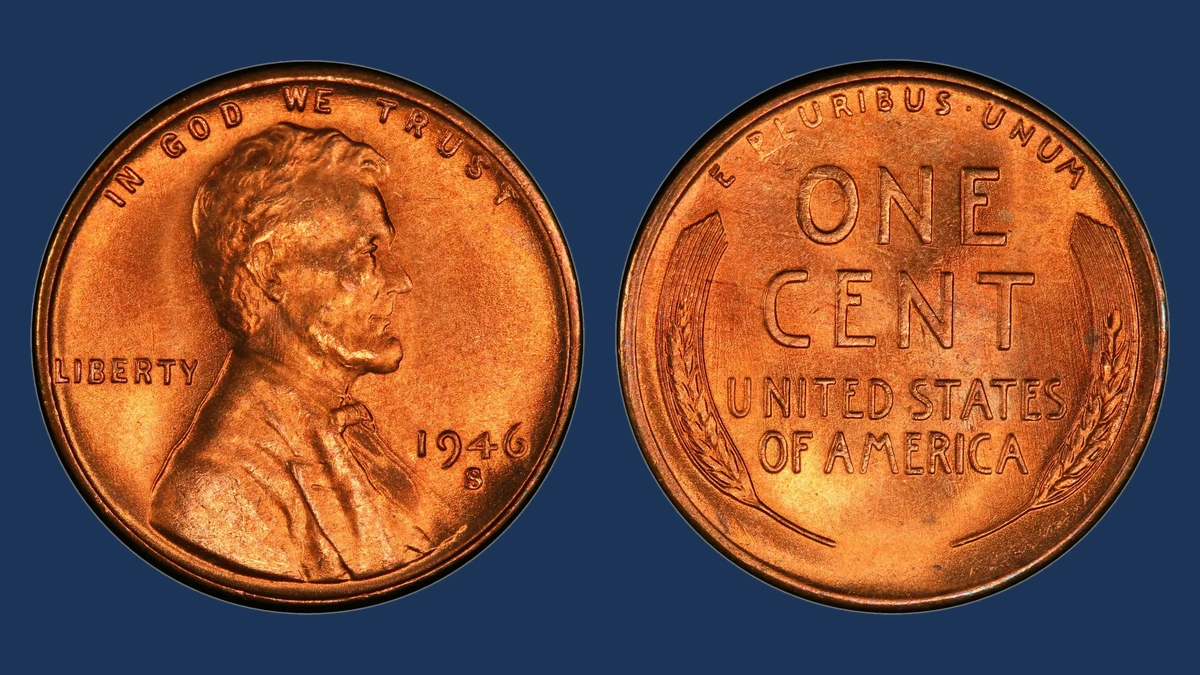
This small letter records two different mint letters on the same stamping tool. An S was punched over an earlier D, leaving parts of the D visible.
The variety is known as 1946-S/D, commonly cataloged as FS-511. The visible main letter is S, so reversing the label would describe a different arrangement.
The earlier D can leave strokes inside the S loops, including an upright in the lower opening. These shapes differ from another curved S impression.
The overlapping letters originated on the tool. They do not mean the finished penny traveled through two mints to receive separate strikes.
Estimated Value
An exceptional MS66+ Red example brought $3,172.50 in September 2019, as recorded in PCGS auction data. Its grade describes an unworn coin with unusually strong preservation and red copper color.
Estimate $50–$1,000 for many identified examples, with outstanding pieces extending toward $4,000. A separate MS65 Red coin brought $350 in January 2023.
Those prices show why the exact variety and condition both matter.
How to Identify
Keep the date upright and find the main S before searching for an earlier letter. Under a 10× magnifier, examine both openings, especially the lower one where the D’s upright can survive.
Compare the strokes with a confirmed FS-511 image. Another rounded S curve is not evidence of a D, and a chip filling an opening may have no letter shape at all.
A scale and calipers can check the normal 3.11 grams and 19.05 millimeters, followed by a plain-edge inspection. Those measurements cannot settle the variety, so return to the mintmark and match the earlier D strokes together rather than accepting one isolated bump.
10. 1946 Lincoln Penny Struck on a Silver Dime Blank (Estimated Up to $6,000)
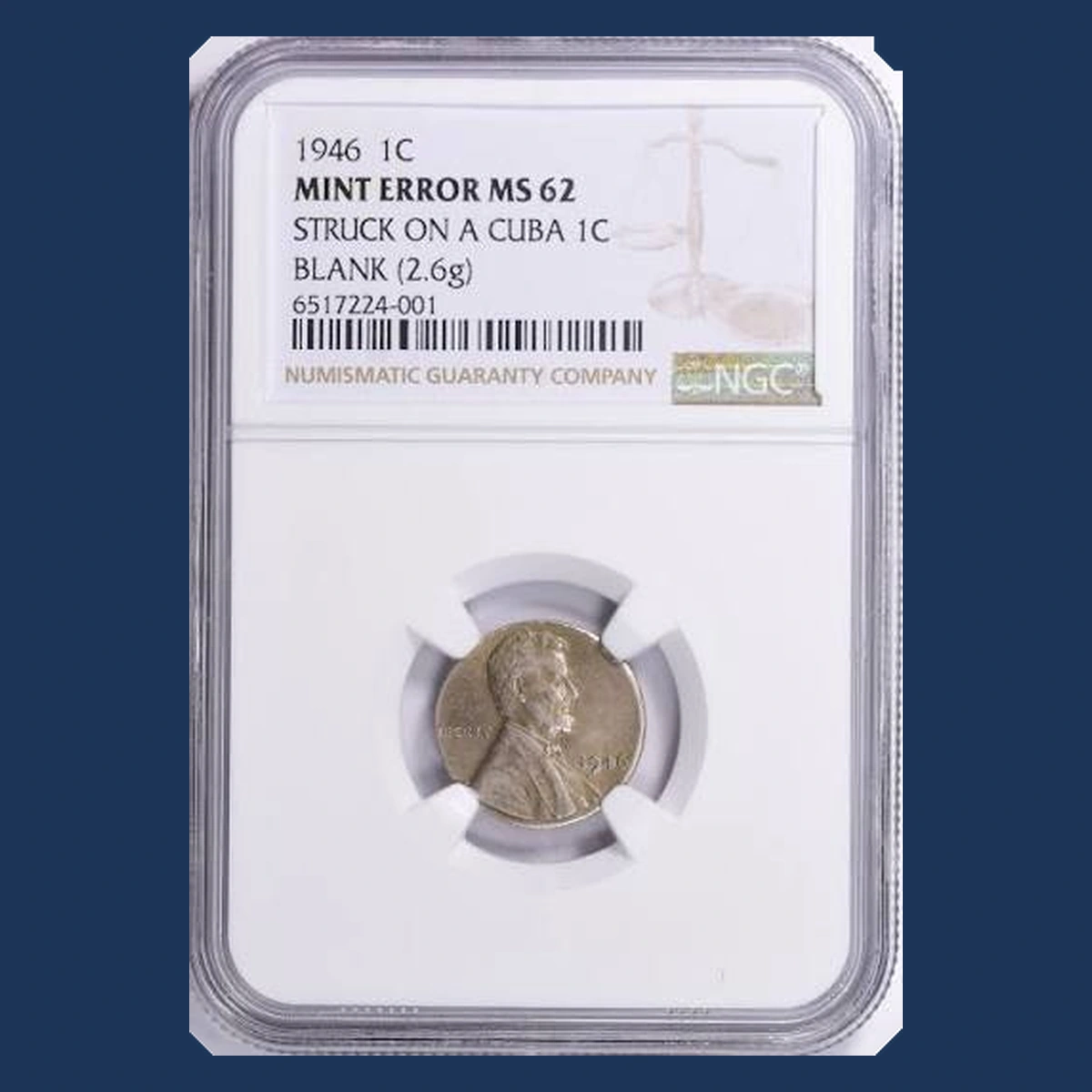
A silver dime blank entered the cent press and received Lincoln’s design. Its smaller size left less room for the penny’s outer lettering and rim.
The documented 1946-D example weighs 2.53 grams and has an ANACS AU50 Details label noting damage. The wear level and the later damage both belong in its description.
A normal dime blank of this period contained 90% silver and 10% copper. It was lighter and smaller than the copper-alloy cent blank.
Silver-colored plating can imitate the color on an ordinary penny, but does not establish the different blank underneath.
Estimated Value
The damaged AU50 Details coin sold for $470 in January 2013. Its condition limits comparison with clean, well-preserved examples.
Use an estimated $400–$6,000 for authenticated 1946-D dime-blank cents across different condition levels. For context, a 1950 Philadelphia MS64 example brought $3,840 in May 2022.
That later unworn coin supports a broader comparison, not a higher assigned sale price for the damaged 1946 piece.
How to Identify
Record the actual weight before deciding that a pale penny is silver. The documented coin weighs 2.53 grams, close to the normal silver dime standard of 2.50 grams and below the cent’s 3.11 grams.
Calipers can compare the struck outline with the dime’s 17.91-millimeter starting size and the cent’s 19.05 millimeters. Spreading during the cent strike means the finished width need not equal an untouched dime blank.
Use a 10× magnifier along the edge to check for coating, then have a specialist confirm the metal and original strike. Keep the date, D, and any later damage in the photographs; a rare blank does not erase surface problems.
Conclusion
Three unusual S marks can require three different explanations: a repeated S, an upside-down S, or an S over an earlier D. Matching the letter’s shape is more useful than simply calling it doubled.
Estimated values extend from $5 to $6,000, including affordable surface flaws and identified silver-blank cents. The $3,172.50 mintmark sale concerns an exceptionally preserved example.
Keep peeling layers attached and compare the complete coin before choosing a price.