1969 Penny Error List with Pictures

Wide, raised doubling helped one 1969-S cent bring $601,875 at GreatCollections in January 2023. It is a very specific pattern, not the value of every doubled-looking penny.
This 1969 penny error list covers that famous coin alongside missing initials, split metal, and misplaced strikes. Estimated values extend from $1–$650,000, with smaller varieties and major errors priced separately.
Explore the visible clues below to see which mistake best explains your coin.
1. 1969 Lincoln Penny Weak Strike (Estimated Up to $30)
Lincoln’s features or parts of the Memorial may look shallow even when the surrounding surface shows little wear. A weak strike leaves the design incompletely formed when the tools press the blank.
The year list reports this appearance without naming a mint or proven cause. Low pressure is possible, but the appearance alone does not establish it.
Wear, tired tools, and material blocking the design can also leave soft detail. Each needs its own comparison.
A weak-looking cent is therefore not automatically a special test piece. Its original surface must support the idea that the detail was never fully struck.
Estimated Value
Many softly struck cents receive little extra attention. For an identified example with original surface still visible, estimate $1–$30.
The clearer the contrast between shallow design and unworn surrounding metal, the easier the coin is to explain. Heavy circulation wear can erase that distinction and leave an ordinary-looking cent.
This modest estimate concerns incomplete detail from striking. It does not assume the coin was an experimental piece or assign a higher price merely because the portrait looks flat.
How to Identify
Compare Lincoln’s cheek, the lettering, and the Memorial under a 10× magnifier. Look for shallow detail with original surface texture rather than polished high points that have lost their finish through handling.
Turn the coin over and check whether the weak areas fit a striking problem on the same piece. Photograph the whole coin before enlarging one soft spot.
A scale should compare the normal 3.11 g, and calipers the 19.05-mm width. Substantial metal loss requires an explanation beyond a weak strike.
Tilt the shallow design under a light and look for preserved texture inside it, instead of treating every flat area as never fully struck.
2. 1969 Lincoln Penny Shifted Front Stamping Tool (Estimated Up to $125)
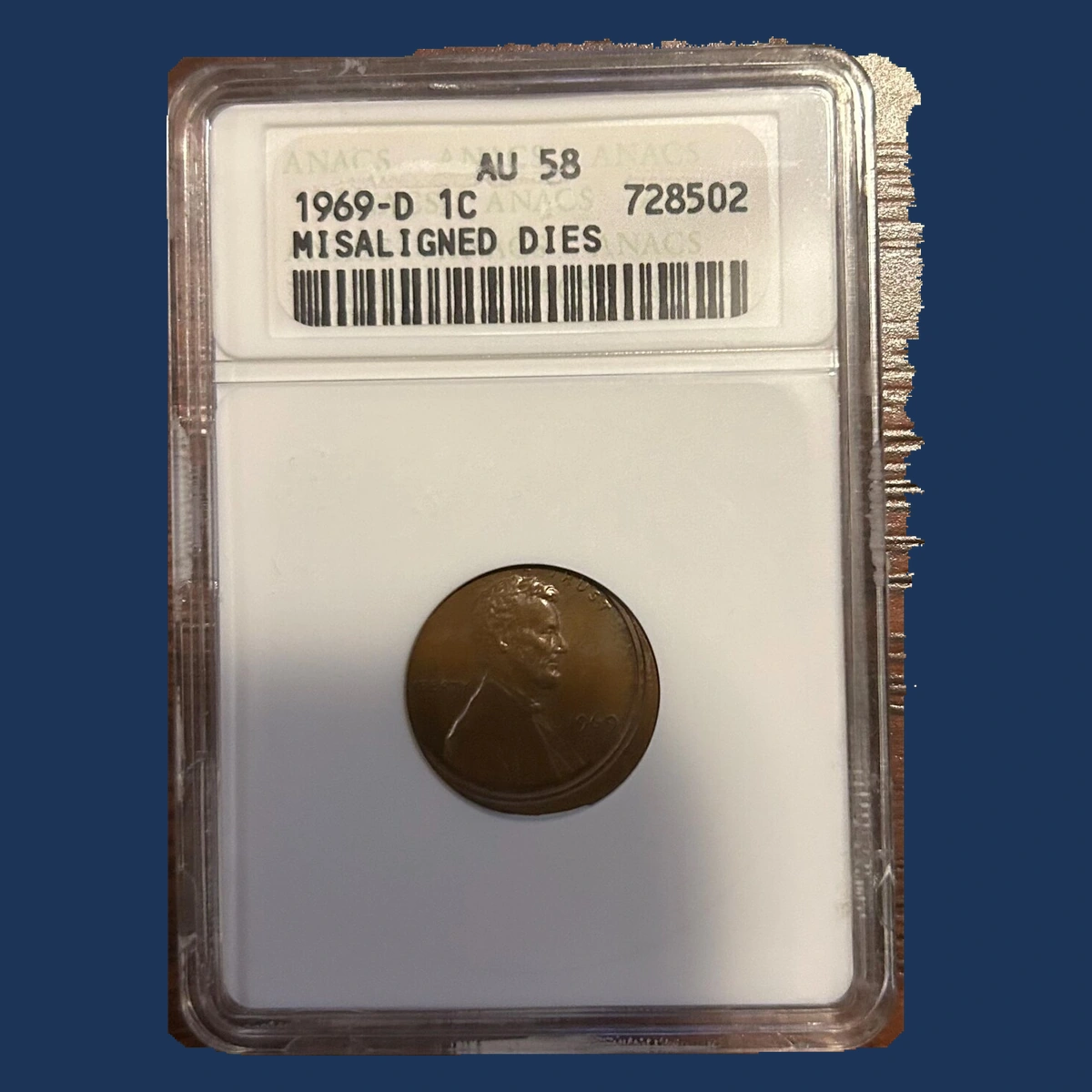
The front design can sit closer to one edge while the back stays more nearly centered. This points to one stamping tool being displaced rather than the whole blank missing its position.
The recorded 1969-D example was described as an obverse misaligned die. Obverse means the front, and a die is the steel tool that stamps the design.
An uneven rim on one face is only the starting clue. Both sides are needed to understand the direction of the shift.
If both designs miss the blank together, consider an off-center strike. Edge damage can also create a misleading wide-rim appearance.
Estimated Value
The NGC MS63 Red and Brown example sold for $39 in March 2025 in Heritage’s archive. It was unworn with noticeable marks and mixed copper color.
An estimated $10–$125 covers identified examples from slight through clearer displacement. The value depends on how easily the shift can be seen without losing the date or damaging the edge.
The archive result is for a front-tool misalignment. It is not a price for a larger off-center strike affecting both faces.
How to Identify
Keep the coin upright and compare the distance from lettering to rim around the front. Then turn it over and repeat the same comparison on the Memorial side.
Use a 10× magnifier to inspect any edge that looks pushed inward or scraped. Such damage can change the apparent design position without moving the stamping tool.
The regular copper-alloy cent is 3.11 g and 19.05 mm; a scale and calipers provide a useful normal comparison.
Lay photographs of both faces side by side. A front design shifted toward one edge, paired with a more normally centered back, supports the one-tool explanation.
3. 1969 Lincoln Penny Repunched D or S (Estimated Up to $200)
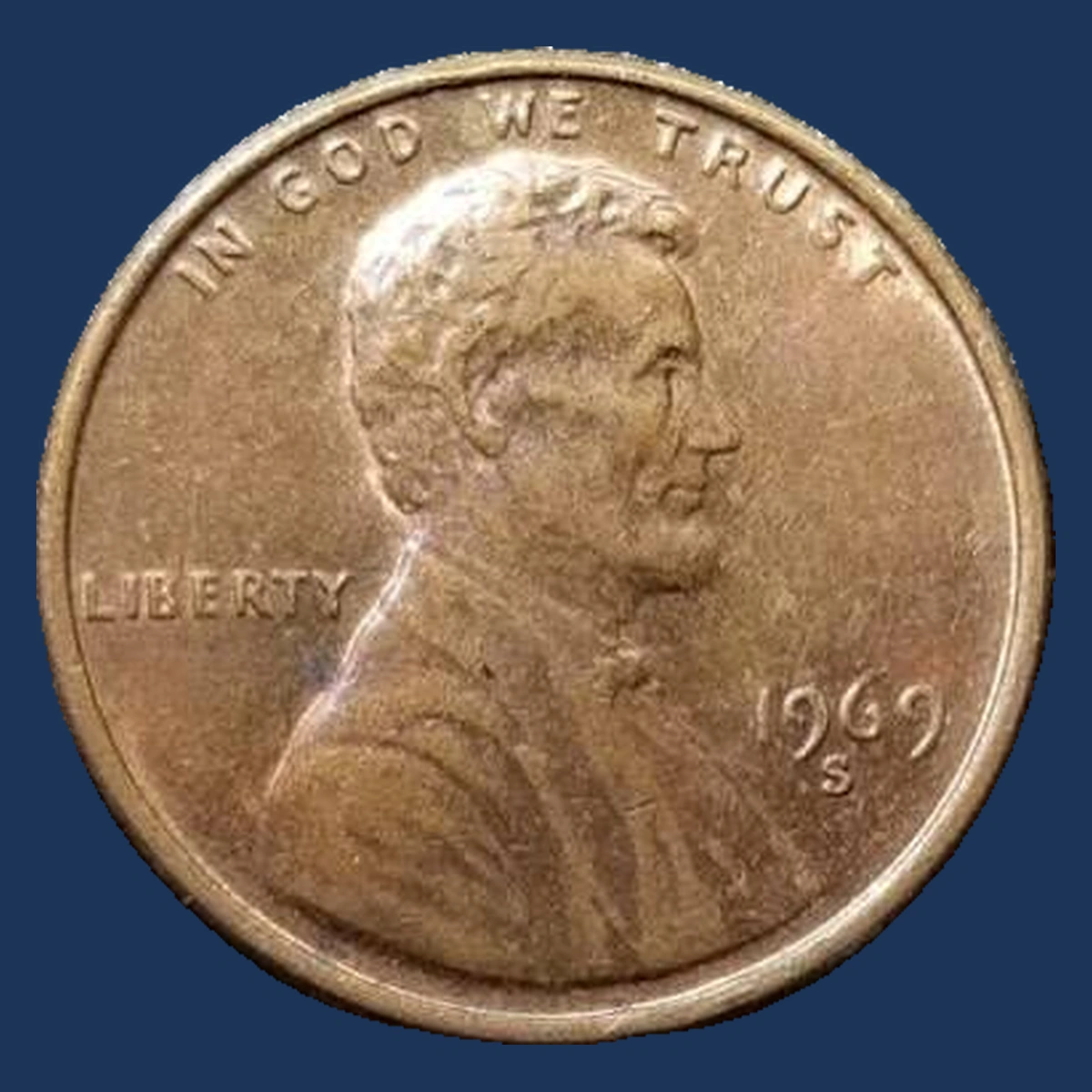
An extra curve or split tip beside D or S can preserve part of an earlier mintmark impression. The small letter punch was applied again after moving or turning slightly.
Denver examples include extra D detail north, south, east, or northwest. Others show an inner upright line or split tips from a tilted impression.
San Francisco examples include westward and eastward S remnants, plus a rotated pattern. Their separation may appear inside a curve or at the letter’s tips.
Mintmarks were added separately from the main design. A repunched S differs from the famous doubled date and words discussed later.
Estimated Value
A second mintmark outline is much smaller than the dramatic doubling on the famous 1969-S cent. Identified repunched D and S varieties have an estimated range of $3–$200.
Preserved curves and split tips help collectors compare the specific pattern. Wear may leave only a faint bump, which is less convincing than a traceable letter remnant.
The range covers different minor varieties, not one auctioned specimen. It should not be replaced with the major doubled-front variety’s six-figure price.
How to Identify
Use a 10× magnifier to sketch where the extra letter metal appears before choosing a comparison. The Coppercoins photographs show separate D and S patterns.
For a D, inspect the upright stroke, outer curve, and both small end tips. For an S, trace each curved opening and look for a second letter-shaped edge rather than one isolated bump.
The ordinary copper-alloy cent’s measurements remain 3.11 g and 19.05 mm, checked with scale and calipers when alterations are suspected. The edge is plain.
Follow the extra segment along its curve or stroke to see whether it forms part of another mintmark impression.
4. 1969 Lincoln Penny Proof Back-Design Doubling (Estimated Up to $250)
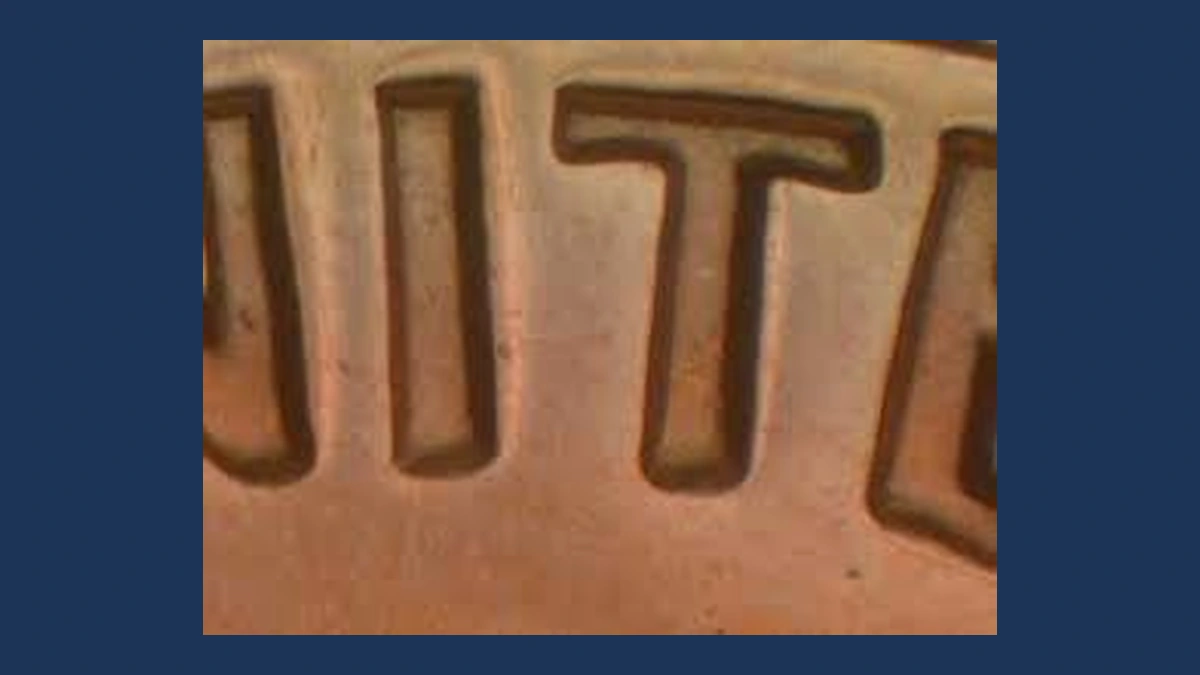
Fine repeated edges in E PLURIBUS UNUM can appear on certain San Francisco proofs. A proof is a specially made collector coin, distinct from the ordinary cents also struck there in 1969.
Coppercoins lists two back patterns with light doubling around the motto. Both also have incomplete design formation around the motto and the left part of the Memorial.
The extra detail came from the stamping tool’s design. Repeated normal blows used to make proofs do not automatically create this variety.
The lines are subtle, and reflections can imitate them. Match the raised letter edges rather than the surrounding shine.
Estimated Value
Proof preservation and the small repeated edges both matter here. An identified example has an estimated $10–$250 range, depending on surface condition and how clearly the pattern can be seen.
Scratches or haze may hide the very feature a buyer wants to study. A bright, clean-looking surface also needs care: cleaning marks can be hard to see in a photograph.
These modest back varieties should be priced separately from the major front doubled die on ordinary 1969-S cents.
How to Identify
First establish that the coin is a proof using its complete surfaces and any existing grading record. An S below the date alone is not enough, because San Francisco also made ordinary cents in 1969.
At 10× magnification, follow E PLURIBUS UNUM and compare the incomplete detail toward the Memorial’s left side. Move the light and check that the repeated edges stay fixed.
A loose coin can be checked against 3.11 g and 19.05 mm with scale and calipers; leave an encapsulated proof in its holder. Look for a stable second edge on the motto letters, not a bright line that shifts with the reflection.
5. 1969 Lincoln Penny Peeling or Split Copper Alloy (Estimated Up to $300)
A flap or rough exposed patch can appear when part of the metal separates along an internal weakness. Collectors often call this lamination, meaning a layer within the coin’s alloy has split.
The ordinary 1969 cent is copper-rich alloy throughout, not a zinc core covered by thin copper. Its peeling should not be explained as modern copper plating falling off.
The year list reports flaking and splitting without naming an exact specimen or separation stage. Some layers remain attached; others fall away.
Later scraping can imitate peeling. The texture and way the break crosses the design help explain the difference.
Estimated Value
A retained flap gives the viewer a direct look at the split metal. A missing layer can be equally interesting when its boundary and surviving design remain clear.
For identified alloy separation, estimate $5–$300, with small flakes toward the lower end and larger clear splits receiving stronger interest. This is a comparison range for the reported type.
Do not lift a flap to make it more obvious. Breaking it away changes the coin and removes part of the visible evidence.
How to Identify
Look along the boundary of the peeling area with a 10× magnifier and light held low. Natural separation may leave rough internal texture, a thin attached flap, or design broken by the missing layer.
Do not bend the flap.
Weigh the coin against the normal 3.11 g and use calipers to compare the 19.05-mm diameter. A lost layer may lower the weight, while an attached one need not do so.
Check for parallel scraping marks or chemical pitting that suggest later damage. Follow the separation into the existing design to see whether the metal split naturally rather than being cut away.
6. 1969 Lincoln Penny Curved or Straight Missing Blank Section (Estimated Up to $350)
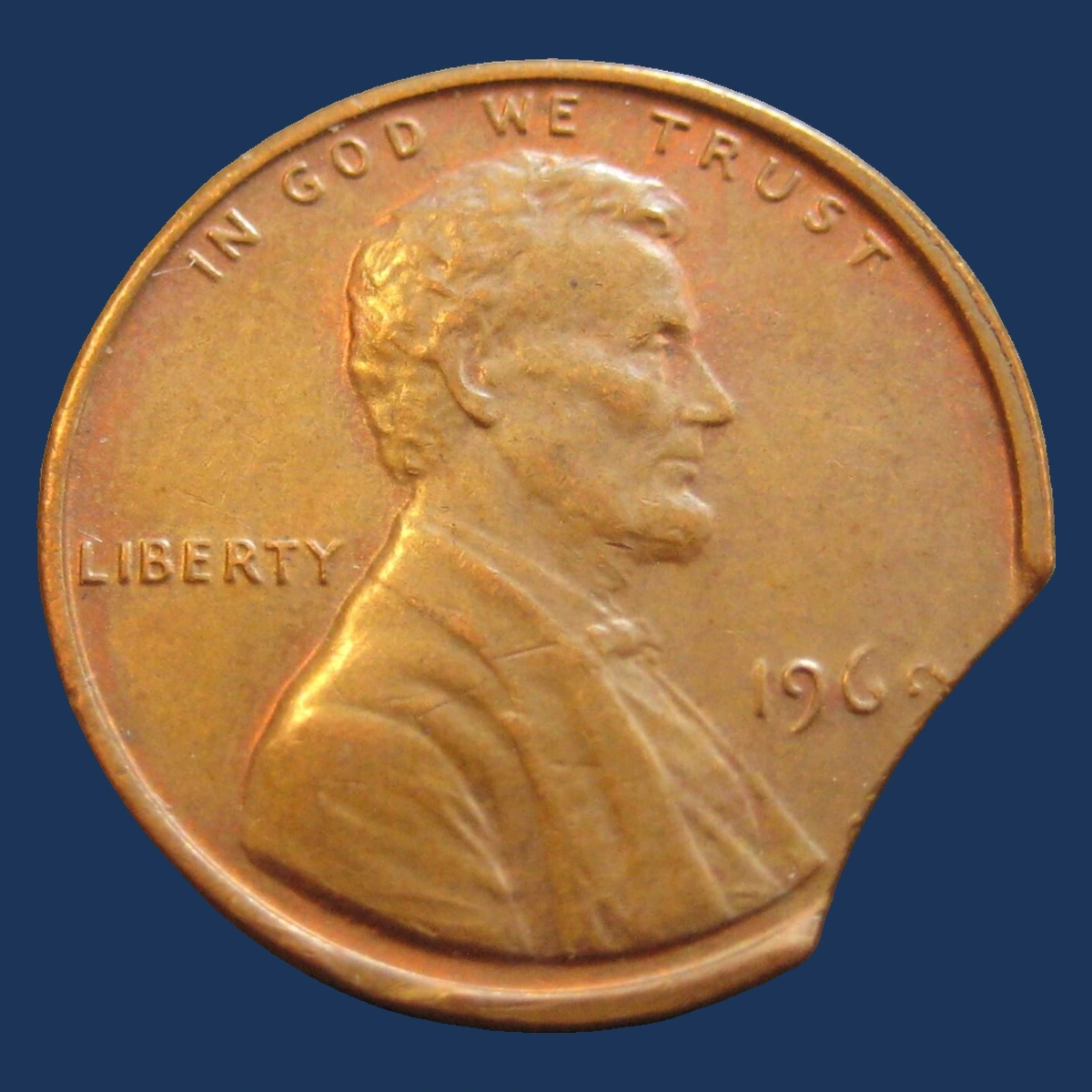
A curved bite and a straight missing edge can both begin while blanks are cut from a metal strip. They describe different shapes of missing material, not different values stamped on the coin.
A curved gap can form when the blank punch overlaps an earlier hole. A straight gap can involve the strip’s edge.
The 1969 year list reports both shapes, without assigning one exact mint or size. The remaining disk later received its cent design.
Opposite-rim weakness can support identification without being obvious on every example. A notch cut into a finished cent has a different cause.
Estimated Value
An estimated $10–$350 allows for small through more prominent identified clips. A large gap with readable date and attractive surfaces can be easier to appreciate than a tiny missing edge.
The range is a comparison estimate for the reported curved and straight forms. Neither shape has a specific 1969 auction result assigned here.
Weight loss alone will not establish the premium. The edge and nearby design must show that metal was missing before the coin received its impression.
How to Identify
Compare the notch with the adjacent letters under a 10× magnifier. Look for softened or stretched detail approaching the missing metal instead of a cut that slices through a completed design.
Use a scale to compare the remaining metal’s actual weight with 3.11 g, then calipers to check the surviving arc against 19.05 mm. These measurements describe a normal, complete copper-alloy cent before any missing section.
Inspect the opposite rim for weakness without making it the only deciding feature. Trace the gap’s edge and nearby struck detail together, checking whether they formed around missing metal rather than being severed afterward.
7. 1969 Lincoln Penny Rim Cud and BIE Chip (Estimated Up to $500)
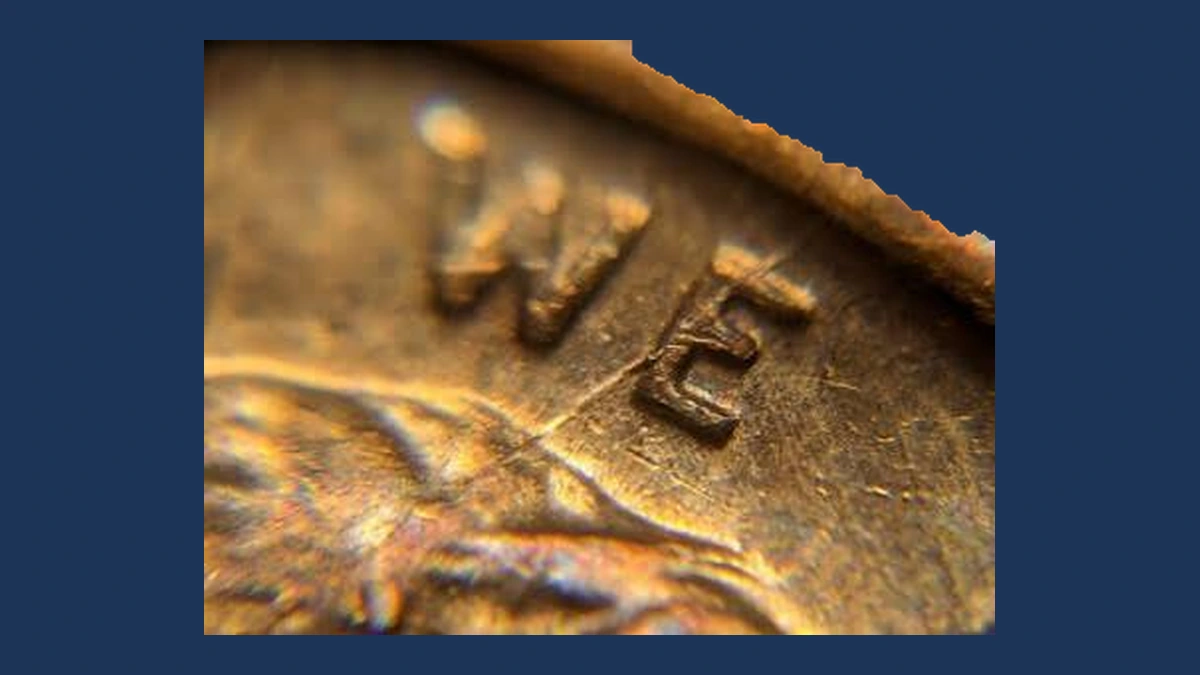
Raised metal can take the place of design where a piece breaks out of a stamping tool. A broad patch touching the rim is called a cud.
A smaller chip between B and E in LIBERTY can instead resemble an extra I. That BIE bar is inside the design and need not reach the rim.
The 1969 lists report both forms. They do not establish that every reported mint shares the same break shape.
The patch is struck metal, not something glued on top. Dirt, solder, and crushed metal can look similar but leave different surface texture or edges.
Estimated Value
Estimated values are $3–$25 for ordinary BIE chips and $25–$500 for identified rim cuds. The larger range reflects how much design the missing tool piece replaced.
As a different-year comparison, a 1977 cud graded PCGS MS63 Red and Brown sold for $138 in May 2021. That was an unworn example with noticeable marks, not a sale of a reported 1969 coin.
Match the raised shape and condition. A tiny letter-space bar should not inherit the comparison cud’s price.
How to Identify
Begin at the raised metal itself and trace its outline with a 10× magnifier. A cud must continue to the rim, while a BIE chip occupies the space between LIBERTY’s B and E.
Look for original surface texture passing into the patch instead of a separate seam around attached material. Check the other face for related weakness, recognizing that its strength can vary.
A scale compares the normal 3.11 g and calipers the 19.05-mm width. Avoid poking the patch to test whether it is attached.
Follow the raised shape to its endpoint: the rim connection or letter-space position tells you which broken-tool feature you are viewing.
8. 1969 Lincoln Penny Broad Strike with Partial Collar (Estimated Up to $600)
The coin can spread wider while part of its edge forms a step. The collar, a metal ring around the blank during striking, normally limits that outward movement.
When only part of the blank sits properly inside the ring, one edge area can be held while another expands. This combines spreading with partial collar contact.
A historical Mint Error News list reports this 1969 combination. It does not identify one fixed position for the edge step.
A broad coin without the edge feature is not necessarily this combination. Later squeezing can also widen a cent and damage its rim.
Estimated Value
The edge step is what makes this more specific than an ordinary broad strike. A clear combination has an estimated value of $50–$600.
Collectors should be able to see both the outward spread and the part held by the collar. Strong design and an undamaged edge help preserve that explanation.
The estimate is for the historical reported type, without an individual sale attached. A flattened or squeezed cent needs a different assessment even if its diameter is large.
How to Identify
View the whole edge from the side before judging the width from a face-on photograph. Under a 10× magnifier, look for a step separating the part held by the collar from the part that spread.
Calipers can compare the widest dimension with a normal 19.05-mm cent. A scale checks whether the metal remains near the usual 3.11 g, as spreading does not itself remove metal.
Then inspect the full design for consistent expansion and check for crushed edges or later squeezing marks. Follow the edge step around the disk to see where the retaining ring stopped controlling the outward spread.
9. 1969 Lincoln Penny Missing FG Initials (Estimated Up to $750)
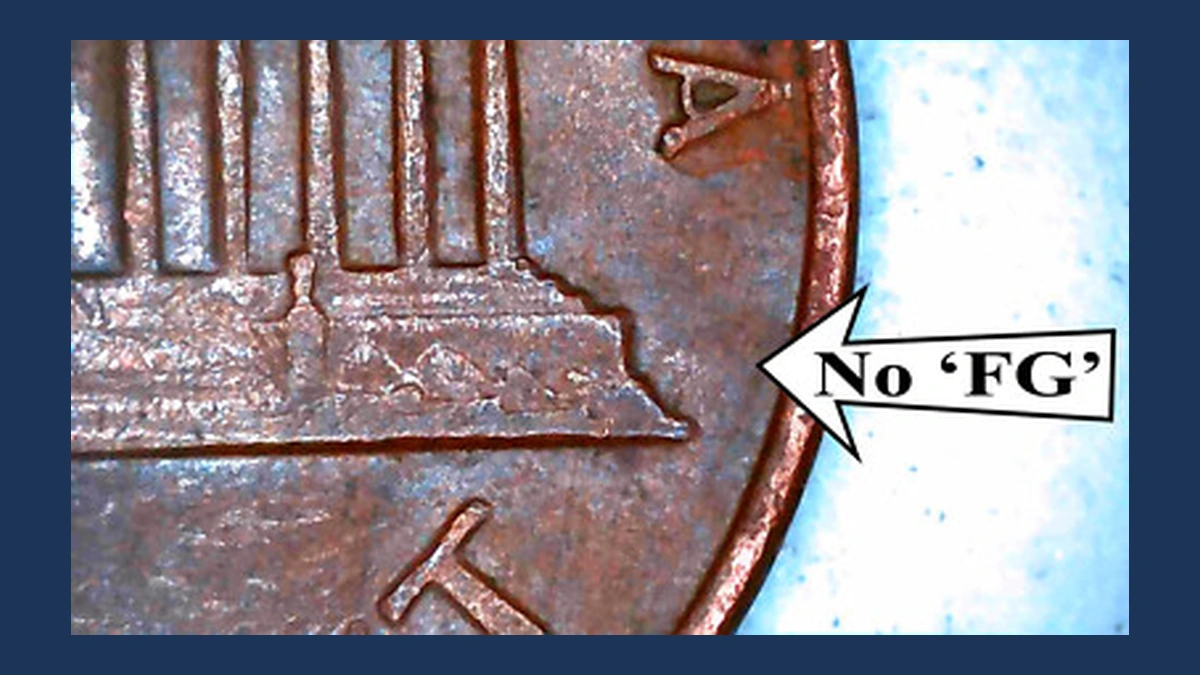
FG normally appears beside the Memorial’s lower right. On the cataloged 1969-D No FG variety, those letters disappear while nearby design remains available for comparison.
The initials identify designer Frank Gasparro. Polishing the stamping tool too deeply can remove its shallow letter detail, so later coins do not receive it.
PCGS lists this Denver variety as FS-901. A worn coin with faint initials does not automatically match that listing.
Material blocking the tool can also weaken small letters, and cleaning can remove them later. The surrounding texture and nearby design help distinguish these causes from the polished-tool state.
Estimated Value
PCGS records an MS62 Brown No FG example at $198 in January 2014. MS62 describes an unworn coin with noticeable marks.
An estimated $10–$750 spans identified examples with different wear, color, and preservation. The top portion concerns strong, attractive matches rather than every cent with hard-to-see initials.
The missing letters must be assessed alongside the remaining Memorial detail. Paying for the name alone risks confusing ordinary wear or a damaged surface with the listed variety.
How to Identify
Find the lower right of the Memorial on an ordinary cent, then compare the same area on the suspect coin. Use a 10× magnifier and two light angles so shadow does not hide a faint F or G.
Inspect the surrounding building detail for the degree of wear and look for scraping where the letters belong. Missing initials on a uniformly flattened back do not establish the same explanation.
For a loose cent, use scale and calipers to compare 3.11 g and 19.05 mm. Confirm the Denver D on the front, then check that the missing initials sit in an otherwise consistent, undamaged design.
10. 1969 Lincoln Penny Off-Center Strike (Estimated Up to $800)
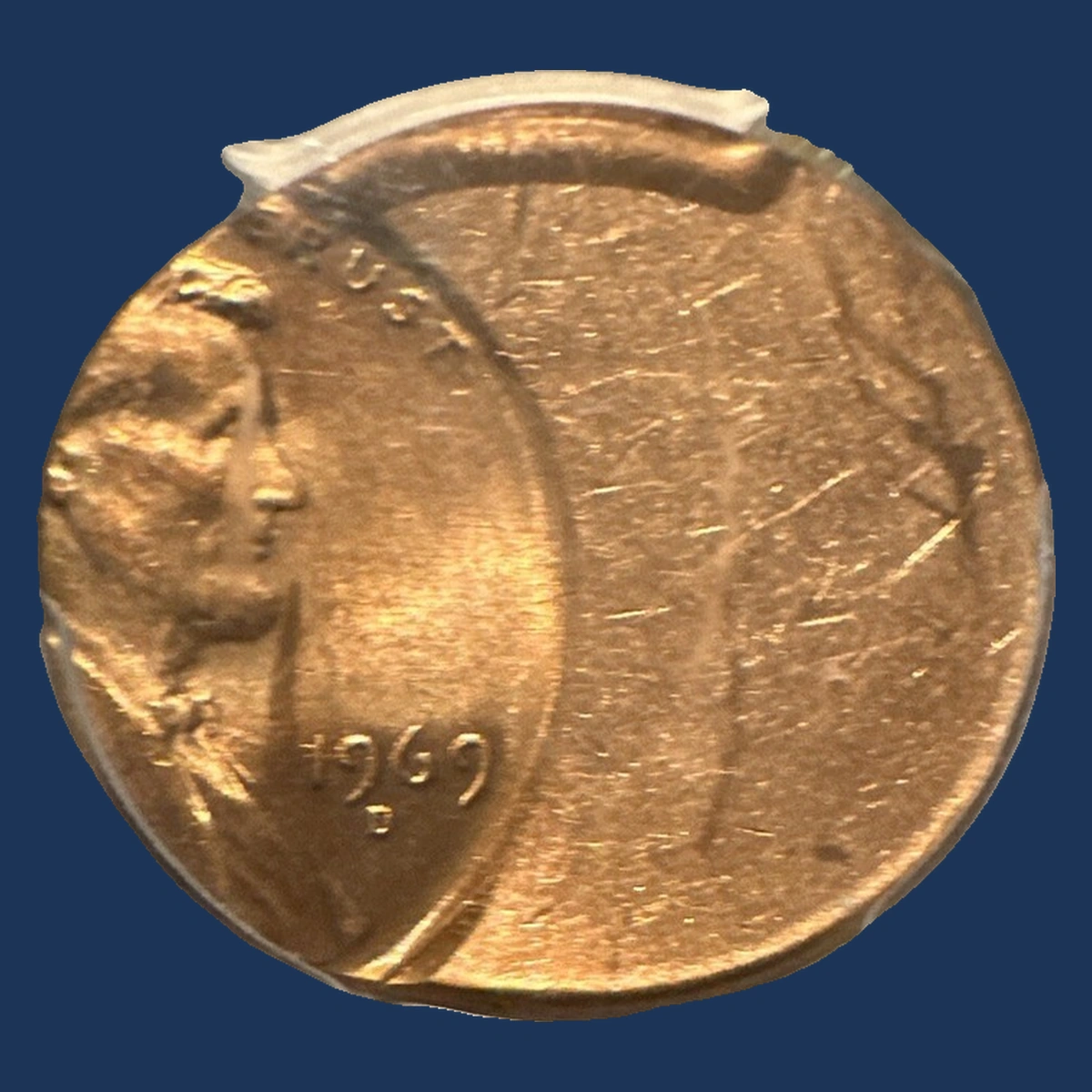
The design occupies one side of the disk while a crescent of blank metal remains beside it. The blank entered the striking area too far from its intended position.
Denver examples include about 50% and 65% displacement. The year list also reports Philadelphia and San Francisco examples without providing the same individual auction details.
The percentage describes how much design missed the metal. It does not give each coin’s direction or condition.
A physical bite missing from the disk is a different feature. On an off-center strike, the unstruck area is still present and forms part of the original blank.
Estimated Value
The Denver 50% example graded NGC MS63 Brown brought $149 in September 2024. A separate 65% example in MS64 Brown sold for $89 in June 2023.
Both were unworn, with the MS64 coin having fewer marks by grade. Their different results show why a larger percentage does not guarantee a higher price.
Use an estimated $15–$800 for identified off-center cents across varying displacement and condition. Readable dates and appealing original surfaces help collectors compare individual coins.
How to Identify
Read the surviving date and mint area before assigning the coin to one of the pictured examples. Use a 10× magnifier to see where the impression ends and the original blank surface begins.
Compare both faces: the displacement should make sense across the same disk. A shift on only one face may instead involve one misaligned stamping tool.
The usual starting disk is 3.11 g and 19.05 mm, checked by scale and calipers. An incomplete design should not be confused with metal that has been ground away.
Trace the unstruck crescent alongside the dated impression to see how far the blank missed the tools.
11. 1969 Lincoln Penny Double Strikes and Chain Contact (Estimated Up to $1,500)
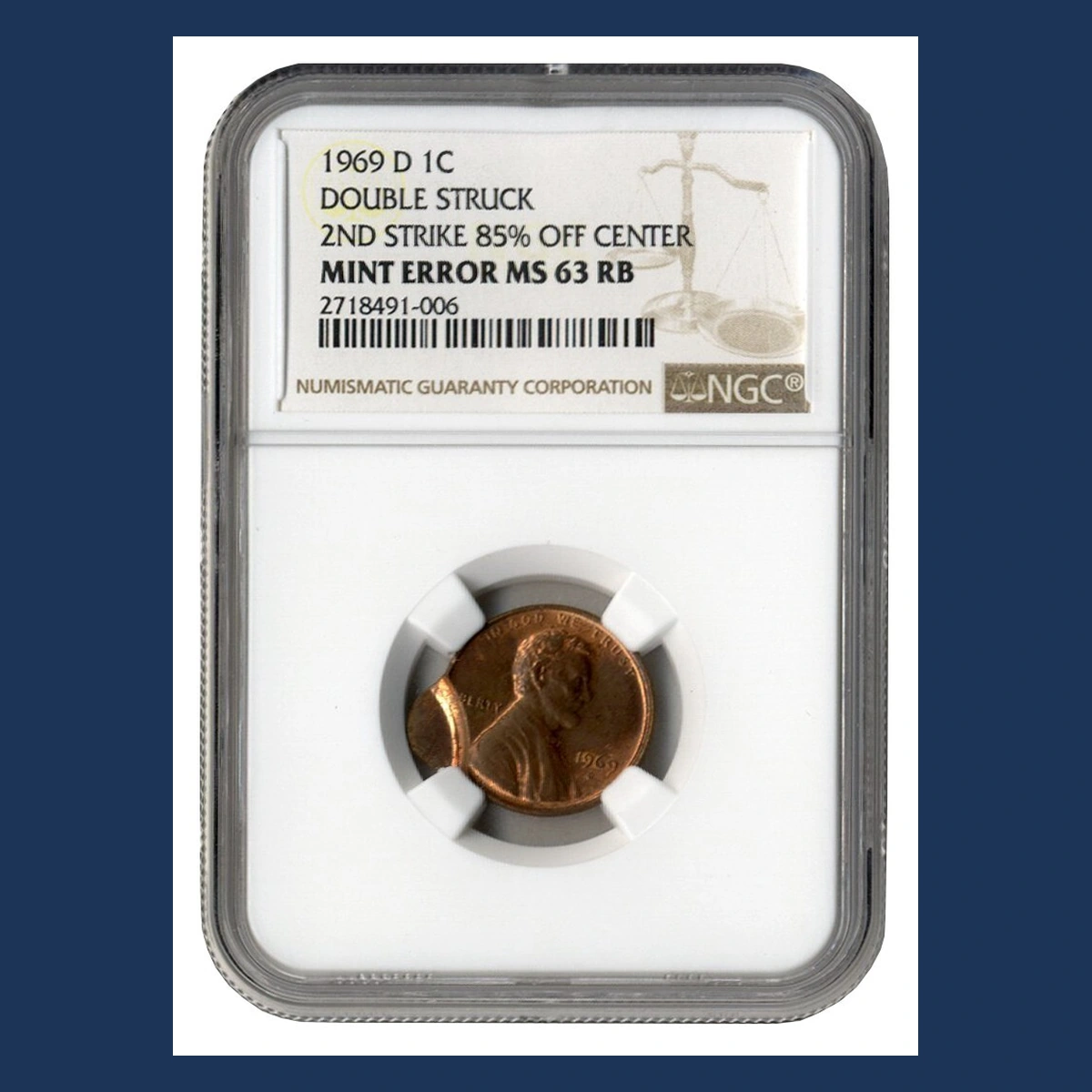
Two impressions can survive when a cent moves and receives another blow. One Denver coin was struck about 85% and 96% off center; another has separate 65% and 98% displacements.
Other Denver examples received a later strike 93% or 80% off center. Those percentages belong to different coins.
A reported chain-struck example also contacted a neighboring blank, affecting its edge. A historical listing describes another cent rotating inside the retaining collar between strikes.
An overlapping design explains the second blow. The chain-contact edge and rotation describe additional movement, so they should not be assumed on every double-struck cent.
Estimated Value
The PCGS MS62 Brown coin with 85% and 96% strikes brought $109 in March 2025. It was unworn with noticeable marks.
A chain-struck ANACS MS63 Red and Brown example sold for $111 in April 2020. A separate 93% second-strike coin in MS61 Brown brought $75 in October 2022.
An estimated $75–$1,500 covers these identified double-strike forms. Clear overlapping dates, distinctive edge contact, and preserved surfaces can affect the price more than a large percentage alone.
How to Identify
Trace one repeated feature through each impression with a 10× magnifier. Mark their positions on a full-coin photograph before deciding whether both blows were displaced or only the later one.
For the chain-struck form, examine the contacted edge without inventing the size or position of its neighboring blank. For rotation inside the collar, compare the angle between repeated designs and inspect the retained edge shape.
A normal cent starts at 3.11 g and 19.05 mm; scale and calipers record any resulting change in outline. Follow the two impressions across their overlap to reconstruct movement on the particular coin in front of you.
12. 1969 Lincoln Penny Off-Center Strike with a Sunken Mirror Image (Estimated Up to $2,000)
A backward, sunken image can appear when a struck coin presses against a fresh blank. Instead of meeting the engraved tool directly, the blank receives an impression from that other coin.
This transferred impression is called a brockage. Its letters and design are reversed and recessed rather than normally raised.
The documented 1969-D example also lies about 80% off center, leaving a large unstruck area. Both effects belong to that same coin.
Faint lines from tools striking each other are a different mechanism. The mirror image is the key feature here, while the blank crescent shows the separate positioning error.
Estimated Value
Heritage sold the PCGS MS64 Red and Brown combination for $94 in December 2020. The grade describes an unworn coin with relatively limited marks and mixed copper color.
Estimate $75–$2,000 for identified brockage combinations with differing strength, coverage, and preservation. A bold readable mirror image may be more visually striking than a small, weak transfer.
The recorded $94 sale is one real result. The upper estimate is not an assertion that its particular partial image sold for more.
How to Identify
Use a 10× magnifier to establish that the transferred image is both backward and below the surrounding surface. Tilt the light so its depth becomes clear rather than relying on one flat photograph.
Then examine the 80% off-center outline and compare the ordinary impression on the other face. The mirror image and blank crescent should fit the same coin’s striking position.
A scale compares the usual 3.11 g and calipers a normal 19.05-mm starting disk. Check for crushed edges that could indicate a later artificial squeeze.
Read a reversed letter in the sunken impression and connect it to the displaced strike visible on the other face.
13. 1969 Lincoln Penny Cent on a Dime Blank, Proof or Ordinary Strike (Estimated Up to $3,500)
The smaller disk leaves little room for the cent’s outer letters. Both proof and ordinary 1969-S cents are reported on blanks prepared for clad dimes.
The PCGS PR68 Cameo proof has a rim above WE TRUST and CENT, but missing rim areas elsewhere. STATES approaches the edge closely.
A lower-grade proof has readable wording around the design. Those rim details should not be transferred from one coin to the other.
Cameo describes contrast between frosted design and reflective background. The ordinary-strike reports involve the same wrong type of blank without requiring that collector finish or the proof’s particular rim pattern.
Estimated Value
The PR68 Cameo example brought $1,920 in May 2022. Its proof grade indicates excellent preservation, while Cameo describes the contrast between design and background.
Estimate $1,000–$3,500 for identified proof examples and $300–$1,500 for ordinary-strike comparisons. The latter range is not a sale assigned to an unnamed ordinary 1969-S coin.
A small pale cent needs more than the right color. The dime-type metal and the coin’s actual finish both affect the relevant price comparison.
How to Identify
For the PR68 proof, compare the rim above WE TRUST and CENT with the missing rim near eight o’clock on the front. The corresponding back gap is near ten, with STATES especially close to the edge.
Use a 10× magnifier without touching the delicate proof surfaces. An S mintmark alone cannot distinguish proof from ordinary production.
A dime blank normally begins around 2.268 g and 17.9 mm, compared with the cent’s 3.11 g and 19.05 mm. Use scale and calipers for loose coins, or existing measurements for encapsulated ones.
Check the smaller metal disk and the full surface finish together before choosing the proof or ordinary-strike comparison.
14. 1969 Lincoln Penny Cent Over a Struck Dime with Reported Flipover (Estimated Up to $6,000)
Older dime details can remain underneath a later cent impression. A historical list reports a 1969 cent struck over a finished dime, with a flipover also noted.
This involves more than an unused dime blank. A previous coin design was already present when later striking changed the surface.
The listing does not establish the underlying dime’s date or the complete sequence of turns and blows. Those details must come from the actual overlapping designs.
An older portrait or word provides a useful starting point. Random grooves or a secondhand label cannot explain how two denominations came to occupy the metal.
Estimated Value
For an identified cent-over-dime piece with the reported additional movement, estimate $500–$6,000. The range allows for how clearly the older design and striking sequence remain visible.
A different-year comparison is the 1973-D cent-over-dime in PCGS MS63, which sold for $4,560 in July 2022. That unworn coin had noticeable marks and is not the reported 1969 specimen.
The historical listing has no individual sale applied here. Readable designs matter more than assuming a flipover adds a fixed premium.
How to Identify
Find surviving dime lettering or a portrait outline before attempting to explain the reported flipover. With a 10× magnifier, trace those older details across the later Lincoln or Memorial impression.
Compare both faces to work out which designs overlap and where. Keep any surviving dime date separate from the cent’s 1969 date.
For a clad dime comparison, use a scale against 2.268 g and calipers against its 17.9-mm starting diameter. The later cent strike can expand that outline toward or beyond the normal cent design’s 19.05-mm width.
Let recognizable earlier and later designs establish the order, instead of assigning a turn that the visible impressions do not demonstrate.
15. 1969 Lincoln Penny Double Strike on a Canadian Dime Blank (Estimated Up to $6,500)
The pale coin shows two slightly turned cent designs rather than one clean impression. Heritage identified the unusual blank as one prepared for a Canadian ten-cent coin.
The specimen weighs 2.12 g. Its two blows occurred inside the retaining collar, with a small clockwise turn between them.
The wrong blank and second strike are both features of this one piece. They do not represent two coins whose values can simply be added.
The auction writer suggested a shared supplier mixed the blanks, but that remains a possible explanation. Weight and overlapping designs provide the direct physical evidence.
Estimated Value
The NGC MS62 Canadian-blank combination sold for $2,760 in May 2007. MS62 indicates an unworn coin with noticeable marks or surface limitations.
An estimated $1,500–$6,500 covers an identified comparable combination, considering the wrong metal, repeated image, and condition together. It does not assign separate premiums and add them mechanically.
The old sale documents this specific unusual piece. A light-colored ordinary penny does not become comparable merely because its letters also look doubled.
How to Identify
The specimen-specific 2.12 g is the starting measurement to compare with its records. A normal copper-alloy cent weighs 3.11 g and measures 19.05 mm, so a scale and calipers help establish the physical difference.
Under a 10× magnifier, follow matching raised cent details through their small clockwise change in angle. Both impressions should remain consistent with rotation inside the retaining ring.
Inspect the edge and surface metal without scratching them. Professional non-damaging composition testing can help identify an unfamiliar blank.
Connect the unusually light metal with the two slightly turned cent impressions, keeping both features attached to the same specimen.
16. 1969 Lincoln Penny Doubled Front Design, Including the Major 1969-S (Estimated Up to $650,000)
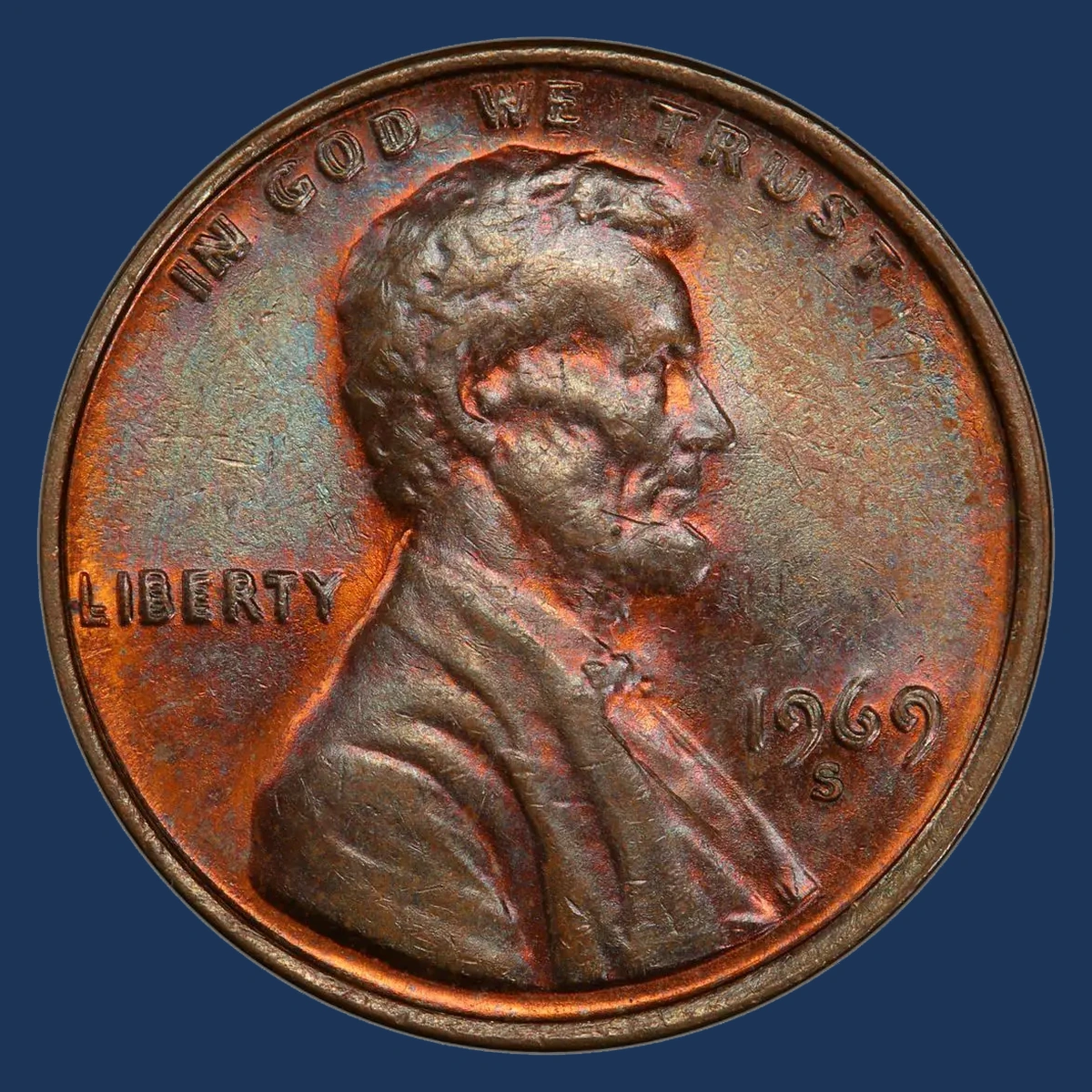
On the major 1969-S variety, the date, LIBERTY, and IN GOD WE TRUST have strong, widely separated raised outlines. The stamping tool carried that repeated design before striking the coin.
The S was added later, so the major design doubling does not require a matching doubled mintmark. This famous pattern is cataloged as FS-101.
Minor doubled fronts also exist: some emphasize parts of 6 or 9, while others affect Philadelphia lettering. They do not share the major variety’s separation.
The famous coin is an ordinary strike, not a proof. Its exact pattern matters far more than any isolated doubled-looking edge.
Estimated Value
PCGS records the MS66 Red example at $601,875 in January 2023, with a different MS64 Red example bringing $70,312.50 in September 2025. Both were unworn; MS66 indicates fewer marks by grade.
Estimate $15,000–$650,000 for genuine major FS-101 examples across condition levels. Minor doubled-front varieties instead have a comparison range of $5–$200.
The two ranges must stay separate. Small date doubling does not justify the famous variety’s price.
How to Identify
Check the date, LIBERTY, and the full motto together with a 10× magnifier. The major San Francisco pattern shows clear rounded separation across these areas, rather than a low flat ledge beside isolated letters.
For minor examples, compare the exact mint and affected digit. Philadelphia patterns include extra detail near the first 9 and 6 or in the words; Denver and other S patterns have their own date details.
The ordinary cent is 3.11 g and 19.05 mm, checked with scale and calipers if loose. Measurements cannot establish FS-101.
Match the major date-and-word pattern as a whole, remembering that the later-added S need not repeat with it.
Conclusion
The major 1969-S doubled front occupies the highest price level, but the year offers many smaller features to study. Start with what the coin actually shows: repeated raised letters, missing initials, separated metal, or an overlapping strike.
Estimated values range from $1–$650,000. Keep ordinary and proof coins distinct, and compare the same mechanism and condition.
A familiar date or mint letter alone does not explain an unusual mark.