1978 Penny Error List with Pictures

A straight missing edge and a shifted design appeared together on a 1978 penny that sold for $432 in May 2021. They record two different minting problems on one coin.
This 1978 penny error list explains those combinations alongside extra lettering, damaged stamping tools, and wrong blanks. Estimated values range from $2–$3,000.
Start with the shape that caught your attention, then follow the matching checks below. A normal 1978 cent uses copper alloy throughout and weighs 3.11 g.
1. 1978 Lincoln Penny Blocked Letters and Mintmark (Estimated Up to $100)
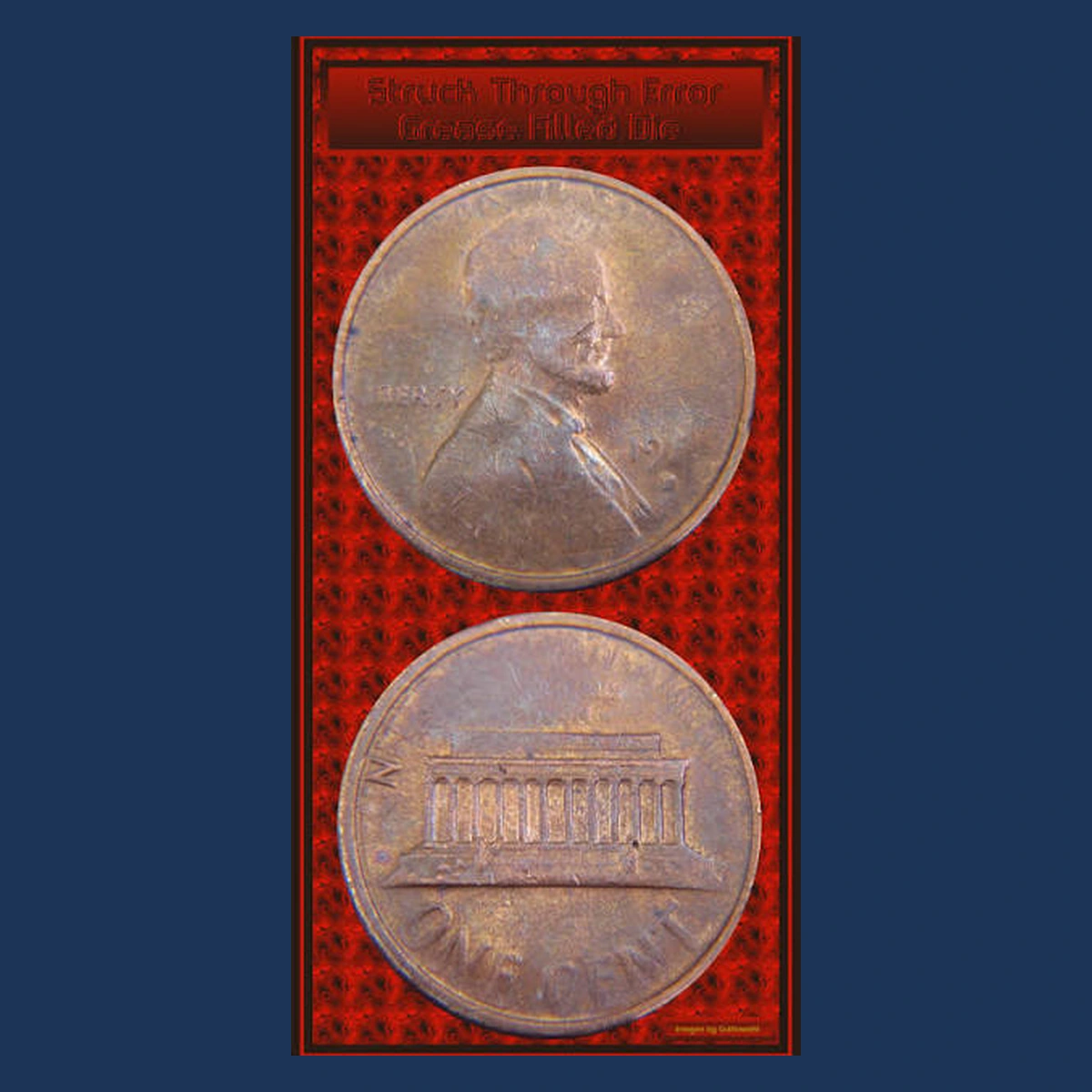
A letter can fail to form even when nearby design remains clear. Material packed into the die, the steel stamping tool, prevents coin metal from filling its recessed detail.
The 1978 report mentions weak parts of LIBERTY, the back motto, and the Denver D. These areas need examination rather than assuming one obstruction affected every reported coin.
A completely absent D creates another problem: ordinary no-mintmark 1978 cents already exist. A blank mintmark area alone cannot establish Denver origin.
Wear and scraping can also erase details. Their effects should be compared with an original local failure to receive the design.
Estimated Value
Use an estimated $2–$100 for an authenticated blocked-design error. A large original weak area surrounded by sharp detail is usually easier to demonstrate than one faint letter.
A 2021-D grease-struck cent sold for $84 in September 2025. Its plated-zinc metal differs from the copper-alloy 1978 blank, so the comparison concerns the blocked impression.
The estimate does not give a premium to every no-mintmark cent. Denver identity must come from other reliable evidence if the D is entirely absent.
How to Identify
Compare weak letters with Lincoln’s exposed high points under a 10× magnifier. If everything is worn, circulation may provide the simpler explanation.
Look for original surface inside the weak area and scraping lines around its boundary. A mintmark ground away after striking can leave a disturbed patch.
Use a scale against 3.11 g and calipers against 19.05 mm, then inspect the plain edge. These normal measurements check the blank, not the missing letter’s cause.
For a claimed blocked D, require a match to other identifying tool marks. Do not turn an ordinary no-mintmark penny into a Denver error merely because the space below its date is empty.
2. 1978 Lincoln Penny Shallow Metal Flake (Estimated Up to $150)
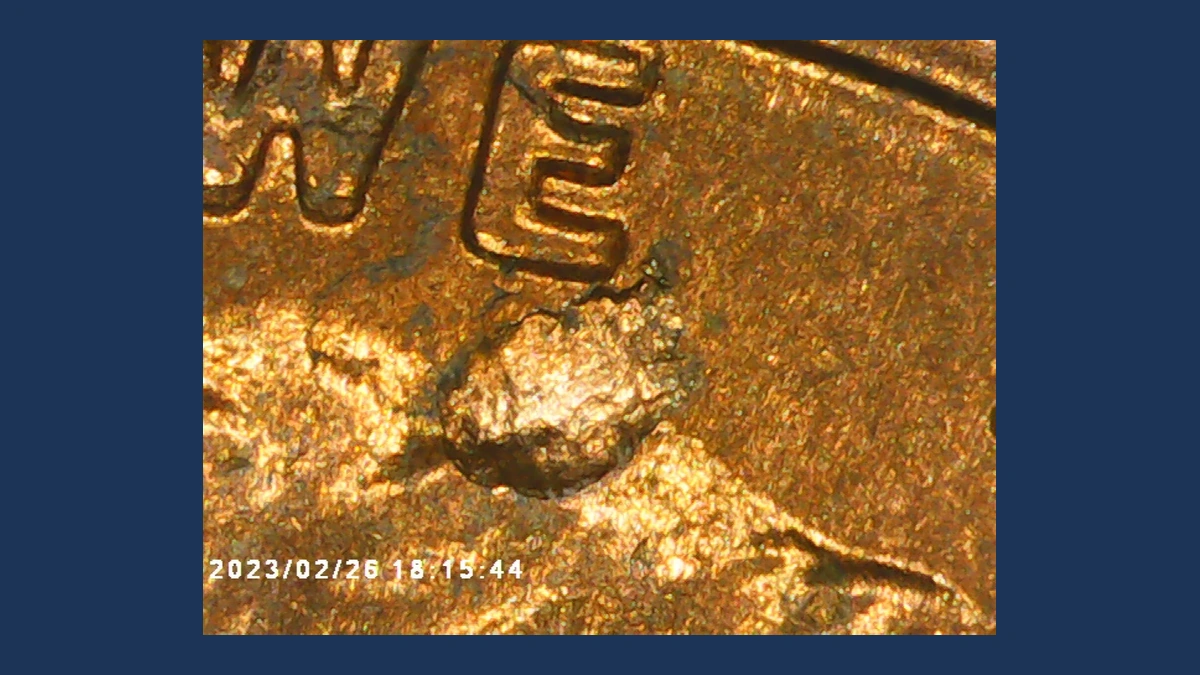
A thin flake can leave a shallow missing patch in the coin’s metal. One high-grade 1978 cent has this feature near the center of the back.
The auction description identifies it as a mint-made blank flake. It also mentions front doubling, but does not assign that separate feature to a named variety.
The coin was graded PCGS MS67+ Red, describing exceptionally well-preserved unworn surfaces with red copper color. That condition is separate from the small metal loss.
This cent uses copper alloy throughout. The shallow flake is not a copper coating peeling from the zinc center found in later pennies.
Estimated Value
For comparable authenticated shallow flaking, estimate $5–$150 as an error comparison. Size, visibility, and preservation of the surrounding original surface influence collector interest.
The recorded MS67+ Red coin can also carry a substantial ordinary grade premium. Its complete value should not be assigned solely to the little flake.
This range compares small copper-alloy surface separations rather than quoting that coin’s auction result. A gouge or corroded patch has a different cause even if its outline looks similar.
How to Identify
Find the shallow back patch under a 10× magnifier and inspect the boundary without scraping it. A natural flake should fit a separation within the original metal rather than repeated cutting marks.
Tilt the coin to follow the nearby struck design. Do not assume its separately reported front doubling names the flake or proves a particular doubled-die variety.
A scale compares the normal 3.11 g; a very small flake may make little measurable difference. Calipers check the ordinary 19.05-mm width.
Inspect the plain edge for further separation or later tools. Keep any remaining loose metal in place, and distinguish the small original defect from the high grade of the coin carrying it.
3. 1978 Lincoln Penny Doubled Front Design (Estimated Up to $150)
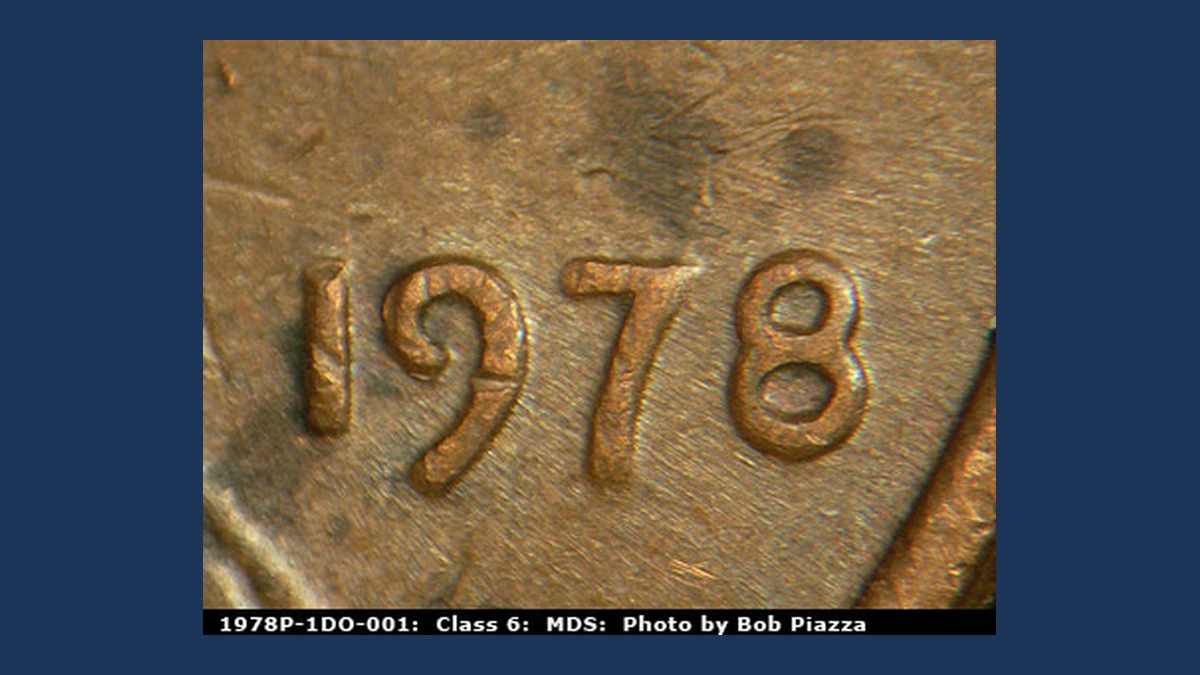
Thick lettering deserves a closer look when one corner also shows a tiny fork. The recorded no-mintmark variety includes such a feature on the lower leg of R in TRUST.
Its stamping tool carried extra design before the blank arrived. Related cataloged patterns show different degrees of thickness in the date, LIBERTY, or motto.
The Denver variety also thickens WE TRUST and splits R’s lower-right leg. Its supporting marks differ from the no-mintmark example.
These are small doubled designs, not a second whole strike. The specific shape and mint identity are more useful than generally bold-looking words.
Estimated Value
Estimate $5–$150 for identified minor 1978 doubled-front varieties. Clear forks and preserved letter shapes are easier for a collector to compare than worn or swollen details.
The range is based on similar small Memorial-cent varieties rather than a major doubled-die auction record. A named tool and an attractive coin still need the actual repeated design to match.
Tiny background marks can support that match. They do not create the same premium on a coin whose main letters lack the feature.
How to Identify
Begin at TRUST’s R using a 10× magnifier, then compare the rest of the lettering with the appropriate variety photograph. Do not judge thickness from two differently lit pictures.
For the Denver pattern, a short vertical mark between the lower U and S helps support the identification. The no-mintmark tool has a different mark near LIBERTY’s R.
Weigh the coin against 3.11 g and measure against 19.05 mm with calipers. Check the plain edge and letter surfaces for later squeezing.
A flat shelf can result from movement during striking instead of a doubled tool. Match the actual fork and thickened shapes before relying on their small supporting marks.
4. 1978 Lincoln Penny Repunched D or Reported Proof S (Estimated Up to $250)
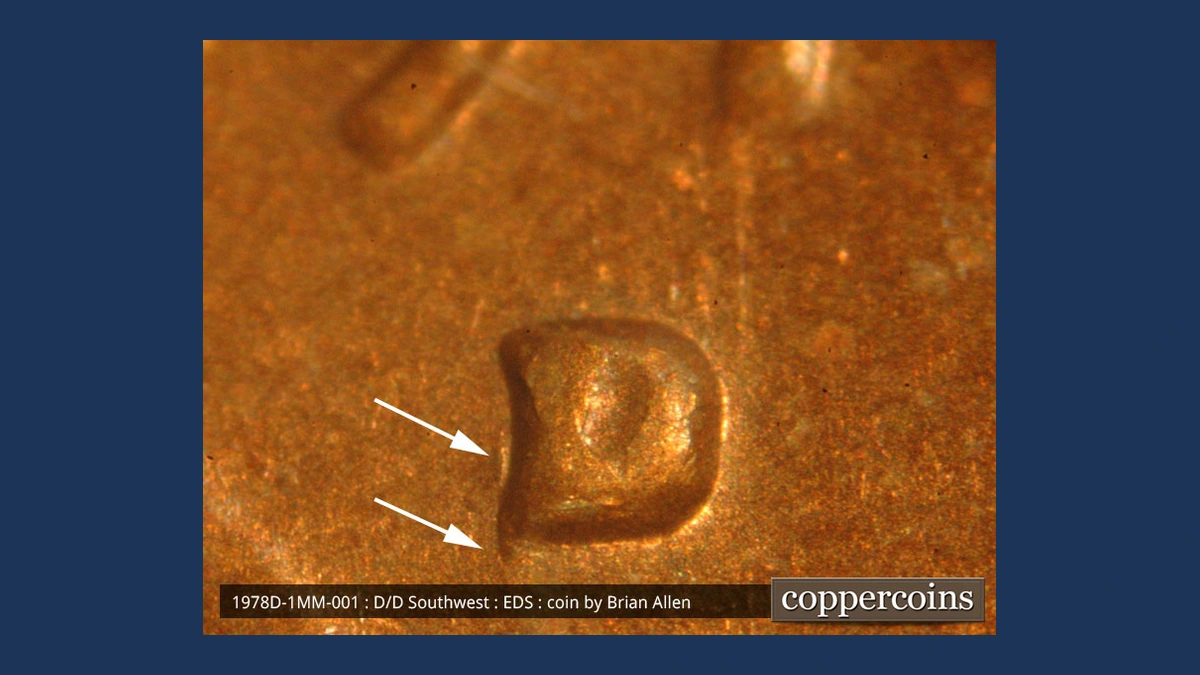
A second D outline can extend below and left of the main mint letter. The letter punch moved between impressions when it was applied to the stamping tool.
Another recorded Denver pattern is tilted, leaving different extra strokes. The two D varieties should not be identified from the same close-up.
A separate report concerns a repunched S on a Proof, a specially prepared collector coin. That claim needs its own matching specimen rather than a Denver photograph.
A bright S cent alone does not prove repunching. The extra curve must follow another placement of the letter.
Estimated Value
Identified Denver repunches have an estimated range of $3–$150. A separately authenticated S Proof repunch can be compared within approximately $25–$250.
The Proof amount is a conditional estimate, not a sale or a confirmed specialist number for the year-guide report. It applies only after the extra S outline is established.
For either mint, clear separated strokes and original surfaces help. A shapeless bump or damaged letter does not deserve the strongest variety’s price.
How to Identify
Read D or S first and choose a matching comparison. On the Denver shifted variety, trace the earlier D below and left through a 10× magnifier.
For the tilted Denver pattern, follow how the earlier letter turns relative to the final D. Tiny surrounding tool marks can help, but cannot substitute for that letter shape.
The normal copper-alloy blank is 3.11 g and 19.05 mm. Check with a scale and calipers, and inspect the plain edge for later pressure.
An S candidate also needs the correct Proof finish and an independent extra-letter match. Keep that examination separate from the established D patterns rather than combining their features.
5. 1978 Lincoln Penny Reported Counterclash (Estimated Up to $300)
An extra fragment of Lincoln’s own design can appear away from its normal position after repeated contact between the tools. A first clash transfers a mark to the opposite tool.
A later contact can return that mark to the original tool at a changed position. Collectors call the result a counterclash.
The reported 1978-D type needs a matching photograph before a particular extra mark can be identified. Compare that shape with Lincoln’s normal design and with the proposed transfer path.
A random raised line is insufficient. The transferred shape must support the proposed sequence.
Estimated Value
For a confirmed 1978-D counterclash, use a conditional estimated range of $25–$300. The comparison concerns a clearly matched repeated-transfer feature, not every odd line near Lincoln.
Related Memorial-cent clashes provide the pricing context. This amount is not a recovered sale for the reported coin or proof that its proposed mechanism has been authenticated.
Clarity matters because another collector must be able to follow the misplaced design. An unexplained mark should not receive a counterclash premium simply from the label.
How to Identify
Photograph the full front and back before choosing a close-up. Locate a recognizable design fragment and compare its position with the normal design under a 10× magnifier.
A claimed return transfer must explain why part of the same face’s design appears elsewhere. Ordinary scratches, tool-polishing lines, and flat strike doubling can offer other explanations.
Use a scale and calipers against 3.11 g and 19.05 mm. Inspect the plain edge for squeezing that may have created a false impression.
No particular 1978-D location is established here. Require a matching documented pattern and a clear transfer explanation before treating a candidate as this reported type.
6. 1978 Lincoln Penny Broadstrike (Estimated Up to $350)
An expanded outline can surround all the cent’s lettering. The collar, the ring that normally contains the blank’s edge, failed to restrict the spread.
This makes the coin a broadstrike. The metal moved outward under pressure without necessarily losing any of the design.
The 1978 year report includes this mechanism without a specific certified specimen or fixed amount of expansion. An uneven border alone should not be given a precise broadstrike measurement.
An off-center strike is different because part of the design falls beyond the blank. On a broadstrike, complete lettering remains inside the metal despite the extra width.
Estimated Value
Use an estimated $10–$350 for a genuine 1978 broadstrike. More visible spread with well-preserved details can support greater interest than a slight enlargement on a worn penny.
A copper-alloy 1980-D broadstrike brought $57 in March 2021. It provides a nearby-year comparison for the same expansion mechanism.
This estimate requires original striking, not a coin hammered wider afterward. Surface damage and crushed lettering can reduce value or explain an entirely different cause for the larger outline.
How to Identify
Check the outer letters on both faces before measuring the coin. Complete intended designs should remain within the expanded metal.
Take caliper readings across several directions against the normal 19.05 mm. A scale should stay close to 3.11 g when the original metal remains intact.
Look through a 10× magnifier at Lincoln’s high points and the Memorial. Later flattening can spread the coin while crushing these already-struck details.
Inspect the plain edge for repeated hammer marks or squeezing. A broadstrike’s extra border should fit naturally formed design rather than a flattened finished penny, even when its outer margin is uneven or sits off to one side.
7. 1978 Lincoln Penny Off-Center Strike (Estimated Up to $600)
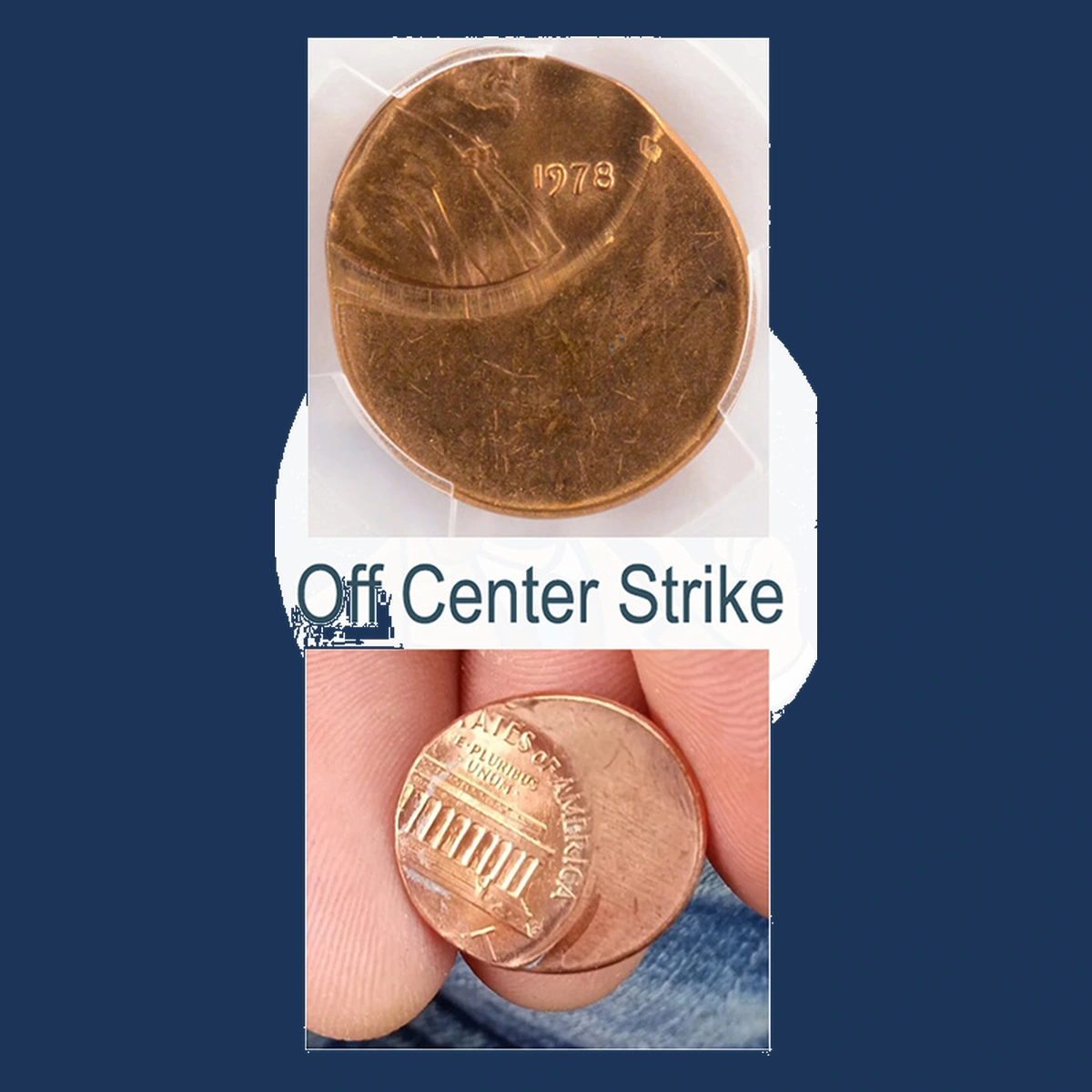
Lincoln can sit near one edge while much of the blank remains untouched. The disc was misplaced when the stamping tools came together.
One recorded no-mintmark example is about sixty percent off center toward the lower left. Other examples have different amounts and directions of displacement.
A separate Denver coin is fifty percent off center toward the upper right and has later scratches. Another Denver report describes a larger seventy-percent shift.
These are individual specimens. The direction, grade, and condition of one should not be copied onto another simply because both have a large plain crescent.
Estimated Value
Estimate $20–$600 for identified dated 1978 off-center cents. Readable identity and natural surfaces help determine the closest comparison alongside the amount of displacement.
A 1984-D fifty-five-percent off-center cent sold for $41 in September 2024. Its later plated-zinc metal differs from the copper-alloy 1978 blank.
The scratched Denver example appeared with a 1979 coin in a two-coin lot. That total does not establish an individual 1978 price, and the scratches need a separate condition adjustment.
How to Identify
Read the remaining date before deciding how much design is missing. Check for D where that area survives rather than assuming the mint from a seller’s similar photograph.
An ordinary blank starts at 3.11 g and 19.05 mm. Use a scale and calipers to record the coin’s weight and altered outline.
Under a 10× magnifier, follow the boundary between struck and untouched metal on both faces. A shift of one tool alone can change only one face’s centering.
Inspect the plain edge and empty surface for cutting or grinding. Keep the particular coin’s direction and visible condition together when comparing it with a cataloged off-center example.
8. 1978 Lincoln Penny Clipped Blank and Off-Center Combination (Estimated Up to $650)
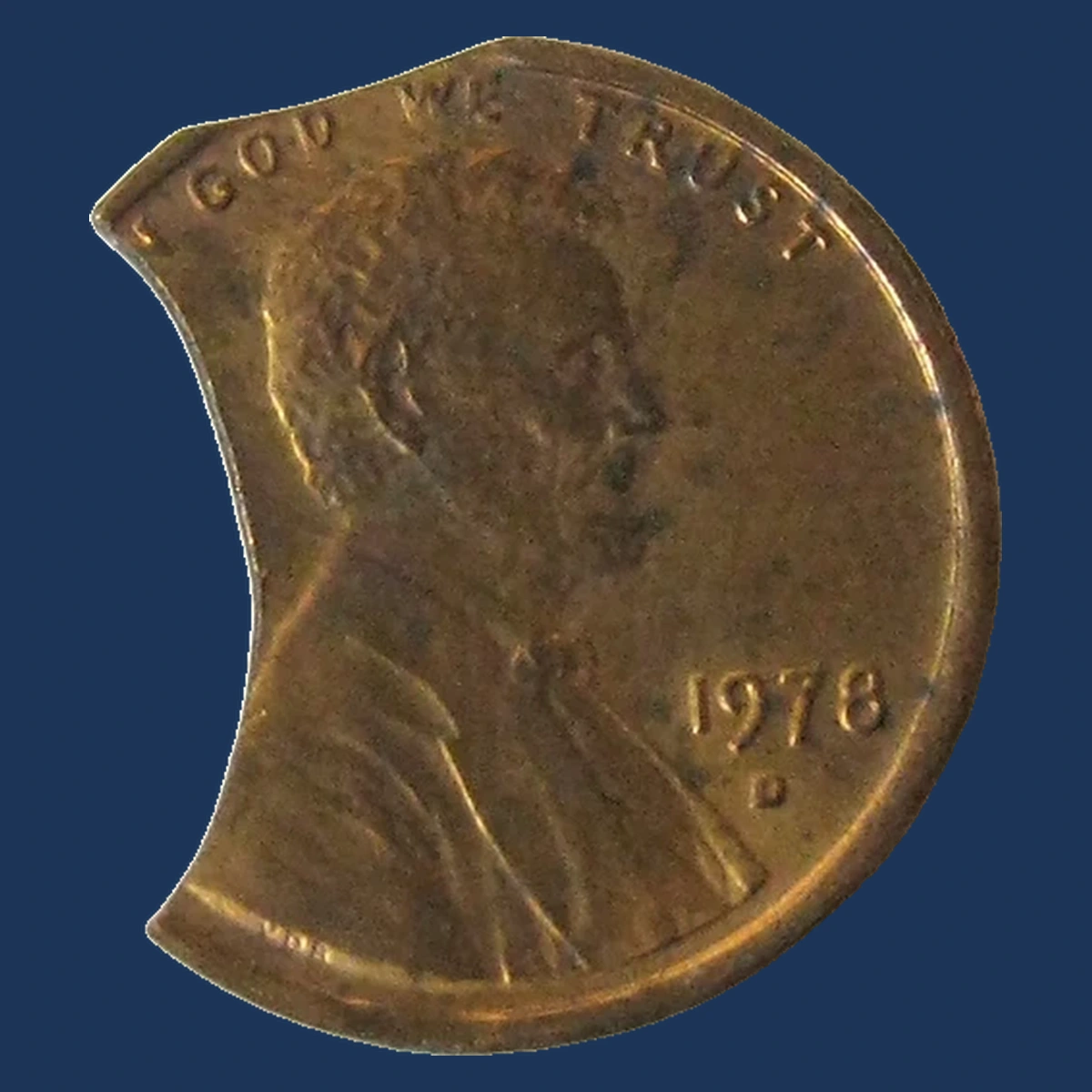
One side of the no-mintmark cent ends along a straight missing boundary. About fifteen percent of its blank was absent before it received the design.
The same coin was then struck about ten percent off center. Its unstruck area still contains metal, while the clip is an actual gap.
A Denver clipped cent also appears in a mixed auction lot, but its exact gap shape is not established by that brief listing. Other coins in the lot cannot supply its missing details.
The two mechanisms can occur together. Trace the blank’s edge separately from the edge of its struck design.
Estimated Value
The combined straight clip and shifted strike sold for $432 on May 22, 2021. It was graded PCGS MS64 Brown, an unworn coin with some marks and brown surfaces.
Estimate $15–$650 across ordinary original clips and stronger combinations. The actual sale concerns the complete two-feature coin.
A mixed four-coin lot does not supply the separate Denver clip’s individual price. Do not divide that total or add two full error estimates to the same penny.
How to Identify
Start by following the physical outline all the way around. Mark where metal is absent, then locate any untouched area still inside the remaining blank.
Use a 10× magnifier to inspect how the rim meets the clip. File marks and sharp burrs can show that a gap was cut after striking.
A scale should reflect lost metal relative to the ordinary 3.11 g. Calipers compare intact spans with 19.05 mm, without treating the missing side as the original diameter.
Inspect the remaining plain edge and both designs. On the combined example, the straight missing boundary and the separately displaced strike should each have original surfaces consistent with their different causes.
9. 1978 Lincoln Penny Cuds and BIE Chips (Estimated Up to $750)
A small raised bridge between B and E can make LIBERTY appear to contain an extra I. This BIE feature comes from a chip in the stamping tool.
Larger broken sections at the edge leave raised patches connected to the coin’s rim. Collectors call these cuds.
Cataloged 1978 examples include no-mintmark and Denver shapes, with some breaks limited to the rim. One Denver cud also appears with distortion from a cap covering the tool.
The exact outline matters more than the catalog count. A tiny rim chip and a large face-covering patch should not be priced or identified as equivalent.
Estimated Value
Small BIE chips can fit an estimated $2–$30. Larger identified cuds can fit approximately $30–$750, with stronger visible breaks and attractive surfaces generally more appealing.
A 2021-D retained cud sold for $186 in September 2025. It is a related tool-break comparison, with different metal and a broken section that remained in place.
For a 1978 coin also affected by a cap, value the complete combination. The presence of several catalog names does not create several separate prices.
How to Identify
Find the raised area under a 10× magnifier and trace its boundary. A cud connects to the rim; a BIE bar occupies the specific space between B and E.
Check the plain edge for pushed metal or added material. A scale and calipers compare the normal 3.11 g and 19.05 mm without proving the cause of a lump.
Use the correct no-mintmark or Denver photograph. The cap-affected Denver piece should show that separate distortion as well as the break.
One catalog entry also notes rotation without a stated angle. Compare both faces by flipping top to bottom, but do not assign a large turn from the raised patch alone.
10. 1978 Lincoln Penny Struck Through a Cap, Sometimes with Brockage (Estimated Up to $1,000)
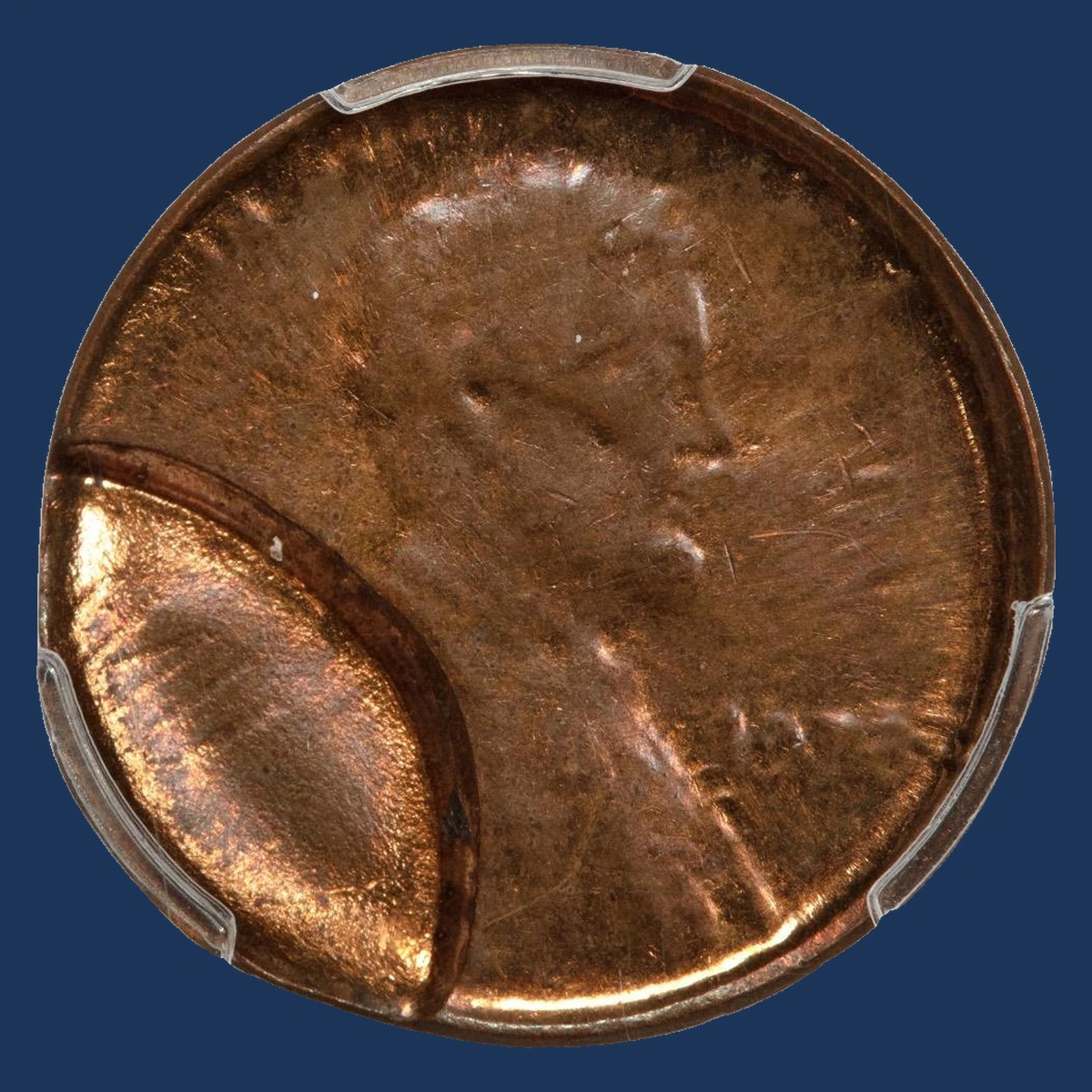
A coin stuck over the stamping tool can soften the design reaching the next blank. The receiving penny may look flat, with a blurred or stretched portrait.
A reported 1978 example has this front-side obstruction and a clearer back. The covering coin was the cap; the new penny beneath it was not.
Another example combines cap-related striking with fifteen percent brockage. Brockage means a backward, sunken design transferred by another coin.
The two effects need separate observation on that piece. Soft Lincoln detail alone does not prove a mirror impression, and a partial brockage need not cover the whole face.
Estimated Value
For identified cap-struck receiving coins, estimate $50–$500. A clear combination with partial brockage can fit approximately $100–$1,000, depending on readability and condition.
A 1995 late-stage cap strike sold for $180 in March 2025. It provides a receiving-coin comparison rather than a price for an actual cup-shaped cap.
The 1978 auction descriptions should be matched to their own photographs. Similar grades and wording do not establish that separate listings show the same individual coin.
How to Identify
Compare the portrait’s softened area with the clearer design on the other face. Use a 10× magnifier to follow a connected distortion pattern rather than general wear.
On the combined example, locate the backward impression and confirm that it sinks into the surface. A reversed photograph can make its letters easier to recognize.
Check weight against 3.11 g and width against 19.05 mm with a scale and calipers. Examine the plain edge for later pressing that could imitate transferred design.
Keep the softened portrait and partial mirror image distinct in your notes. Only assign the combined error when both features are present on the same original struck coin.
11. 1978 Lincoln Penny Double Strike (Estimated Up to $1,000)
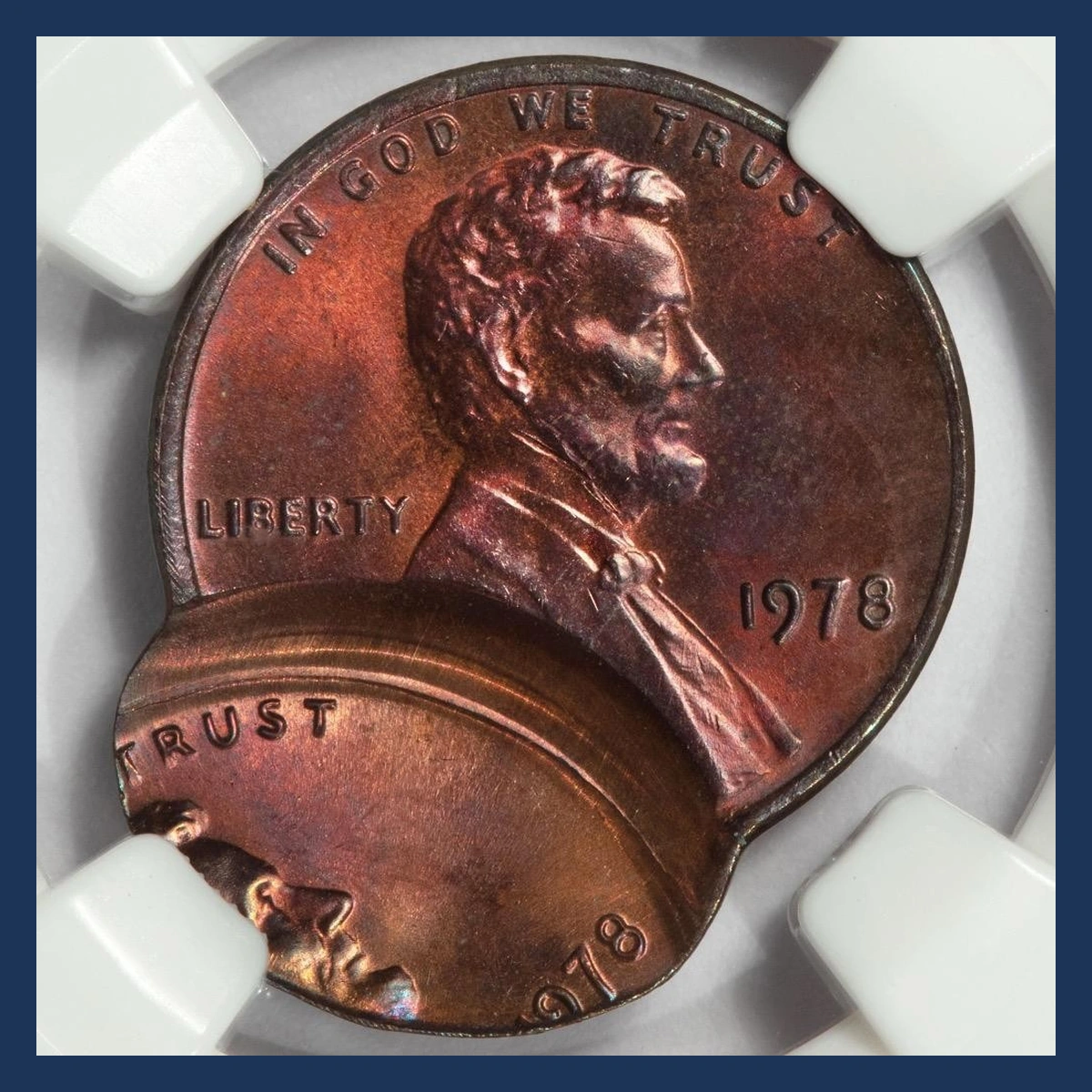
A small second design can remain near the outer edge of an otherwise recognizable cent. The coin moved after its first blow and received another strike.
The no-mintmark example has a second strike about ninety percent off center. It was graded ANACS MS60 Red and Brown, meaning unworn with many marks and mixed copper color.
A different Denver cent has a seventy-five-percent off-center second strike with one side blocked. Its listing does not identify that blocked face.
Those are different sequences. Their percentages and affected surfaces should remain attached to their own specimens rather than combined into one imagined coin.
Estimated Value
Estimate $50–$1,000 for confirmed 1978 double strikes of these kinds. Clear remaining designs and original surfaces support a stronger comparison than a confusing overlap.
A 1979 cent with an off-center second strike brought $204 in September 2023. That copper-alloy cent offers a nearby-year mechanism comparison.
The recorded 1978 grades differ, and the Denver coin has an additional blocked-side feature. Compare each complete coin instead of assuming ninety percent displacement must be worth more than seventy-five percent.
How to Identify
Choose a recognizable date, portrait, or lettering fragment from each strike and follow both with a 10× magnifier. Their overlap should reveal two connected design positions.
Turn the Denver example over to locate the blocked portion of its second strike. Do not guess which face was blocked from the percentage alone.
The ordinary starting blank weighs 3.11 g and spans 19.05 mm. Use a scale and calipers to record whether the metal spread or appears to have been removed.
Inspect the plain edge and lettering for later crushing. Two original impressions explain a double strike; narrow flat shelves beside individual letters can arise from a different movement during one blow.
12. 1978 Lincoln Penny Deep Die Cap (Estimated Up to $1,500)
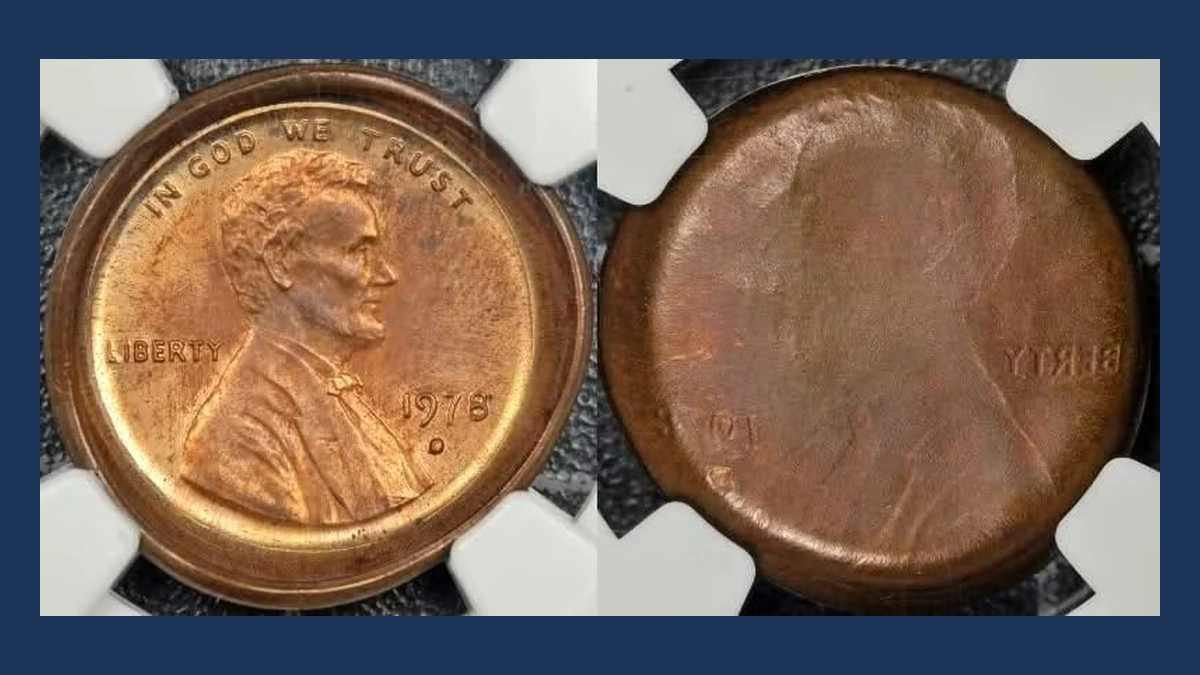
The outside of this Denver cent rises into a deep cup. The coin stayed attached to a stamping tool as later blows stretched its metal around the tool’s side.
Collectors call the stuck coin a die cap. It is different from the flatter pennies struck beneath that covering.
A collector’s report describes an NGC MS65 Red and Brown cap with stretched mirror detail on its back. Part of Lincoln’s nose appears repeated within that distorted impression.
Those details belong to the reported object. A normal penny bent into a cup can look unusual without showing the same original striking history.
Estimated Value
For a confirmed deep 1978-D die cap, estimate $150–$1,500. An intact wall, clear remaining design, and natural copper surfaces generally make the shape easier to appreciate.
A 1979-D deep front cap sold for $329 in January 2016, graded PCGS MS64 Red. That is a nearby copper-alloy comparison, not a sale of the reported 1978-D piece.
The collector report supplies a specimen description rather than a verified realized price. Later bending or repaired walls need separate condition consideration.
How to Identify
Support the coin while viewing its profile; do not push the wall flat. A 10× magnifier can follow the original design as it stretches into the rising metal.
On the reported Denver piece, inspect the distorted mirror detail on the back separately from the front portrait. The repeated nose belongs within that transferred image, not automatically to another full strike.
A scale compares the normal 3.11 g. Use existing caliper measurements when a holder protects the cap, since the final outline differs from a flat 19.05-mm cent.
Examine the plain edge for plier marks, sharp forced folds, or repairs. The wall and surviving design should form one continuous struck object.
13. 1978 Lincoln Penny Struck on a Clad Dime Blank (Estimated Up to $2,000)
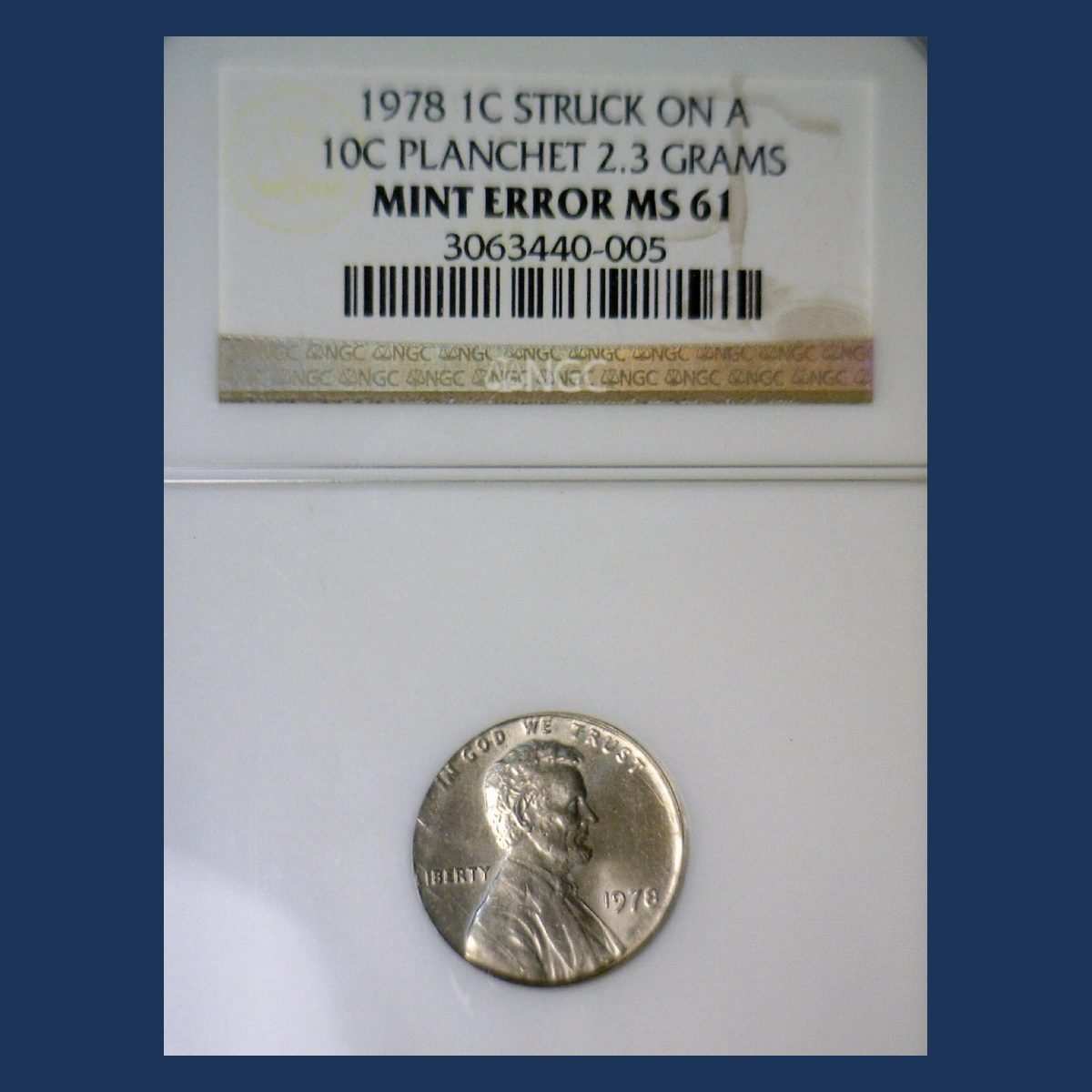
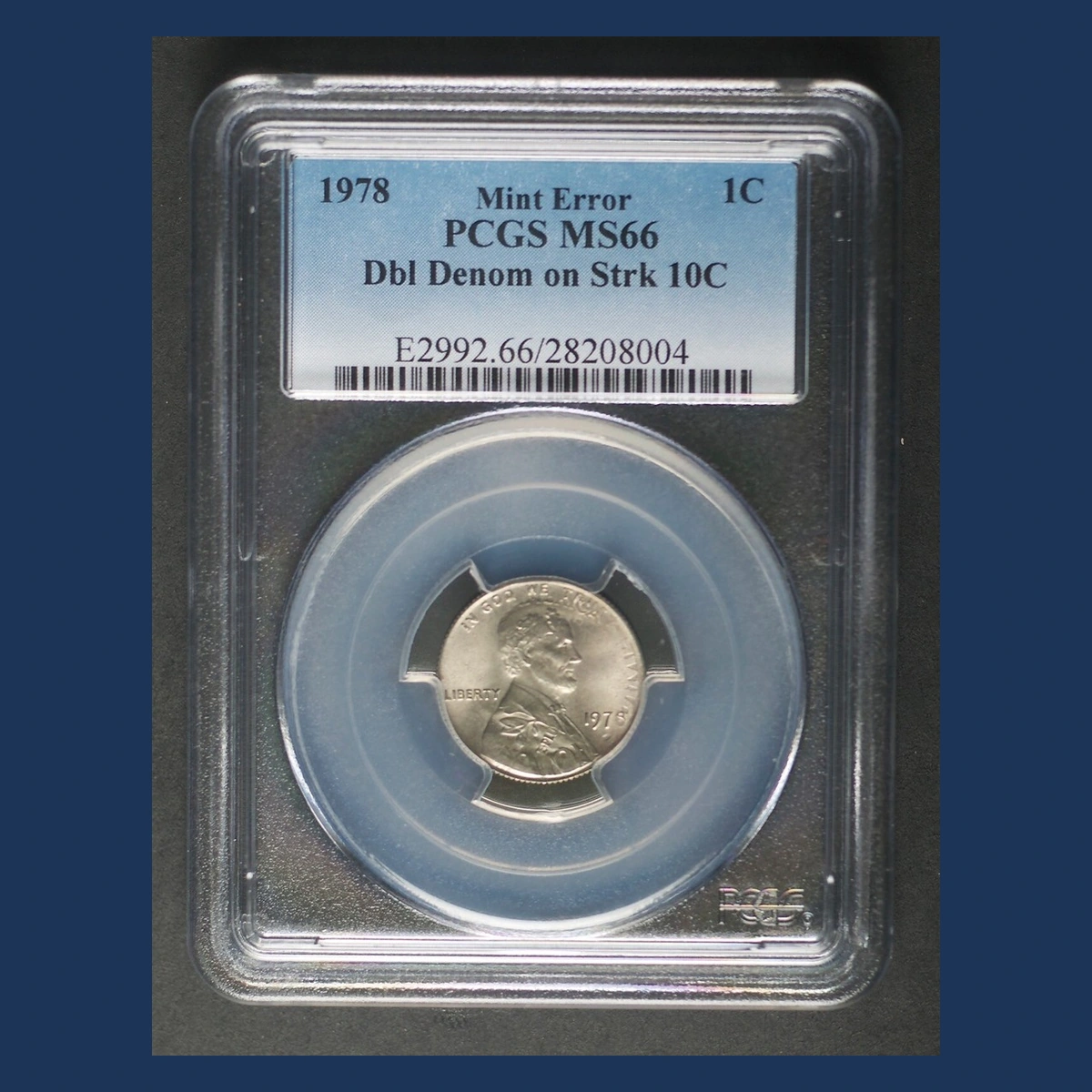
The cent design has less room when it lands on a disc intended for a dime. The blank is smaller, lighter, and made from layered metal.
One recorded no-mintmark 1978 example was graded PCGS MS64. A different example used a Type One blank, meaning its edge had not received the usual preparatory raised rim.
Another report describes a dime-blank cent with a back-side struck-through mark and a recorded 2.33-g weight. That weight and added impression belong to this specimen.
The blanks had no earlier Roosevelt design. Surviving dime pictures would instead indicate a cent struck over a finished coin.
Estimated Value
Estimate $250–$2,000 across authenticated dime-blank examples and stronger combinations. Readable cent identity, original surfaces, and a clear added impression affect the closest comparison.
A 1976-D cent on a clad dime blank sold for $480 in December 2024. It provides a nearby-year wrong-blank comparison rather than a price for the 2.33-g struck-through piece.
Type One describes blank preparation, not another denomination. The added label alone does not guarantee a larger premium without an appealing, securely identified coin.
How to Identify
A precise scale helps separate the normal 3.11-g cent from a clad dime blank near 2.268 g. Keep the reported 2.33-g measurement with its own specimen.
Calipers compare the usual dime width of 17.91 mm with the cent’s 19.05 mm. The cent strike may spread the smaller blank.
Under a 10× magnifier, inspect the edge for light outer layers bonded around a copper center. A Type One blank need not show a prepared rim or finished dime grooves.
Examine the separate struck-through piece’s back without guessing the trapped material. Search both faces for older dime details before deciding whether the starting object was an unused blank.
14. 1978 Lincoln Penny Reported Nickel Blank (Estimated Up to $3,000)
A cent on a nickel blank would be heavier and wider than a normal penny. The blank intended for a five-cent coin would receive Lincoln and the Memorial instead.
The 1978 year guide reports this type without a confirmed original auction specimen. The claim needs a separate match to genuine nickel metal and dimensions.
A nickel struck on a cent blank is the opposite error. Its Jefferson design and copper-colored cent metal cannot prove this reported cent-on-nickel case.
Color alone is insufficient either way. A coating can make an ordinary penny pale without changing its original blank into a nickel.
Estimated Value
For a professionally authenticated cent on a genuine nickel blank, use a conditional estimated $800–$3,000. This is a wrong-blank comparison range, not a realized price for a verified 1978 example.
Recent dime-blank cent sales provide context for smaller wrong blanks; the 1976-D example brought $480 in December 2024. A larger nickel blank requires its own comparison.
The estimate applies only after the metal and denomination are established. An ordinary plated penny or the reverse nickel-on-cent error does not qualify.
How to Identify
Check for a weight near the nickel standard of 5.00 g, compared with the normal cent’s 3.11 g. Calipers compare a nickel blank’s 21.21 mm with the cent’s 19.05 mm.
Those are starting specifications, not measurements from a confirmed 1978 specimen. Striking can change the final outline.
Use a 10× magnifier to inspect the genuine date, Lincoln design, and plain edge for altered digits or added metal. Professional testing can check the usual nickel alloy of 75 percent copper and 25 percent nickel.
Confirm that cent designs were struck on the larger blank. Jefferson on copper cent metal tells the opposite story and needs a different label.
15. 1978 Lincoln Penny Cent Struck Over a Finished Dime (Estimated Up to $3,000)
A recognizable Roosevelt portrait remains beneath Lincoln on the recorded 1978 overstrike. The first coin was already a dime before it reached the cent press.
On the NGC MS64 example, Roosevelt points toward the lower right relative to Lincoln. Part of the torch sits beneath the Memorial’s right side.
Portions of both dates survive, rather than two completely clear dates being guaranteed. These details describe this specimen’s overlapping designs.
A different mixed lot also contained a cent-over-dime example. Another coin’s listed weight within that lot should not be assigned to this type simply because the objects were sold together.
Estimated Value
Estimate $600–$3,000 for identified 1978 cent-over-dime errors, depending on preservation and how clearly the older design remains visible. Complete dates are helpful but not required for every authenticated example.
A 1990 cent over a 1989-P dime sold for $2,160 in September 2025. That transaction supplies a recent two-denomination comparison, with different dates and condition.
The estimate values one overstruck coin. A mixed auction lot cannot establish its individual price without a separate recorded result.
How to Identify
Start beneath the Memorial’s right side on the recorded specimen and locate the older torch. Follow that feature under a 10× magnifier, then turn to Roosevelt beneath Lincoln.
Keep the two date fragments attached to their own designs. Do not fill in a missing numeral from an unrelated coin’s photograph.
A clad dime normally starts near 2.268 g and 17.91 mm, compared with a cent’s 3.11 g and 19.05 mm. Use a scale and calipers while allowing for spread from the later blow.
Inspect the layered edge for seams or alteration. The same piece of metal should carry genuine older dime details underneath the cent impression, not two joined coin faces.
Conclusion
Read the whole coin before naming its unusual feature. A missing section, a blank crescent, and a smooth blocked area can each point to a different event.
The estimated $2–$3,000 range includes small tool defects and major wrong-blank combinations. Use 3.11 g as the normal copper-alloy starting point.
Keep mint-specific features together. Leave fragile caps and peeling metal untouched while comparing the design.