1803 Dollar Coin Error List with Pictures

Turn an 1803 dollar over carefully: its eagle may sit at an angle even when Liberty was upright. That is different from finding two overlapping designs on one side.
A nearly unworn example with a low repeated 3 and a turned back brought $18,000 in November 2019. Several features can share the same coin.
This 1803 Draped Bust dollar error list explains those differences, with estimated whole-coin values of $1,000–$100,000. Read on for documented details, reported examples, and the checks required before assigning an off-center error value.
1. 1803 Draped Bust Dollar Raised Cracks through the Stars
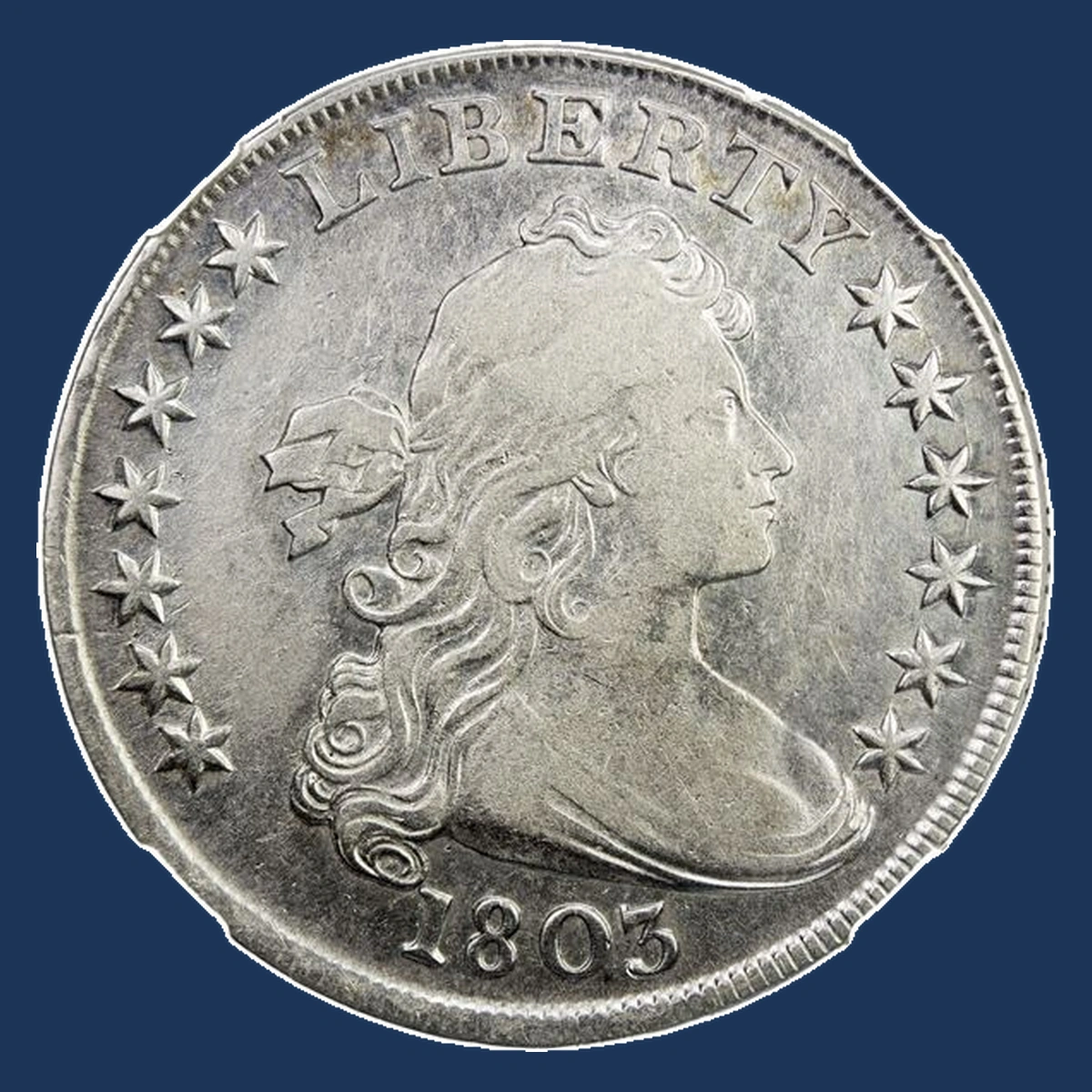
The stars to Liberty’s right can be joined by a thin raised line. Auction descriptions record this feature on Large 3 dollars, named for the size of the final date digit.
The line comes from a crack in the steel tool used to stamp the front. Silver pressed into the split, leaving a narrow raised copy on the coin.
These examples can also have a turned back. That separate feature does not mean the star crack was made by a second strike.
Inspect the connecting line itself, rather than judging by how bold the stars look.
Estimated Value
Estimated values are $1,000–$20,000 for worn through attractive lightly worn examples. Much of that price belongs to the early silver dollar itself.
A cracked example graded NGC VF30 carried a $2,400–$3,000 auction estimate in September 2021 but did not sell. VF30 describes a moderately worn coin with substantial detail.
That estimate is useful context, not a realized price. Smooth surfaces and clear star connections can help appeal, while cleaning or deep scratches work against it.
How to Identify
Place Liberty upright and examine the stars on the viewer’s right. Follow the space between neighboring stars, where a connecting thread is easier to distinguish from a normal star point.
A 10× magnifier and light from the side should reveal whether the line rises above the silver. Scratches instead cut a path into the coin and may leave displaced metal beside that cut.
Compare several connections with a photographed Large 3 example, not just one place where two points seem to touch. A matching raised path through the right-hand star group is the useful check; unrelated scratches elsewhere do not strengthen it.
2. 1803 Draped Bust Dollar Rotated Back
Liberty can stand upright while the eagle appears tilted after the coin is turned over. The front and back tools were not aligned in their usual positions.
One Large 3 example has a back turned about 20° counterclockwise. Another auction description gives about 45° counterclockwise for a different coin.
This is a relationship between the two faces, not two impressions on the same face. A single sharp design can therefore show a rotation error.
Independently rotated photographs can create the same appearance. The way the physical coin is held and flipped is essential.
Estimated Value
Allow an estimated $1,000–$25,000 for identified examples from worn coins through attractive nearly unworn pieces. The coin’s grade remains more important than a modest turn by itself.
A PCGS AU58 Large 3 dollar with about 20° rotation brought $18,000 in November 2019, recorded by PCGS Auction Prices. AU58 means only slight wear.
It also has a repunched 3. Those two features belong to one sale, not two separate valuations.
How to Identify
Hold the dollar by its left and right edges with Liberty upright. Turn it top to bottom around that horizontal axis, without twisting it sideways.
The eagle should normally appear upright after this flip. Compare its central vertical line with your starting position to see whether it leans.
Repeat the movement several times before measuring an angle. A slip in the fingers can create a false turn, and separately straightened photographs cannot preserve the relationship.
For a coin in a holder, turn the whole holder the same way and use its edges as a fixed guide. A repeatable tilt of the entire back, without overlapping designs on either face, distinguishes rotation from a rotated second strike.
3. 1803 Draped Bust Dollar Rotated Double Strike
Two partly overlapping designs on one face can show that a coin was struck again after it turned. The second blow may flatten much of the first image while leaving parts of it visible.
An 1803 price guide reports a Small 3 BB-252 example described as a rotated double strike. It gives a PCGS VG10 grade, indicating considerable wear.
The important feature is the surviving second impression, not simply a crooked eagle when the coin is flipped. A rotated back can result from one strike.
The location of surviving details must be checked on the individual coin.
Estimated Value
Estimate $2,000–$30,000 for a genuine double-struck 1803 dollar, with clear overlapping designs favoring the upper part. Wear can make a second impression difficult to recognize.
The price guide reports a $2,115 Heritage sale in 2016 for the VG10 example. Treat that as a reported result, rather than assigning it to another dollar with a tilted back.
The strength and spread of the second image matter. A modest, heavily worn example need not bring a dramatic error premium.
How to Identify
Look for more than one border, letter, star, or portrait outline on the same face. Do not begin by measuring the angle between front and back.
Under magnification, trace one set of details as far as wear allows. Then see whether another set fits the same dollar design at a different angle.
A second strike can flatten an older impression where the two designs overlap. Separate scratches or thick date digits should not form a convincing second design by themselves.
Check the other side for related evidence without assuming it must be equally strong. Keep photographs of the whole coin beside the close-ups.
Two connected sets of design details on one face provide the direct test for another strike.
4. 1803 Draped Bust Dollar Repeated Date or Letter Punches
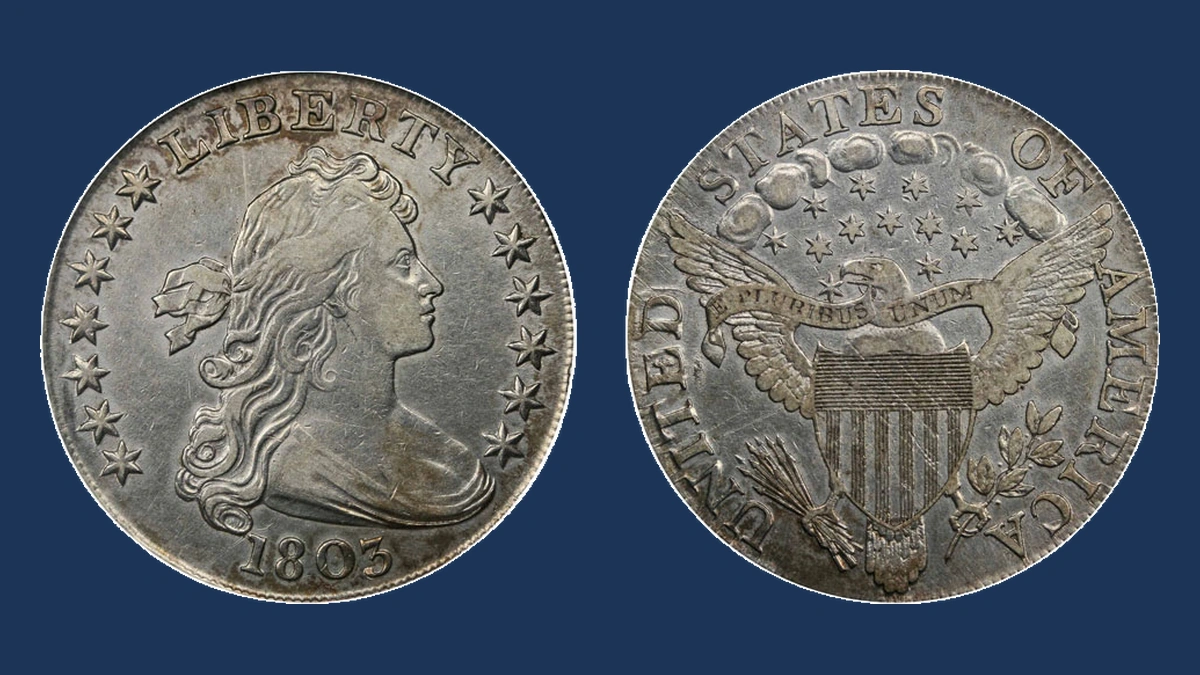
A small extra stroke below the final 3 can be left by an earlier date-punch position. This is a feature of the Large 3 variety called BB-255.
A different Large 3 variety, BB-257, has a repeated base on the T in LIBERTY. The two locations should not be combined into one imagined coin.
Both features began when a punch was applied more than once while preparing a steel stamping tool. Coins copied the extra strokes already present in that tool.
This is not evidence of a different year under 1803 or of the whole coin being struck twice.
Estimated Value
For the BB-255 date feature, estimate $1,000–$25,000 across worn and nearly unworn examples. The $18,000 AU58 sale includes this low repeated 3.
The much rarer BB-257 letter variety calls for a separate estimated $15,000–$75,000 range if correctly identified. That is an estimate for the complete variety, not an observed sale of its small T detail.
Original surfaces, wear, and correct variety identification matter. A damaged T or ordinary broad serif does not qualify for the rarer variety’s range.
How to Identify
Decide which feature you are testing before choosing a comparison photograph. For BB-255, examine the bottom of the large 3 for a lower repeated stroke, keeping the entire digit visible.
The T test belongs to BB-257 instead. Compare its base with a clearly identified example, including the adjoining letters so a normal serif is not mistaken for another punch.
Fine scratches and flattened edges can imitate short extra lines. Rotate the lamp around the coin to separate the raised metal from shadows and reflections.
Other features should agree with the same named variety. A match at the 3 cannot substitute for a match at the T, because these are different front tools.
5. 1803 Draped Bust Dollar Off-Center Strike Checks
An off-center strike leaves part of the metal disc outside the stamping tools. The design is cut off on one side, with an unstruck area opposite it.
For an 1803 dollar, that description is a test to apply to a suspected coin, rather than a named authenticated example here. A merely uneven border is not enough.
Early dollars often have imperfect centering without a major missing section of the design. Filing away the edge after striking can also create a misleading outline.
The full dollar design and original edge must support the identification.
Estimated Value
A genuine, authenticated 1803 off-center dollar is estimated at $10,000–$100,000, depending on displacement, date visibility, and preservation. This is a conditional valuation.
For comparison, an 1880 Morgan dollar struck 40% off center sold for $72,000 in May 2022 at Heritage Auctions. It is a different date and design.
That later sale illustrates demand for dramatic silver-dollar errors. It does not establish an 1803 transaction or authenticate a coin with a narrow rim.
How to Identify
Check the edge before treating a strange outline as a Mint error. An original Draped Bust dollar has edge lettering, so saw marks or freshly filed metal deserve close attention.
Then photograph both faces with every border visible. A shifted design should end naturally at the original metal boundary, while an unstruck area remains on the opposite side.
A scale and calipers can help detect removed metal or a wrong denomination. The normal dollar was about 26.96 grams and roughly 39–40 millimeters across, allowing for wear and early manufacturing variation.
Those measurements alone prove nothing. The decisive visible combination is missing design at one side and a genuine unstruck area opposite it, without signs that the coin was cut down.
Conclusion
Check the kind of change before naming an 1803 dollar error. A tilted back, an extra digit outline, and a second strike describe different events.
Estimated whole-coin values range from $1,000–$100,000, including a conditional range for a genuine off-center example. Wear and the actual error matter more than an exciting label.
Keep the date, full design, and lettered edge in view, and avoid counting several features as several separate coins.