1868 Dollar Coin Error List with Pictures

A tiny extra 6 can be easy to miss beneath the date of an 1868 silver dollar. A coin with that feature sold for $6,600 in November 2025.
The same coin also has a fine raised line across letters on its back. These marks tell different parts of its story.
This 1868 Liberty Seated dollar error list covers date-punch mistakes and raised marks left by the stamping tools. Estimated whole-coin values span $500–$20,000; read on to separate ordinary dollars from collector Proofs and find the right details.
1868 Liberty Seated Dollar Misplaced and Repeated Dates
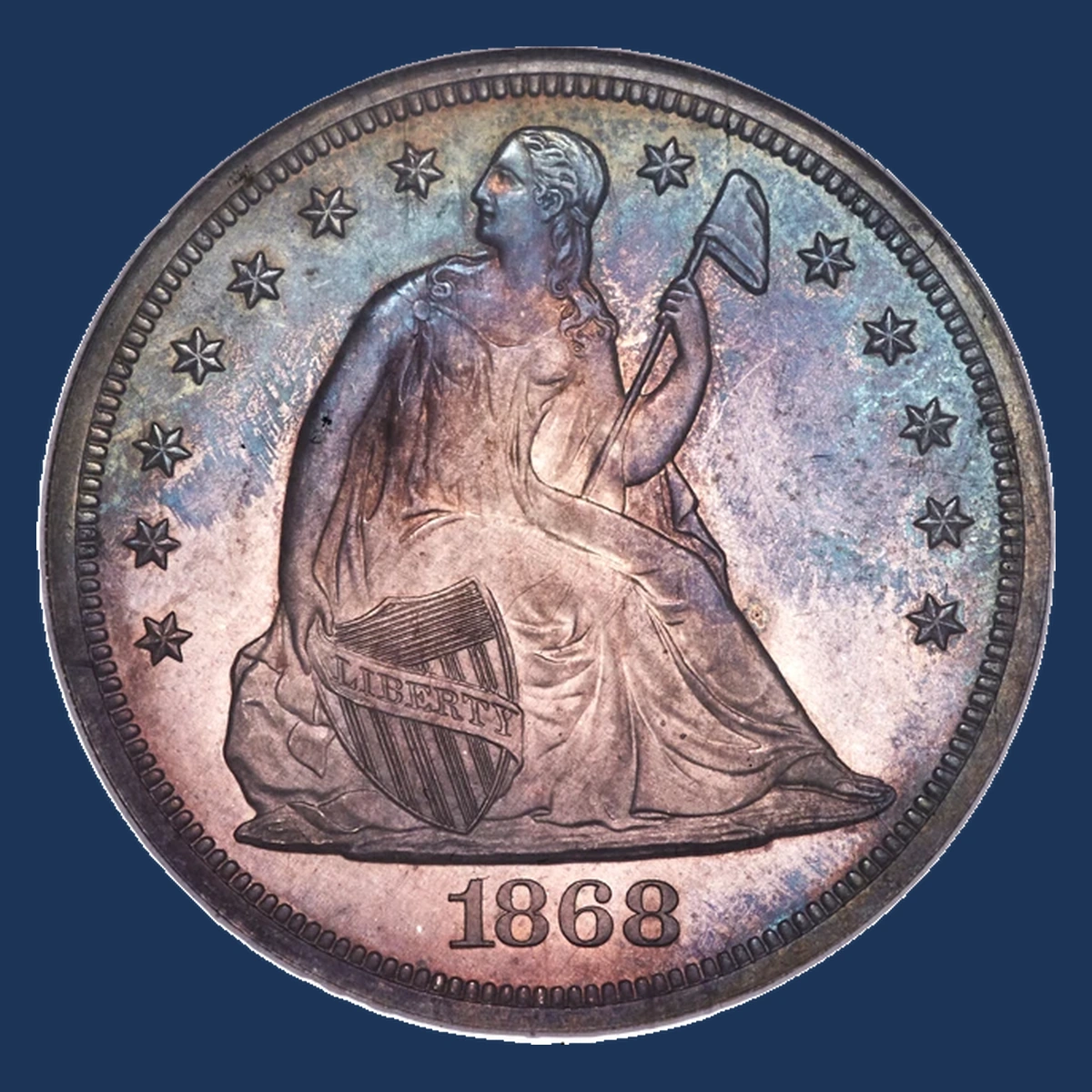
Look below the normal 6 on an ordinary 1868 dollar. A second 6 can hide among the small beads around the border.
This FS-301 variety began with a misplaced date punch in the steel tool used to stamp coins. Each coin copied the extra digit.
Proofs, specially made collector coins, also have date varieties. FS-302 is a misplaced-date listing; Breen-5480 describes a repeated date impression that shows best on early strikes.
These Proof names should not automatically mean two different coins. Their date details require separate comparison with the ordinary FS-301.
Estimated Value
An ordinary FS-301 is estimated at $500–$10,000, depending on wear and surface quality. The PCGS MS62 example brought $6,600 at Heritage Auctions in November 2025.
For the Proof date varieties, allow $2,500–$15,000. Greysheet lists FS-302 guide values around $3,080–$10,230, rather than recorded sales.
These ranges buy the entire coin. A beautiful Proof or unworn dollar carries substantial value before its extra date details are considered.
How to Identify
First decide whether you have an ordinary dollar or a Proof. Bright, mirrorlike areas alone cannot settle this: the ordinary $6,600 coin also has reflective surfaces.
For an ordinary FS-301, place a 10× magnifier over the border directly beneath the normal 6. Compare the small extra curve with a clearly identified FS-301 photograph.
A nick in one border bead is not enough. Follow the digit shape across the surrounding beads without scraping the surface.
For a Proof, use a photograph carrying the same variety name. Do not apply the ordinary coin’s lower-6 position to FS-302.
On a suspected Breen-5480, compare the repeated date outlines with an early-strike example; weak later impressions can hide them.
1868 Liberty Seated Dollar Raised Cracks and Drapery Lump
A fine raised line joins letters near the top of the back on the OC-2 variety. It runs from the last S in STATES to the tops of O and F in OF.
A crack in the stamping tool left that line on the coin. This example also carries the misplaced 6 described above.
Another variety, OC-1, has a small raised lump inside Liberty’s clothing. It is a mark from the stamping tool, rather than part of the intended folds.
The lump and the lettering crack occur on different examples.
Estimated Value
Allow an estimated $500–$20,000 for identified examples across worn and well-preserved unworn grades. Most of that value comes from the silver dollar’s rarity and condition.
The OC-2 with the back crack is the same MS62 coin that sold for $6,600. Its crack and misplaced date cannot be priced as two separate coins.
The OC-1 lump appears on an NGC MS65 example. That higher grade describes better preservation, not a guaranteed premium for the lump.
How to Identify
Turn the coin to the eagle side and find OF in the outer lettering. Under low, angled light, look for a fine raised thread touching the tops of both letters.
Trace it back toward the last S in STATES. A cut below the surface follows different rules: it may be a scratch rather than a copied tool crack.
The clothing lump calls for a different comparison. Use a close photograph of an identified OC-1 and match the surrounding folds before judging any raised spot.
Loose dirt can look like a lump, but do not pick at it. Move the light instead, keeping the coin still.
For the OC-2 crack, the easiest starting check is the continuous raised line linking the final S to OF.
Conclusion
The extra 6 below the ordinary 1868 date offers a clear place to begin. Proof date varieties need their own comparisons, while the back crack and drapery lump belong to different examples.
Estimated whole-coin values run from $500–$20,000. Condition and the type of coin matter far more than counting its unusual marks.
Keep the surface untouched, and compare clear photographs before assigning a variety name.