1876 Dollar Coin Error List with Pictures

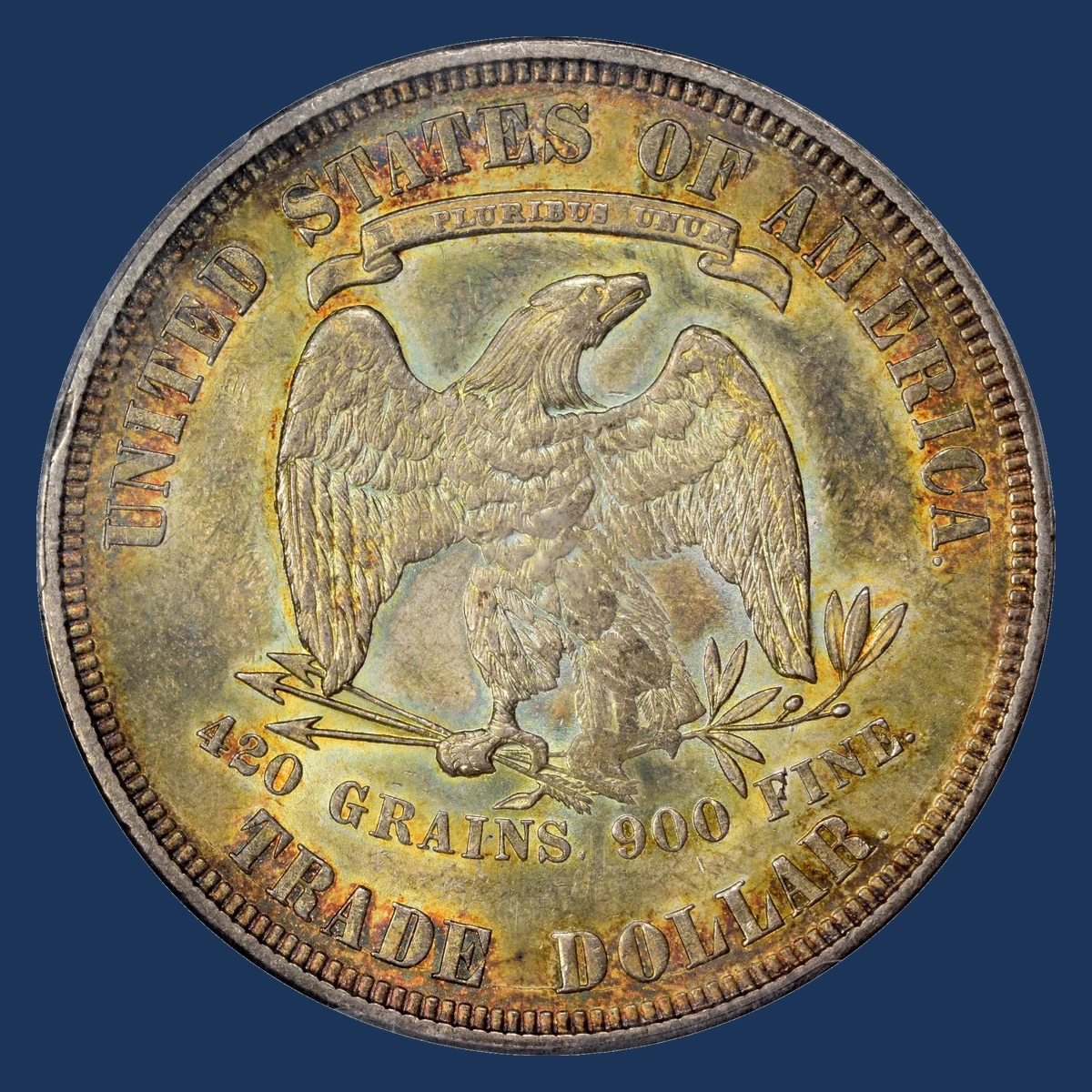
A repeated olive branch can be worth examining before a suspicious date digit. An 1876-CC doubled-back dollar graded MS64+ sold for $55,200 in September 2019.
MS64+ means an unworn coin with especially good surfaces for that grade. Other 1876 Trade Dollar errors involve date-punch remnants, raised cracks, or a reported weight difference.
Estimated whole-coin values here range from $200–$60,000. Follow the mint-specific checks below, especially where a source reports a feature without establishing its cause.
1. 1876 Trade Dollar Repunched 6 on a San Francisco Dollar
Inside the final 6, part of another 6 can remain visible. The date punch entered the steel stamping tool more than once, leaving a small extra curve.
This San Francisco variety belongs to the later front-and-back design combination. Collectors call those two designs Type II.
It is a repeated 6, not a 5 or 4 beneath the date. Old overdate names should not change the shape being examined.
The extra detail came from preparing the tool before it struck the silver. A second blow to the entire coin would leave a different pattern of repeated design.
Estimated Value
Use an estimated $300–$5,000 for identified repunched-6 examples from circulated through ordinary unworn condition. The visible remnant and preservation both affect how useful a comparison will be.
A strong date on original surfaces can attract more interest than a heavily rubbed or cleaned example. The extra curve alone does not make every 1876-S equally scarce.
Match this date variety rather than a doubled-portrait coin from the same mint. Their different features and collector demand can produce very different prices.
How to Identify
Check the S below the eagle before enlarging the date. Keep 1876 fully visible while examining the inner curve of the last digit.
Compare the leftover curve with a clear example of the repeated-6 variety. Do not force a small irregular mark into the shape of a 5 or 4.
The matching later design has ribbon ends pointing downward on the front and no berry below the eagle’s claw. Those normal design details help keep the correct comparison beside your coin.
Use changing light to see whether the remnant rises from the silver. An incised scratch through the loop needs a different explanation from a raised piece of the earlier numeral.
2. 1876 Trade Dollar Reported Light-Weight Carson City Candidate
A year article reports a Carson City dollar weighing 26.99 grams. That is slightly below the usual Trade dollar standard of about 27.2 grams.
A lighter blank is one possible explanation, but the number does not establish how the difference arose. Wear, edge filing, measurement error, and a counterfeit can also affect weight.
The report therefore remains a candidate for a mint-made blank defect. It does not prove a special metal composition or a different denomination’s blank.
The whole edge and surface need examination before an unusual scale reading becomes an error identification.
Estimated Value
Estimate $500–$15,000 for a genuine Carson City dollar in comparable worn through lower unworn conditions, including a confirmed modest blank-weight defect. This is primarily a whole-coin range.
A reading of 26.99 grams alone does not earn an added mint-error premium. The cause of the difference must be established first.
Compare the coin’s remaining detail, surfaces, and edge with ordinary examples of the same mint. Filing or heavy wear may reduce value instead of creating the rarer mint-made condition.
How to Identify
Use a checked scale that reads to hundredths of a gram for a loose coin. Repeat the weighing and record the result without rounding it to a convenient number.
Measure the diameter with calipers and compare it with the normal 38.1 millimeters. Then inspect the edge grooves for flat areas, filing lines, or other signs that metal was removed.
Now examine the high points for wear and compare the design with an authenticated Carson City example. The difference between 26.99 and roughly 27.2 grams is too small to explain the cause by itself.
A coin already in a grading holder should stay there. Use its documented measurements or arrange professional examination instead of opening the holder to obtain a new reading.
3. 1876 Trade Dollar Raised Cracks on Philadelphia and Carson City Examples
A raised line can form when silver fills a crack in the stamping tool. The crack’s outline is then copied onto the coin.
A Philadelphia dealer example has a line below TRADE on the back. A separate Carson City auction example has a crack passing through the first seven stars on the front.
The two locations belong to different coins and different design combinations. One should not be used to fill in missing details of the other.
These lines are not trenches cut into the dollar after minting. Their position and height help separate original tool cracks from surface scratches.
Estimated Value
Estimate $200–$5,000 for comparable Philadelphia examples and $500–$25,000 for Carson City examples. These ranges include the complete dollar’s value across circulated through ordinary unworn condition.
The reported Philadelphia coin was graded MS62, an unworn grade with noticeable marks. The Carson City example was AU58, showing only slight wear.
Much of the price difference can come from the mint and preservation rather than the crack. A common thin line is not automatically more valuable than a clean surface without one.
How to Identify
Choose the appropriate face for the mint you are checking. On the Philadelphia coin, locate TRADE and follow the raised line beneath it.
For the Carson City example, use a full-front photograph to track the line through the first seven stars. Keep the surrounding flat surface visible to show whether the feature continues between them.
Tilt the light across the line and compare its relief with the stars or letters nearby. A scratch can push up thin ridges along a cut, so examine the center rather than judging one bright edge.
Match the entire route to the documented coin. An unrelated line through a different group of stars should not inherit this example’s identification or price comparison.
4. 1876 Trade Dollar Doubled Designs on Separate Mint Issues
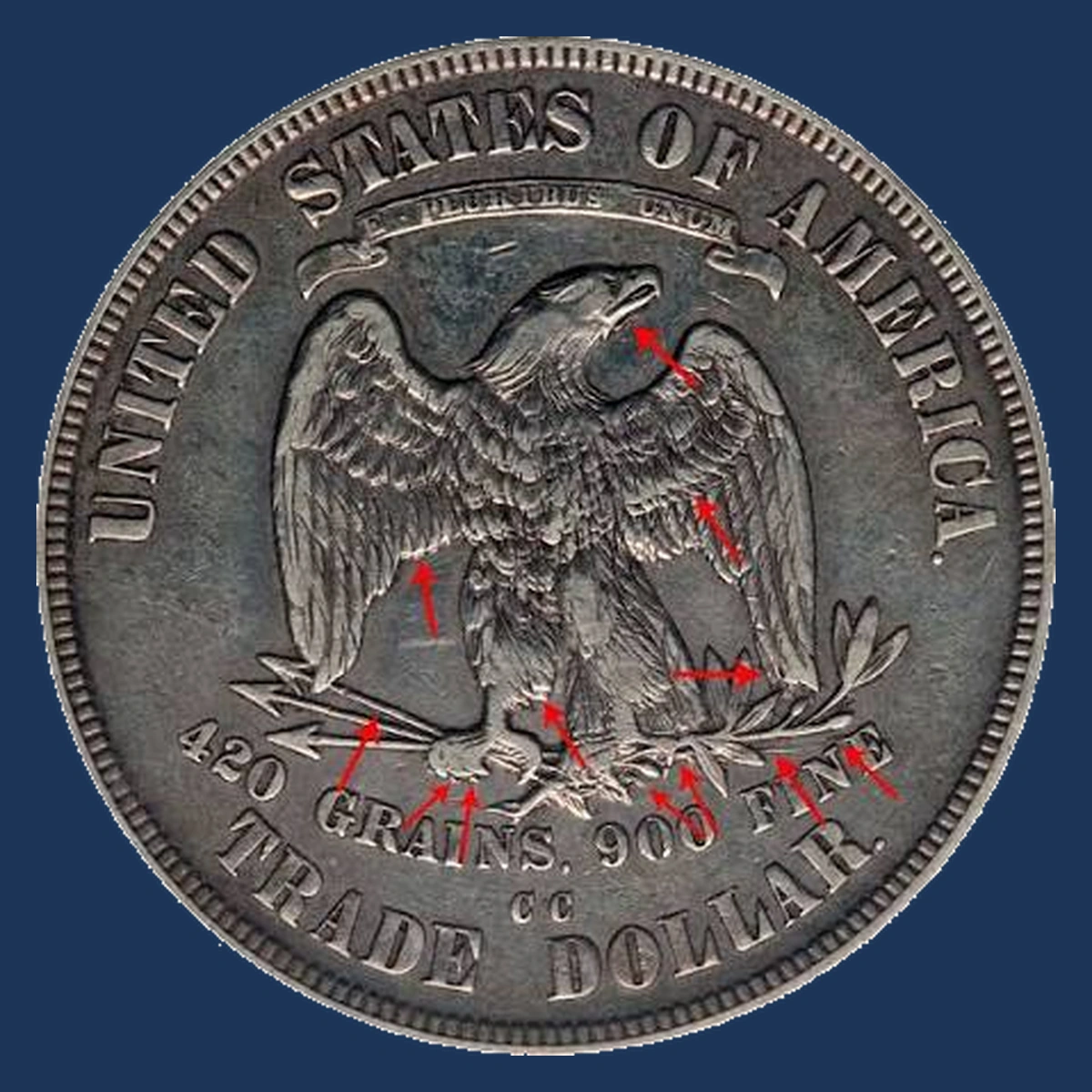
Carson City examples can show strong repeated outlines in the olive branch, back lettering, and the eagle’s left wing. That wing appears on the viewer’s right.
A separate San Francisco variety repeats parts of Liberty’s chin, extended hand, left foot, and clothing. The repeated design was already in the die, the steel stamping tool.
An older article also reported a San Francisco doubled back, but its precise pattern was not established in the account. Carson City’s details cannot be assigned to it.
These are separate examples of doubled tools, not one dollar bearing every listed feature.
Estimated Value
Estimate $400–$60,000 for the Carson City doubled back and $1,000–$15,000 for the San Francisco doubled front, depending on condition.
A CC MS64+ realized $55,200 in September 2019, recorded by PCGS. A San Francisco AU50 with moderate wear brought $9,000 in September 2023.
For the reported San Francisco doubled back, use a conditional estimate of $500–$10,000 after matching an authenticated example. The established varieties’ sales do not prove that candidate’s identity.
How to Identify
On a Carson City example, begin with the olive branch above IN in FINE. Compare the repeated contours with the lettering and the wing on the viewer’s right.
A San Francisco front example needs a different sequence. Compare the chin and extended hand first, then check the left foot and clothing folds for the same copied outlines.
Low flat shelves from movement during striking should not replace the documented raised pattern. Photograph several related features rather than relying on one thick-looking edge.
For the older San Francisco back report, obtain its own matching specimen image before naming a variety. Neither the CC back photograph nor the S front photograph establishes where doubling should appear on that reported coin.
Conclusion
The mint letter helps choose the right 1876 Trade dollar comparison. San Francisco’s repeated 6 and doubled portrait differ from Carson City’s strongly doubled back.
Estimated whole-coin ranges span $200–$60,000, with the $55,200 doubled-back sale at the high end. Small cracks often owe much of their value to the underlying coin.
For a light dollar, establish why metal is missing before paying a mint-error premium.