1878 Trade Dollar Error List with Pictures

An enlarged 1878-S Trade dollar can keep its entire design even when the impression sits off to one side. Error specialist Mike Byers reported a $17,250 auction result in January 2006 for just such a coin.
Other examples need closer inspection: doubled arrows, faint transferred shapes, or an unusual edge. This 1878 Trade Dollar error guide covers four types, all reported here on San Francisco coins.
Estimated whole-coin values range from $200–$30,000. Follow the comparisons below to tell an enlarged strike from missing design, and genuine doubling from damage.
1. 1878-S Trade Dollar Faint Traces from Colliding Tools
Faint fragments of the opposite design can appear in spaces where they do not belong. Some 1878-S Trade dollars have these clash traces along with a doubled back design.
A clash occurs when the two steel stamping tools hit each other with no metal disc between them. Marks left on the tools then appear on coins made afterward.
The clash and doubled design have different causes, even when they share a coin. The doubled detail was already in the tool.
A shallow scratch or a merchant’s later stamp is not a clash mark.
Estimated Value
Estimate $200–$5,000 for worn through attractive unworn examples with clear clash traces. The underlying coin and any recognized doubled-die variety account for much of its value.
The $2,760 MS63 doubled-die sale discussed below offers a same-year variety comparison. It does not establish how much a clash alone adds.
Strong, recognizable transferred shapes can attract specialist interest. Faint traces should not outweigh heavy wear, cleaning, or distracting marks when comparing prices.
How to Identify
Before studying an extra line, identify whether it resembles part of the opposite face. A clash should relate to a recognizable design shape, unlike a random scratch.
Compare both faces with a confirmed clashed example of this variety. Keep the normal eagle, seated Liberty, and inscriptions visible so the extra marks can be placed correctly.
Use soft angled light to bring out faint traces without harsh glare. The doubled arrows and 420 are a separate feature and cannot by themselves prove that the tools also clashed.
Merchant stamps cut recognizable added symbols into the finished surface.
Match several connected parts of the suspected trace to the opposite design rather than naming a clash from one isolated line.
2. 1878-S Trade Dollar Partial Collar Strike
Part of the edge can show normal grooves while another part lacks them. The coin entered only partway into the collar, the ring that controls its diameter and forms the edge grooves during striking.
Sullivan Numismatics offered an 1878-S example described as PCGS Very Fine Details, Cleaned. That description separates its worn, cleaned condition from the original striking error.
A partial collar can create a step between metal held by the ring and metal that spread beyond it. The position and extent must be checked on the actual coin.
Later edge filing can imitate missing grooves.
Estimated Value
A reasonable estimated range is $500–$5,000 for a confirmed partial collar, from cleaned circulated pieces to attractive examples with a clear edge step.
The dealer’s cleaned Very Fine coin belongs to the lower-condition end of that comparison. Cleaning remains a value penalty even when the Mint error is genuine.
The much more dramatic broadstrike below reportedly sold for $17,250. That related collar failure shows collector demand, but its price should not be transferred directly to a partial collar.
How to Identify
An edge photograph matters more than a straight-on portrait view here. Request views around the whole circumference if the holder hides the important transition.
Follow the grooves into the area where they stop, looking for a step or ledge formed by uneven expansion. A smooth area alone could be wear or later filing.
Inspect the nearby rim for crushed metal and parallel tool marks. Those signs can indicate that the edge was altered after striking.
The normal Trade dollar is about 38.1 millimeters wide and weighs about 27.2 grams, unlike a Morgan dollar. On a loose coin, size measurements can support the inspection, but the intact boundary between constrained and expanded edge metal is the decisive feature.
3. 1878-S Trade Dollar Doubled Design on the Back
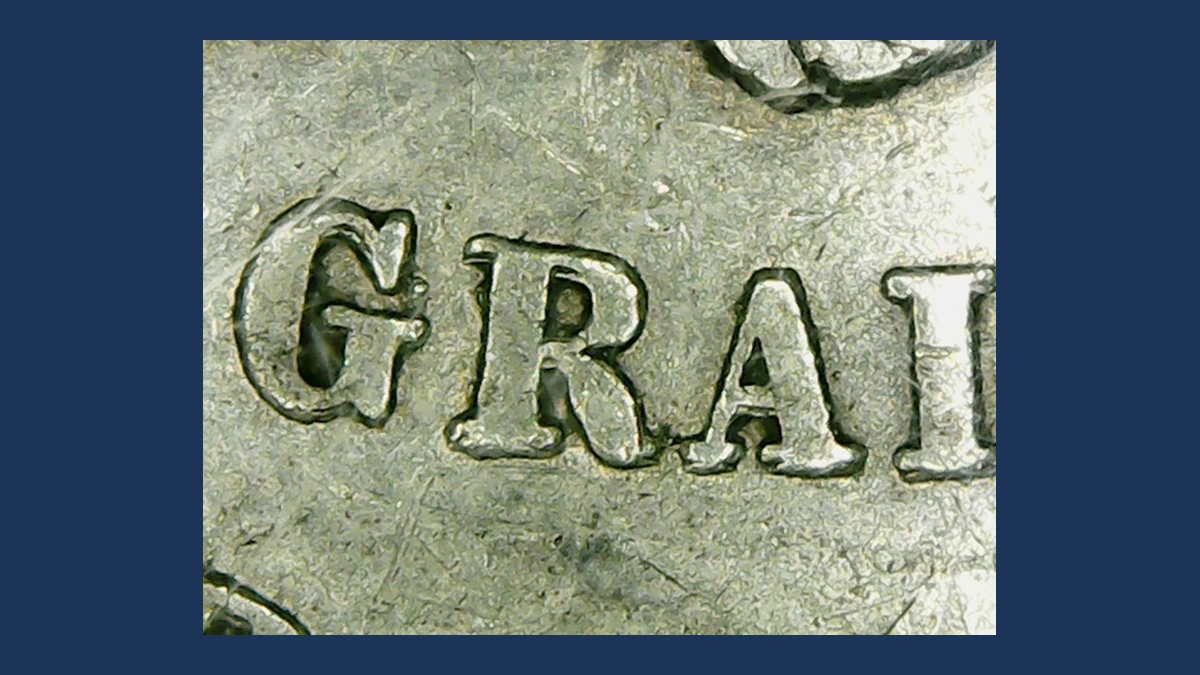
The number 420 and the eagle’s arrows show strong repeated outlines on the recognized FS-801 variety. Weaker doubling also appears in some lettering and the motto.
This is a doubled die reverse: the back stamping tool carried a repeated image before it struck the coin. The coin did not need a second strike to acquire that pattern.
Other reported back-doubling examples involve 900 FINE and the arrow feathers. Their details should be compared separately rather than combined into one imagined coin.
The catalog numbers identify varieties; they do not describe when a coin was first struck.
Estimated Value
Estimated values of $300–$6,000 cover worn through attractive unworn examples with confirmed back doubling. Clear separation and original surfaces support stronger prices.
PCGS records $2,760 on August 18, 2019 for an MS63 FS-801 sold by Heritage. MS63 indicates an unworn coin with noticeable marks.
A worn or cleaned example should not inherit that price automatically. Compare the same doubled pattern and a similar level of preservation before judging the premium.
How to Identify
Check the S mintmark and Trade dollar design first. The examples here are not varieties of the 1878 Morgan dollar.
Enlarge 420, then compare the arrowheads and their shafts with a clear FS-801 photograph. Look for separated outlines that follow the same parts of the design on both coins.
Inspect the motto and lettering as supporting checks. For another recognized doubling pattern, use its own comparison rather than insisting that every feature match FS-801.
Flat shelves beside a letter can come from movement during striking. They lack the full repeated contours expected on the identified doubled tool.
The combination of matching separation on 420 and the arrows gives a quick, specific starting test.
4. 1878-S Trade Dollar Uncentered Broadstrike
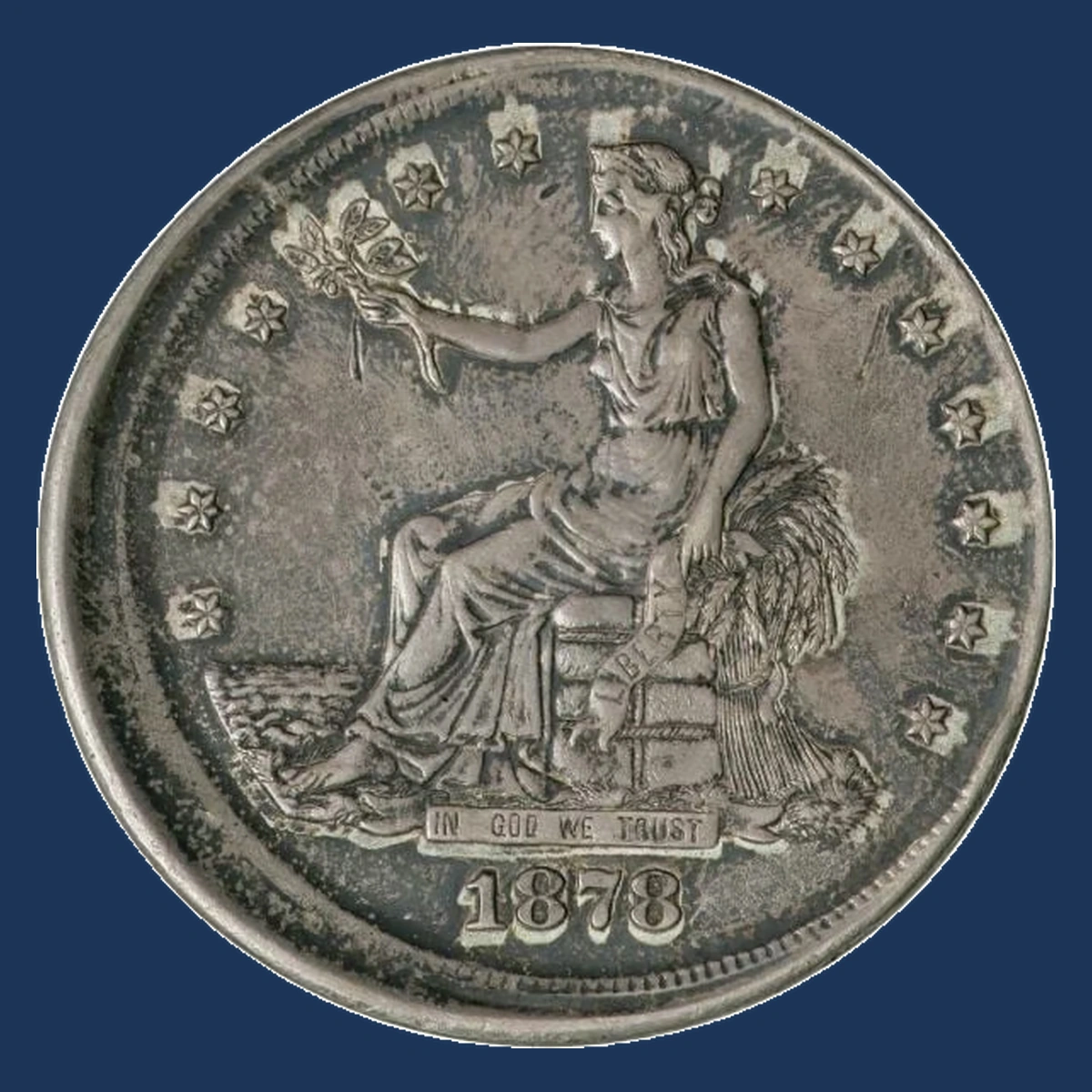
The design sits toward one side of an enlarged coin, yet all the design remains present. This is an uncentered broadstrike, made when the metal spreads beyond the collar that normally restrains it.
A recorded worn 1878-S example was described as displaced toward three o’clock. It also had a raised crack extending from the olive branch through the border into the expanded area.
That crack is a feature of the same example, not another broadstrike specimen.
The complete design matters: a true off-center strike leaves some of the intended design beyond the metal.
Estimated Value
For a confirmed uncentered broadstrike, estimate $10,000–$30,000, depending on wear, size, and visual impact.
In a January 2006 discussion, Mike Byers reported $17,250 including the buyer’s fee for the Stack’s example. It was described as Choice Extremely Fine, meaning light to moderate wear with strong remaining detail.
The price belongs to this dramatic expanded coin. A slight alignment difference on an ordinary-sized Trade dollar does not justify the same valuation.
How to Identify
Check design completeness before measuring the amount of apparent shift. Follow every outer word, star, and the date to see whether the impression remains on the coin.
Then compare the enlarged outline with a normal Trade dollar. One wide border and one narrow border can show that a complete impression sits off center on expanded metal.
Look at the edge to see where the coin escaped the collar, and inspect the design for crushing from later hammering. Metal naturally spreading during the strike should not resemble a flattened finished portrait.
For the recorded example, trace the olive-branch crack through the border into the expanded area. Complete design on an enlarged, naturally struck coin supports broadstrike rather than lost-design off-center striking.
Conclusion
The doubled back, clash traces, partial collar, and uncentered broadstrike require different checks. Look at repeated contours, transferred shapes, the edge step, or the completeness of the expanded design.
Estimated whole-coin values span $200–$30,000. The reported $17,250 broadstrike sale and documented $2,760 doubled-die sale describe different kinds of collectibility, so compare condition and mechanism before applying either price.