1881 Morgan Dollar Error List with Pictures

Liberty’s ear is small, but a repeated outline can make it an important collecting feature. PCGS records $5,750 in May 2021 for an 1881-O doubled-ear dollar graded MS64, an unworn coin.
The 1881 Morgan Dollar error list below ranges from faint transferred letters to a dollar struck twice. Estimated whole-coin prices span $60–$25,000.
Use the illustrated features to compare the correct mint, surface change, and striking error.
1. 1881 Morgan Dollar Letters Left by Colliding Stamping Tools (1881-O)
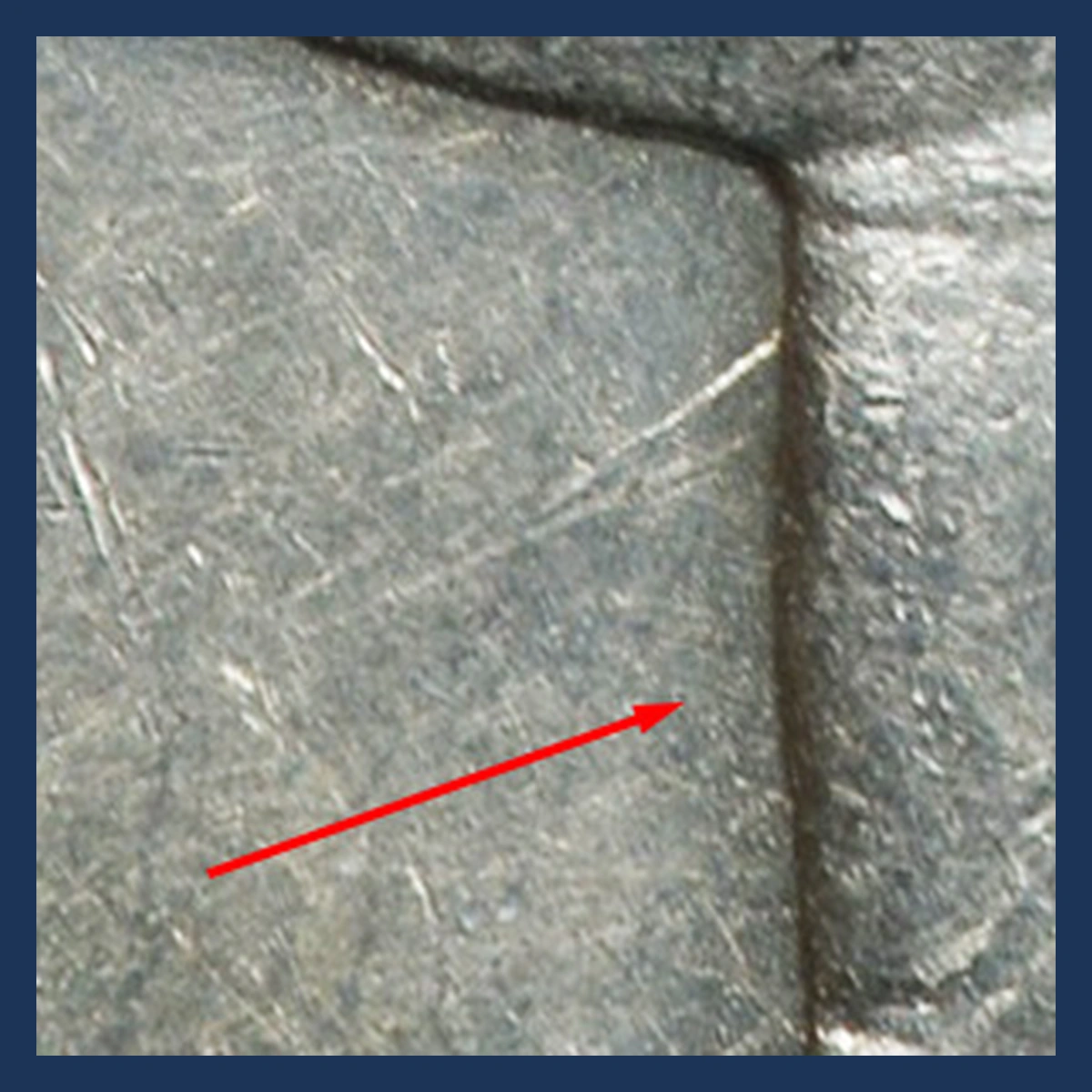
Parts of the back lettering can turn up beside Liberty on the front. They were transferred when the two steel stamping tools, called dies, collided without a blank between them.
The collision left traces on the tools, which then copied them onto later dollars. This is called a die clash.
The 1881-O collection catalog includes patterns with front-side n and st traces, plus other transfers. Exact shapes and positions depend on the pair of tools involved.
The fragments do not mean a finished dollar was stamped onto another coin.
Estimated Value
Allow $60–$500 as an estimated whole-coin range for identifiable 1881-O clashes in worn through modest unworn condition. A recognizable letter fragment can be more desirable than a faint, isolated trace.
Multiple transferred marks help identify one coin but do not each carry a separate fixed price. Compare the strength of the letters together with wear and surface marks; heavy abrasions may make a potentially interesting clash difficult to recognize.
How to Identify
Look at the opposite face when a suspected letter appears beside Liberty. Its shape should make sense as a transferred fragment from the other design, not as a random scratch.
Compare close-ups in the 1881-O variety collection, choosing the pattern with the same surrounding features. Keep the entire portrait or eagle available alongside the enlargement so the location remains clear.
Use side lighting and a magnifier to separate the fragment from lines cut into the surface. Where n and st traces are reported, compare both rather than selecting the more convenient one.
Connected strokes that match the correct letter-transfer pattern offer the strongest visible support.
2. 1881 Morgan Dollar A Surface Layer Has Broken Away (1881-S)
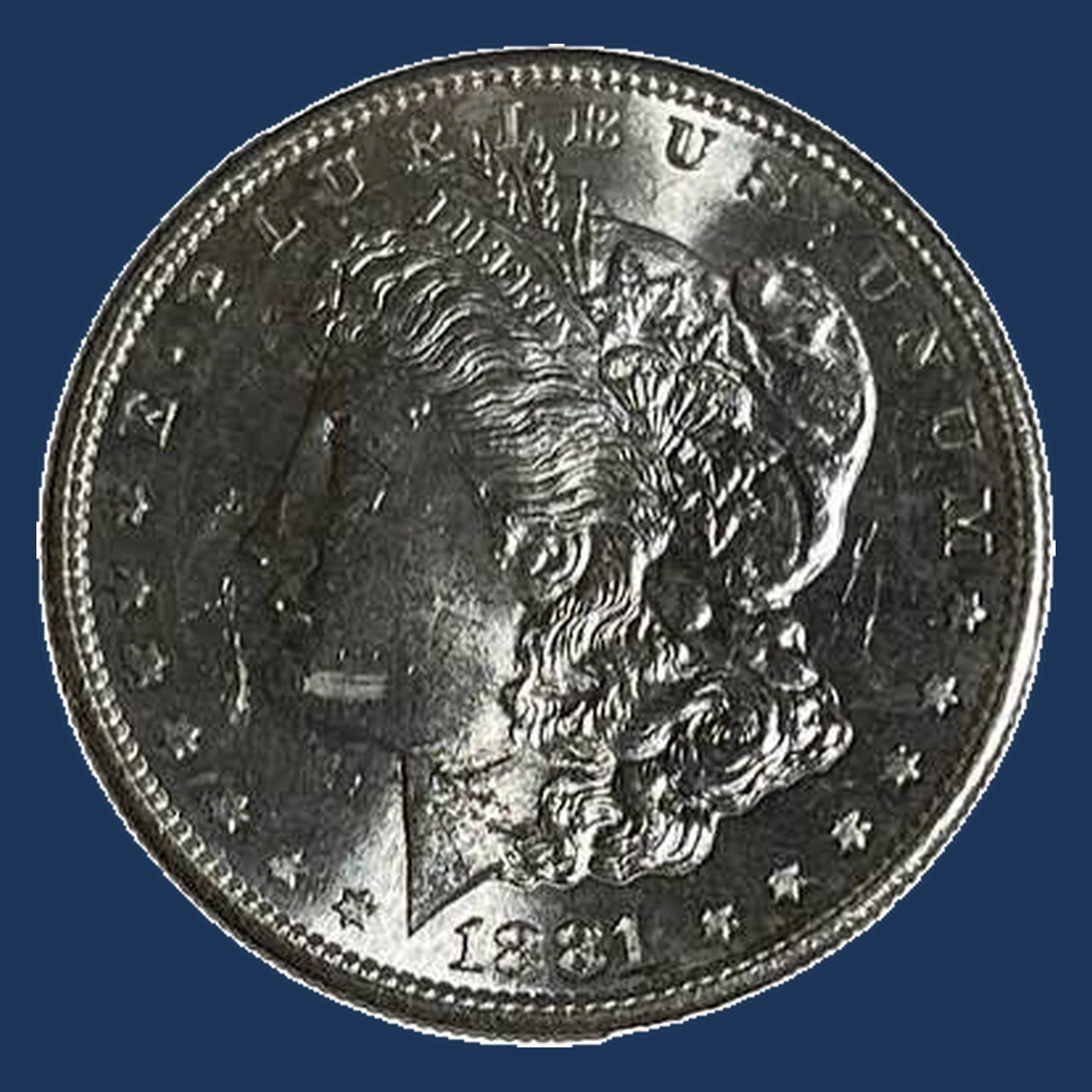
A shallow missing patch can mark the place where a layer of silver separated from the blank. That separation is called lamination.
The weakness began within the metal before the dollar was struck. A thin portion later broke away, leaving a rough or layered boundary rather than an ordinary flat surface.
A 2014 Stack’s Bowers group included an 1881-S graded MS62 with a detached lamination. MS62 describes an unworn dollar with noticeable marks.
The catalog does not locate the missing layer on a particular face. A scraped patch alone does not prove this error.
Estimated Value
Estimate $75–$650 for an 1881-S with a genuine detached lamination, depending on size and condition. A well-defined layered edge can make even a small missing patch recognizable.
The cataloged MS62 dollar appeared in a mixed group, so a group total would not be its individual price. Large distracting damage outside the original flaw can reduce interest, and a higher ordinary grade does not automatically make every peeled area desirable.
How to Identify
Photograph the missing patch with the surrounding picture visible, then examine its boundary under a magnifier. Note whether the surface looks layered or simply crushed.
A detached layer may leave an irregular edge where intact struck silver meets the exposed metal.
Follow that edge around the patch instead of relying on its color. Corrosion can discolor and eat into silver without producing a separated layer.
Check for parallel scraping or sharp tool cuts. These can suggest that someone removed metal after the coin was struck.
Do not scrape the area to find out what lies beneath it. The layered boundary and the way it meets the original design provide the clues to preserve.
3. 1881 Morgan Dollar More than One O Mintmark Outline (1881-O)
An extra arc beside the O mintmark may be part of an earlier punch impression. The final O did not completely erase the first position on the stamping tool.
The extra outline was then copied onto every dollar struck from that tool. Collectors call this a repunched mintmark, often written O/O.
The 1881-O catalog shows several directions of repetition. A remnant can appear lower, sideways, or higher depending on the individual pattern.
A single O placed off to one side, or tilted, is not necessarily repunched. There must be an additional trace.
Estimated Value
For ordinary circulated through modest unworn 1881-O repunched mintmarks, use an estimated $75–$750. A clearly separated arc generally gives a buyer more confidence than a thick or uneven O.
The direction of the remnant identifies the pattern; it does not rank the coin’s condition. Mintmark wear, cleaning, and distracting contact marks still affect the complete dollar, so compare similar preservation before treating two different O/O varieties as equal purchases.
How to Identify
First decide whether you see one displaced O or two overlapping outlines. Position alone is not enough: the small O below the wreath can sit high, low, or tilted without an earlier impression.
With a ten-power magnifier, trace the inner opening and then the outside curve. Look for a separate arc that follows the shape of another O rather than a nick with an irregular edge.
Compare the direction and spacing with a photograph of the matching 1881-O pattern. Move the lamp to test whether a dark border is merely toning, and check the surrounding silver for an added mintmark or recent disturbance.
4. 1881 Morgan Dollar Debris Impressed into the Surface (1881-S)
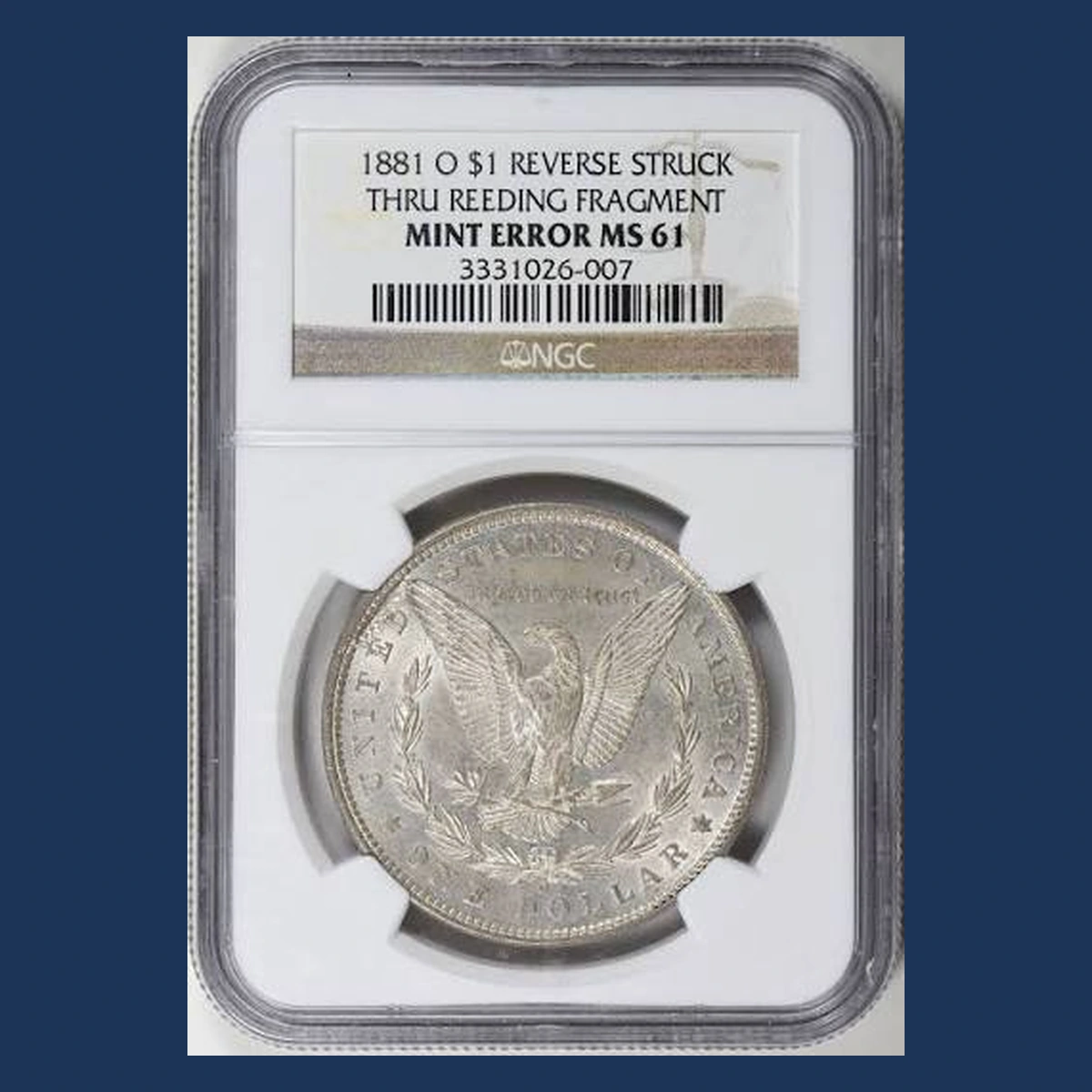
A foreign piece caught between the blank and a stamping tool can leave a depressed impression. Parts of the normal design may be weak or absent where the object blocked the strike.
This is a struck-through error. The term describes the striking process without identifying every possible piece of material involved.
Stack’s Bowers cataloged an 1881-S graded MS62 as struck through debris in a 2014 group. The description does not specify the material or its exact position.
It also does not establish that the debris remains attached to the dollar.
Estimated Value
A practical estimate for genuine 1881-S debris impressions is $100–$1,000, from modest visible marks through more prominent examples. The shape and disruption to the design help explain differences in appeal.
The 2014 MS62 entry was one coin in a mixed auction group, not a separately priced sale. For a same-mechanism comparison, an 1885-O back impression graded MS61 sold for $159 in June 2026 at Heritage; it is a different date and mint.
How to Identify
Inspect how the normal design ends at the depression. An object present during striking can interrupt the picture, while a later blow may flatten a picture that was already complete.
Try light from two directions to show both the depth and the boundary. Use magnification to look for displaced ridges, fresh cuts, or scraping that might explain the hollow as damage.
Check the actual 1881-S photographs rather than assuming a familiar wire or cloth shape. The catalog’s broad word “debris” does not identify either material.
If anything appears attached, leave it untouched and seek a close inspection. The documented example supports an impression; attachment requires its own visible evidence.
5. 1881 Morgan Dollar Two Levels along the Edge
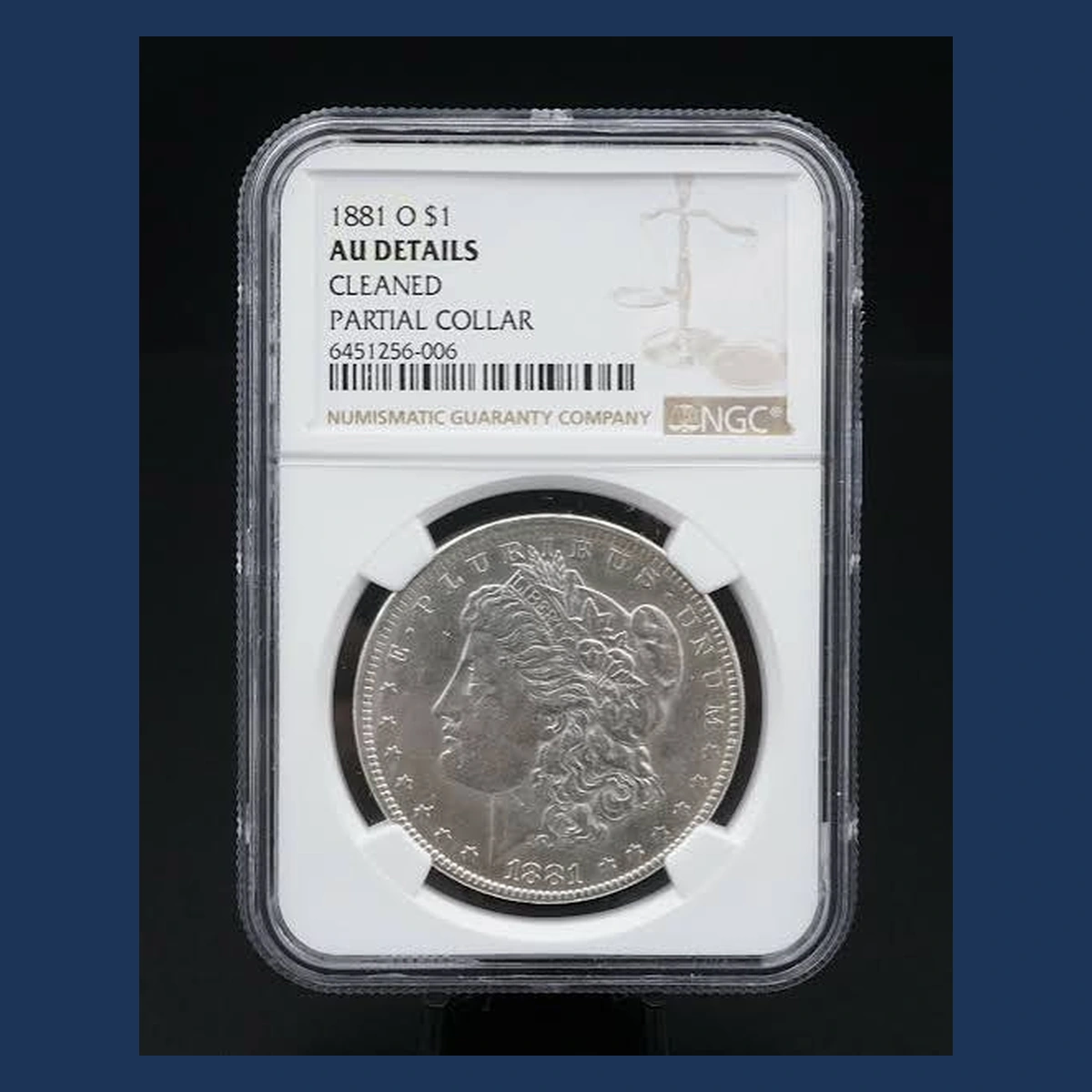
The dollar’s edge can look stepped, with one band grooved and another expanded beyond it. Only part of the blank entered the collar ring that normally controls width and adds the grooves.
A Philadelphia example graded PCGS Fine-15 appeared at Stack’s Bowers in June 2024. Fine-15 means substantial circulation wear with the main design still visible.
A separate auction record reports an 1881-O graded ANACS XF40 Details. Its condition has an additional problem, and its exact edge shape needs its own comparison.
A face with a wide rim alone is not enough.
Estimated Value
PCGS records $264 for the Philadelphia Fine-15 partial-collar dollar at Stack’s Bowers in June 2024. That is an actual whole-coin result for a well-circulated example.
Estimate $125–$1,250 across genuine 1881 partial-collar dollars, allowing for the size of the step and preservation. A cleanly displayed edge can add interest even when the portrait is worn.
The reported New Orleans Details coin should not be assigned the Philadelphia price automatically.
How to Identify
A worn face does not prevent a partial-collar error from showing clearly at the edge. Turn a loose coin slowly beside a lamp, or request a continuous set of edge photographs for a sealed example.
Use a magnifier to follow the grooved band into the expansion step. Filing marks or dents from a jewelry mount may explain a smooth strip without any failure of the Mint’s collar.
If the coin is loose, calipers can compare several widths with the normal 38.1-millimeter diameter; a sealed coin should stay in its holder. More useful than width alone is the intact grooved band meeting silver that spread beyond its level.
6. 1881 Morgan Dollar Rough Eye from Tool Damage (1881-O)
Liberty’s eye can have an unusual rough texture that seems out of place beside the surrounding portrait. The named 1881-O variety is known as the Pummeled Eye or Flaky Eye.
Both names refer to VAM-1D, a particular stamping-tool pattern. The roughness was copied from tool damage rather than created by an ordinary blow to each finished dollar.
The effect differs from the doubled-ear variety, which repeats part of a recognizable outline. Here the main clue is the eye’s damaged-looking surface.
A single battered eye still needs comparison before receiving the variety name.
Estimated Value
PCGS records $1,250 in December 2018 for an MS64 Pummeled Eye dollar sold on eBay. It provides a recorded comparison for an unworn example, rather than a price for every rough-looking eye.
An estimated $100–$1,500 covers recognizable VAM-1D dollars from worn through attractive unworn condition. Preservation of the surrounding portrait matters, since a badly struck or heavily damaged eye can become difficult to distinguish from ordinary contact damage.
How to Identify
Compare the eye with a clearly labeled VAM-1D close-up while keeping the entire face visible. The nickname alone is too broad to identify a coin that simply has a dent near the eye.
Under angled light, inspect the shape and spread of the unusual texture. Use a magnifier to see whether a recent impact has pushed silver into a ridge or flattened nearby facial detail.
Look at the forehead and cheek for related damage from the same blow.
The cataloged tool pattern should repeat in the same place on other examples, despite differences in wear.
Matching the distinctive eye texture is more persuasive than finding unrelated roughness elsewhere on Liberty.
7. 1881 Morgan Dollar Blank Flaw near the Lower Rim (1881-CC)
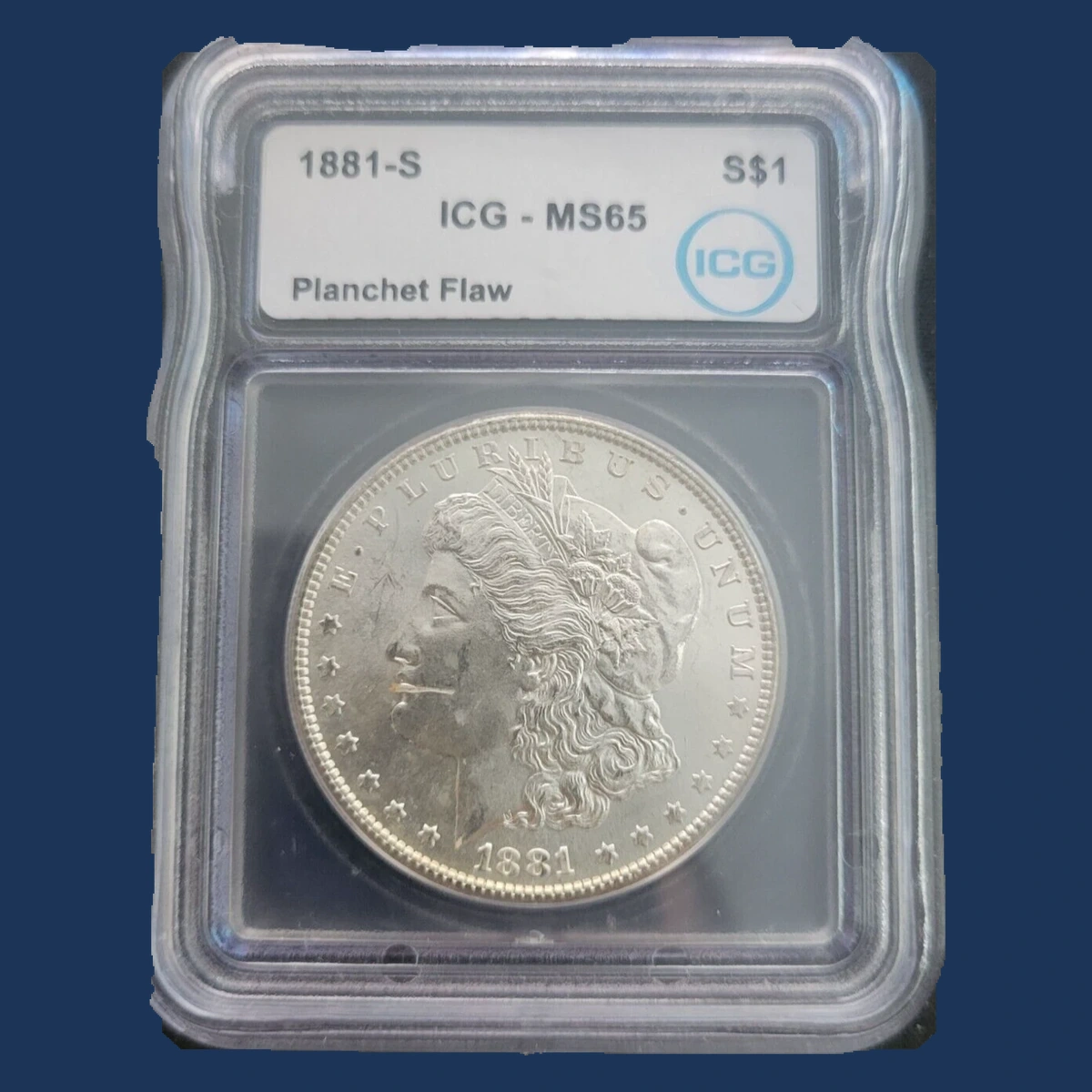
A flaw near six-thirty interrupts the lower portion of a documented 1881-CC dollar. Northern Nevada Coin identifies the PCGS MS63 example as struck on a defective blank.
That description places the problem in the metal used to make the coin. It does not, by itself, establish that a curved piece was punched out of the edge.
The flaw’s boundary and nearby struck details therefore matter more than choosing a familiar error name. MS63 indicates an unworn dollar with visible marks.
The Carson City mintmark also distinguishes it from similar-looking flaws on other Morgan issues.
Estimated Value
For an authenticated 1881-CC with a comparable blank flaw, estimate $500–$3,000 as a whole-coin range. The Carson City issue and its condition contribute substantially to the total.
The cataloged MS63 example shows how a flaw can coexist with relatively little wear or surface disturbance. A large, clear original flaw can strengthen collector interest, but scratches or altered edges may reduce the dollar’s appeal.
How to Identify
Orient the documented coin correctly and locate the flaw near six-thirty. Keep the rim and nearby design in the photograph rather than cropping to a patch of rough silver.
Use a magnifier to study where normal struck detail meets the defective area. Check for cutting, filing, or fresh impact marks that could imitate a flaw present before striking.
Compare the outline with Northern Nevada Coin’s error gallery. The broad “defective blank” description should not become a curved-clip diagnosis unless the physical shape and striking evidence support one.
For a loose coin, record its weight on a scale; the normal Morgan standard is 26.73 grams. The actual boundary beside struck detail is the primary clue.
8. 1881 Morgan Dollar Upward Shift with a Broad Blank Band (1881-S)
A broad strip of unstruck silver lies beneath the date on this 1881-S dollar. The struck design is shifted toward eleven-thirty.
Heritage cataloged it as 5% off center, graded PCGS MS62. The same description says all the lettering remains complete, with outer details stretched by unrestrained metal flow.
That combination overlaps the appearance of an uncentered broadstrike. The preserved lettering and blank band are therefore important when comparing this particular coin.
Test scratches on the jaw and beside the olive branch are later marks. They did not cause the original shift.
Estimated Value
This PCGS MS62 dollar brought $4,270 on January 15, 2026 at Heritage Auctions. The result belongs to the coin with the broad blank band below its date.
Estimate $1,500–$6,000 for comparably clear 1881-S shifted strikes, depending on condition and display. Keep the complete lettering in mind when choosing another auction comparison.
A percentage alone does not account for the amount of blank silver, preservation, or visible later scratches.
How to Identify
Begin beneath the date and follow the unstruck band toward both ends. Its surface should belong to the original blank rather than an area ground flat after the dollar was made.
Check the outer lettering on both faces for completeness. Missing intended design supports the usual off-center definition, while complete design surrounded by expanded metal points toward a broadstrike.
For the cataloged MS62, compare the upward shift toward eleven-thirty and stretched outer details together.
Use a magnifier to separate the test scratches from the original blank area. Those cuts are condition marks, not evidence of a second strike or of the direction in which the design moved.
9. 1881 Morgan Dollar Repeated Ear, Lettering, and Wreath Details
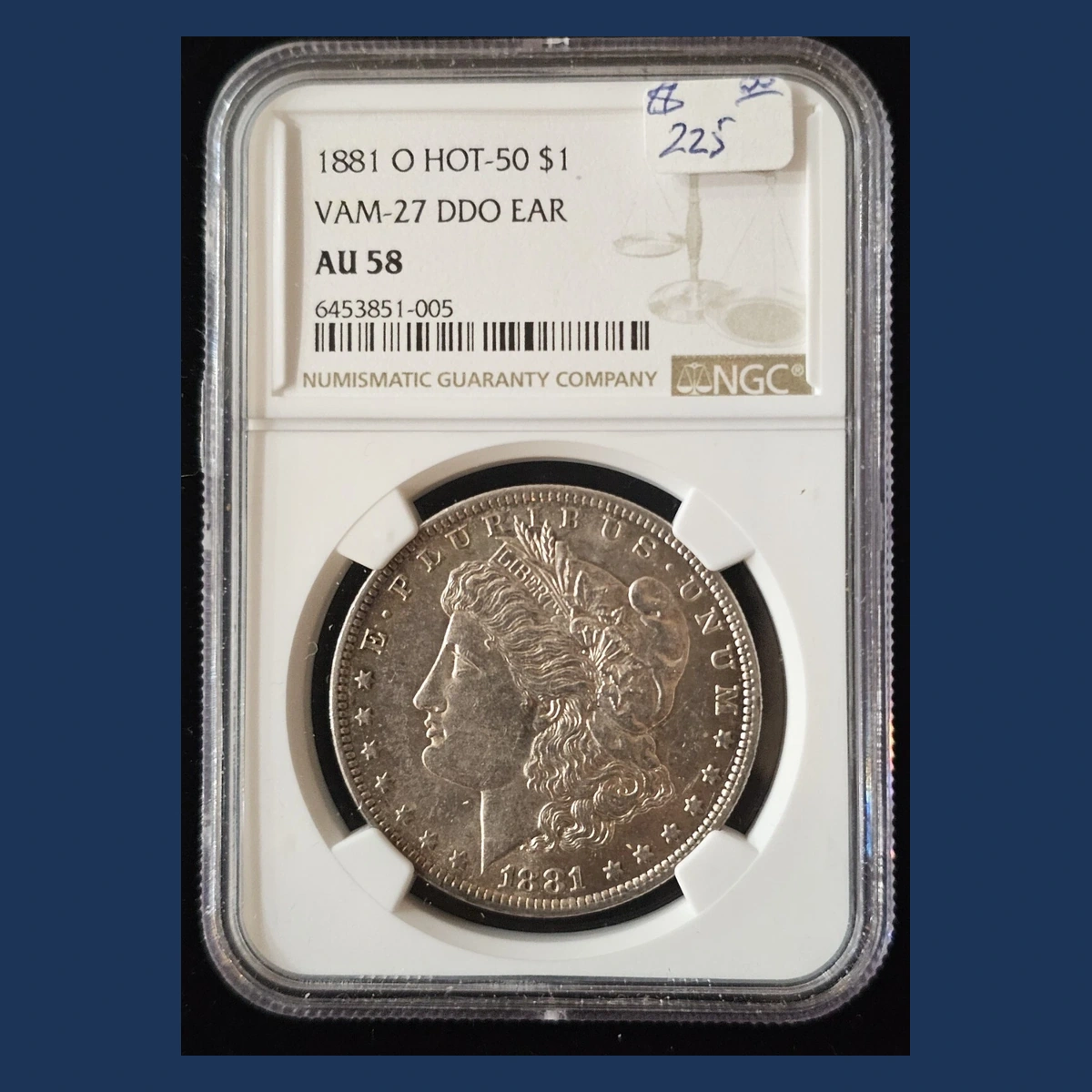
Two rounded outlines can appear in Liberty’s ear instead of one. The stamping tool itself carried repeated detail, so each dollar it produced could show the same pattern.
New Orleans VAM-27 is a cataloged doubled-ear variety. Other 1881-O patterns affect the profile or the back’s lettering, motto, and left wreath.
These features do not all belong to one coin. Philadelphia and San Francisco front doubling is also reported in year guides, but needs its own identified comparison.
Extra date strokes alone do not prove that the entire front design was doubled.
Estimated Value
PCGS records $5,750 for an MS64 VAM-27 in May 2021 on eBay. That strong result belongs to the specific New Orleans doubled-ear variety.
Use an estimated $75–$6,500 across the reported doubled-design patterns and grades. Modest worn examples sit far below an attractive, clearly identified doubled ear.
The VAM-27 price should not be assigned to faint back lettering, an unconfirmed Philadelphia mark, or every slightly thick ear.
How to Identify
Identify the mint before choosing an enlargement. For a New Orleans doubled ear, focus on the curved ear outlines rather than scattered marks in the hair.
Turn the lamp and use a ten-power magnifier to check that both outlines are part of the raised design.
A flat, shaved-looking shelf may instead be doubling caused by movement during the strike. Follow the shape around the ear to distinguish a repeated curve from a short shelf.
On a suspected back variety, compare its lettering, motto, or left wreath with that specific pattern. These areas need not all repeat on one coin.
Philadelphia and San Francisco candidates need a matching example from their own mint, not the New Orleans ear photograph.
10. 1881 Morgan Dollar Two Strikes with a Turn between Them
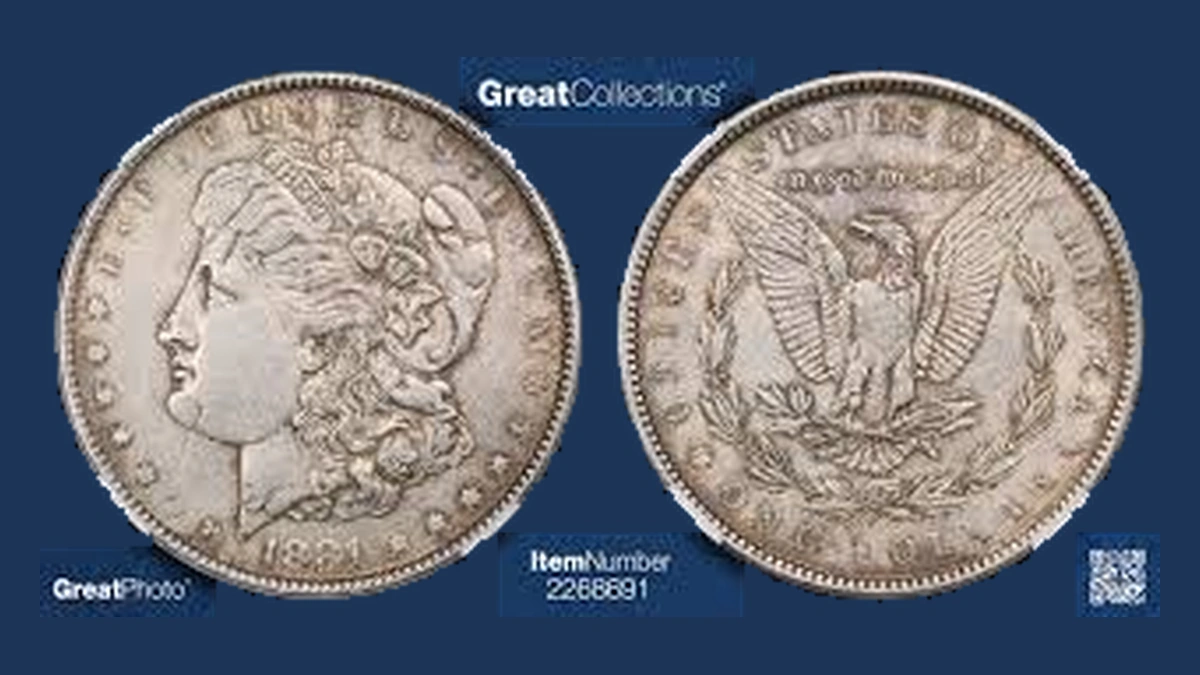
Parts of two designs overlap at different angles on this Philadelphia dollar. The coin remained in the press and turned before receiving another blow.
The second strike occurred within the collar ring, which continued to limit the coin’s width. A rotated double strike can therefore be dramatic without a large unstruck crescent.
GreatCollections lists an 1881 example graded NGC AU58, meaning only slight circulation wear. Its exact rotation angle must be measured from the surviving designs.
This repeats parts of an entire strike, unlike the fixed extra ear outline on a doubled stamping tool.
Estimated Value
Estimate $8,000–$25,000 for a clearly authenticated 1881 rotated double strike, with the visibility of both impressions strongly affecting appeal. Well-preserved overlapping words and portrait features make the sequence easier to understand.
GreatCollections’ NGC AU58 listing shows a $17,500 starting bid before buyer’s fees for an October 2026 auction. That is an offer threshold, not a completed sale.
The estimate concerns the complete error coin rather than a standard AU58 dollar.
How to Identify
Trace one recognizable feature from each impression, such as surviving lettering or a portrait outline. The two sets should make sense as overlapping strikes of the same design at different angles.
Compare their positions in several areas rather than judging one doubled letter. A magnifier and clear photographs help follow weak remnants that disappear beneath the stronger second impression.
Check the edge for evidence consistent with collar restraint. If the coin is loose, measure its width gently against the normal 38.1-millimeter standard; leave the certified example in its holder.
Distinguish the two overlapping impressions on one face from a simple front-to-back rotation. Two coherent sets of struck details are the important observation.
Conclusion
The estimated whole-coin range for these 1881 Morgan dollar errors is $60–$25,000. Large striking errors, familiar varieties, and small surface flaws occupy different parts of that range.
A doubled ear is not the same as a dollar struck twice. A missing silver layer also needs different checks from material pressed into the surface.
Keep each coin’s mint, visible feature, and grade together when choosing a comparison.