1885 Morgan Dollar Error List with Pictures

Even a cleaned dollar can attract serious bids when a large part of its design misses the blank. Mint Error News reported $7,200 for an 1885 dollar struck 30% off center in a December 2022 Heritage auction.
This 1885 Morgan Dollar error list covers estimated whole-coin values of $75–$10,000. The clues range from a tiny extra S to metal trapped in the silver.
Read on to see where each feature appears and how to check it.
1. 1885 Morgan Dollar Peeling Silver on the Back (1885-O)
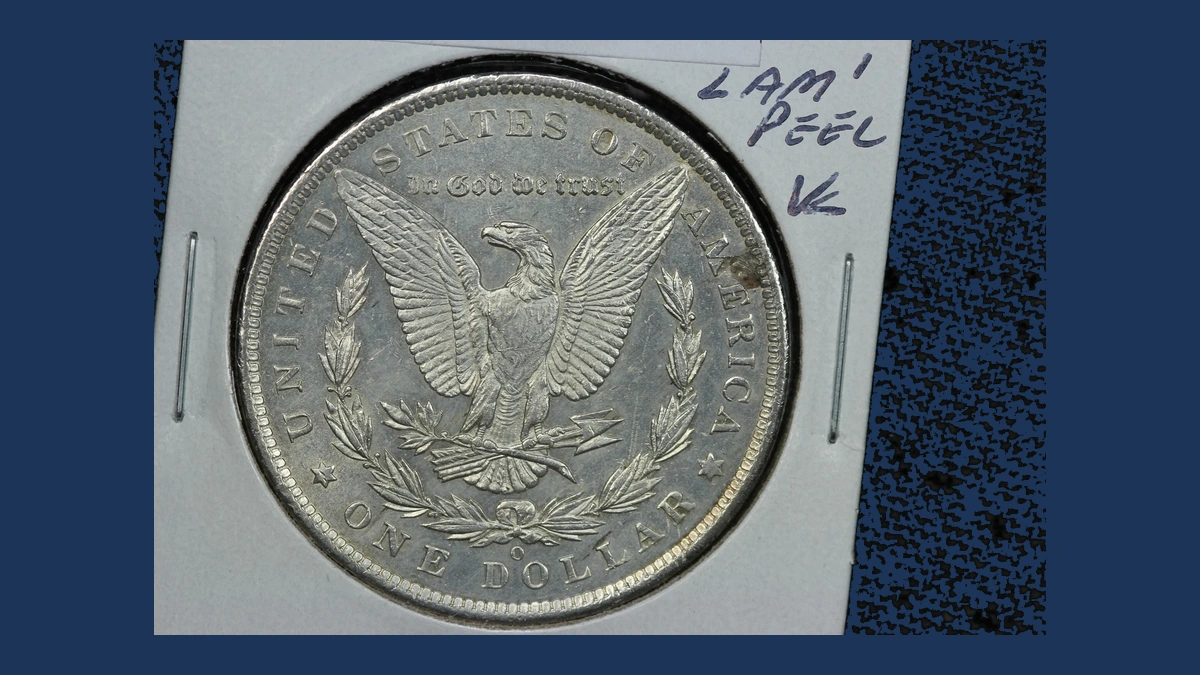
A thin piece of silver can lift from the surface while the rest of the dollar stays intact. This peeling is called lamination.
It begins with a weakness within the metal, sometimes caused by trapped material or poor bonding. Striking can expose the weakness or leave a loose flap that opens later.
A cataloged 1885-O example has peeling on the back between about four-thirty and six o’clock. It was described as VF, meaning substantial wear with the main design still clear.
That local peel is different from an entire coin splitting into layers.
Estimated Value
For a worn 1885-O with a clear, original peel, estimate $75–$500. Size matters, but an attached flap and readable surrounding design can make the feature easier to appreciate.
A scraped or corroded patch should not receive the same allowance. Higher-grade dollars may carry substantial value for their condition, so this range chiefly suits circulated pieces and modest examples with visible surface separation.
How to Identify
On the reported New Orleans coin, turn the back upright and inspect the lower-right border toward the bottom. Use side lighting to see whether a thin layer rises above the nearby silver.
Follow the flap to its attached end with a magnifier. A naturally separated layer may have an irregular boundary, while a tool cut can leave scraping or a sharp trench.
Do not lift the flap. Pulling it changes the feature and can tear away original metal.
Check whether parts of the struck design continue onto the loose layer or its adjoining surface. An attached, peeling layer offers a better clue than discoloration alone.
2. 1885 Morgan Dollar A Step around the Edge (1885-O)
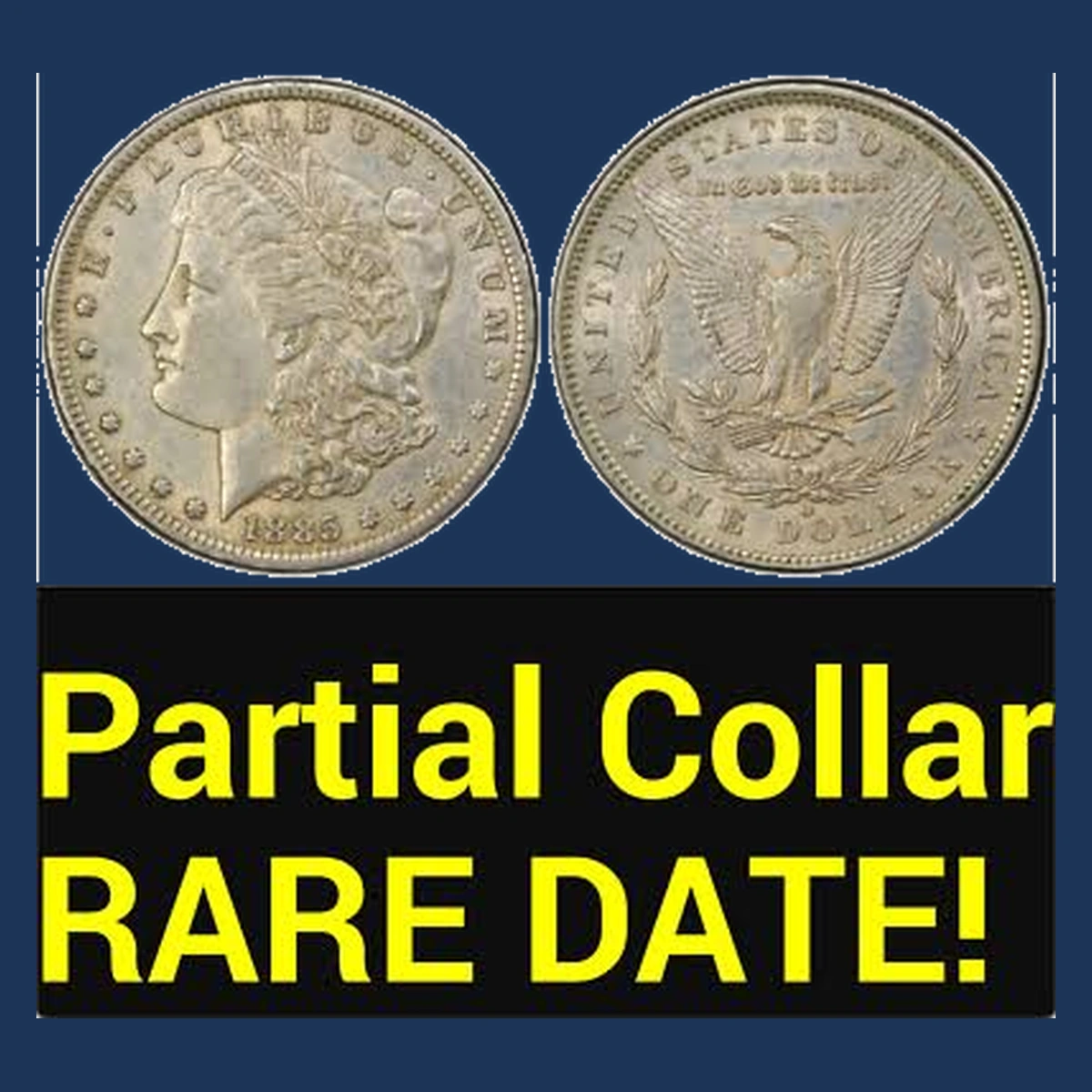
The side of the dollar can show two levels instead of one evenly grooved edge. Part of the blank sat outside the collar, the metal ring that controls its width.
The portion inside the ring received the normal edge grooves. The exposed portion could spread outward, leaving a step where the two areas meet.
An 1885-O example is reported in AU condition, meaning only light circulation wear. Its exact edge position must be seen on the coin.
A wide border on the face alone does not establish this partial-collar error.
Estimated Value
Allow an estimated $100–$750 for a genuine 1885-O partial-collar dollar in circulated through modest unworn condition. A pronounced, intact edge step is more attractive than a small uneven patch.
For a same-mechanism comparison, an 1882-CC graded MS65 brought $480 in September 2025 at Heritage. That different date and mint had no circulation wear; its result is context, not a sale price for the reported 1885-O.
How to Identify
Hold the coin by its rims and slowly turn the entire edge past a fixed light. A partial-collar step may be difficult to see in straight-on photographs.
Use magnification to follow the edge grooves into the lower level and inspect the expanded band beside them. A smooth strip caused by filing will often show cuts rather than naturally spread silver.
Compare several widths with calipers if the coin is loose; a normal Morgan dollar is about 38.1 millimeters across. Keep a graded coin in its holder and use clear edge photographs instead.
Finally, examine the transition itself. The meeting of the grooved band and the outward step is the feature that supports partial collar restraint.
3. 1885 Morgan Dollar A Second S beneath the Mintmark (1885-S)
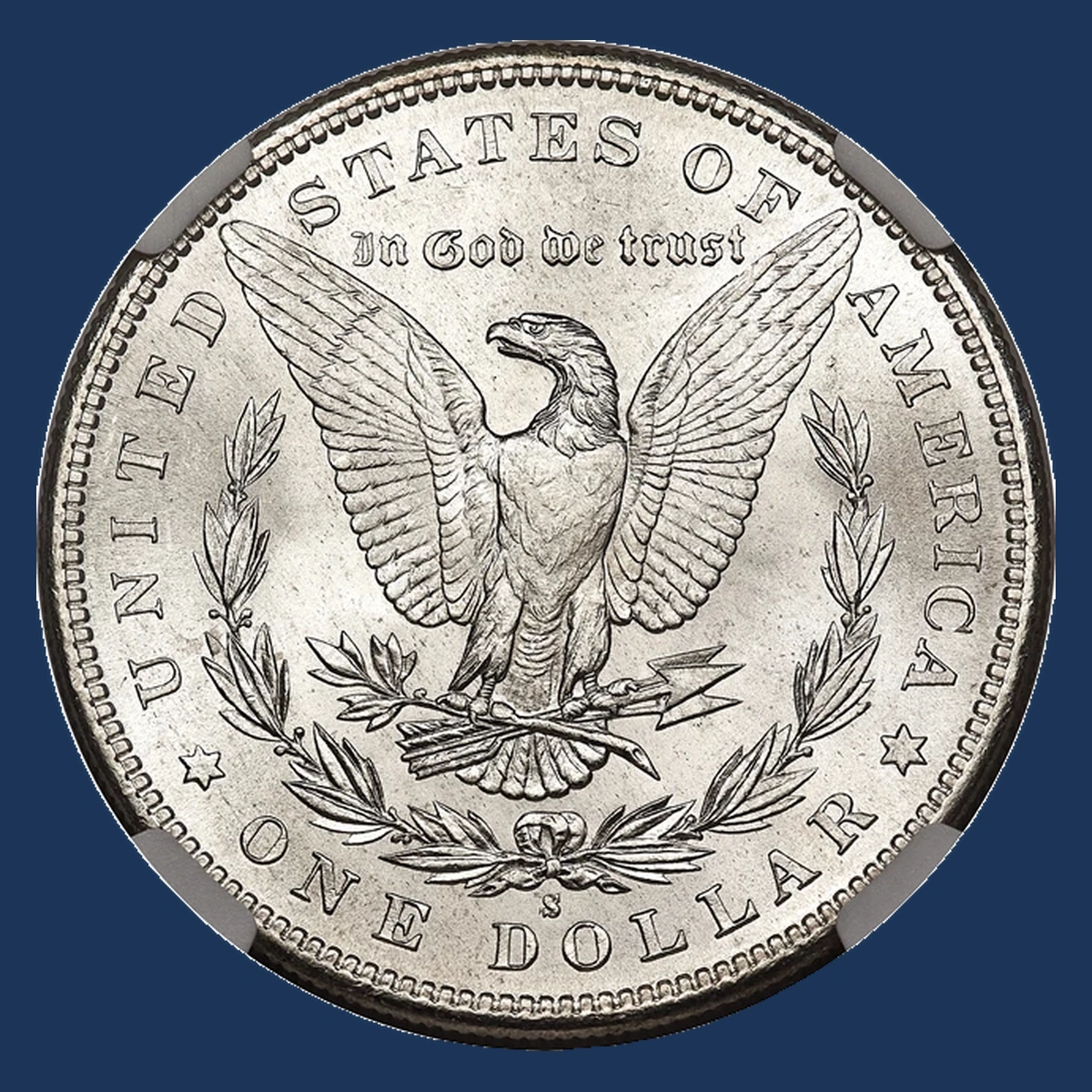
The small S beneath the back wreath can have an extra edge near its lower-left end. It is a remnant of an earlier placement of the mintmark punch.
The mintmark was punched into the die, the steel tool used to stamp the coin. A second placement slightly apart from the first could leave traces of both positions.
This is called a repunched mintmark, or S/S. Catalogs list different 1885-S patterns, including VAM-6 and VAM-9.
Those numbers identify different tool patterns; they do not mean every extra S has the same shape.
Estimated Value
An estimated $100–$1,500 covers identified 1885-S repunched mintmarks from worn examples into lower unworn grades. Strong separated traces make the feature easier to recognize and compare.
The dollar’s grade can account for much of its total price. Highly reflective surfaces or exceptional preservation may take a coin beyond this working range, without making the mintmark error larger.
Compare the exact S/S pattern before paying extra for a catalog number.
How to Identify
Find the S between the wreath bow and the words ONE DOLLAR. With a ten-power magnifier, concentrate first on the lower-left end rather than searching the entire coin for doubling.
Change the light angle to separate a raised remnant from a dark shadow. A second rounded outline should connect logically with the shape of an earlier S.
Compare it with the correct variety photograph in PCGS’s 1885-S listings. VAM-6 and VAM-9 need their own comparisons.
Look for disturbed silver or a seam that could suggest an added mintmark.
The useful match is the extra serif and surrounding S shape together, not merely a thick-looking letter.
4. 1885 Morgan Dollar Hollow in Front of Liberty’s Lips (1885-CC)
A reported Carson City dollar has a noticeable hollow just in front of Liberty’s lips. Collectors discussed the coin in its GSA holder, packaging used for government sales of stored dollars.
The hollow has been described as a possible blank flaw, peeling area, or impression from trapped material. Those explanations describe different ways metal could be absent or depressed.
The holder does not identify the cause. A close examination is needed before calling this particular mark a confirmed Mint error.
Treat the hollow as one feature to examine, rather than several errors on the same coin.
Estimated Value
If the hollow is confirmed as a Mint-made flaw, use a provisional whole-coin estimate of $650–$2,500 for a comparable 1885-CC. Much of that amount belongs to the Carson City dollar itself.
A clear explanation of the hollow can make it more collectible, but an unattributed pit is not an automatic premium. Wear, cleaning, scratches, and the coin’s overall appearance remain important when comparing offers within this range.
How to Identify
Photograph the hollow through the holder from several lighting angles before trying to name it. Keep the surrounding lips and smooth background in view so its depth and boundaries are understandable.
A magnifier may reveal a loose layered edge, which would favor peeling. An impressed shape with nearby design formed around it could instead support material trapped during striking.
Look separately for fresh scratches, displaced ridges, or corrosion inside the hollow; these can point to later damage. Do not open a GSA holder merely to probe the surface or test a loose edge.
The boundary beside the lips is the place for an error specialist to examine closely.
5. 1885 Morgan Dollar Material Pressed into the Design
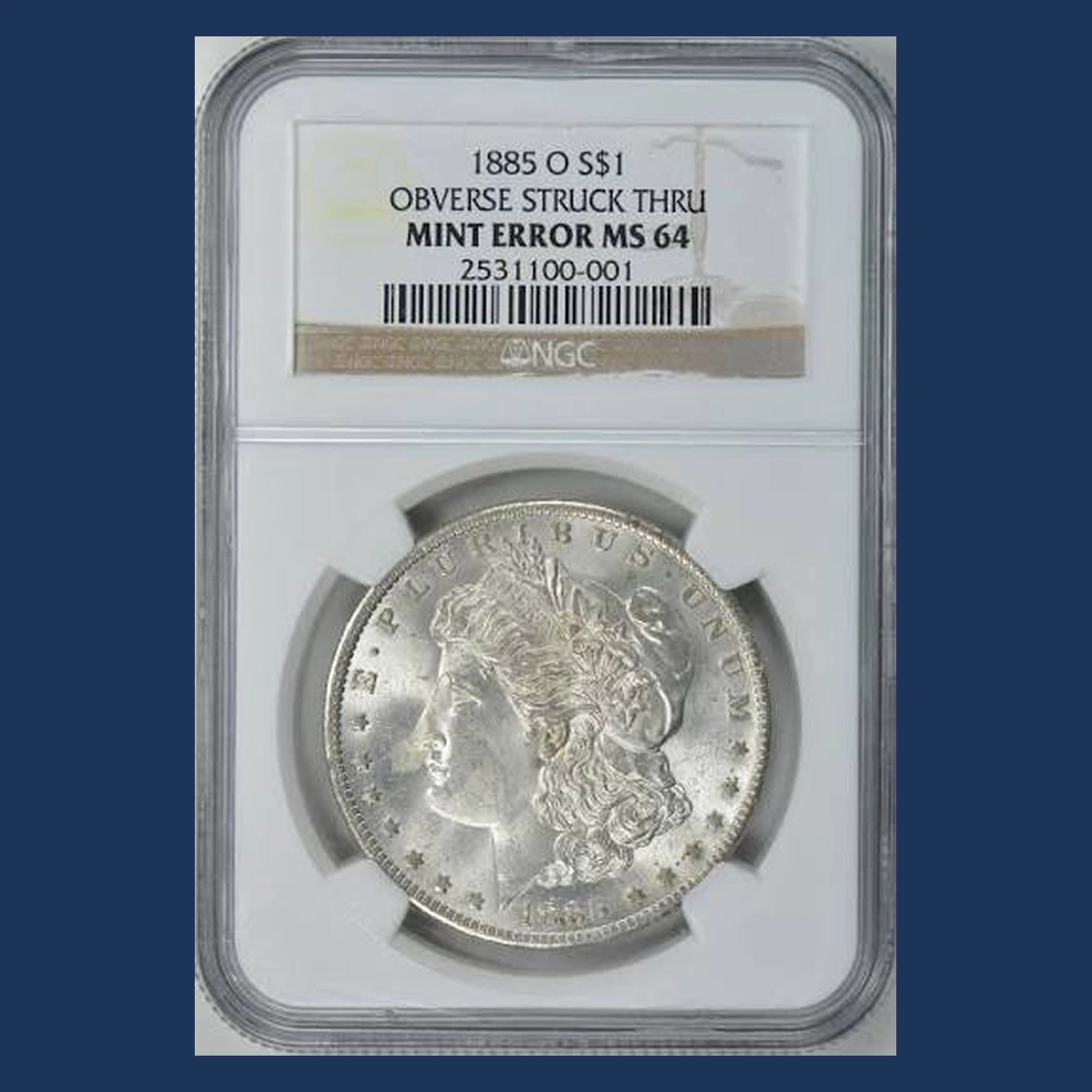
Foreign material can interrupt the picture when it lies between the blank and a stamping tool. The resulting sunken mark is called a struck-through error.
An 1885-O graded PCGS MS63 has a back impression described as one and one-quarter inches long. Other examples include separate MS61 back and MS63 front impressions; these MS grades describe unworn coins.
Some objects stay attached. A Philadelphia dollar graded PCGS MS62 was cataloged with three staple-like pieces on the back near six and twelve o’clock.
Those retained pieces are different from an empty groove left after an object falls away.
Estimated Value
Heritage’s 1885-O MS61 back-impression example sold for $159 in June 2026. The separate PCGS MS63 with the long back impression brought $240 in June 2023.
Estimate $125–$3,000 across recognizable impressions and securely authenticated retained pieces. Ordinary small depressions belong nearer the lower end; an obvious attached object can support a stronger price.
All figures concern complete dollars, with surface quality and the size of the obstruction affecting demand.
How to Identify
For an empty impression, trace the depressed area under side lighting and see how the design meets its boundary. A scratch may cut across finished detail and leave pushed-up silver beside its path.
On the long New Orleans example, the reported measurement belongs to the back impression. Check both faces before using that comparison for a different mark.
For retained pieces, photograph the attachment points without touching or bending the objects. Examine the silver around each piece for signs that the design formed with it in place.
Glue, a later puncture, or a fragment resting against the plastic holder can create a misleading appearance.
The Philadelphia comparison centers on three retained pieces near the back’s top and bottom, not on every foreign-looking speck.
6. 1885 Morgan Dollar Part of the Picture Misses the Blank
An off-center dollar leaves an unstruck crescent on one side while losing part of the picture on the other. The blank was displaced when the tools came together.
A reported 1885 example was struck 30% off center and graded NGC XF Details Cleaned. It has circulation wear and a cleaning problem in addition to the striking error.
A separate 1885-O was struck 8% off center and graded PCGS AU53, indicating relatively light wear.
The size of the shift differs greatly between them. Neither percentage, by itself, tells you the direction of the missing design.
Estimated Value
Mint Error News’s December 2022 Heritage results report $7,200 for the 30% example. Cleaning affected its condition, but the large displacement remained readily visible.
Estimate $1,500–$10,000 for authenticated 1885 off-center dollars across modest through dramatic shifts. Readable dates and original surfaces strengthen the display.
The 8% New Orleans coin is a smaller displacement and needs a closer comparison than simply assigning it the 30% coin’s price.
How to Identify
Place photographs of both faces side by side, keeping the same physical edge at the top. Find the unstruck crescent and then check where the opposite part of each design disappears beyond the blank.
A complete design with an expanded border is a broadstrike, not this missing-design pattern. One displaced face with a normally centered opposite face can instead reflect a shifted stamping tool.
Use a ruler or image overlay to compare the blank area with the full coin, without treating the measurement as an exact grading result. On a loose specimen, a scale can help flag a cut-down coin against the normal 26.73-gram standard.
Check the crescent for intact original surface; grinding away finished detail can imitate missing design but leaves altered metal.
Conclusion
These 1885 Morgan dollar errors span estimated whole-coin values of $75–$10,000. A peeling surface, extra mintmark, stepped edge, and misplaced design each need a different inspection.
Keep the New Orleans, San Francisco, Philadelphia, and Carson City examples separate. Condition and the underlying dollar matter alongside the error.
Use clear photographs of both faces and the affected area, and leave attached flakes or foreign pieces untouched.