1889 Dollar Coin Error List with Pictures

An expanded, uneven border did not prevent an 1889-S Morgan dollar from bringing $4,680 in September 2025. Heritage’s archive lists the uncentered broadstrike as PCGS MS63, an unworn coin with noticeable marks.
The 1889 Morgan Dollar error list below spans an estimated $75–$6,500 for complete coins. Some errors change the outline; others leave a letter trace, groove, or tilted back.
Follow the physical clues to compare each dollar with the correct type.
1. 1889 Morgan Dollar Letters Transferred by Colliding Tools
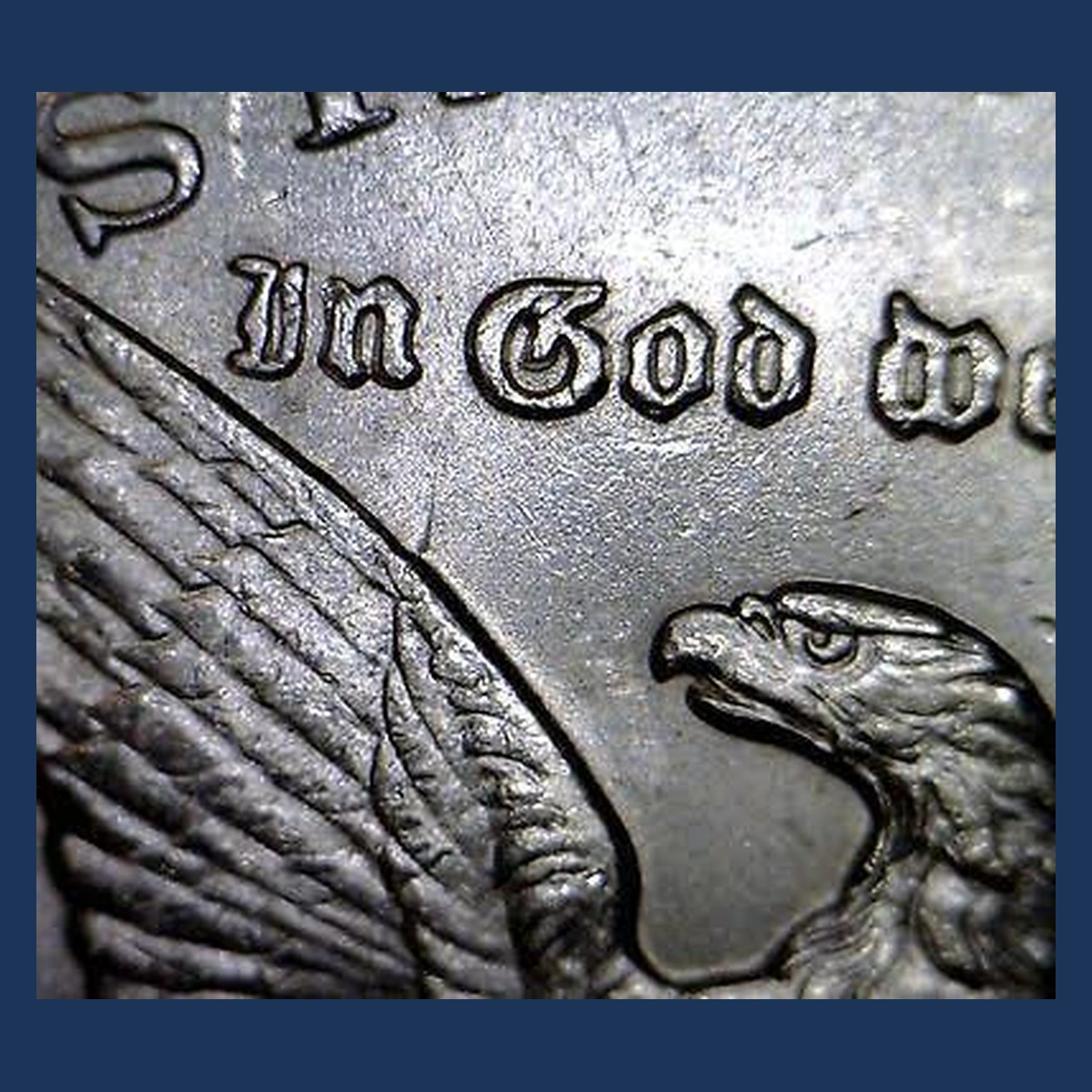
A faint letter fragment can appear on the wrong side of a Morgan dollar. The front and back stamping tools struck each other without a blank between them.
Those steel tools, called dies, picked up traces of the opposite design. Later coins received the unwanted traces along with their normal pictures.
The reported 1889 patterns include transferred IN on Philadelphia dollars and E on New Orleans dollars. Each requires its own matching photograph.
Only part of a letter may survive. A scratch or random line does not become a clash simply because it seems out of place.
Estimated Value
For identified 1889 letter-transfer clashes, estimate $75–$750 on worn through attractive unworn examples. The range covers the complete coin rather than an automatic charge for each extra line.
A legible letter fragment can attract more interest than a weak trace hidden among ordinary marks. Cleaning or scratches can obscure the feature and reduce the appeal of the dollar.
Compare Philadelphia IN examples with that pattern, and New Orleans E examples with their own, before judging a premium.
How to Identify
Keep both faces visible in your comparison photographs, since the suspected letter should relate to the opposite design. Identify the mint below the back wreath before selecting a reference image.
Use a magnifier and side lighting to follow the entire extra fragment. A short straight line is less persuasive than a curve or corner that matches part of a recognizable letter.
For Philadelphia, compare the reported IN traces; for New Orleans, compare the E pattern. The two mint issues do not share one universal spot that can be applied to every 1889 dollar.
Check nearby silver for a cut or scrape. A matching letter shape in the correct surroundings provides the useful confirmation.
2. 1889 Morgan Dollar Back Rotated Relative to the Front (1889-O)
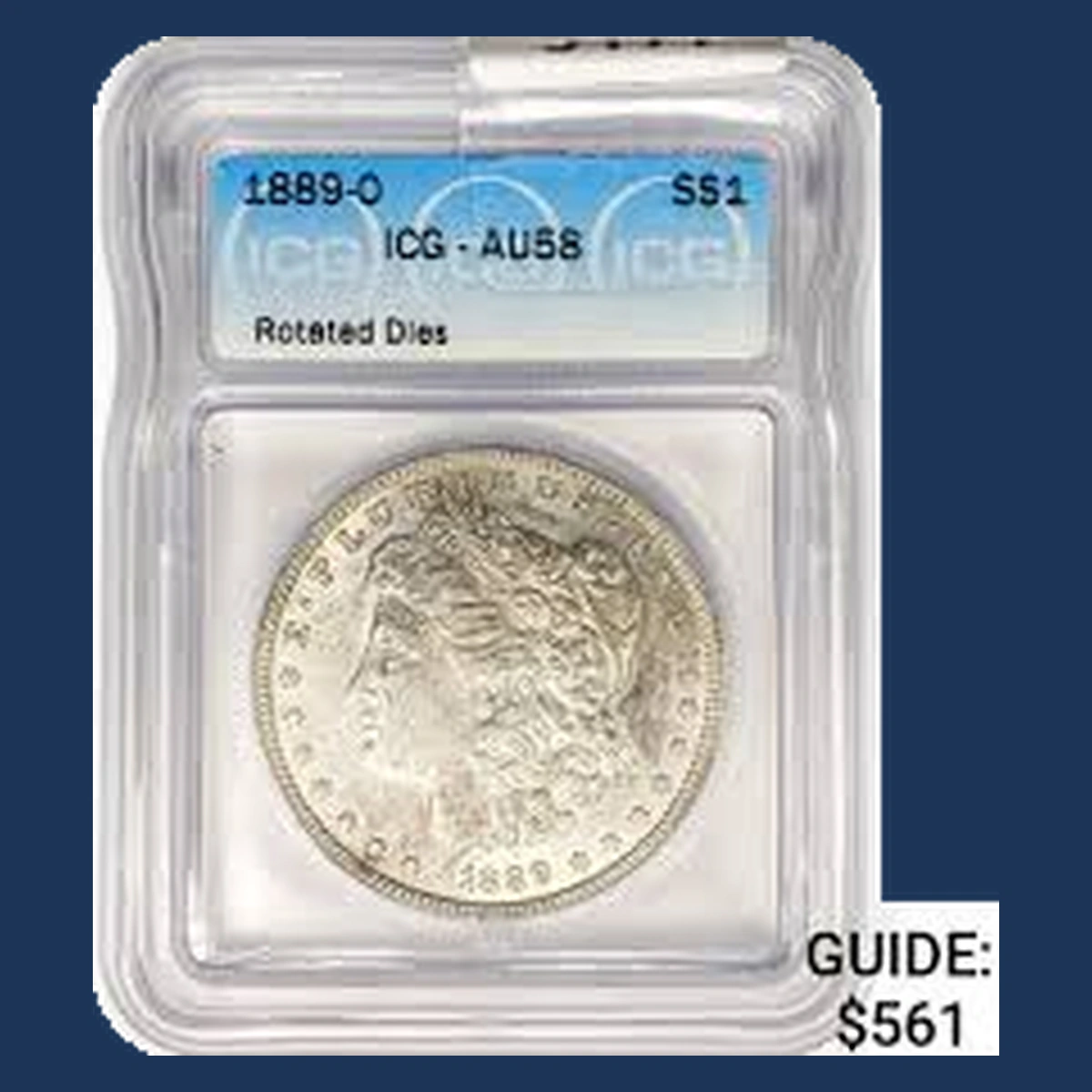
The eagle may stand far from upright after Liberty is positioned correctly and the coin is flipped from top to bottom. The two tools were turned out of their normal alignment.
A year guide reports an 1889-O example with a 100-degree rotation and XF Details condition. Details indicates a condition problem in addition to the amount of wear.
The report does not establish which direction the back turns. That must be measured from the actual coin.
Rotating two photographs separately can create a false impression. A genuine rotation affects the entire back design in one consistent direction.
Estimated Value
Use an estimated $100–$1,000 for authenticated 1889-O rotations across worn through attractive examples. A large angle that can be shown clearly usually offers a stronger display than a slight lean.
The year guide reports a $128.50 sale for its 100-degree XF Details example. That secondhand figure concerns a coin with a condition problem, not a clean unworn dollar.
The degree of rotation alone cannot explain the price without considering wear and surface damage.
How to Identify
Draw a vertical line on paper and place a clear coin holder over it. Position Liberty upright so the front has a fixed starting direction.
Flip the holder over from top to bottom without turning it sideways. A normal Morgan dollar should now show an upright eagle.
If the eagle leans, repeat the flip while watching the holder’s corners. Record a short continuous video if still photographs make the movement hard to follow.
Use an angle overlay or protractor to measure the departure from upright. For the reported 100-degree example, establish the direction from the coin rather than assigning clockwise or counterclockwise in advance.
The eagle and all surrounding words should share that measured turn.
3. 1889 Morgan Dollar Wire or Other Material Impressed into the Surface
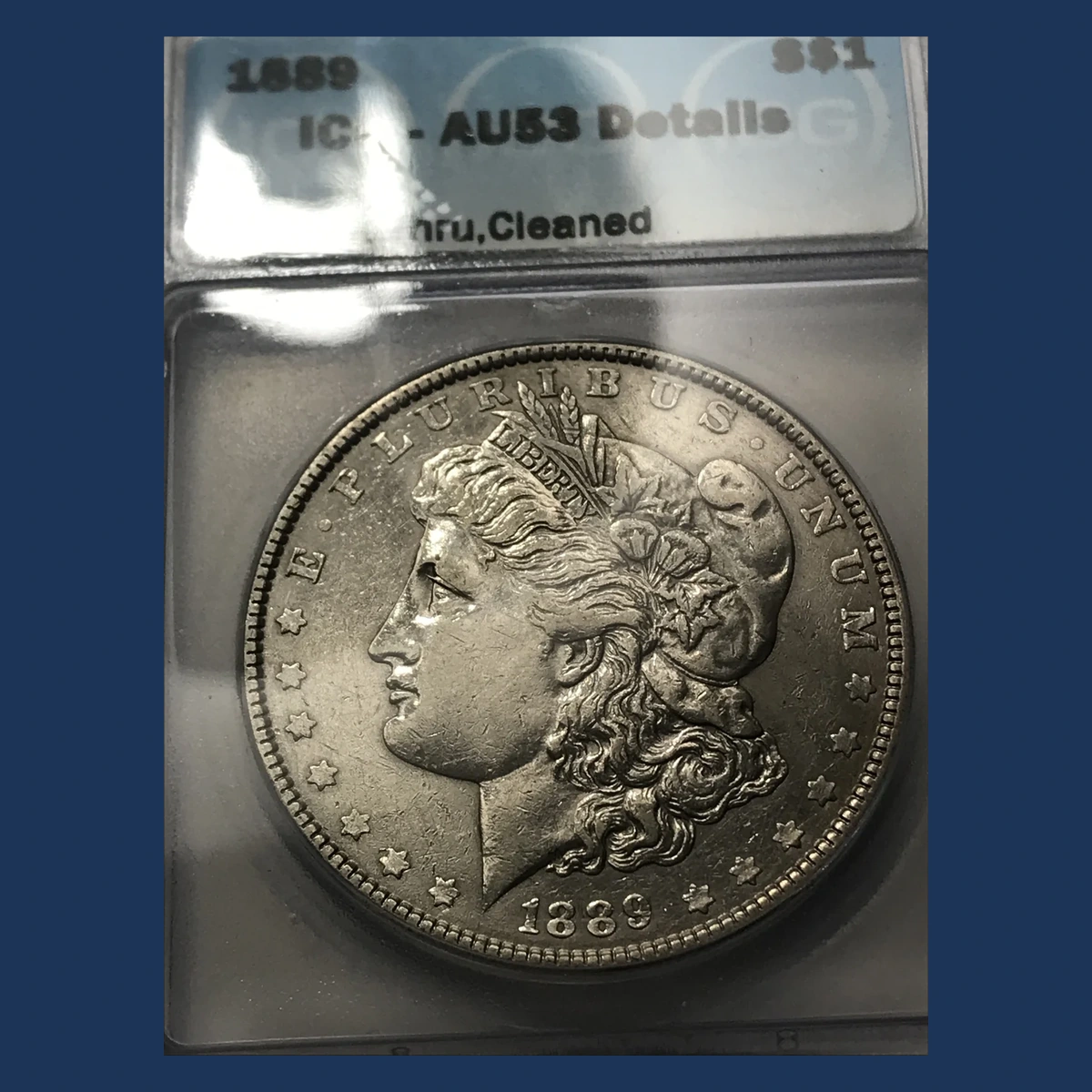
A narrow sunken track can remain when wire lies between a blank and the stamping tool. Pressure forces the wire into the silver while the rest of the picture forms.
Northeast Numismatics listed a Philadelphia 1889 dollar graded PCGS AU53 with a wire impression on the back. AU53 means a circulated coin with relatively light wear.
A separate year report describes an 1889-O AU55 with an impression on the front. Its material and precise location are not established.
An ordinary scratch can also make a narrow groove. The surrounding surface helps distinguish the two.
Estimated Value
The Philadelphia AU53 wire example carried a $550 asking price in Northeast’s inventory. An asking price shows the seller’s offer, not a completed auction result.
Estimate $150–$1,000 for genuine 1889 struck-through dollars of comparable size and condition. A clear shaped groove on otherwise attractive silver can draw stronger interest than a faint mark among heavy abrasions.
The New Orleans front example needs its own physical comparison rather than borrowing the wire identity or price automatically.
How to Identify
Begin with the groove’s endpoints and follow the full path under a magnifier. Note where it passes through raised design and where it crosses the smooth background.
Look for a border formed as the coin was struck around the obstructing material. Later scratching may leave fresh cuts, pushed-up ridges, or scraping that continues beyond the main groove.
Turn the lamp rather than rubbing the coin to reveal the depth.
For the Philadelphia example, examine the back-facing photographs from Northeast’s error inventory. Do not assume that an unrelated front mark on an O-mint coin came from wire.
The shape of the impression and the way nearby design meets it are the practical clues.
4. 1889 Morgan Dollar Missing Piece of the Blank
A gap in the dollar’s outline can begin before any picture is struck. The blank-cutting operation leaves an incomplete disc, which then passes through the press.
The resulting coin has a clip, a missing section formed during blank preparation. Year reports describe curved gaps, but the exact outline must be checked on each coin.
A 2014 Stack’s Bowers group included an 1889 clip graded MS61. Its exact gap position needs checking on the coin.
Removing metal from a finished dollar can imitate the outline. The struck detail beside the gap helps tell them apart.
Estimated Value
Allow an estimated $100–$1,250 for genuine 1889 clips. A well-defined gap with surviving date and attractive original surface can bring more interest than a tiny, poorly displayed missing section.
The cataloged MS61 example was sold within a group, so the group’s price cannot be assigned to that one dollar. Its condition also differs from a worn or cleaned candidate.
Gaps made by cutting, filing, or other later damage do not receive the same Mint-error allowance.
How to Identify
Inspect both junctions where the normal rim meets the gap, using a magnifier to compare the nearby letters and border teeth. Metal flow or local weakness there can support a blank that was already incomplete when the tools struck it.
Now check the exposed boundary for saw marks, file strokes, or a sharp cut through finished detail. Those signs suggest removal after striking rather than a genuine clip, even when the overall curve looks convincing.
Turn to the rim opposite the missing section and look for weakness that may support the diagnosis. That clue is not always obvious, so combine it with the original struck surfaces at the two ends of the gap.
5. 1889 Morgan Dollar Raised Lump Connected to the Rim (1889-O)
A broad raised lump joined to the rim can replace part of the normal design. A piece broke from the edge of the stamping tool, letting silver flow into the open space.
This kind of break is called a cud. Its connection to the rim distinguishes it from a small isolated bump within the picture.
A year guide reports an 1889-O example in worn VF/XF condition. The exact position and outline require comparison with the actual coin.
A hard blow can also push rim metal inward. The shape and neighboring surface must support tool failure rather than damage.
Estimated Value
The reported worn 1889-O rim-cud example was listed at $147.75, an asking price rather than a confirmed sale. It offers limited context for a modest example.
An estimated $125–$1,500 covers authenticated cuds across different sizes and conditions. A large, obvious break replacing design generally makes a stronger display than a small edge lump.
Cleaning, rim hits, or heavy wear can still reduce the whole coin’s value despite the presence of an original cud.
How to Identify
Look for a single raised mass that joins the coin’s outer rim and extends into the design. Trace its boundary with a magnifier before treating every thickened edge as a cud.
Inspect the lump’s surface for normal detail that should have occupied that spot. A missing piece of tool can leave a smooth raised area in place of letters, border teeth, or other features.
Turn to the opposite face and check for weakness in the corresponding area, which can support metal flowing into the break. Then inspect the rim for an impact hollow or crushing.
A rim connection plus replaced design is the useful combination. A dent beside displaced metal suggests later damage instead.
6. 1889 Morgan Dollar Design Shifted off the Blank
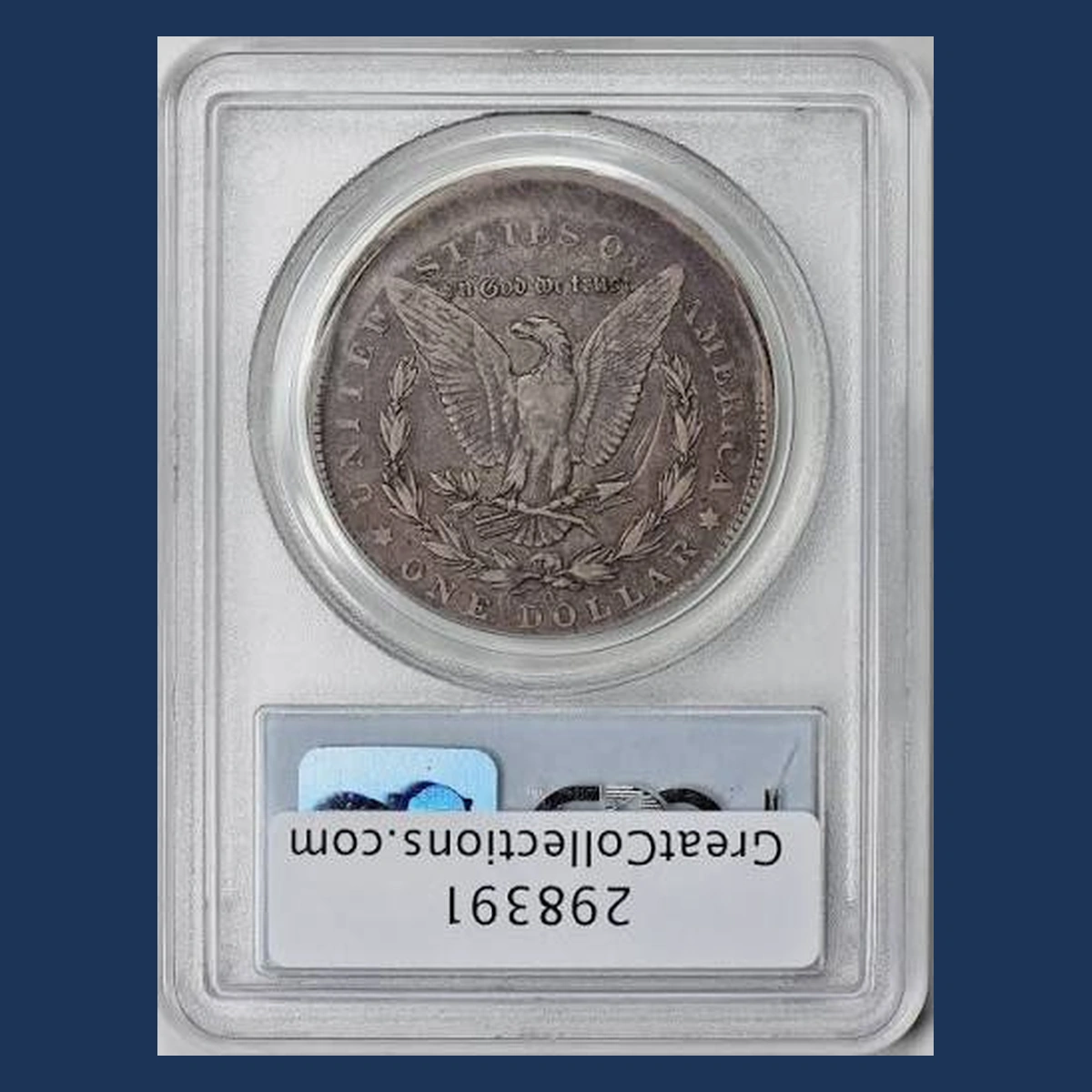
A crescent of unstruck silver can remain on one side while part of the opposite design runs beyond the blank. The disc was not centered under the tools.
One Philadelphia example graded PCGS MS62 was struck about 5% toward three o’clock. The left border has extra blank silver, while some outer teeth were lost.
A different 1889-O graded PCGS VF30 was struck about 8% toward twelve o’clock. The tops of PLURIBUS extend beyond the blank.
These are separate coins with different directions and amounts of wear. Neither requires a second strike to explain its appearance.
Estimated Value
The Philadelphia 5% example brought $2,990 in July 2002. The New Orleans 8% example sold for $1,782.50 in March 2004.
Estimate $1,000–$6,000 for comparable identified 1889 off-center dollars. These earlier sales illustrate how a modest displacement can attract substantial interest on this large silver coin.
Condition, mint, and the clarity of the missing design still matter. The larger percentage does not automatically outrank a better-preserved example with a smaller shift.
How to Identify
Read the outer lettering and border teeth all the way around each face. An off-center strike should show which portion of the intended design could not fit on the blank.
For the Philadelphia example, compare the missing right border teeth with the extra silver along the left. For the New Orleans coin, the incomplete tops of PLURIBUS explain the upward displacement.
Use full-coin photographs beside a normal 1889 dollar rather than judging the border’s width alone. A broadstrike can expand unevenly while retaining the entire design.
Check with a magnifier that the unused area has not been filed or ground down.
The pairing of untouched silver and missing outer design is the clearest distinction.
7. 1889 Morgan Dollar Expanded Uneven Border (1889-S)
The picture can remain complete even when the dollar’s border spreads unevenly. The surrounding metal ring, called the collar, failed to contain the blank normally during striking.
This is a broadstrike. An uncentered broadstrike places the design unevenly within the expanded metal but still retains the full intended picture.
A 2014 Stack’s Bowers catalog lists an 1889-S example graded PCGS MS63. Heritage also lists that mint, date, error type, and grade in its September 2025 auction.
The shared descriptions do not establish that the two listings show the same physical coin. Each example needs its own photographs.
Estimated Value
Heritage’s September 2025 archive records $4,680 for the PCGS MS63 uncentered broadstrike. The result supplies a recent comparison for this specific date and mint.
An estimated $2,000–$6,500 covers recognizable 1889-S examples across circulated through attractive unworn condition. A broad expanded margin, complete readable design, and original surfaces can strengthen demand.
The price concerns the whole dollar; damage added later can reduce its appeal even when the expansion is genuine.
How to Identify
Confirm that the date, stars, and outer words remain on both faces before measuring the enlarged outline. Losing part of the intended picture points toward an off-center strike rather than a complete broadstrike.
For a loose dollar, use calipers gently to compare several widths with the normal 38.1-millimeter diameter. Inspect the edge and expanded border through a magnifier for original struck texture and the effects of incomplete collar restraint.
Flattening a normal dollar with blows can also make it wider, but may crush the portrait or leave repeated dents. Complete design surrounded by naturally expanded silver, without that damage, is the combination to examine.
Conclusion
Estimated whole-coin prices for these 1889 Morgan errors range from $75 to $6,500. Recognizable features, original surfaces, and the mint all help explain differences within that span.
An expanded border with a complete design differs from an off-center strike that loses part of it. A rim lump needs a different check from a missing piece of blank.
Photograph the whole coin and the feature together before choosing an error label.