1902 Dollar Coin Error List with Pictures

A small patch above the R in DOLLAR did not stop a superb 1902-S coin from bringing $17,037.50 in July 2020. Its high grade drove that whole-coin price; the patch’s cause has been questioned.
This 1902 Morgan dollar error list covers misplaced digits, extra outlines, unusual surfaces, and striking mistakes. Estimated ranges run from $61–$25,000, including the exceptional-condition end.
Look for the visible features below, then compare the correct mint and condition.
1. 1902 Morgan Dollar Raised Patches from Tool Rust
A rough patch can be raised rather than eaten into the coin. Rust pits in a steel stamping tool can fill with coin metal during striking, leaving small bumps.
A Philadelphia catalog description places this texture near the bow’s right ribbon, above OL in DOLLAR, and above the left of N in ONE. Those locations help distinguish the pattern from general surface damage.
The silver dollar itself did not need to rust. The pitted tool made the repeated texture.
Other varieties combine tool rust with doubled details, so roughness can accompany a different main feature.
Estimated Value
Estimate $90–$600 for Philadelphia examples in worn through ordinary unworn condition. Small tool-rust patches often add less value than a striking error.
A sharp coin that preserves the repeated pattern is easier to compare and can interest a variety collector. General corrosion on the coin does not receive that same premium.
Use the complete dollar’s condition when choosing a price within the range. Bright cleaning, deep marks, or an uncertain pattern can outweigh the appeal of a tiny rough patch.
How to Identify
Compare the rough areas above DOLLAR and beside ONE with the bow’s right ribbon area. Their positions matter more than the general impression that the back looks grainy.
Bring a light down close to the surface and look for small raised peaks. Later corrosion commonly removes or changes the coin’s own surface instead of reproducing the tool’s pits as bumps.
Find a photograph of the same Philadelphia pattern and compare the outlines of each affected area. Random pitting scattered across both faces does not establish this variety.
Keep the surface untouched. A brush or polish can remove the delicate peaks that distinguish the original texture from later damage.
2. 1902 Morgan Dollar Reworked Leaf Details
Some leaves can look unusually thick or crudely outlined because someone reworked their shapes in the stamping tool. The changed tool then passed those details onto the coins it produced.
The Philadelphia variety has rough leaf work near ON in ONE and across from U in UNITED. The inner leaf edge of the first affected cluster is especially useful for comparison.
This is a change made to the tool, not carving added to the finished silver dollar. Other New Orleans varieties also have reworked leaves alongside doubled designs.
A single scratch crossing a leaf is a different feature.
Estimated Value
For a correctly matched reworked-leaf example, use an estimated $90–$800 across worn and moderately marked unworn coins. The surrounding design should remain clear enough to identify the altered leaves.
Fine tool work may attract a specialist without adding a large premium. A stronger, well-preserved pattern can sit higher within the range.
The estimate includes the underlying dollar, not a separate charge for each modified leaf. A coin with later engraved lines needs a damage assessment rather than this variety comparison.
How to Identify
Choose a normal Philadelphia back photograph and place it beside the candidate. Compare the leaf cluster near ON in ONE before examining any small surrounding lines.
Follow the inner edge of the first affected cluster, then check the leaves across from U in UNITED. The reported tool work should change the leaf shapes in a repeatable way.
Tilt the light across the leaf. A cut added to the finished dollar often interrupts its surface and can push metal along the cut’s edge.
Do not test the area with a needle.
For a New Orleans example, use its own matching photographs instead of the Philadelphia pattern. Reworked leaves and doubled outlines can occur together, but their locations are not interchangeable.
3. 1902 Morgan Dollar Raised Tool Lines and the Bar O
An accidental cut in a stamping tool can leave a raised line on the dollar. The direction is reversed: a hollow in the steel becomes extra metal on the coin.
One New Orleans variety has a horizontal raised bar across the top of the O mint mark’s opening. Other examples show a long line through upper left wreath leaves or a line from the bow toward the tail feathers.
A further example has a broad shallow tool line near the wing’s top. Some also have doubled designs.
These patterns belong to separate tools, not one universal scratched-dollar variety.
Estimated Value
Matched raised-line varieties are estimated at $90–$1,000 for worn through ordinary unworn examples. A clear bar inside O is easier to recognize than several faint lines visible only under unusual lighting.
The amount of extra value depends on the particular pattern and its collector following. Multiple lines on one dollar do not each earn a separate full-coin price.
Check preservation as carefully as the feature. A genuine tool line can coexist with cleaning scratches that reduce the total value.
How to Identify
Inside the New Orleans O, look for the raised horizontal bar rather than a second complete O outline. Those two appearances point to different causes.
Move the light and check the bar’s height relative to the mint mark. A later cut tends to form a trench, even if disturbed metal rises along one side.
For the leaf, bow, or wing examples, identify the exact starting and ending points of the line. Their surrounding design fixes the location and prevents an unrelated scratch from seeming like a match.
Photograph the whole back before making the close-up. If doubling occurs elsewhere on that dollar, keep its evidence separate from the raised line while matching the complete variety.
4. 1902 Morgan Dollar Marks from Contact with the Collar
The stamping tool can contact the collar, the ring around the blank. Damage from that contact may leave marks near the edge on coins made afterward.
Philadelphia catalog entries report this collar clash on one variety and on a later stage of another. The later stage places the marks along the front’s twelve-to-two-o’clock arc.
The second variety also has ear doubling and back-letter doubling. Those companion features help distinguish its earlier and later appearances.
A collar clash is different from a coin struck partly outside the ring. The latter changes the coin’s edge shape during its own strike.
Estimated Value
Estimate $100–$1,200 for authenticated collar-contact varieties in ordinary circulated through unworn condition. Strong repeated edge-area marks can add interest when their match is clear.
A close date or a slightly uneven border does not establish this premium. Those appearances can occur without the reported tool contact.
Price an example with ear doubling as one complete variety. The clarity of the marks and the dollar’s preservation matter more than how many separate features a seller lists in its title.
How to Identify
Keep the coin’s face and physical edge separate in your examination. This variety concerns marks copied from a damaged tool, not simply a broad or stepped edge.
On the later Philadelphia stage, inspect the front border between twelve and two o’clock. Compare the positions and shapes with a documented example of that stage.
Check the ear and back-letter details too, because a nearby-date appearance alone is not enough to identify the variety. The other reported Philadelphia collar clash has no precise clock position specified here.
If the physical edge instead has a distinct ledge between grooved and smooth sections, investigate a partial collar. An edge photograph can resolve that different kind of mistake without treating both as the same event.
5. 1902 Morgan Dollar Repunched O Mint Mark
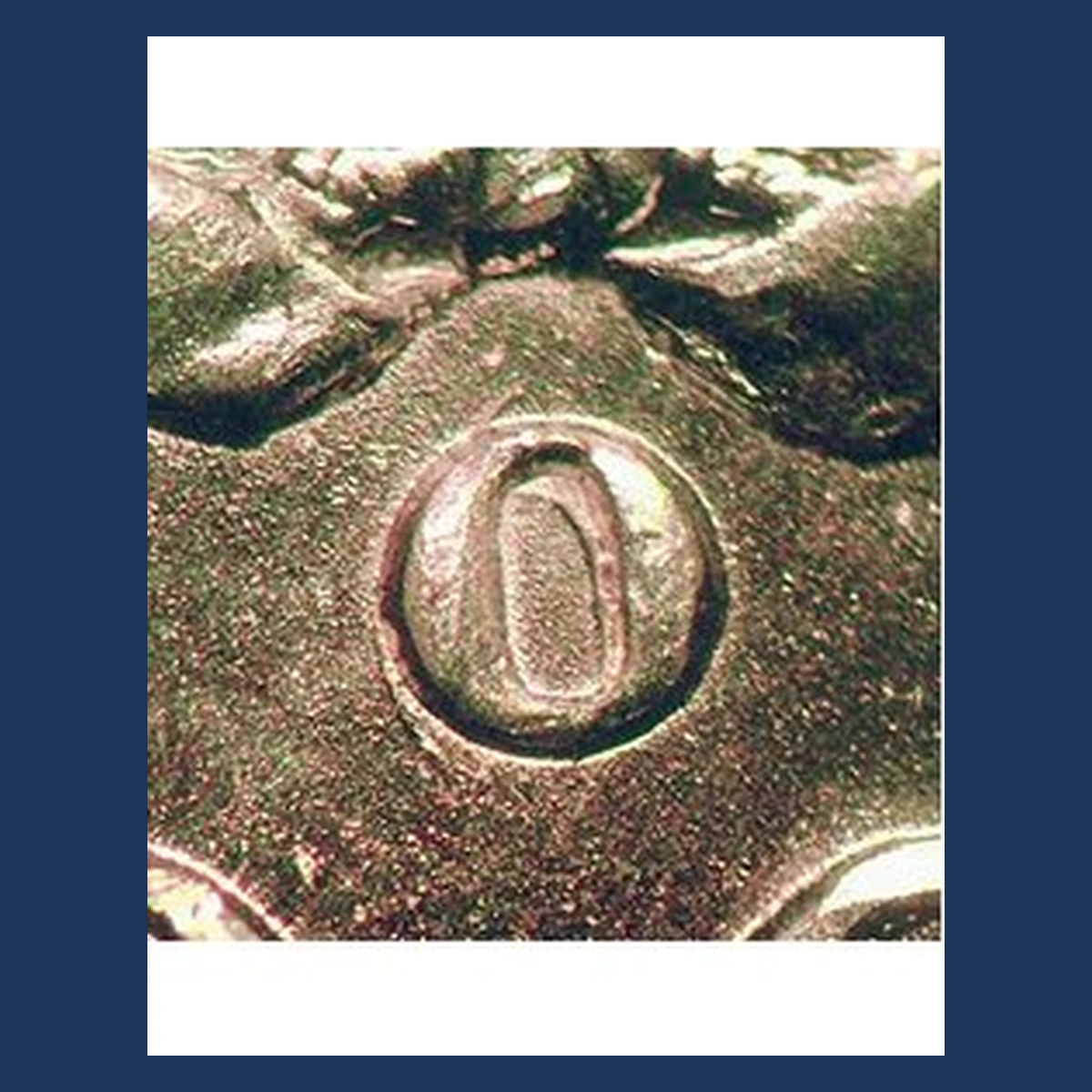
The O mint mark was added to a stamping tool with a punch. If the punch landed again in a slightly different position, traces of both impressions could remain.
A documented New Orleans variety has strong overlapping O detail. It also carries small doubled front details and a doubled olive on the back.
The mint-mark overlap identifies the repunching; a high, low, or tilted O by itself does not. Those normal placement differences can occur without a repeated punch.
The horizontal bar found inside O on another variety is a tool line rather than this overlapping-letter pattern.
Estimated Value
Use an estimated $100–$1,500 for identified repunched-O dollars across circulated and ordinary unworn grades. A strongly separated remnant that clearly follows the O can command more attention than a vague thickened edge.
Surface quality and overall grade still influence the total substantially. The extra olive and small doubled front details describe the same variety, not separate coins to price again.
An unusually positioned O with no repeated outline belongs with ordinary mint-mark placement comparisons rather than this estimated error range.
How to Identify
Focus on the opening and outer curve of O under a 10× magnifier. Trace the proposed earlier letter as a continuous curved shape rather than connecting random bumps.
Compare it with the documented overlapping-O example. A horizontal bar across the opening belongs to a different tool-mark variety, and a tilted single O is not repunching.
Now examine the adjacent normal surface for scraping or added metal. Alterations to a mint mark can leave a disturbed boundary around the letter.
The companion doubled olive and front details can support a match to the complete coin. They cannot turn an ordinary single O into a repunched mark when the actual overlapping curve is absent.
6. 1902 Morgan Dollar Cracked, Chipped, or Broken Stamping Tools
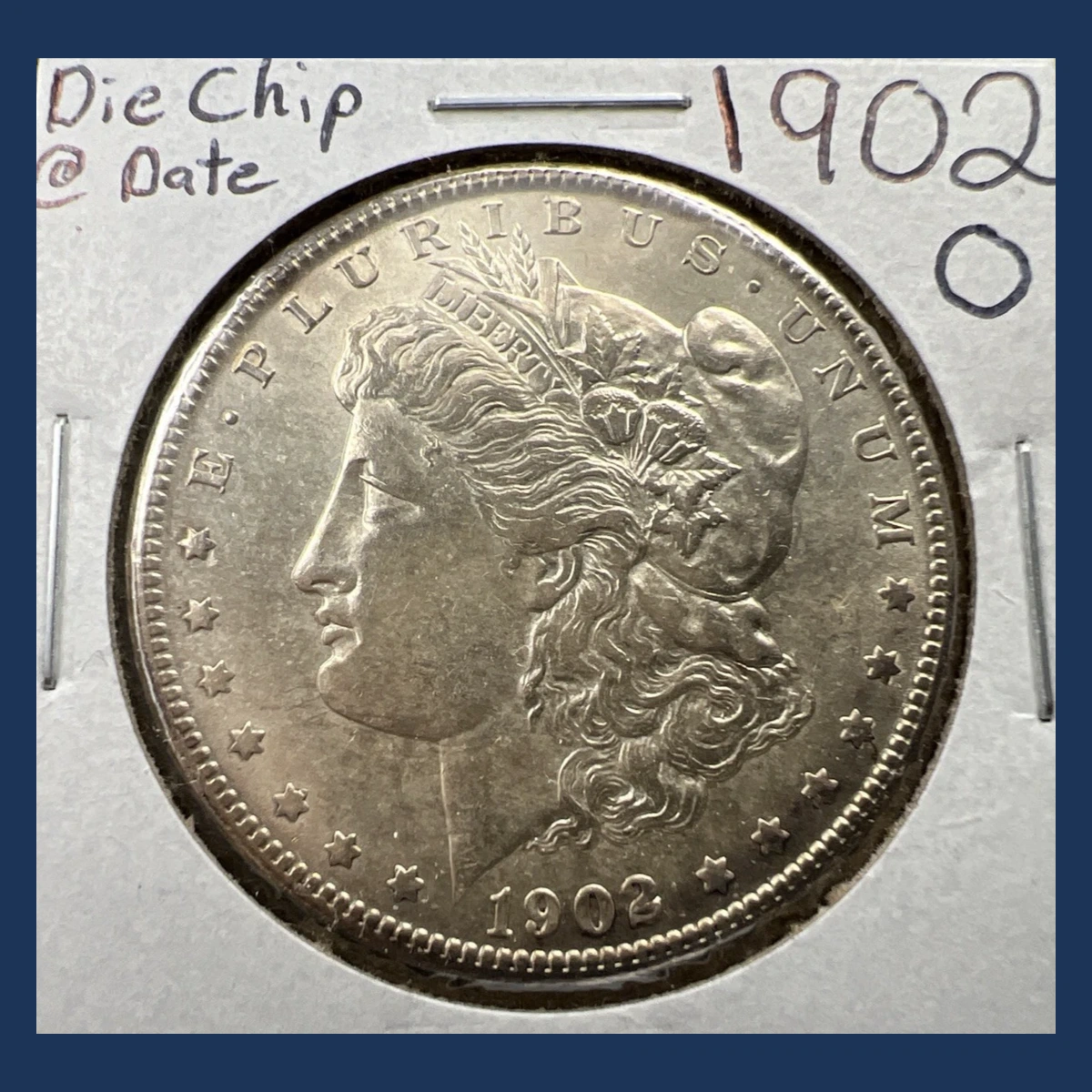
When a stamping tool cracks, metal can enter the narrow opening and form a raised line on the coin. A small missing tool piece can leave a thicker lump.
New Orleans examples include rough chips near the date, stars, and letters. Other patterns show a neck-to-star crack, a break around E and D in ONE DOLLAR, or a line through the date.
A Philadelphia back example has a crack running from the arrow feathers through ON in ONE toward the rim. These are different patterns, sometimes paired with doubling.
Later scratches cut the coin instead of reproducing a broken tool.
Estimated Value
For ordinary examples with identifiable cracks or chips, estimate $90–$1,800. Larger breaks and linked patterns may interest collectors more than a common fine line.
Condition can matter more than the size of a small chip. A sharply detailed New Orleans dollar with clean surfaces may outprice a heavily worn coin with a larger break.
Compare the complete pattern rather than counting each bump as a separate error premium. Damage that removes metal from the finished coin needs a different valuation.
How to Identify
A line that reaches a star, letter, or the rim can be followed as a path. Check whether it rises above the neighboring surface and whether the same path appears on a matching example.
For a chip, examine the lump’s outline instead of looking for a long line. Near-date roughness on the New Orleans examples can include several small tool breaks.
Some later stages join a crack to a larger raised area, such as the E-to-D break. Earlier and later appearances should not be forced to look identical.
Photograph the whole path and its intersections with the design. A later scratch can run across the raised letters but usually leaves a cut and disturbed edges rather than an added ridge.
7. 1902 Morgan Dollar Misplaced Date Digits
Parts of a date digit can appear below the proper date when a punch first landed too low in the stamping tool. The misplaced traces remain after the correct date is added.
A New Orleans variety shows extra curved tops of 2 in two neighboring border gaps beneath 02. These small arcs are separate from the normal struck date.
The same cataloged group also has doubled portrait details, with some later examples showing transferred border impressions near the eagle’s wing. Those companion marks do not turn every doubled 2 into a misplaced digit.
Estimated Value
For an example with visible 2 arcs, estimate $150–$2,000 in worn through attractive unworn condition. Their visibility in the small border gaps is central to the appeal.
Wear or heavy marks can make these traces difficult to recognize. A strong photograph and a complete variety match help distinguish a collectible misplaced digit from random rim roughness.
The later wing marks and portrait doubling belong to the same coin. Treat its price as a whole rather than adding several feature estimates.
How to Identify
Find the proper 0 and 2, then lower the view to the gaps between the small border teeth underneath them. The reported remnants are curved tops of extra 2 punches.
Use a magnifier and light from several directions to trace the arcs. Do not treat every triangular point between border teeth as part of a numeral.
Compare the spacing with a clear image of this New Orleans variety. The misplaced shapes should sit outside the regular date rather than merely thicken its normal outline.
Check the rest of the coin for the companion portrait features. Later wing impressions may support a particular stage, but their absence alone does not rule out an earlier example with the same misplaced digit traces.
8. 1902 Morgan Dollar Clash Marks from Contact Between Tools
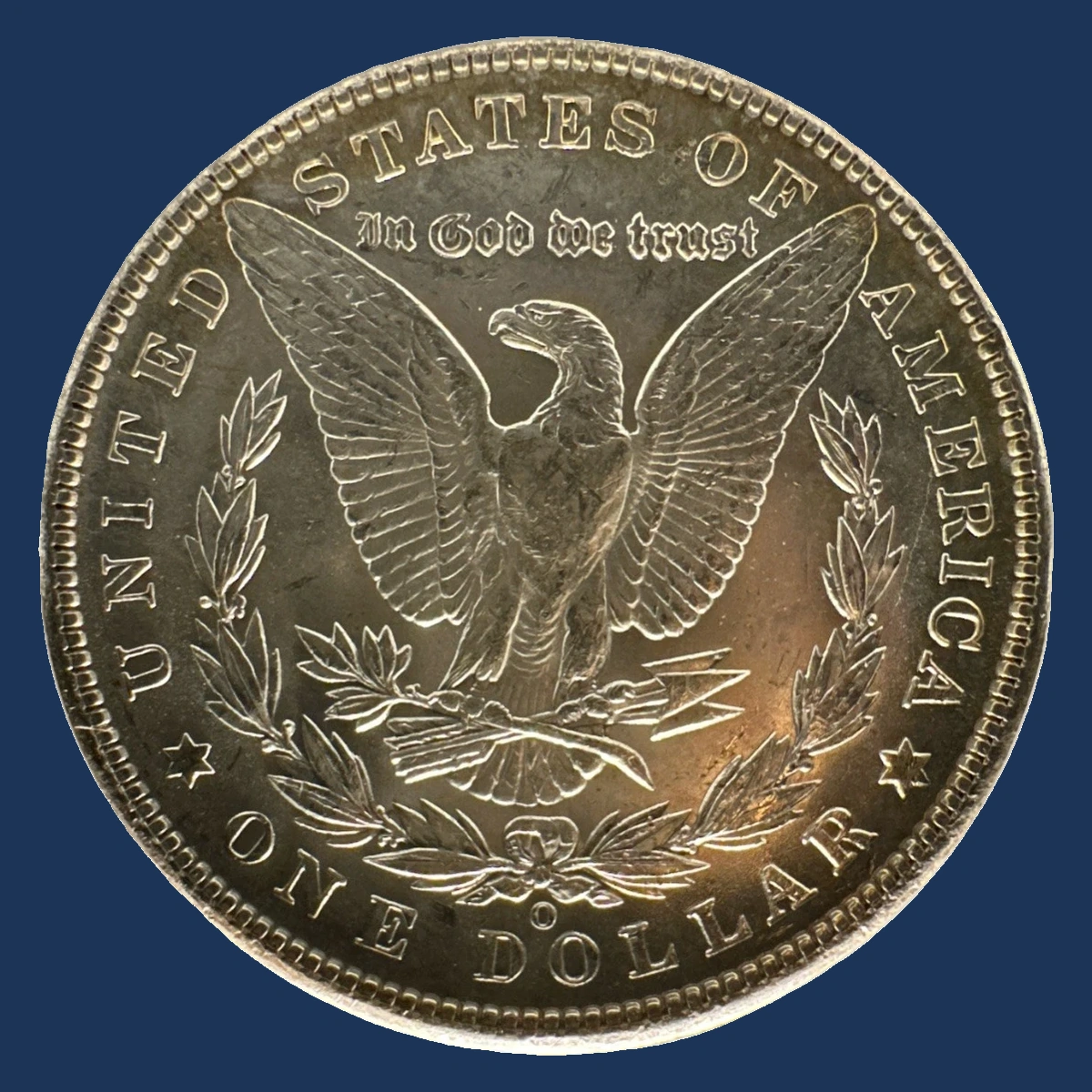
The front and back tools sometimes met without a blank between them. Their contact left marks that could transfer onto later coins.
New Orleans examples show letter fragments near Liberty’s neck or back hair, and some show a raised M near the back motto. On one repeatedly clashed variety, a G appears near the neck after a slight change in alignment.
Other patterns include traces around the eye or impressions resembling border teeth beneath tail or wing details. A Philadelphia example also carries neck and hair traces.
These marks occur in different combinations, not together on every coin.
Estimated Value
Recognizable clash varieties are estimated at $90–$2,500 across circulated and unworn conditions. Strong transferred letters or several related marks can attract more specialist interest than a faint line.
The original dollar’s mint and grade remain important. A polished tool can weaken a clash on later coins without creating an entirely new price category.
Use a comparison with the same surviving combination. Random marks near the neck, or a catalog number unsupported by the actual features, do not establish the premium.
How to Identify
Choose one unusual fragment and locate the normal design that surrounds it. A G-like mark near the neck needs a different comparison from a short trace behind the hair.
On the repeatedly clashed New Orleans variety, John Roberts describes the transferred G and related marks. Do not rename it an E merely because another nearby line looks suggestive.
Inspect the opposite face for the matching combination, such as motto-area or leaf traces. The exact pair matters more than finding any clash on each face.
A fragment can appear raised or sunken according to how it formed. Compare its documented shape and surroundings instead of requiring every clash mark to have the same height.
9. 1902 Morgan Dollar Tilted Partial Collar
A dollar blank could sit unevenly in the collar ring that formed its edge grooves. Part of the metal then expanded beyond the supported section during striking.
The result is a partial-collar edge, often with a ledge that changes around the circumference. Philadelphia auction records describe examples with this tilted-collar effect.
Their ANACS Details descriptions also mention polishing, scratches, or cleaning. Those are later condition problems rather than part of the minting mistake.
A broad rim seen from the front is only a clue. The physical edge must show how the collar contained some metal while leaving another section unsupported.
Estimated Value
Estimate $150–$3,000 for authenticated partial-collar dollars, from worn or impaired examples to stronger unworn pieces. A clear step is more persuasive than a slight imbalance in rim width.
The cataloged Philadelphia coins have condition problems that affect their comparisons. Polishing or cleaning may make a genuine mint error less desirable.
Compare edge visibility and preservation together rather than valuing the collar effect alone. A well-photographed step helps collectors assess the mistake without mistaking a damaged rim for a striking error.
How to Identify
Hold a loose coin by its edges and turn it slowly, without rubbing its surfaces. Watch where the grooved section meets metal that spread outside the collar.
The ledge may change height around a tilted example. A side photograph should show that transition, while both face photographs show how the border relates to it.
If the coin is certified, leave it in its holder and use any available edge images. An obscured edge cannot be replaced by a guess based solely on rim width.
Read a Details label separately from the error description. Cleaning scratches and polishing affect condition, but neither one creates the original stepped relationship between supported and unsupported edge metal.
10. 1902 Morgan Dollar Design Struck Through Foreign Material
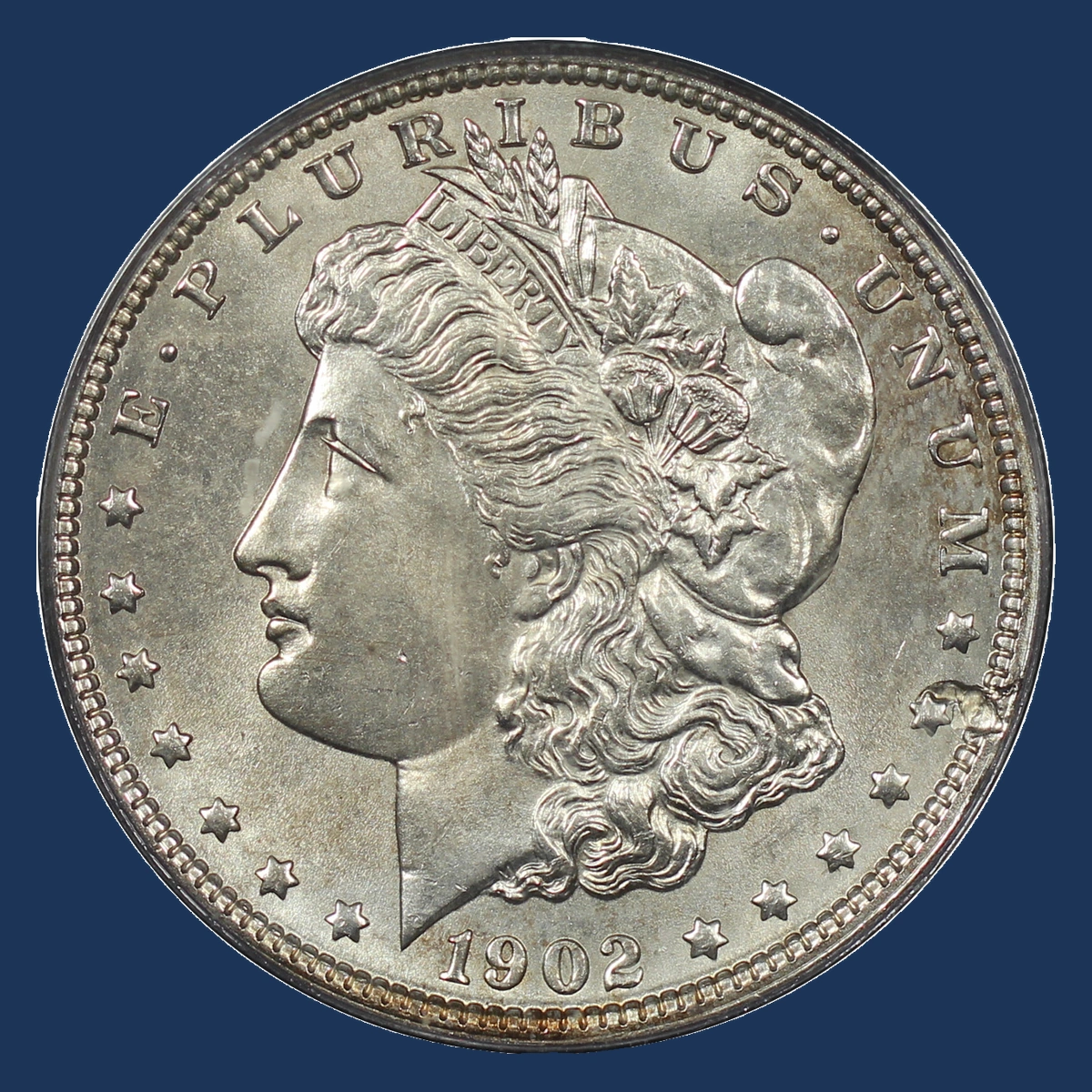
Something between the blank and a stamping tool can interrupt the design as the coin is struck. The object may fall away or remain lodged in the coin.
A New Orleans back example graded NGC MS64 retains the material, but its exact substance is not specified. A different New Orleans MS63 coin has a front impression.
A collector’s gallery also reports a minor Philadelphia example. The report does not establish one shared shape or location for these coins.
MS grades describe unworn condition. They do not identify whether the obstructing material was cloth, wood, metal, or something else.
Estimated Value
A New Orleans front-impression dollar graded MS63 sold for $61 in December 2016 at Heritage. Small effects can be valued close to an ordinary coin in comparable condition.
Estimate $61–$700 for minor to clearer impressions, and $300–$5,000 for a confirmed example retaining recognizable foreign material. These are whole-coin estimates, with the actual appearance determining the comparison.
Do not transfer a retained-object premium to an empty depression. Cleaning or attempts to remove the object can reduce both evidence and appeal.
How to Identify
If material remains in the coin, leave it in place. Do not pull, scrape, or dissolve it to see what is underneath.
Photograph the contact boundary from the front and at a shallow angle. An examiner can look at how the design meets the object and whether it was pressed into the coin during striking.
For an empty impression, inspect the surrounding metal for a rim pushed up by a later impact. Compare nearby details with those missing inside the affected area.
Keep the New Orleans front and retained-back examples separate. A catalog’s general struck-through description does not identify an object’s substance, so describe the shape you can actually see before naming a material.
11. 1902 Morgan Dollar Off-Center Strike
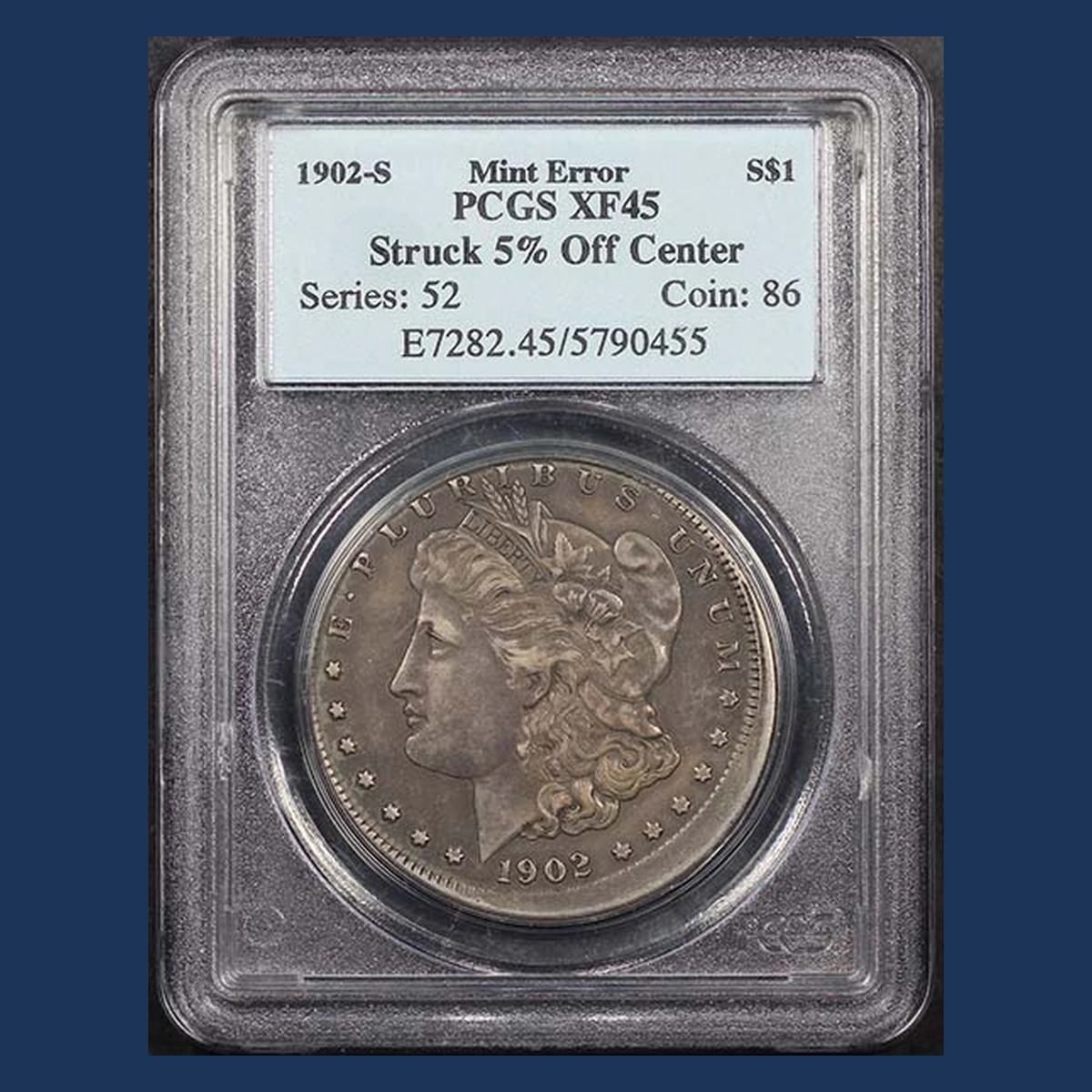
A blank placed slightly away from the center of the press receives a shifted design. One side of the border becomes compressed while the opposite side has extra blank space.
Heritage described a Philadelphia dollar struck five percent off center toward ten o’clock. Some border teeth remain at the upper left, and the lower-right border is wider.
Northern Nevada Coin also lists a San Francisco five-percent example. Its report does not give the Philadelphia coin’s grade or direction.
These are separate dollars, and the small offset should be assessed from both faces rather than one broad rim alone.
Estimated Value
The Philadelphia example, graded PCGS AU58, sold for $1,320 in April 2021 at Heritage. AU58 means only slight circulation wear.
Estimate $1,000–$8,000 for authenticated 1902 off-center dollars across worn and unworn conditions. Mint, visible displacement, original surfaces, and remaining design all influence the total.
The San Francisco gallery example needs its own condition comparison. A five-percent label does not make two coins equally valuable or prove that their shifted designs point in the same direction.
How to Identify
Center the outline of the dollar in each photograph rather than centering its design. Compare both faces for the displacement and for the larger blank border opposite it.
On the Philadelphia example, inspect the upper-left border and the wider lower-right area. Some border teeth remain at the upper left despite the cataloged five-percent off-center strike.
Do not apply those exact positions to the San Francisco example. Check its S mint mark and its own pair of faces.
For a loose coin, confirm roughly 26.73 grams and 38.1 millimeters while inspecting for later edge removal. A one-sided tool shift or an enlarged broadstrike needs a different explanation from the specific off-center examples described here.
12. 1902 Morgan Dollar Doubled Ears, Portraits, Dates, or Back Designs
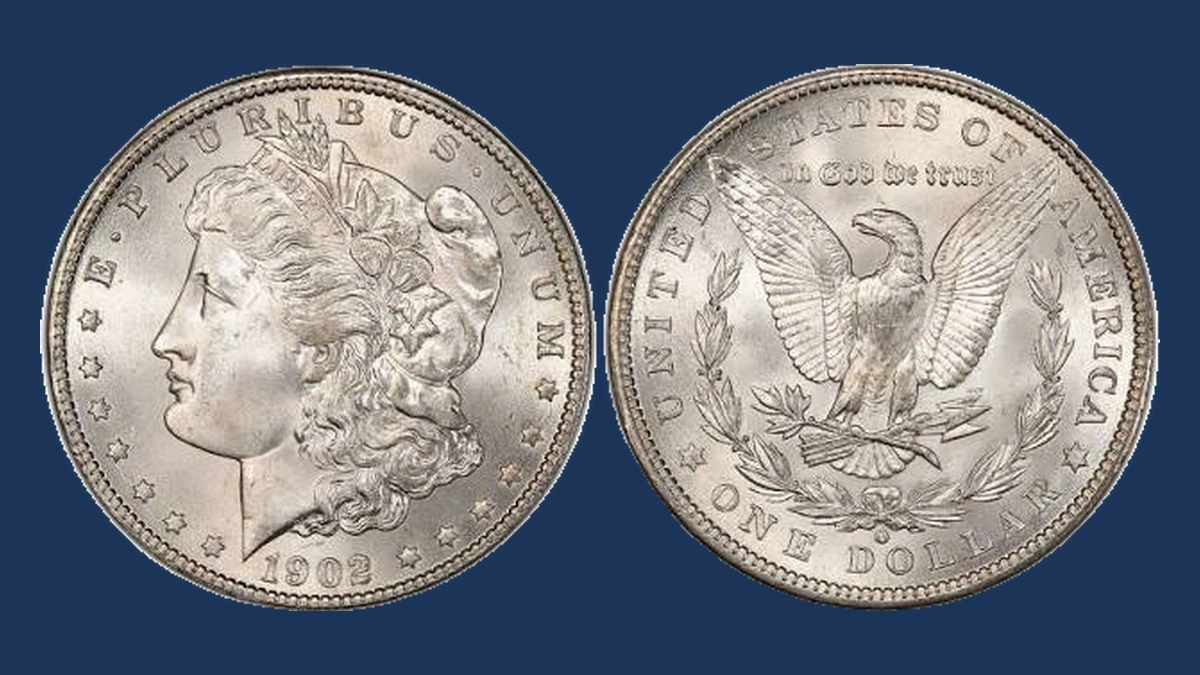
A repeated outline can begin in the tool that stamps the design, called a die. Coins made from it then share the extra detail.
Philadelphia examples include doubled ears, parts of Liberty’s face, and repeated olive or leaf shapes on the back. New Orleans and San Francisco have their own portrait, date, and back-letter patterns.
A Philadelphia Proof variety also has doubled back details. Proofs were specially prepared collector coins, so that example needs its own comparison.
Some coins combine doubling with tool lines, rust, or filled portions of 2. Those companion features do not occur on every doubled-design dollar.
Estimated Value
The Philadelphia doubled-ear variety graded MS64 brought $1,200 in June 2023 at Heritage, as recorded by PCGS. MS64 means unworn with some surface marks.
Estimate $90–$5,000 for ordinary-strike varieties, and $1,500–$15,000 for correctly identified Proof examples in more usual collector grades. Very high-grade coins require individual comparisons.
Minor shared doubling may add little, while a strong ear pattern can interest specialists. A bright mirror-like surface alone does not establish the special manufacture of a Proof.
How to Identify
Read the mint mark before choosing which ear, digit, or back letter to enlarge. No letter means Philadelphia; O and S identify New Orleans and San Francisco.
On the Philadelphia doubled-ear example, follow the outer right and inner left edges of the ear. Other varieties need their own location checks rather than that same ear pattern.
Compare copied raised contours with flat, shelf-like doubling caused during striking. The surrounding hair, face, leaves, or letters should support the particular match.
For a supposed Proof, have its manufacture assessed before applying a Proof price.
Photograph both faces even when only one feature attracted attention. Many cataloged combinations pair different front and back tools, so a familiar doubled olive alone does not identify the complete variety.
13. 1902 Morgan Dollar Peeling Metal or a Back-Surface Depression
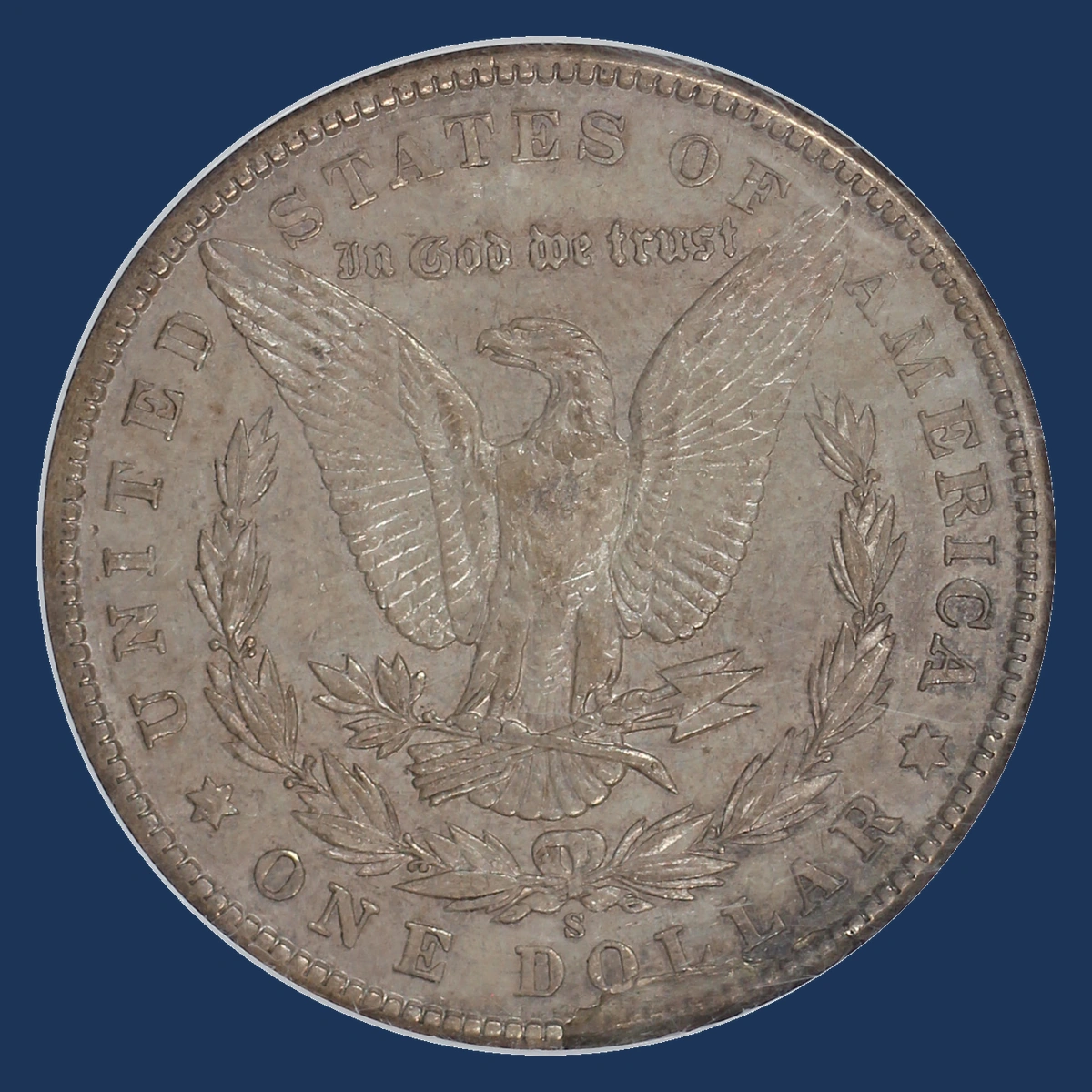
A weak patch within the silver alloy can peel away, leaving an irregular recess. A collector’s gallery reports back lamination on a San Francisco dollar.
A separate high-grade 1902-S has a small depression above R in DOLLAR, partly hidden by the wreath. Its auction description calls it a detached lamination.
Collectors later questioned that explanation after noting similar patches on other coins. Material repeatedly blocking a tool was proposed instead, so the depression’s cause remains open.
Both reports deserve examination, but they are not proven to describe the same coin. This silver alloy has no modern clad outer layer.
Estimated Value
For ordinary-condition San Francisco peeling errors, estimate $150–$2,000. Exceptional unworn coins occupy a different market: allow roughly $12,000–$25,000 for a comparable high-grade dollar, depending on preservation.
The MS66+ coin with the depression brought $17,037.50 in July 2020 at Legend, recorded by PCGS. Its grade indicates exceptional unworn condition.
That was the price of the whole scarce high-grade coin. It does not measure a $17,037.50 premium for the patch or settle how the defect formed.
How to Identify
Locate the depression above R in DOLLAR and compare the surrounding wreath at the same magnification. Preserve a full-back image so the patch stays tied to this coin’s exact position.
Look along the boundary for a thin peeling edge, exposed internal texture, or an impression that could have formed around an obstruction. None should be assumed from the word lamination on a listing alone.
A similar feature repeated on other dollars deserves comparison with those coins. Repetition can help test the proposed tool-related explanation without proving it from one photograph.
Do not probe the recess or move any remaining flap. Keep the gallery lamination and the high-grade auction coin separate unless their complete images establish a match.
Conclusion
These 1902 Morgan dollar estimates range from $61–$25,000, with the highest end reflecting exceptional whole-coin condition. The $17,037.50 San Francisco sale should not be read as the price of a small surface defect alone.
Check where the feature sits and whether it is raised, missing, repeated, or shifted. Then match the mint and the complete coin before choosing a price comparison.
Preserve tiny surfaces and any retained material during inspection.