1927 Dollar Coin Error List with Pictures

The tiny letters in WE deserve a close look on a 1927 Peace dollar. A Philadelphia doubled-motto example brought $7,800 in February 2019.
These 1927 Peace dollar errors also include peeling metal, clipped blanks, and unusual mintmarks. Estimated whole-coin values below run from $75 to $8,000, with condition making a large difference.
Read on to see which small details matter and how to separate them from ordinary wear.
1. 1927 Peace Dollar Small “Micro D” Mintmark
A very small D below ONE can be easy to miss. The reported “Micro D” feature concerns the size of that Denver mintmark, rather than a second letter beside it.
A small-looking mark does not by itself show that a worker made a punching mistake. Wear, weak striking, and differences in the original letter shape can also affect its appearance.
Treat the nickname as a description of what you see. An error premium needs more than a small D, especially when the rest of the design also looks weak or worn.
Estimated Value
For circulated to modestly preserved unworn candidates, estimate $75 to $1,000 for the whole coin. This is a condition-based comparison range, not a proven Micro D premium.
A sharp Denver dollar can already be valuable without a minting mistake. Pay attention to remaining hair detail, original surface shine, and marks across Liberty’s face before paying extra for the size of one tiny letter.
How to Identify
Choose a normal 1927-D comparison with similar wear and photograph both coins at the same size. Otherwise, a smaller photograph or worn letter can create a misleading difference.
Find the D below ONE on the eagle side and enlarge it with a 10× magnifier. Compare its height, width, opening, and outer curves rather than judging only how dark it looks.
Check the nearby letters and feathers next. If several details are equally weak, a weak strike or wear may explain the small-looking mintmark.
Turn the light to reveal scratches or pushed metal around the D.
A specialist can then compare the letter with known Denver punch shapes. The nickname alone cannot identify how the small appearance formed.
2. 1927 Peace Dollar Peeling Silver Surface
A thin strip of metal can lift from a silver dollar and leave an uneven opening behind. Collectors call this peeling a lamination.
The separation begins within metal that did not hold together properly. It can interrupt the stamped design, leaving part of a letter or other detail on the loose section.
A 1927-D seller described an example as PCGS AU58 with a lamination. AU58 means only slight wear; the seller’s description does not establish one standard location for the defect on all Denver dollars with peeling metal.
Estimated Value
A seller asked $220 for the described AU58 example in June 2024. That was an asking price, rather than a confirmed auction result.
Estimate $100 to $1,200 for comparable authenticated Denver laminations in circulated to moderately unworn condition. A broad visible peel with original metal still attached can attract more interest than a tiny flake, while scratches and cleaning reduce the appeal of the surrounding coin.
How to Identify
Leave an attached flap alone. A fingernail or probe can break it away, taking part of the design with it.
Use light from the side to examine where the flap joins the rest of the coin. Follow any stamped detail across that boundary and photograph the lifted section without trying to straighten it.
A real separation can reveal a rough layered surface underneath. Compare that with a deep scrape, which often leaves directional scratches and pushes metal along its sides.
The seller report does not name a particular cheek, neck, or eagle location. Find the defect on the actual coin and compare both faces, rather than looking for a fixed mark that every example must share.
3. 1927 Peace Dollar Repunched S Mintmark
An extra curve beside the S may record more than one use of the mintmark punch. When a worker placed the punch differently, part of its earlier impression could remain.
The resulting feature is called a repunched mintmark. It comes from the steel stamping tool, or die, rather than a second strike of the entire coin.
A year guide reports shifted or repeated S impressions on 1927-S dollars. The extra shape must follow the letter itself; a nearby scratch or a random raised lump does not demonstrate an earlier S.
Estimated Value
Use an estimated $100 to $2,000 for authenticated examples from circulated condition through moderately preserved unworn coins. The coin’s general condition may account for much of that amount.
A small extra S usually appeals to a narrower group of collectors than a large striking error. Clear curved remnants and a convincing comparison photograph support interest, but heavy wear can hide the very feature a buyer wants to see.
How to Identify
First draw the main S in your mind, following its top curve, center, and lower curve. This makes it easier to recognize whether a nearby ridge could belong to another S.
Under a 10× magnifier, examine the mintmark below ONE on the back. Look for raised curved remnants that sit in a consistent position around the main letter, not merely a thicker patch.
Move the light and compare photographs taken from the same angle. A shadow beside the S can disappear when the lighting changes, while actual extra metal remains visible.
A scratch cuts into the surface and may cross the letter without following its shape. Match the whole extra outline to a documented example before assigning a particular repunched-mintmark label.
4. 1927 Peace Dollar Curved Clipped Blank
A smooth curved gap in the outline can start before the coin receives its design. If a blank is cut from an already punched area of metal, part of its edge is missing.
The incomplete blank then goes through the press. Nearby lettering and the rim can respond differently because less metal is available at that edge.
A seller offered a 1927-D described as unworn with a curved clip. That description reports the feature, but the shape of the gap and the surrounding metal still need examination to separate it from later cutting.
Estimated Value
The advertised price for the reported unworn Denver clip was $149 in 2020. A crossed-out listing does not establish what a buyer actually paid.
For authenticated examples with comparable condition, estimate $125 to $2,500. A larger natural-looking gap, readable date, and clean original surfaces can strengthen demand; a very small clip may add only modest interest to a dollar already valued for its date and mint.
How to Identify
Examine the inside of the gap before weighing the coin. Saw marks, sharp cutting burrs, or freshly scraped metal suggest that someone removed a piece after striking.
Next, follow the rim toward the missing section on both faces. A genuine clip can show a fading rim and design stretched toward the gap, with another weak area on the opposite edge.
Use a scale if the dollar is loose: a normal silver Peace dollar weighs about 26.73 grams. A clipped example should be lighter, but there is no single target without knowing the amount missing.
Compare the gap’s curve on the front and back photographs. Weight loss supports a visible blank-making defect; it cannot turn a later cut into a Mint error.
5. 1927 Peace Dollar Doubled Motto and Leaves
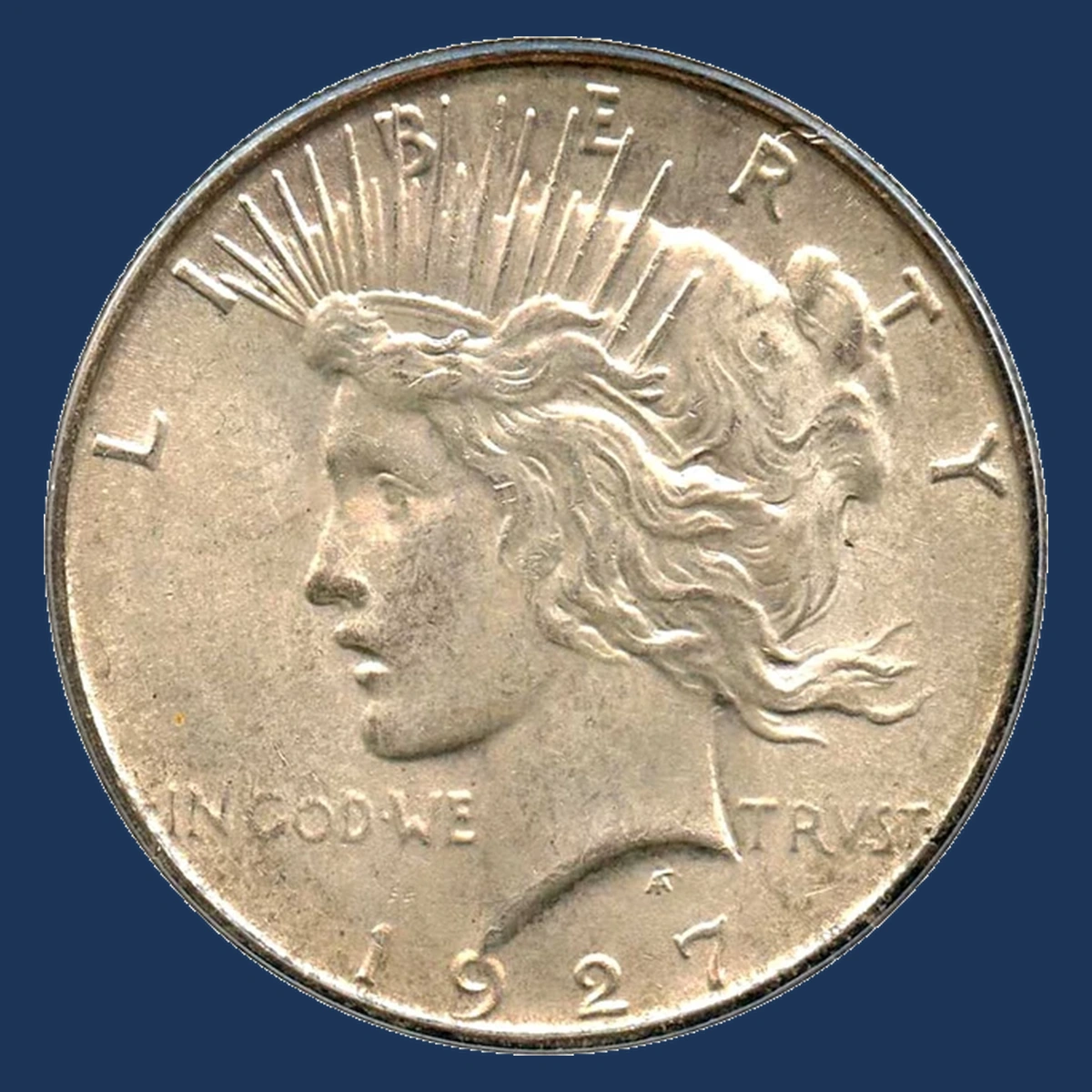
An extra raised edge on a letter or leaf can come from a doubled stamping tool. The tool copied two slightly shifted versions of the design onto each coin it struck.
Philadelphia and Denver examples show doubling around WE and the designer’s small initials on the front. The Denver pattern includes a notch at the lower right of the E.
The San Francisco variety instead shows repeated edges on the middle and lower olive leaves beneath the eagle. These are separate coins and patterns, even though the same general tool-making problem explains their extra outlines.
Estimated Value
PCGS records a Philadelphia doubled-motto dollar selling for $7,800 in February 2019. Its MS65+ grade describes an unworn coin with especially attractive preservation.
Estimate $75 to $8,000 across worn examples and choice coins with recognized doubling. The mint, exact pattern, and condition matter together; the top result prices a complete dollar, not the few doubled letters independently of everything else.
How to Identify
Turn the coin to the eagle side and identify its mint first. An S calls for a leaf comparison; a D or no mintmark leads to the separate motto patterns.
For the S variety, use a 10× magnifier on the middle and lower olive leaves. Follow their outer edges for an additional raised outline, keeping ordinary overlapping leaves separate from true doubling.
On Philadelphia and Denver coins, study the right side of WE and the designer’s small initials. The Denver E can show a notch at its lower right, while the Philadelphia pattern needs its own comparison.
A flat shelf beside a letter can result from movement during striking. Compare raised outlines and small notches with an identified example, rather than accepting general thickness as a match.
Conclusion
A small mintmark and a peeling silver surface need very different checks. Compare letters under magnification, but protect loose metal and examine a clipped edge from both sides.
The examples here span an estimated $75 to $8,000. The doubled-motto auction shows what a choice coin can bring; seller asking prices provide a different kind of comparison.
Keep the date, mint, condition, and visible feature together when choosing a comparable coin.