1934 Dollar Coin Error List with Pictures

Read the motto carefully, but do not mistake TRVST for a spelling error. On the valuable doubled-design variety, extra outlines around the letters are the clue.
One exceptional Denver example sold for $12,350 in August 2013. This 1934 Peace dollar error list also covers peeling metal and reported clips, with estimated values of $100–$15,000.
Use the checks below to separate those three features and choose a comparison that fits the coin’s condition.
1. 1934 Peace Dollar Peeling Metal on the Back
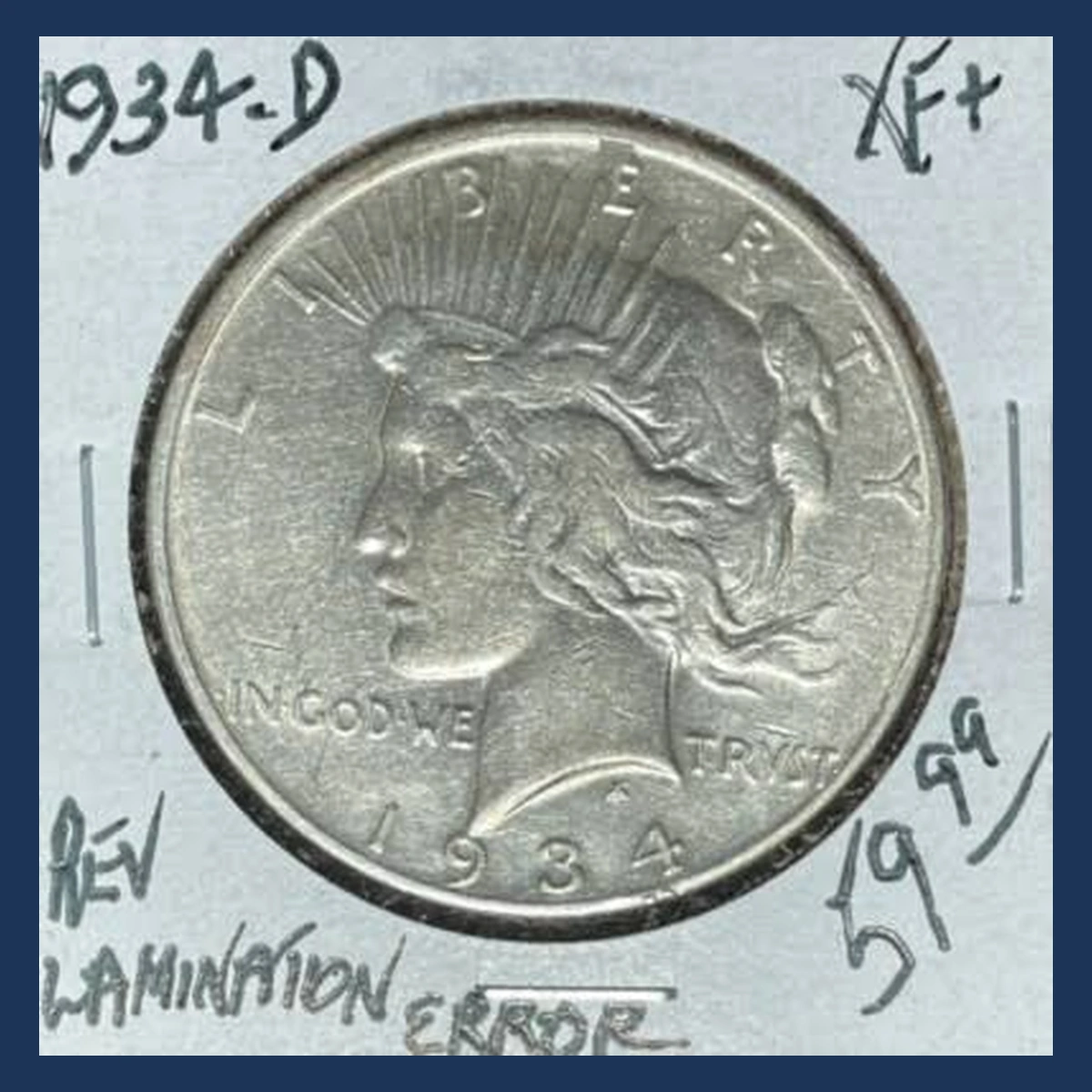
A thin flap or a rough missing patch on the back can come from a weakness within the coin’s metal. Collectors call this peeling or separation a lamination.
A documented 1934-D example was graded NGC MS63, meaning unworn with visible marks. Its back-surface defect appears in an auction description.
The dollar is an alloy of ninety percent silver and ten percent copper. It does not have the manufactured outer layers found on later copper-nickel dollars.
A lamination therefore needs to be examined as a break within the alloy, rather than assumed to be a missing clad layer.
Estimated Value
Stack’s Bowers recorded $247 in March 2014 for a Denver dollar with back lamination, graded MS63. The grade describes an unworn coin with visible marks.
Estimate $100–$600 for comparable worn to moderately marked unworn examples. The amount includes the underlying dollar, not just a premium for the peeling metal.
A clear original separation can attract interest, while extensive damage or cleaning may reduce the coin’s appeal.
How to Identify
If any thin metal remains attached, leave it untouched. Lifting the flap can damage the coin and remove useful evidence.
Examine where the uneven patch meets the normal back design. Low-angle light can reveal a layered break that a dark surface stain might hide in a straight-on photograph.
Look for remnants of the original design on the flap or beside the missing metal. Their relationship can help explain when the separation occurred.
A cut made later may leave tool grooves and pushed-up metal along its sides. Do not scrape the rough area to test its depth.
Photograph the entire back, including the D near the eagle’s tail, then add a close-up showing the defect’s boundary beside undisturbed design.
2. 1934 Peace Dollar Reported Clipped Blank
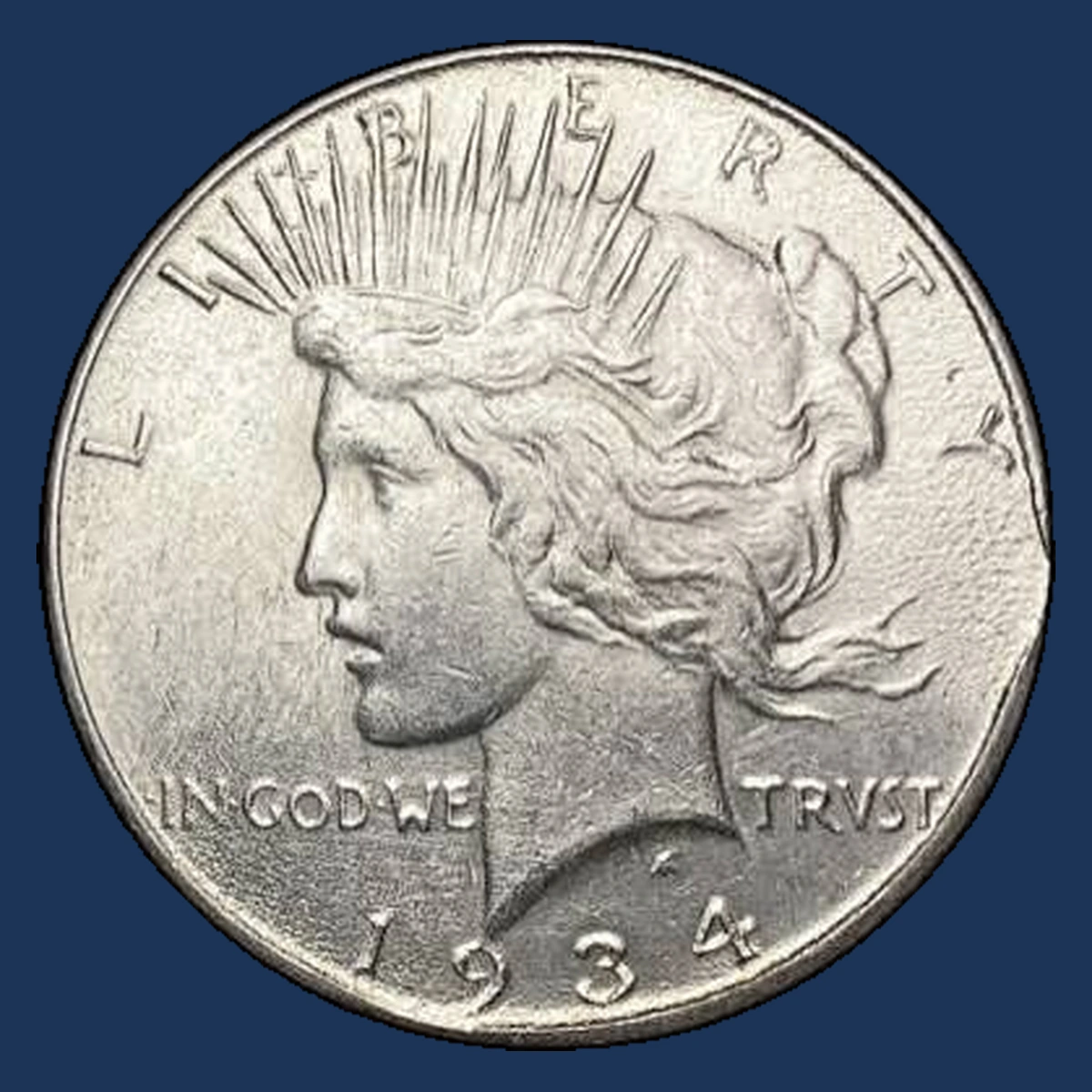
A missing segment at the edge may begin with an incomplete blank before striking. The blank cutter can overlap an earlier hole and leave a gap in the disc.
A seller describes a 1934-S dollar with a rim clip near three o’clock. The coin was offered without professional certification, so the seller’s condition wording is not a verified grade.
A collector also mentioned another 1934 clip in a date list, without showing its mint mark. That report cannot establish a Philadelphia example by itself.
Both later cutting and ordinary rim damage can imitate a small clip.
Estimated Value
The reported San Francisco coin was offered at $199.99, an asking price rather than an auction result. Its unverified condition description should not be used as a grading standard.
For authenticated worn examples, estimate $150–$1,000, depending on mint, preservation, and the clip’s size. An unworn San Francisco dollar can require a much higher ordinary-coin comparison.
A convincing original gap helps, but its apparent size alone does not override the value and condition of the whole dollar.
How to Identify
First identify the mint letter on the back near the eagle’s tail, then assess the coin’s wear. Those observations matter because San Francisco dollars can have substantial value even without an error.
Examine the reported gap and follow the raised rim into both ends. Look for a boundary formed before the design was struck, rather than saw lines, file strokes, or crushed edge grooves.
A weak area on the opposite rim may support a clip, though it is not a complete authentication test. For a loose coin, reduced weight compared with the normal 26.73 grams can provide another clue, but later metal removal also lowers weight.
Have the gap examined before accepting a seller’s clip description or condition grade.
3. 1934 Peace Dollar Doubled Motto and Crown Rays
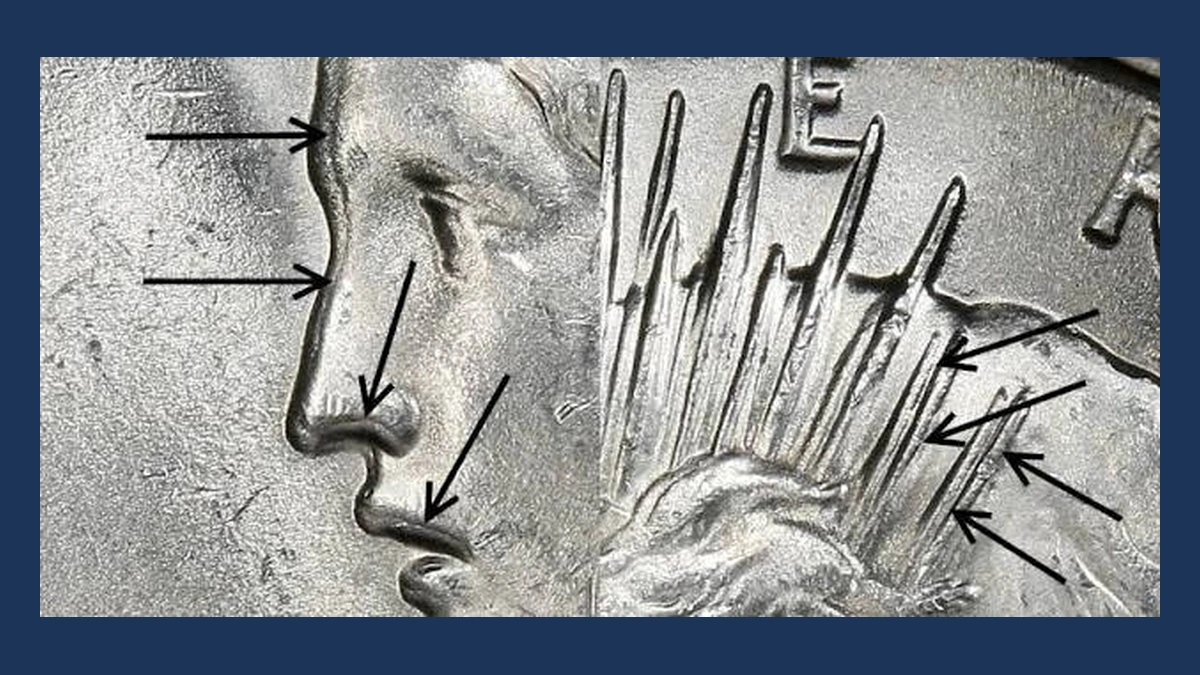
Some Denver dollars show extra raised outlines around the motto, portrait, and crown rays. The doubled image was already present in the die, the steel tool that stamped the front.
Check the D, W, and E in IN GOD WE TRVST and the rays below ER in LIBERTY. Those features help distinguish the doubled design from ordinary thick lettering.
The same doubled front can occur with different sizes of D on the back. A small or large mint letter alone is not an error.
The V in TRVST is also intentional and appears on normal Peace dollars.
Estimated Value
A medium-D doubled-design coin graded MS66+ brought $12,350 in August 2013, according to PCGS’s Heritage auction record. That is an exceptionally well-preserved unworn coin.
PCGS separately records $5,000 in April 2019 on eBay for a small-D example graded MS64. Mint-letter pairing and preservation both affect the comparison.
Estimated values span $100–$15,000 from worn examples to outstanding pieces. The highest sale is not a premium automatically added to every doubled dollar.
How to Identify
Start with the motto rather than the mint mark. Under a 10× magnifier, compare D, W, and E with a normal front photographed at the same angle.
Follow any extra raised outline into the portrait or the crown rays below ER. A flat shelf beside a letter is a different effect from a copied raised detail.
Once the front pattern matches, turn to the D near the eagle’s tail. Compare its actual size and shape with the correct small- or medium-D example.
Do not use the mint letter alone to choose the expensive variety. Both the doubled front and its back pairing need to agree before the auction prices become useful comparisons.
Conclusion
Estimated values run from $100–$15,000, with exceptional doubled-design coins at the upper end. The $12,350 result involved outstanding preservation as well as the Denver variety.
For a peeling patch, protect any remaining flap. For a rim gap, establish the mint and condition before applying a clip estimate.
The normal V in TRVST and the size of D are useful background details, but neither alone makes a coin an error.