1977 Dollar Coin Error List with Pictures

Two very different 1977 dollars each brought $26,400: a Denver coin on silver metal and a badly shifted San Francisco Proof. A Proof is a specially made collector coin.
This 1977 Eisenhower dollar error list covers tiny doubled letters, missing edge pieces, and even staples trapped in coins. Estimated values run from $20–$35,000, depending on the error and condition.
Check both sides before deciding what you have. The nine sections below show where to look and which sales help explain the prices.
1. 1977 Eisenhower Dollar Misaligned Front Design
The rim looks wider on one side of a 1977-D dollar certified PCGS MS63. Its front stamping tool sat slightly out of position, producing a shift described as 1%.
Turn the coin over. The back remains centered, which separates this error from a blank that sat off-center beneath both tools.
MS63 means the coin has no circulation wear but shows noticeable marks. This small alignment error changes the spacing around the design more than the picture itself.
An uneven rim alone is only a starting clue. Both faces provide the answer.
Estimated Value
The PCGS MS63 example sold for $54 in December 2024. A modest shift can therefore be an affordable way to collect this large dollar.
Estimate $20–$200 for comparable authenticated front misalignments. The upper end favors a readily visible shift with attractive surfaces and clear separation from rim damage.
A tiny change that requires careful measurement generally has less visual appeal. Scratches, wear, and dents can also outweigh a minor minting feature.
How to Identify
Photograph each face straight on, with the camera directly above the coin. An angled photograph can make one side of an otherwise even rim look wider.
Compare the space outside LIBERTY and the date on the front. Then inspect the spacing around the back lettering without changing the camera angle.
The listed Denver coin has a slightly displaced front and a centered back. Use a magnifier to check that the narrow rim was struck that way, rather than crushed by a later hit.
A dent may flatten the edge and push metal inward beside it. For this error, look for a shifted design on just one face with an undamaged surrounding edge.
2. 1977 Eisenhower Dollar Clipped Blank
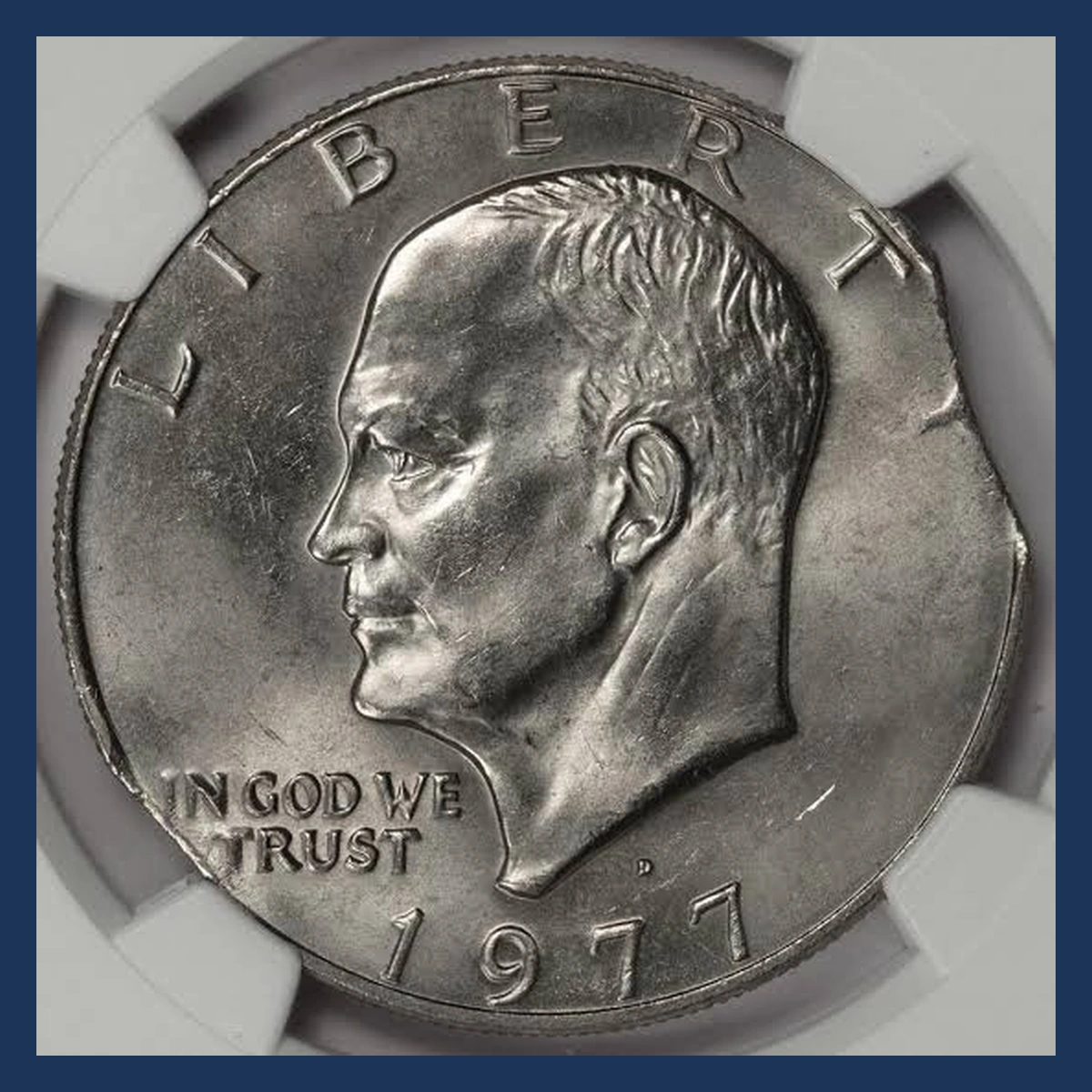
Two curved gaps interrupt the edge of a 1977-D dollar graded NGC MS63. They began before the blank received its design.
Coin blanks are cut from a metal strip. If the cutter overlaps an earlier hole, it can produce a disc with a curved piece missing.
Two overlaps can leave two gaps on one coin. The surviving rim and design then form around those missing sections during striking.
A clip should not resemble a fresh saw cut through finished letters. Its shape and the nearby metal help show whether the missing pieces were absent from the start.
Estimated Value
The certified double-curved-clip example brought $99 in April 2021. It gives a concrete comparison for a Denver dollar with two missing edge sections.
A practical estimate is $50–$500 for genuine 1977 clips. Larger, easy-to-see gaps can attract stronger bids when enough design remains to identify the coin.
Two small clips are not automatically worth twice one large clip. Surface quality, missing area, and the appearance of the remaining rim matter together.
How to Identify
A fresh cut can remove the same amount of metal as an original clip. Under a 10× magnifier, examine whether the struck design weakens naturally toward each gap or ends against a cut surface.
Follow the rim around to the opposite side of each opening, where a weak area can support an original clip. Two gaps may affect the rim differently, so one neat outline is not a sufficient test for the whole coin.
Weigh a loose candidate against the normal copper-nickel-clad standard of 22.68 grams, but remember that either a clip or later cutting reduces weight. The untouched boundary and nearby metal flow provide the more useful evidence, so do not scrape the openings.
3. 1977 Eisenhower Dollar Doubled Letters and Numbers
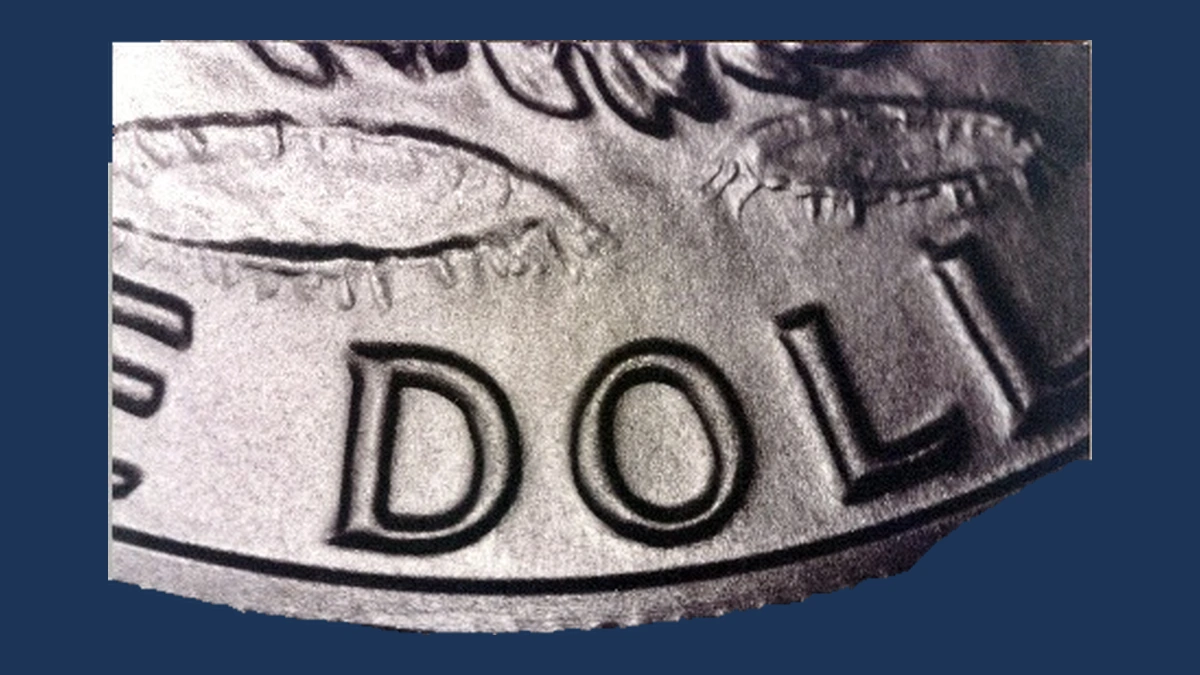
Extra outlines appear on several 1977-S Proof designs, especially IN GOD WE TRUST, the date, and LIBERTY. Some patterns are much closer together than others.
These are doubled dies: stamping tools that carry a repeated design. One strike from such a tool can produce the doubling.
Denver also has a listed doubled LIBERTY pattern. Another slight back-side doubling comes from a shared master tool used across several years.
That common master-tool feature is a normal comparison, not an automatic rare-error premium. The specific shape of each extra letter edge matters more than a general thick appearance.
Estimated Value
Allow an estimated $25–$750 for clearly matched doubled-die examples, with stronger patterns and well-preserved Proof surfaces favored. The different catalog numbers do not all command the same amount.
These figures are estimates rather than a reported auction result for each pattern. Ordinary master-tool doubling alone should be valued with the normal coin.
A readable extra outline in several letters makes a better purchase than one blurred photograph. Clear identification is especially important for the very close Proof patterns.
How to Identify
Start with the mint letter and finish so that you compare the correct photographs. Wexler’s San Francisco catalog shows several different Proof patterns.
Under a magnifier, examine the bottom ends of the motto letters and the date. WDDO-009 includes separation around the 9 and the tops of the two 7s.
For WDDO-010, inspect the motto and then turn to DOLLAR on the back. Its paired WDDR-001 has extra edges in those letters.
Denver’s listed front pattern instead involves LIBERTY. Slight doubling in ONE DOLLAR and the moon details may be the shared master-tool feature.
A flat, shelf-like smear is a common lookalike. Match several actual outlines in one catalog pattern instead of combining details from different examples.
4. 1977 Eisenhower Dollar Improperly Heated Blank
Some 1977 dollars have an unusual surface color caused during the blank’s heat treatment. Collectors often call this an improperly annealed or sintered blank.
Annealing means heating metal to prepare it for striking. An abnormal furnace environment can change the surface before the coin receives its design.
A Philadelphia example with no mint letter was certified PCGS MS66 with this error. The grade describes an unworn coin with relatively few marks.
Dark color by itself is not enough. Ordinary aging, chemical treatments, and later heat can also change the appearance of a finished dollar.
Estimated Value
The PCGS MS66 example sold for $431.25 in January 2009. A separate MS65 example brought $287.50 in that same auction.
Estimated values of $150–$900 cover comparable authenticated coins. Attractive original surfaces and a clear mint-caused color change help support the upper part of the range.
Cleaning can remove evidence and reduce appeal. A dark dollar with no reliable explanation for its color should not automatically receive the same price as these certified examples.
How to Identify
Leave the color untouched. Dipping or polishing can remove the surface that an expert needs to examine.
Neutral white light makes color easier to judge than a warm yellow lamp. Tilt the dollar and follow its original shine across both faces.
The normal copper-nickel outer layers surround a copper center. A copper-colored band at the edge is therefore ordinary and does not identify a furnace error.
Look through a magnifier for scratches, pitting, or patches left by an added coating. Later chemicals and heat can create dramatic color without any mistake at the Mint.
Photographs alone cannot establish the furnace history. An error specialist needs to inspect the original surface, so keep it as found.
5. 1977 Eisenhower Dollar Second Strike at the Edge
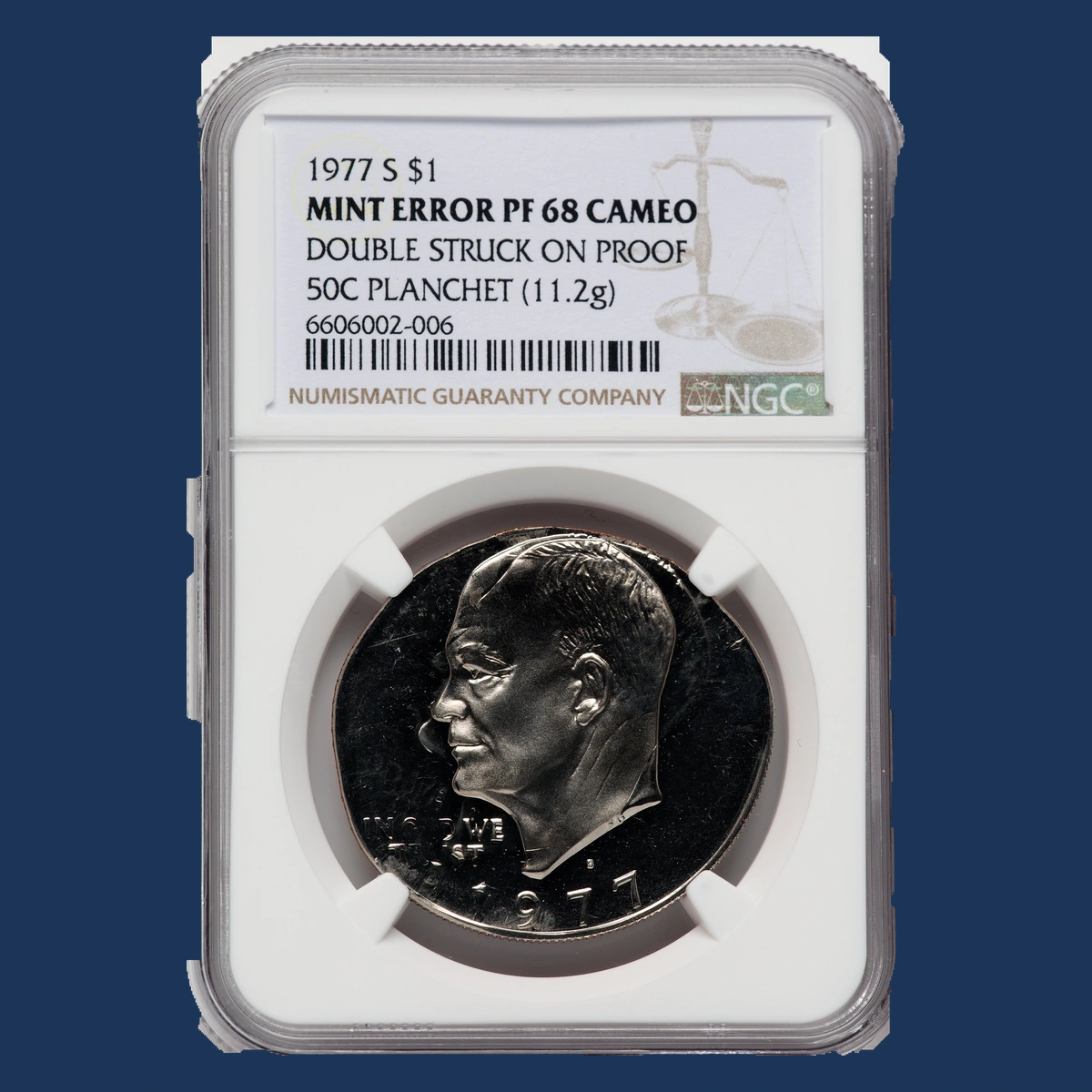
A second design impression reaches only the edge of a documented 1977 Philadelphia dollar. The coin moved almost completely away from the stamping tools before they struck again.
Its second strike was described as 95% off-center. That number describes the second impression, not a claim that 95% of the first design is missing.
PCGS certified the coin as Genuine with Uncirculated Details. This means it retains unworn detail but did not receive a normal numerical grade.
The small second impression is the feature to trace. It records another strike on an already formed dollar.
Estimated Value
This second-strike example sold for $264 in June 2023. Its Details classification matters when comparing it with a problem-free coin.
Estimate $200–$1,500 for comparable authenticated 1977 double strikes. A clear second picture, readable date, and pleasing surfaces can raise interest.
The percentage alone does not set the price. A tiny but sharp second impression may display the sequence better than broad, confusing distortion, while surface problems can hold the value down.
How to Identify
Follow the original dollar design first so you can separate it from the small second impression. The surviving first strike should explain most of the coin’s normal picture.
Use a magnifier on the edge area where the new impression begins. Look for recognizable struck letters or picture fragments, rather than a simple dent with pushed-up metal.
Photograph the junction from both faces under a low lamp. Overlapping design and flattened earlier detail can show which impression came later.
A doubled die produces repeated outlines within one design and does not require this large movement of the coin. Here, the decisive feature is a separate second strike reaching the edge of an already struck dollar.
6. 1977 Eisenhower Dollar Clash Marks on the Proof
A 1977-S Proof shows extra design traces on both faces from clashed stamping tools. The tools hit each other while no blank separated them.
That contact left marks which later transferred to a coin. The result can resemble a faint fragment of the opposite picture in an unexpected place.
A documented example was graded PCGS PR68 Deep Cameo. This describes a very well-preserved Proof with strong contrast between the bright background and frosted design.
Clash marks are not a second full strike on the coin. They are marks carried by the tools into a later impression.
Estimated Value
A certified PR68 Deep Cameo example brought $1,020 in May 2022. A dealer also advertised a PR68 example at $2,250, an asking price rather than a confirmed sale.
An estimated range of $400–$2,500 is reasonable for comparable authenticated Proof clashes. Visibility and preservation are both important.
Faint marks can be difficult to enjoy through haze or scratches. Strong mirror surfaces help the extra traces stand out, but ordinary polishing lines should not receive the same premium.
How to Identify
Place photographs of both faces beside one another. A suspected clash trace should make sense as a small part of the opposite design transferred through the tools.
Move a low light across the Proof surface and examine the extra lines with a magnifier. A straight polishing line may cross the background without resembling any part of the opposite picture.
Avoid touching the mirror-like areas while turning the coin. Fingerprints and wiping can spoil the finish and make fine traces harder to judge.
For a holdered example, compare detailed photographs of the certified coin without opening the holder. Look for actual design-shaped traces on both faces, rather than relying on brightness or the Proof grade.
7. 1977 Eisenhower Dollar Staple Struck into the Coin
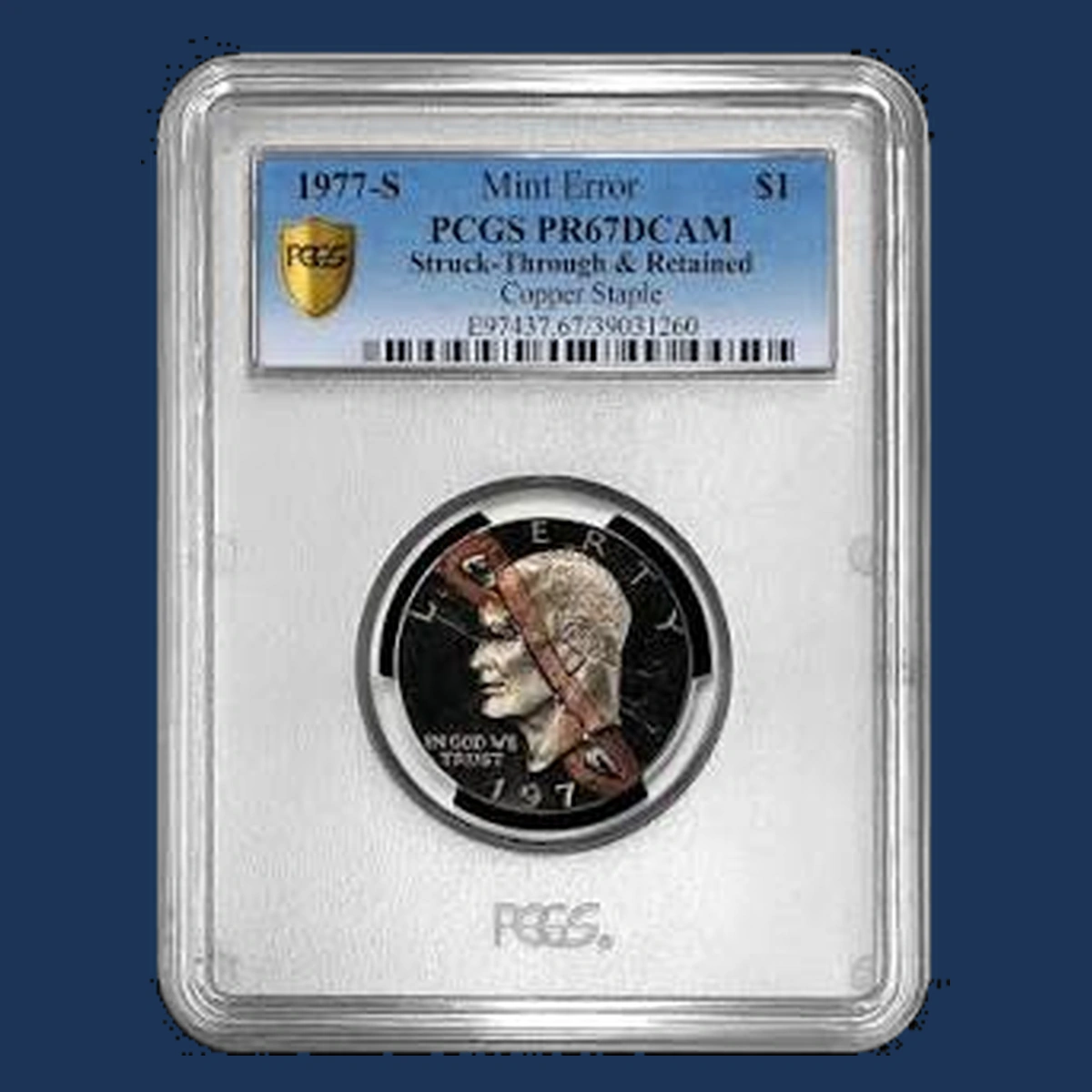
A copper staple crosses Eisenhower’s portrait on one spectacular 1977-S Proof. It remained trapped when the tools pressed the dollar’s design into the coin.
The PCGS PR67 Deep Cameo example has a staple running from IB in LIBERTY toward the final 7. The face’s profile remains clear.
A different NGC PR66 Ultra Cameo example has a staple running from LI toward the opposite rim near 4 o’clock. Its recorded weight is 23.3 grams.
These are separate coins with different staple paths. The extra metal is part of the error, so it should never be pulled free.
Estimated Value
The PCGS PR67 example sold for $8,400 in April 2021. The different NGC PR66 coin brought $9,000 in March 2023.
Comparable authenticated retained-staple Proofs have an estimated range of $5,000–$12,000. A large visible staple and attractive undamaged mirrors make a striking display.
Those sales price the complete coins with the objects still attached. Removing a staple would destroy part of their appeal and could damage the surrounding design or surface.
How to Identify
Do not tug on the metal. A retained object can be damaged by even a gentle attempt to lift it.
Follow the staple under a magnifier, checking where it crosses the design and enters the coin. Compressed metal around it should fit the striking process rather than a later attachment.
Glue, fresh scratches, or a newly cut groove call for closer examination. Keep a certified coin sealed while inspecting these details.
The PCGS specimen runs from IB toward the final 7; the NGC example runs from LI toward 4 o’clock. Their paths identify different coins.
The NGC coin’s recorded 23.3 grams includes its retained material. That figure is not the normal dollar weight and should not be assigned to the other staple coin.
8. 1977 Eisenhower Dollar Off-Center Strike
A large blank crescent borders a 1977-S Proof struck 30% off-center toward 2:30. The blank was not centered when the tools came together.
The date and S remain visible, along with the portrait and eagle. Some outer lettering on the right falls beyond the available metal.
This PCGS PR68 Deep Cameo example also has a small split near 12 o’clock formed during striking. That split is not a clipped blank.
Ordinary dollars can be off-center too. A separate 1977-D coin graded NGC MS63 shows a 20% off-center strike without the Proof finish.
Estimated Value
The 30% off-center Proof sold for $26,400 in April 2021. The separate 20% off-center Denver MS63 dollar brought $727.20 in December 2024.
Estimate $300–$1,500 for comparable ordinary strikes and $10,000–$30,000 for major authenticated Proof examples. These are different markets within the same error type.
A readable date, complete mint letter, and attractive surfaces help. The percentage cannot explain the price difference by itself because the finish and rarity of the error also matter.
How to Identify
The unused crescent and missing outer design should agree on both faces. A coin with only one shifted face needs a different check for tool misalignment.
For the listed Proof, use the date at the bottom to orient the 2:30 displacement. Examine the right-hand lettering and the small upper split without mistaking that split for an original clip.
Check the finish as well as the S. A frosted design against mirrored backgrounds help identify the Proof, but the grading label and full-coin views provide useful confirmation.
The Denver example is an ordinary strike with a different percentage. Match the blank crescent to the missing parts of the design, rather than judging from an uneven rim alone.
9. 1977 Eisenhower Dollar Struck on a Silver-Clad Blank
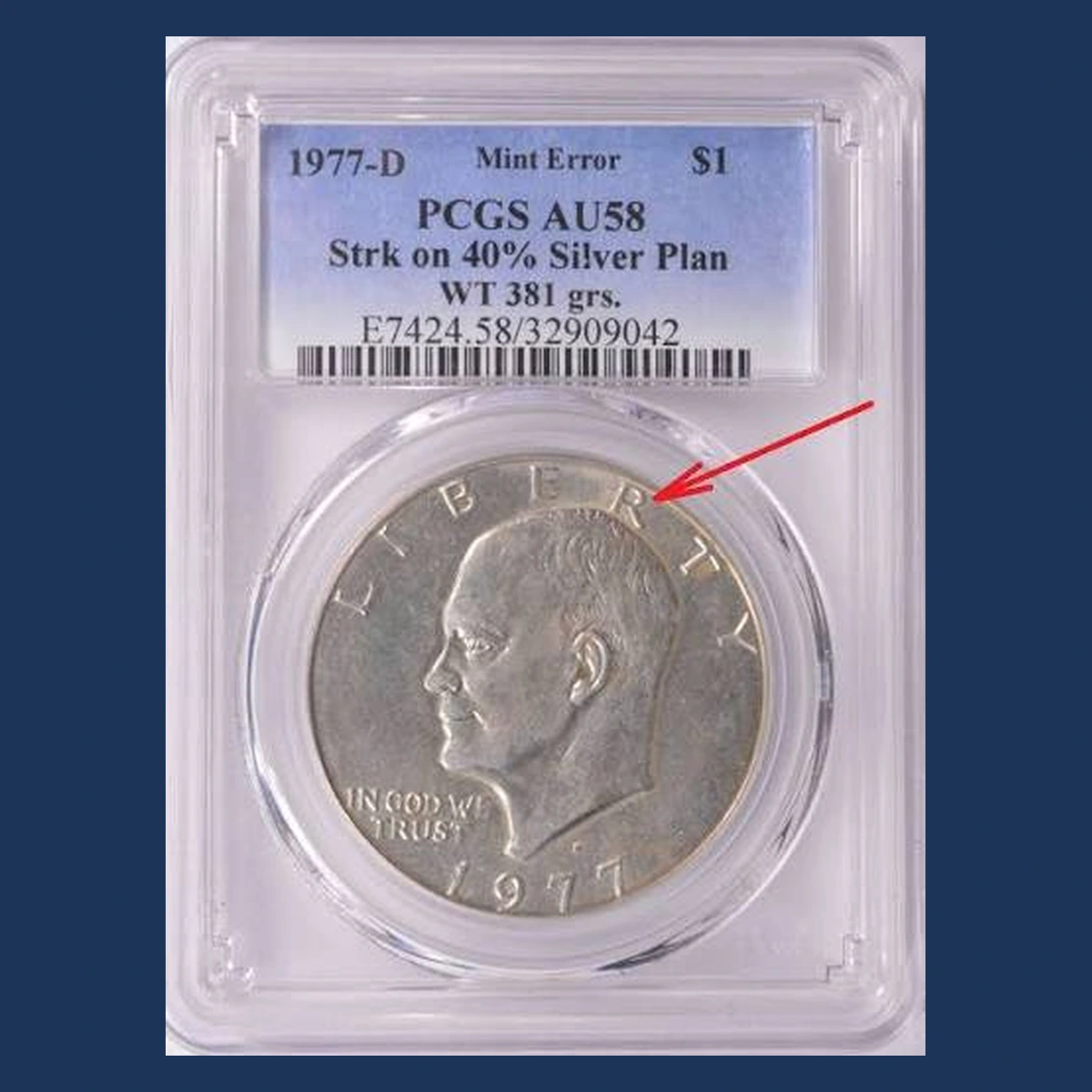
A 1977-D dollar can look fairly normal while containing the wrong metal. One certified example was struck on a leftover 40% silver-clad blank.
Normal 1977 dollars used copper-nickel-clad metal, including the collector Proofs. The silver blank belongs to an earlier dollar production period.
The NGC MS62 example weighs 24.5 grams, close to the silver-clad standard of 24.59 grams. A normal copper-nickel-clad dollar weighs 22.68 grams.
Small struck-through depressions also appear on the right of this coin’s front. They belong to the same silver-blank dollar and do not represent a second valuable specimen.
Estimated Value
The 24.5-gram NGC MS62 coin sold for $26,400 in January 2023. That is the price of the whole coin, including its small struck-through marks.
An estimated $15,000–$35,000 suits comparable authenticated silver-clad examples. Correct metal identification is essential before using that range.
A bright color or plated surface does not establish silver content. Condition can shift the price, but the wrong blank is the main reason this otherwise familiar-looking dollar commands so much.
How to Identify
Weigh a loose candidate on a calibrated scale before drawing conclusions from its color. Around 24.59 grams is consistent with the earlier silver-clad blank, while ordinary 1977 dollars average 22.68 grams.
Both dollar blanks share a normal diameter of about 38.1 mm. Calipers therefore help check the coin’s size, but cannot establish the alloy by themselves.
Read the 1977 date and D carefully, then have the metal tested without scratching or filing it. A grading service can assess the alloy and any signs of alteration together.
The small front depressions can be examined under a magnifier without guessing what material caused them. The crucial combination is the correct 1977-D design and professionally confirmed silver-clad metal.
Conclusion
A small alignment shift can cost far less than a silver-blank dollar or a major Proof error. The types here span estimated values of $20–$35,000.
Begin with the feature you can see: an extra outline, an edge gap, a second impression, or trapped metal. Use weight and alloy testing when the suspected error involves the blank.
Keep unusual surfaces and attached objects untouched. Clear identification makes the price comparisons useful.