1978 Dollar Coin Error List with Pictures

A copper-colored face does not always mean the same thing on an Eisenhower dollar. Missing metal, a surface wash, and later damage need different checks.
This 1978 dollar error list also covers misplaced and repeated strikes, including a 30-percent off-center coin sold for $1,680 in March 2023.
Estimated values across these types run from $10–$3,500. Follow the photographs and checks below to connect each unusual feature with the right price comparison.
1. 1978 Eisenhower Dollar Weak Designs from Grease
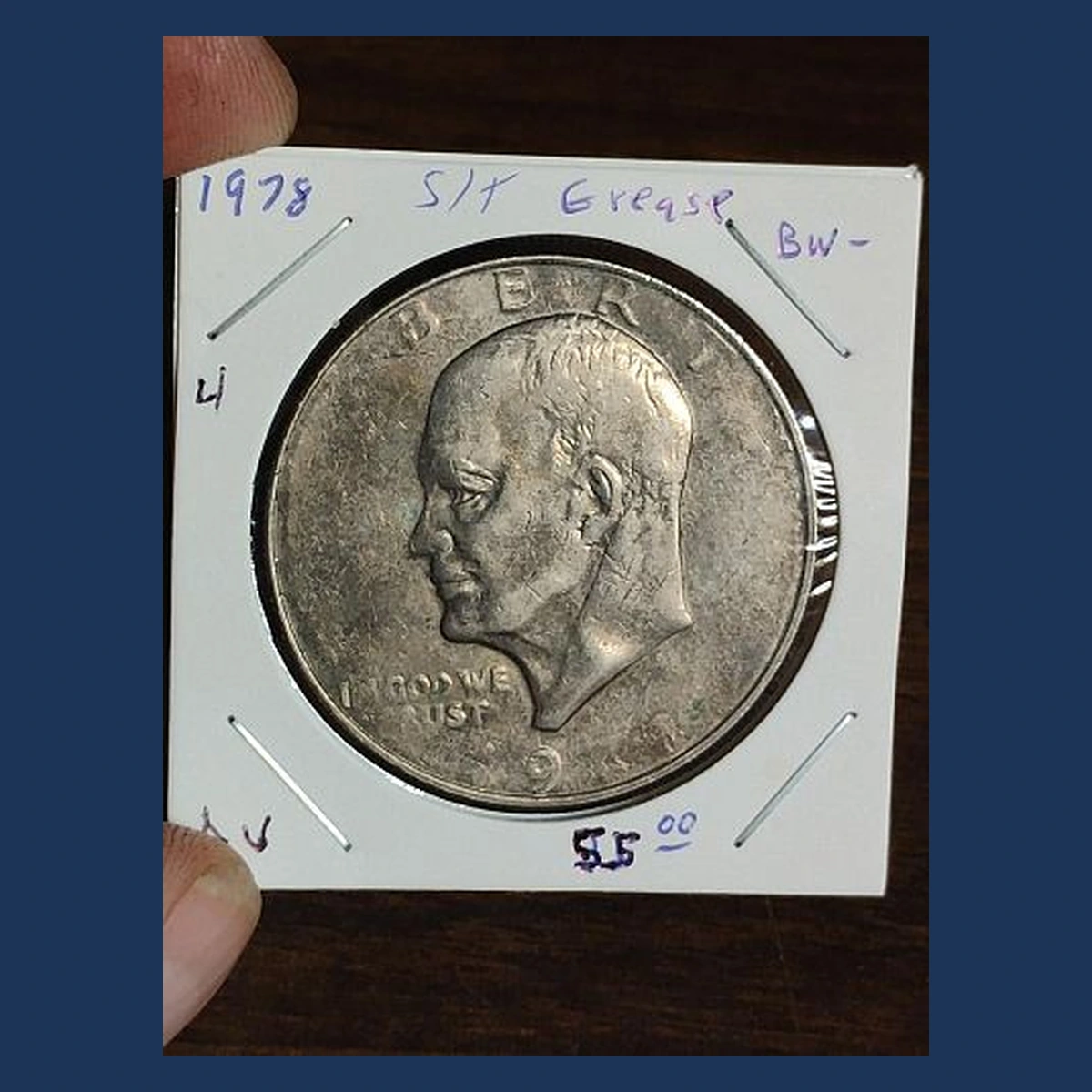
Missing letters can leave a surprisingly smooth patch on a coin. Grease and dirt can pack into the recessed parts of a die, the steel tool that stamps the design.
The filled areas cannot form their usual raised details when the tool meets the blank. A seller reports a 1978 Eisenhower dollar with this effect on both faces.
The listing does not establish a particular mint or a professional error identification. Wear and a weak strike can also soften designs.
Look at the surviving nearby details before deciding that a missing word came from grease.
Estimated Value
A clear grease-related loss of detail is estimated at $10–$150. A barely weak letter on a worn dollar belongs near the lower end.
More complete missing words beside otherwise strong details can attract greater interest. The seller’s description of the two-sided example does not turn an ordinary worn coin into a valuable error.
Keep the condition of both faces in view. Scratches or polishing can remove details too, while reducing the dollar’s collector value.
How to Identify
Compare the weak patch with nearby raised details at the same height. If all high points are equally smooth, wear is a better starting explanation than a filled stamping tool.
Next look across the patch under low-angle light. Grease can prevent a feature from forming without leaving the fresh cutting lines expected from later scraping.
Check the other face independently, because the seller’s two-sided example does not establish that every weak 1978 dollar has both faces affected. Use clear photographs taken under the same lighting.
A sharp neighboring letter beside a softly missing one is more useful than a generally blurry photograph. Preserve the surface as found; cleaning cannot reveal a design that never formed.
2. 1978 Eisenhower Dollar Faint Transferred Designs from Clashed Tools
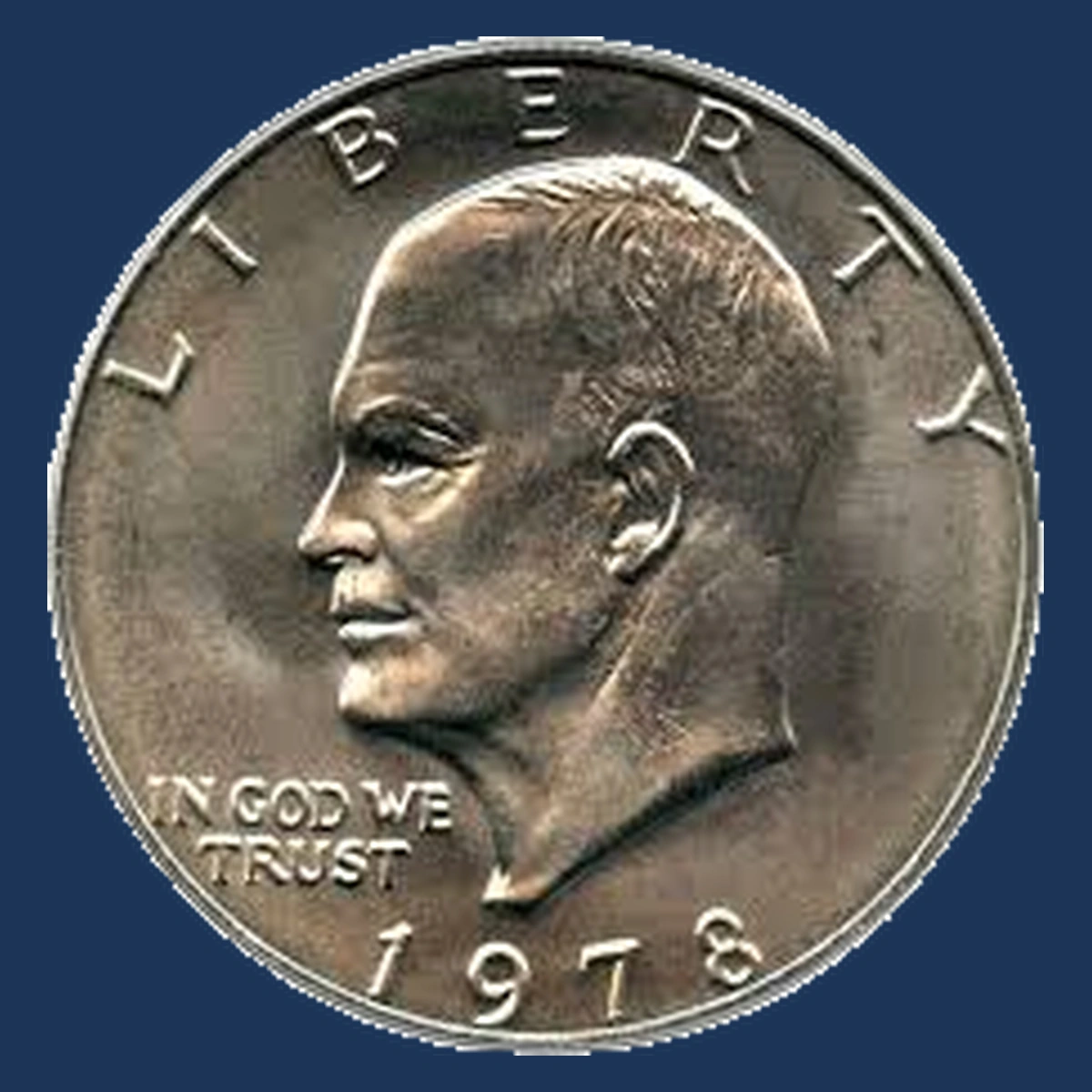
A faint outline from the opposite face can appear where the normal design has open space. It may form after the two stamping tools hit each other without a blank between them.
The damaged tools then pass traces of that contact onto later coins. Collectors call this a die clash.
A collector reported a 1978 Philadelphia example sent for grading at MS66, an unworn grade with few marks. That account does not independently establish a particular clash pattern.
The useful clue is a recognizable part of the opposite design, rather than a random line.
Estimated Value
For a recognizable, authenticated clash, estimate $25–$250. A small faint trace usually adds less interest than several clear transferred outlines.
The collector-reported MS66 coin provides an example to investigate, not a completed sale price. Its high condition grade should not be assumed for another dollar with a similar line.
An attractive original surface helps the faint features stand out. Heavy scratches can hide the transferred pattern and make comparison much harder.
How to Identify
Place a normal front and back photograph beside the unusual coin. Search for a recognizable portion of the opposite design within the unexpected marks, rather than assigning a name to every line.
A clash may preserve only a small part of that design. Rotate the comparison photograph as needed to understand how the two tools faced each other, keeping the actual coin’s orientation recorded.
Use a 10× magnifier to decide whether the feature follows a design outline or simply cuts across the surface. Random scratches often cross unrelated details without forming a coherent picture.
Do not rely on the MS66 grade alone. Ask the examiner to point out the specific transferred design that supports the clash identification.
3. 1978 Eisenhower Dollar Copper-Colored Surface Wash
The back of a documented Denver dollar has an unusual copper-colored surface. Heritage cataloged the coin as having a copperwash reverse, meaning the wash affects the back.
PCGS graded it MS63, an unworn coin with visible marks. The appearance concerns a surface coating rather than automatically proving that an entire outer metal layer is absent.
This distinction matters because both conditions can make a coin look coppery in a photograph. Normal color changes, applied plating, and heat damage can imitate the appearance.
Color alone does not identify the process that created the surface.
Estimated Value
An authenticated copperwash example is estimated at $50–$300. A clear contrast between the two faces and attractive original surfaces can make the feature easier to appreciate.
That range applies to the identified surface error, not every copper-colored dollar. A coated souvenir or heat-altered coin needs a different assessment.
Compare both sides under neutral lighting before judging the color. Strong digital color correction in a sales photograph can make a modest surface change look much more dramatic.
How to Identify
Photograph the front and back under the same neutral light, then photograph the edge. A camera setting that makes both faces orange can create a misleading impression of a copper wash.
If the coin is loose, weigh it against the normal 22.68-gram standard. A substantial shortfall raises a different question about missing metal; a normal weight still does not prove that the color formed at the Mint.
Inspect the surface for a later coating, heat damage, or altered texture without rubbing it. Compare the appearance with the professionally identified copperwash example, and have the surface examined before treating color as evidence of a mint-made coating.
4. 1978 Eisenhower Dollar Two Curved Clips with a Stepped Edge
Two curved gaps interrupt the outline of a documented 1978-D dollar. They began when the blank was cut incompletely from the metal strip, before any coin design was added.
The same coin also has a partial-collar error. The collar is the surrounding ring that controls the edge during striking.
Only part of the blank sat properly inside that ring, leaving an uneven edge with a step. PCGS graded the coin AU55, indicating light wear.
The paired gaps and stepped edge belong to one coin, although a clipped dollar does not always have both features.
Estimated Value
Allow an estimated $150–$750 for a genuine dollar with this combination, depending on clip size, edge definition, and surface condition. The complete coin receives one price.
The PCGS AU55 example illustrates two clips together with a partial collar. A single small clip without the edge step is a different comparison.
Well-lit edge photographs help buyers judge the combination. Scraped gap boundaries or flattened edge grooves can make the original features harder to assess.
How to Identify
Study the edge before the two gaps. A partial collar should leave a change in the edge’s level or grooves from the way the surrounding ring held the coin.
Follow that change around the coin in side photographs. A dent at one point is not enough to explain a collar step.
Now inspect each curved gap where it meets the raised rim. Look for details formed around an already incomplete blank, rather than parallel saw lines or file strokes.
Check both gaps separately; one convincing boundary does not authenticate the other. Keep the full date and D visible with the edge views so the combined features remain tied to the same dollar.
5. 1978 Eisenhower Dollar Missing Outer Metal from Poor Bonding
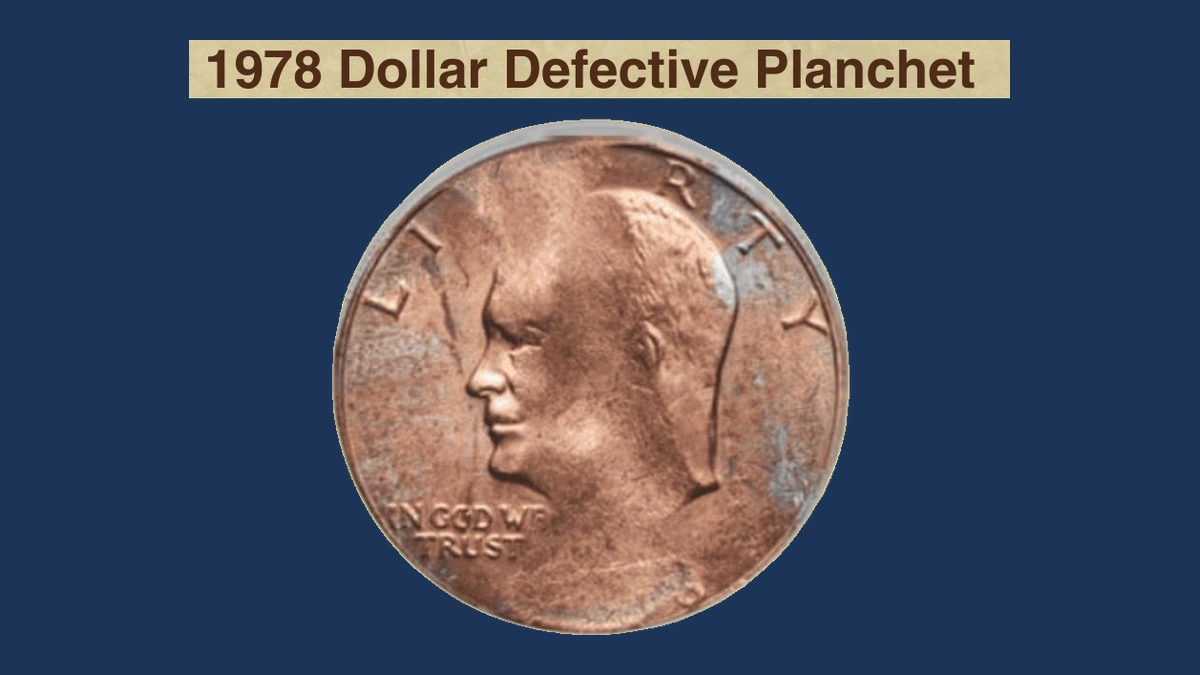
Eisenhower dollars use outer copper-nickel layers bonded to a copper center. Failed bonding can leave copper exposed across a face or within a smaller area.
A 1978-D dollar missing its front layer weighs 18.9 grams and was graded NGC AU58 for slight wear. A separate Philadelphia example has a vertical depression where about 22 percent of the outer strip was already absent.
That defect weakened the designs on both faces during striking. Much of its date is absent, but the 8 remains visible.
The two coins show different extents of missing metal.
Estimated Value
Estimate $400–$2,500 for authenticated examples across these two forms. The whole-front-layer Denver AU58 coin sold for $1,320 in November 2022.
The 22-percent defective-strip Philadelphia MS63 coin brought $705 in August 2016. MS63 means unworn with visible marks.
Those sales involve different defects and condition levels. The exposed area, surviving design, and any later scratches affect where another example belongs in the range.
How to Identify
First decide whether copper appears across the entire face or only within a recessed strip. The two documented dollars should not be forced into the same shape description.
For a loose whole-layer candidate, compare its weight with the normal 22.68 grams. The known Denver coin weighs 18.9 grams, supporting substantial missing metal.
On a strip-like defect, turn the coin over and inspect the area directly behind the depression. Metal missing before striking can weaken the opposite design because the thin section cannot fill the stamping tool’s recesses.
Look separately for later scratches. Thin test marks on the documented Philadelphia back were later damage, and scratching a coin yourself would not establish its original construction.
6. 1978 Eisenhower Dollar Off-Center Strike
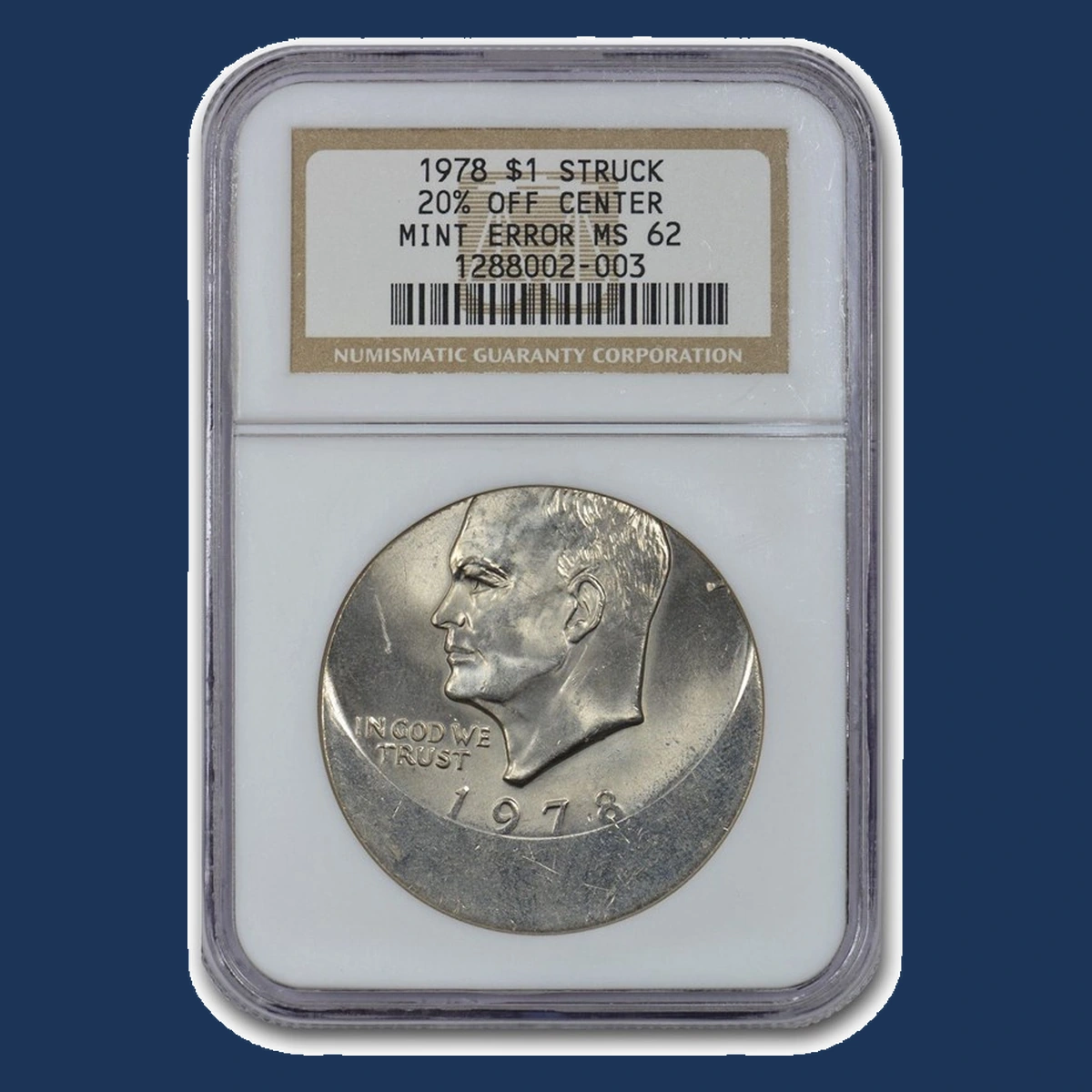
A broad untouched area beside a displaced design shows that the blank missed its proper position in the press. Part of the intended picture then fell outside the available metal.
The documented Philadelphia MS65 example is 25 percent off center toward twelve o’clock, with the date still visible. MS65 describes an unworn coin with relatively few marks.
Other examples include small Denver shifts and a separate 30-percent off-center NGC MS66 dollar. They are not all the same degree of error.
A shifted design on only one face can instead come from one misaligned stamping tool.
Estimated Value
A 30-percent off-center NGC MS66 example sold for $1,680 in March 2023. That is a separate coin from the pictured 25-percent MS65 example.
Estimated values of $150–$2,500 cover a range of genuine shifts and conditions. Large visible displacement with a readable date usually draws more interest than a slight shift.
The date’s survival matters especially when much of the design misses the blank. Heavy damage can lower the appeal even when the off-center strike is obvious.
How to Identify
Cover the blank area in a photograph and look at what remains of the design. Identify the date and check which letters have run beyond the metal, rather than using an uneven rim alone.
Repeat the check on the other face. Both impressions should occupy the same displaced striking area; one displaced face beside a normally centered face suggests a different alignment problem.
The documented 25-percent coin retains its date despite the upward shift. Do not estimate another coin’s percentage from that description without comparing its actual struck and untouched areas.
Finally, examine the untouched metal for later flattening or cutting. Its boundary should fit where the stamping tools met the misplaced blank.
7. 1978 Eisenhower Dollar Partial Sunken Mirror Image
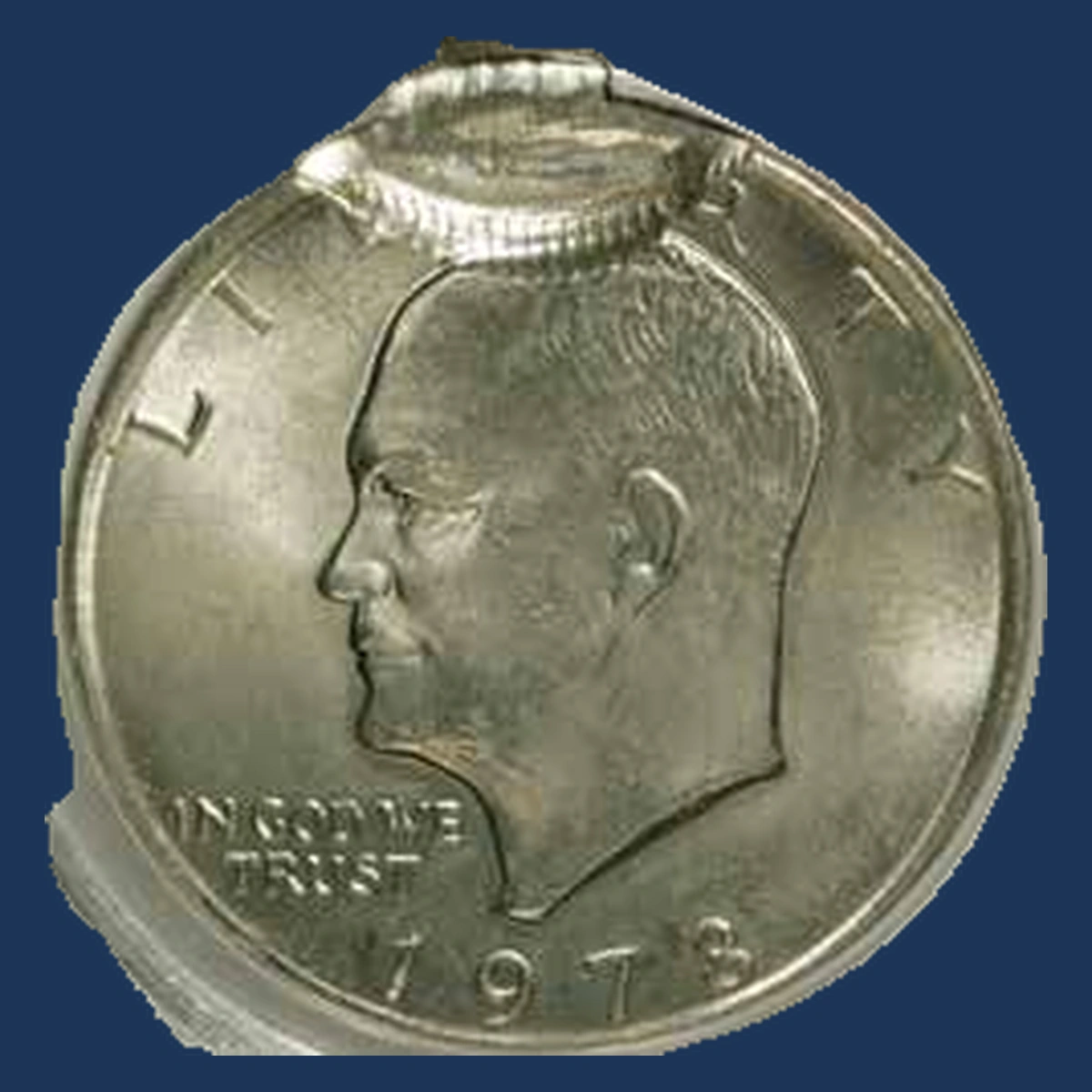
Reversed letters pressed into the front can reveal contact with another coin during striking. A previously struck coin can become a temporary stamping surface.
Its raised design then leaves a sunken mirror image in the next blank. Collectors call that transferred impression a brockage.
Mint Error News illustrates a 1978 Philadelphia dollar described as ten-percent front brockage and graded PCGS MS64. That grade means unworn with noticeable marks.
The transferred area covers only part of the face. A smooth dent without recognizable reversed design does not establish the same error.
Estimated Value
Use an estimated $500–$2,500 for an authenticated partial brockage of this kind. Strong reversed details make the unusual transfer easier to see.
The illustrated ten-percent example is a comparison for size and appearance, rather than a full-face mirror impression. A nearly complete brockage belongs in a different price comparison.
Readable date, original surfaces, and clear contact boundaries can support stronger interest. A poorly defined depressed patch needs identification before receiving a brockage premium.
How to Identify
Find a letter or portrait feature inside the depressed area before considering the ten-percent description. A brockage requires transferred design, not just a dent.
Check whether the feature is reversed. A photograph of the opposite normal design, flipped horizontally, can help make the relationship easier to follow.
Under a magnifier, confirm that the transferred details sink below the nearby surface. Ordinary repeated strikes generally leave raised copies instead.
Trace where the transfer stops and the normal front resumes. Photograph that boundary with the date and then photograph the whole back.
Later pressing between coins can imitate a mirror image. Have the contact surfaces examined together for a minting explanation rather than treating reversed letters alone as final proof.
8. 1978 Eisenhower Dollar Double Strike with a Displaced Second Impression
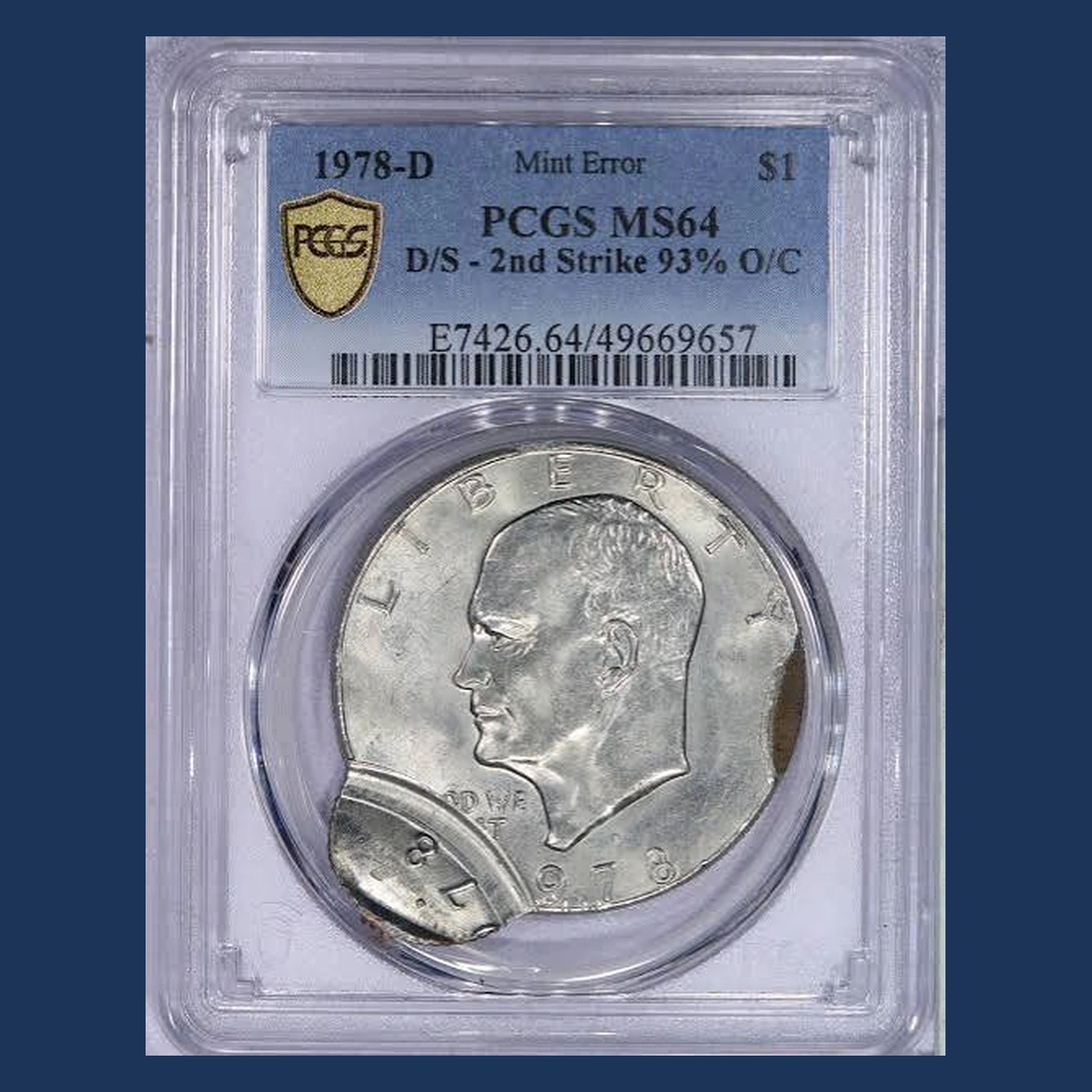
This Denver dollar carries the remains of two blows rather than one misplaced picture. It received its first design, stayed in the press, and shifted before the second strike.
The later impression landed 75 percent off center, creating a large separation between the two sets of details. NGC graded the coin MS64, meaning unworn with noticeable marks.
The first date and the shifted second design help explain the order of events. Both faces should be considered together.
Small doubled edges beside a letter cannot by themselves show this kind of large second strike.
Estimated Value
The documented 1978-D MS64 double strike brought $1,560 in March 2023. Its second impression was 75 percent off center.
For comparable authenticated examples, an estimated $800–$3,500 allows for differences in displacement, preservation, and visible overlap. A clear first date makes the coin easier to identify.
The amount covers one coin with two blows, not two separate errors added together. A distorted coin with little readable design may be harder to appreciate than a clear, well-preserved example.
How to Identify
Begin where two recognizable design features cross. Trace one portrait or line of lettering into the first picture, then trace the displaced copy into the second.
The later blow may flatten portions of the first design. Note which details remain underneath and which cut across them, using photographs of both faces to follow the sequence.
Keep the first date and D in the record, then locate any visible fragments of the second date or lettering. Do not require every digit to survive when most of the later impression missed the metal.
Compare that large displacement with a single off-center coin. Two distinct design positions, rather than simply a blank crescent, are needed to explain a second blow.
Conclusion
Estimated values for these 1978 dollar errors span $10–$3,500. The $1,680 off-center sale and $1,560 double-strike sale involved different coins.
Start with the visible feature: missing design, missing metal, a transferred picture, or a displaced strike. Copper color needs particular care because a surface wash and a missing layer are different conditions.
Preserve the coin’s surfaces and compare both faces before choosing a price range.