2003 Dollar Coin Error List with Pictures

A raised line above Sacagawea’s forehead can be more useful than a dark patch when checking 2003 dollar coin errors. This year has reported striking flaws and documented defects on specially prepared collector coins called Proofs.
The estimated ranges below span $5–$3,500. For a major-error price comparison, a 2000-P dollar struck about halfway off center sold for $3,120 in April 2021.
Follow the checks below to tell a broken tool, damaged blank, and interrupted strike apart.
1. 2003 Sacagawea Dollar Weak Detail from Grease or Other Material
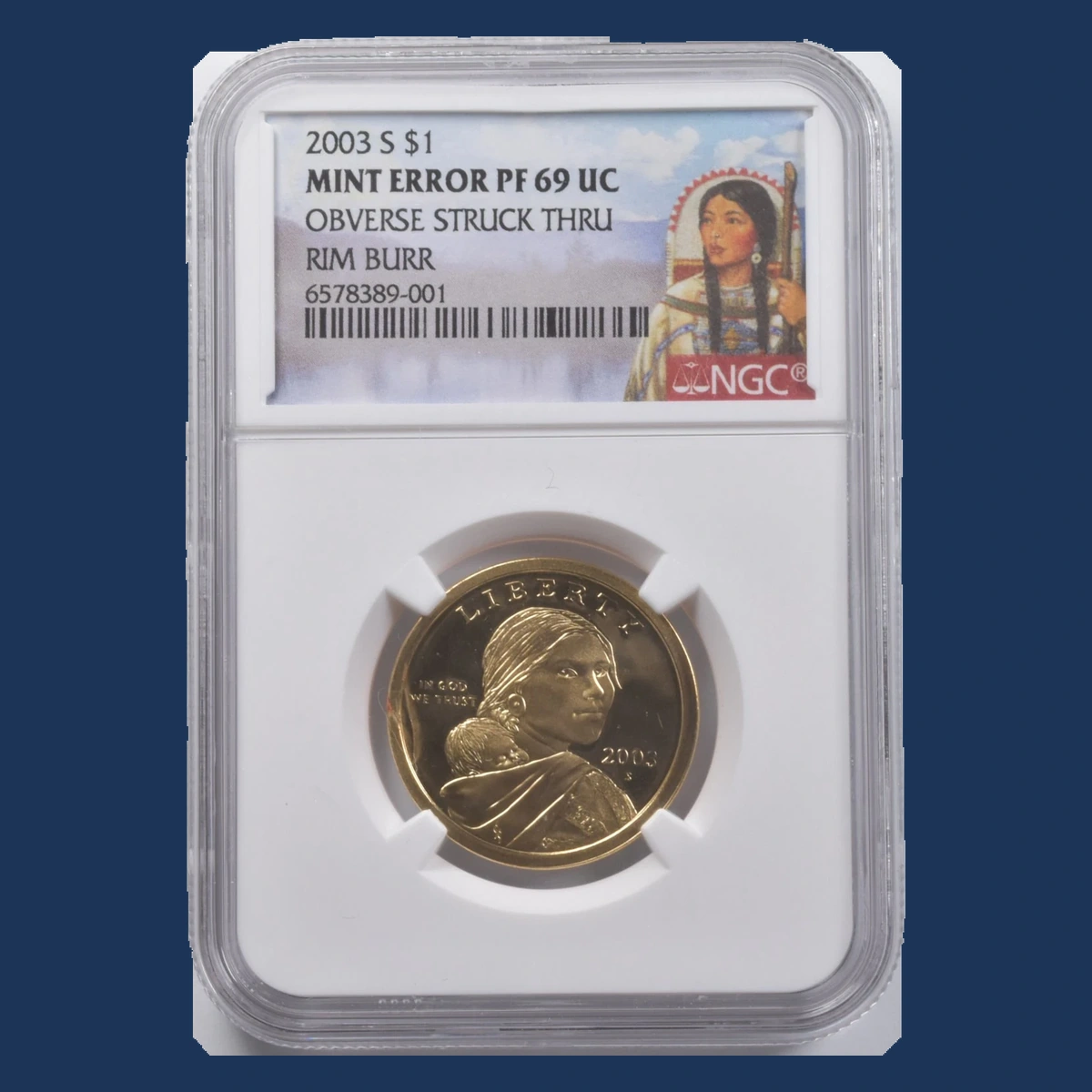
A letter can look faint because grease or other material blocked the design during striking. The stamping tool cannot fully reach the blank through the obstruction.
Grease may soften details without leaving a neat outline of an object. Harder material can make a more sharply shaped impression.
A 2003-D dollar has been offered by MS Coins LLC as a grease error without a grading-service opinion. That seller’s description identifies the claimed cause rather than proving it.
The weak area still needs to be distinguished from wear, a scrape, or an ordinary weak strike.
Estimated Value
Mild grease-filled detail is estimated at $5–$75, while a more obvious authenticated strike-through can reach an estimated $50–$250. Large missing portions of recognizable lettering are easier for a buyer to see.
The seller’s 2003-D grease-error listing asked $69.99 with offers invited. That was an asking price, not a recorded sale or an authentication.
Worn or scraped detail does not qualify for these mint-error ranges just because a letter is hard to read.
How to Identify
Locate the faint area beside sharper, normally formed details. If the entire portrait and eagle are worn smooth, circulation is a more likely explanation than one blocked letter.
Compare the same area on another 2003 dollar and photograph where normal detail changes into the weak patch. Use low-angle light to see shallow remaining strokes.
A scrape often leaves lines cutting across the surface and may push metal against its boundary. A blocked design can instead fade into a surface that was not cut afterward.
Keep the date and D in a wider photograph. If grease is claimed, ask for an explanation based on the actual weak area rather than the seller’s title alone.
2. 2003 Sacagawea Dollar Broadstrike
A dollar normally stays within a surrounding metal collar while the design is stamped. Without that support, the blank can spread farther outward.
The result is called a broadstrike. The coin may look wider or have an uneven outer border, but its intended design remains complete.
This type is reported for 2003-D dollars without a specific measured specimen. Its identification depends on the expanded metal and full design, rather than a claimed diameter alone.
An ordinary plain edge is not evidence of this error. Sacagawea dollars were supposed to have plain edges in 2003.
Estimated Value
A genuine 2003-D broadstrike is estimated at $50–$500. A clear spread with strong remaining detail belongs above a slight expansion on a heavily marked coin.
The amount of extra metal outside the normal design helps explain the difference between the ends of the range. Attractive surfaces also make the shape easier to appreciate.
These are estimated prices for an authenticated mint error. Hammering a dollar wider after minting does not create the same collectible feature.
How to Identify
Place the dollar beside a normal example and compare the space around the outermost letters. Trace the complete portrait-side wording and the eagle-side border rather than looking only at the widest spot.
If a letter or picture is cut off, consider an off-center strike. A broadstrike should preserve the full intended design.
For a loose coin, measure the diameter at several angles with calipers and compare it with the 26.5-millimeter standard. Record an oval outline rather than reducing it to one measurement.
Inspect the raised design for flattening from later squeezing or hammering. Look for original outward spread around an intact picture, while remembering that a smooth edge by itself is normal here.
3. 2003 Sacagawea Dollar Clipped Blank
A prepared coin blank can arrive at the press with metal already missing from its outline. That incomplete blank receives the dollar design around the gap.
A curved gap can form when the cutter overlaps a hole left by an earlier blank. Other cutting problems can leave a straighter missing section.
Clipped blanks are reported for 2003-D dollars, but the report does not establish a separate specimen for each possible shape. The design and boundary must show that the gap existed before striking.
A coin cut or filed afterward can resemble a clip from a distance.
Estimated Value
Estimate $50–$1,000 for a confirmed clipped 2003-D dollar, with size and preservation influencing the price. A small missing section on a worn coin is usually less desirable than a broad clear clip.
Readable identity and original surfaces also matter. A missing piece that cuts away the date can make the coin harder to identify and compare.
The range assumes an incomplete mint blank; later cuts or filed edges are damage rather than this type of error.
How to Identify
Check the ends of the gap under magnification before judging its shape. The raised rim may fade or weaken as it approaches an original missing section.
Look across the coin for a corresponding weak rim area, which can support the identification. Some genuine clips show this more clearly than others.
Examine the exposed boundary for file lines or saw marks and compare the adjacent design with an undamaged dollar. A freshly cut edge through fully formed detail needs a different explanation.
Weigh a loose example against the normal 8.10 grams, recording the gap’s size as well. Reduced weight proves that metal is missing, but the struck boundary is needed to establish when it disappeared.
4. 2003 Sacagawea Dollar Peeling Metal on a Proof
A thin piece of surface metal can separate from the rest of a coin. Collectors call this a lamination error, meaning a peeling or flaking layer within the metal.
A 2003-S dollar was listed by GreatCollections with this error and an ICG Proof 68 DCAM grade. The grade describes a well-preserved collector coin with strong contrast between frosted designs and mirror-like fields.
That description does not mean the whole outer brass layer is absent. A local flap, split, or fallen fragment must be judged by its actual size and boundary.
Estimated Value
Estimate $100–$1,500 for an authenticated lamination on a 2003-S Proof, depending on the extent and appearance of the separation. A large original feature with intact surrounding mirrors can draw stronger interest.
The ICG Proof 68 example appeared at auction in February 2021. The range above is an estimate, not a disclosed selling price for that coin.
Scratches, peeling coatings added later, and cleaning can reduce value or change the diagnosis altogether.
How to Identify
Leave any loose flap untouched and keep the coin in its holder. Lifting the metal can destroy the connection needed to understand how it separated.
Use angled photographs to show whether the area rises above the surface, remains partly attached, or has already fallen away. A flat color change without a boundary is not enough.
Follow the surrounding design toward the split and look for a layer within the coin rather than a film resting on top. Check the exposed area for scraping or a later applied coating.
On a Proof, reflections can hide thin separations, so vary the light while keeping the coin still. Show the S and full faces along with the local defect for comparison with the documented example.
5. 2003 Sacagawea Dollar Die Cracks, Chips, and Rim Breaks
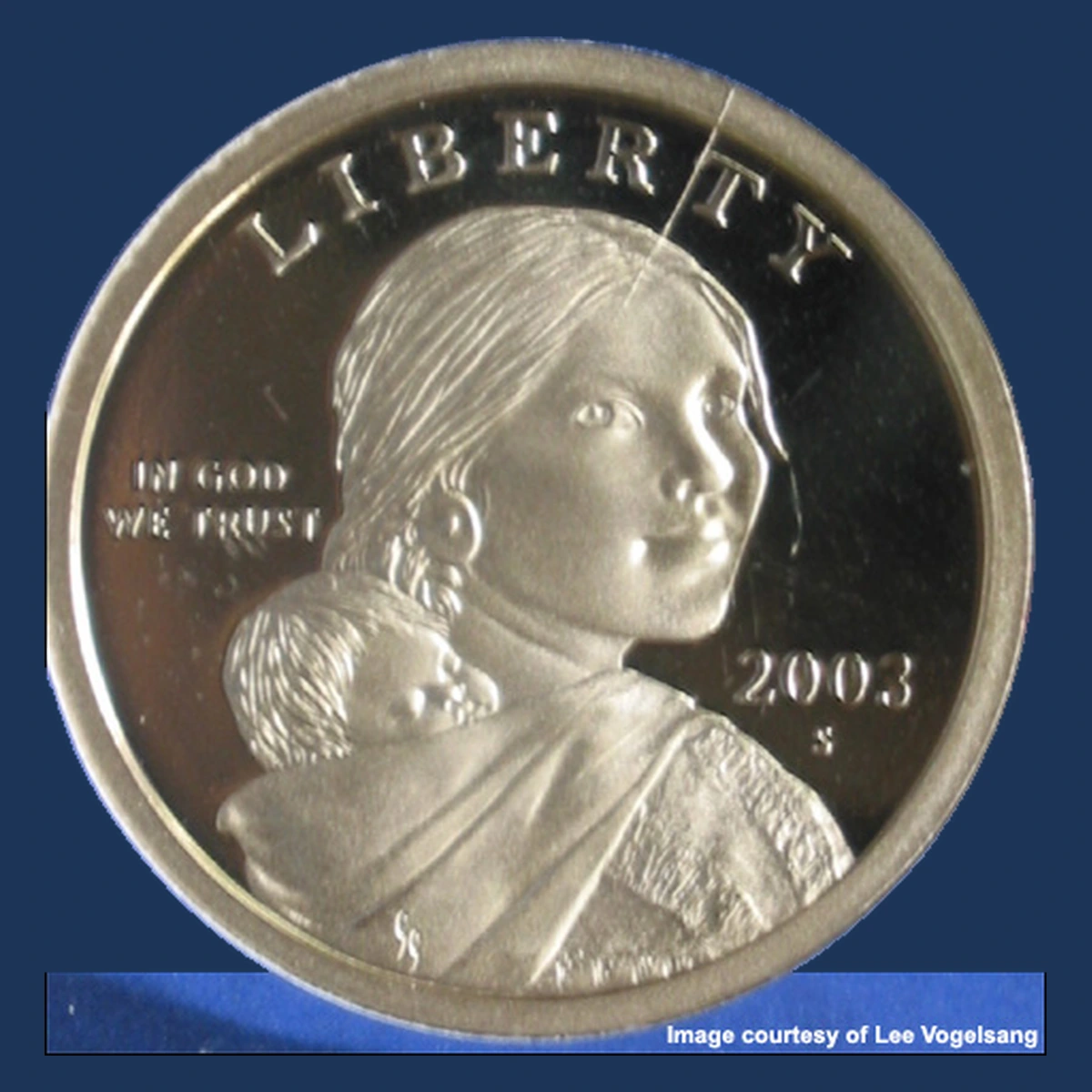
A damaged stamping tool can leave raised lines or lumps on a coin. Collectors call the tool a die, and a crack in it lets metal form a thin raised line.
Mike Byers documented two 2003-S Proof patterns. One runs from the rim toward the portrait near eleven o’clock; another crosses the rim into the forehead near one o’clock.
Small interior chips and larger rim-connected breaks are also reported for the year. A rim-connected raised mass is called a cud, but the reported cud does not establish either Proof crack’s location.
Estimated Value
For ordinary examples, estimate $25–$750 for clear cracks or chips and $75–$1,500 for substantial rim cuds. Fine lines usually bring less than a large feature that replaces recognizable detail.
The documented S Proof cracks have an estimated range of $250–$2,500, reflecting their collector finish and visible damage to the stamping tool. These are estimates rather than sale results for the two photographed patterns.
Keep the Proof and ordinary-coin comparisons separate when judging an offered coin.
How to Identify
On an S Proof, hold the portrait upright and examine the upper rim near eleven and one o’clock. The documented lines run inward, with the one-o’clock pattern reaching the forehead.
Use light from the side to see whether the line rises above the surrounding surface. A scratch cut into the coin can look similar in a straight-on photograph.
For a small lump elsewhere, inspect whether design detail has been replaced by raised metal. If a larger mass reaches the rim, compare it as a possible cud rather than assuming it is one of the Proof cracks.
Photograph the line or lump without touching it. Retain the full portrait and mint letter in a second view so the exact coin and position remain clear.
6. 2003 Sacagawea Dollar Off-Center Strike
An off-center strike pushes part of the picture beyond the available metal. The blank was misplaced when the two stamping tools came together.
One side of the coin has untouched metal while the opposite side loses part of the intended design. Both faces should reflect the same misplaced blank.
This type is reported for 2003 dollars without a fixed mint or percentage for a particular example. A dramatic 2000-P coin is a useful comparison, but its date and degree of displacement cannot be transferred to a 2003 coin.
Estimated Value
A substantial authenticated 2003 off-center strike is estimated at $300–$3,500. A readable date, a clear blank crescent, and attractive surfaces support the upper end.
A 2000-P comparison struck about halfway off center sold for $3,120 in April 2021. NGC graded it MS66, meaning unworn with few marks.
That is an actual result for a different year. Smaller shifts, weaker remaining detail, or heavy damage can bring substantially less.
How to Identify
First check how much of the front date remains, since this year shares its eagle design with other early Sacagawea dollars. The eagle alone cannot establish 2003.
Find the area without a picture and compare it with the missing design on the opposite side. Then turn the coin over while keeping track of the same blank area.
A centered back with only the front shifted suggests a misaligned tool instead. An expanded border around a complete design points toward a broadstrike.
Record the surviving mint letter without guessing from a missing portion. Photograph the whole outline on both faces, then add a close view of the transition between untouched metal and the struck picture.
Conclusion
The estimated $5–$3,500 spread covers faint missing detail through large, confirmed striking errors. A raised line on an S Proof needs a different comparison from a peeling surface or a dollar with a missing section.
Keep photographs of the full coin as well as the feature that caught your eye. The date and mint letter belong on the front in 2003, and its normal edge is plain.