1995 Penny Error List with Pictures

On the familiar 1995 doubled die, LIBERTY and IN GOD WE TRUST can show the extra outlines you are looking for. An exceptional MS69 Red example reached about $5,053 at auction in January 2017.
The range of 1995 penny errors goes much further, including folded coins, missing copper, and a cent front paired with a dime back. Estimated values below span $2–$150,000; the extreme upper range concerns that rare tool mismatch.
Read through the fifteen groups to compare real features, distinguish similar-looking errors, and avoid mistaking damage for a valuable find.
1. 1995 Lincoln Memorial Penny Clashed Dies (Estimated Up to $150)
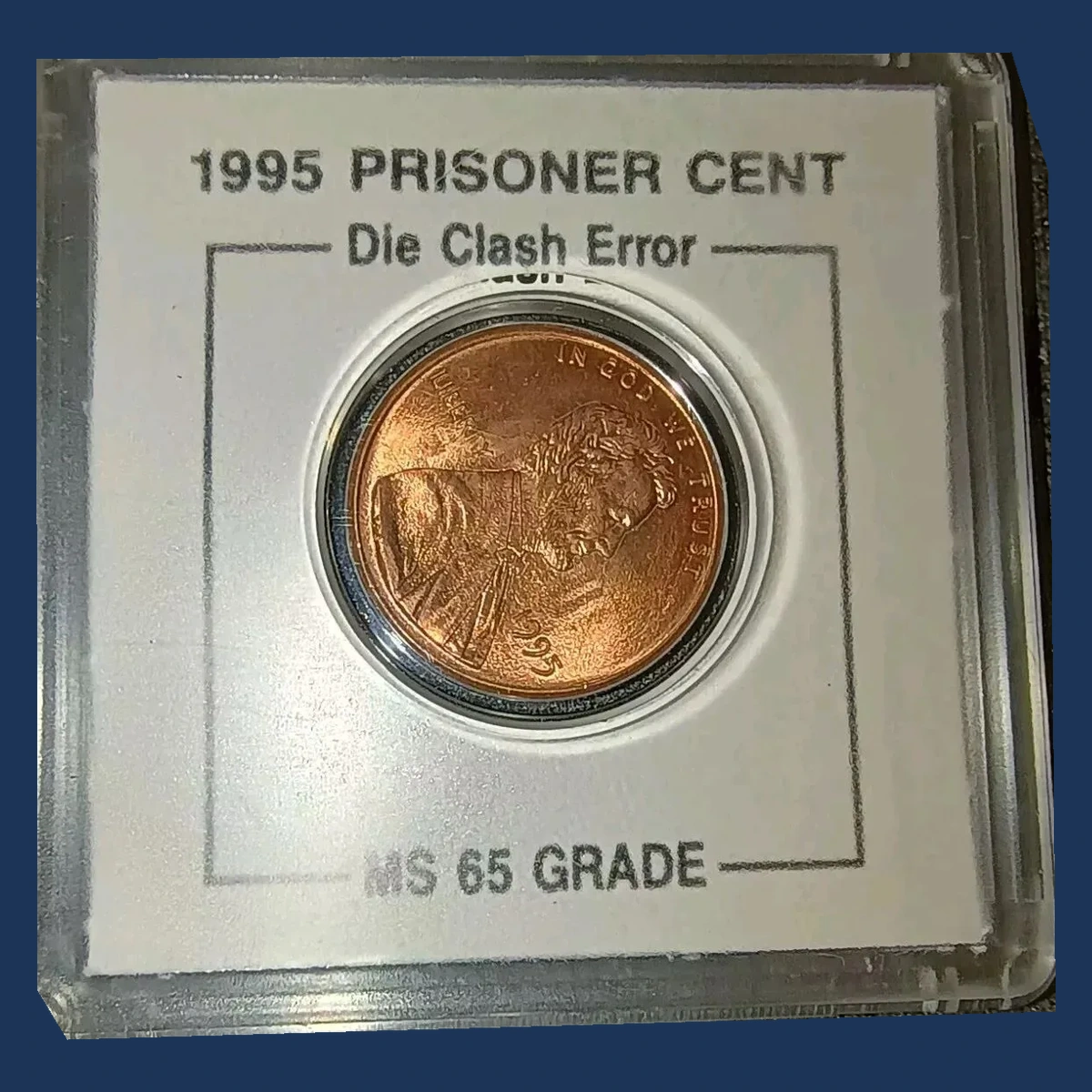
A few shallow lines may resemble part of the Memorial where only Lincoln’s portrait should be. They can be traces left by contact between the stamping tools.
The tools normally have a metal disc between them. When they meet without one, small design marks can transfer and later appear on coins.
A historical listing reports a group of nine lightly clashed 1995 cents. That description does not establish one precise mark shared by every piece.
The unexpected shape should fit the opposite design. A scratch, stain, or later impression from squeezing two coins together can otherwise create a misleading resemblance.
Estimated Value
Estimate $10–$150 for confirmed light-to-clear clashes on this date. A more recognizable trace on a clean coin can be worth more than faint lines.
The historical group of nine coins does not provide a verified individual price here. This range compares other minor Memorial-cent clashes.
The image needs to be convincing at normal magnification. A seller’s drawing or nickname cannot add the same premium when the supposed clash is actually a scratch or surface deposit.
How to Identify
Compare both faces with photographs of an ordinary 1995 cent. Decide which portion of the opposite design could explain the extra line.
Use a 10× magnifier with light from the side to follow the complete trace. Several unrelated scratches should not be joined into an imagined Memorial shape.
Inspect the plain edge for squeezing and the surface for impressed marks from another finished coin. Check that any claimed pattern matches an authenticated example.
A loose cent should be compared with 2.50 g on a scale and 19.05 mm with calipers. Neither measurement proves a clash.
Follow a recognizable opposite-design trace at a confirmed position, rather than accepting a random line as a mint error.
2. 1995 Lincoln Memorial Penny Clipped Planchet (Estimated Up to $250)
Part of the coin’s outline can be absent while the remaining design looks struck. The starting metal disc, called a planchet, was incomplete.
A curved gap can form when blank-cutting overlaps an earlier hole. A straight missing boundary can instead come from the edge of the metal strip.
Clipped 1995 cents are reported, but each specimen needs its own boundary examined. A particular clip shape should not be assigned without seeing the coin.
Later cutting removes metal too. The difference lies in how the missing edge and nearby design formed, not simply in how much of the penny is gone.
Estimated Value
For a confirmed clip, an estimated $20–$250 covers small gaps through more obvious, attractive examples. The date should ideally remain clear.
A later 2021 Shield cent with a five-percent straight clip sold for $114 in September 2025. That provides modern-cent context, not a 1995 transaction.
Both the missing shape and the preserved surface influence appeal. A penny trimmed with tools should not receive this error premium, even if the resulting gap looks dramatic.
How to Identify
Weigh the loose coin before deciding how large the gap is. Its normal starting weight is 2.50 g, so missing metal should reduce the reading on a suitable scale.
Measure the surviving round section with calipers against 19.05 mm. Do not judge its original diameter only across the gap.
Under a 10× magnifier, inspect the missing boundary and its ends for saw marks or filing. A weak border opposite the gap can help but is not always visible.
The remaining edge is normally plain, and a genuine gap can retain copper coating.
Look for a naturally formed missing boundary with reduced weight and no tool marks explaining the lost metal.
3. 1995 Lincoln Memorial Penny Die Cracks, Chips, and Cuds (Estimated Up to $300)
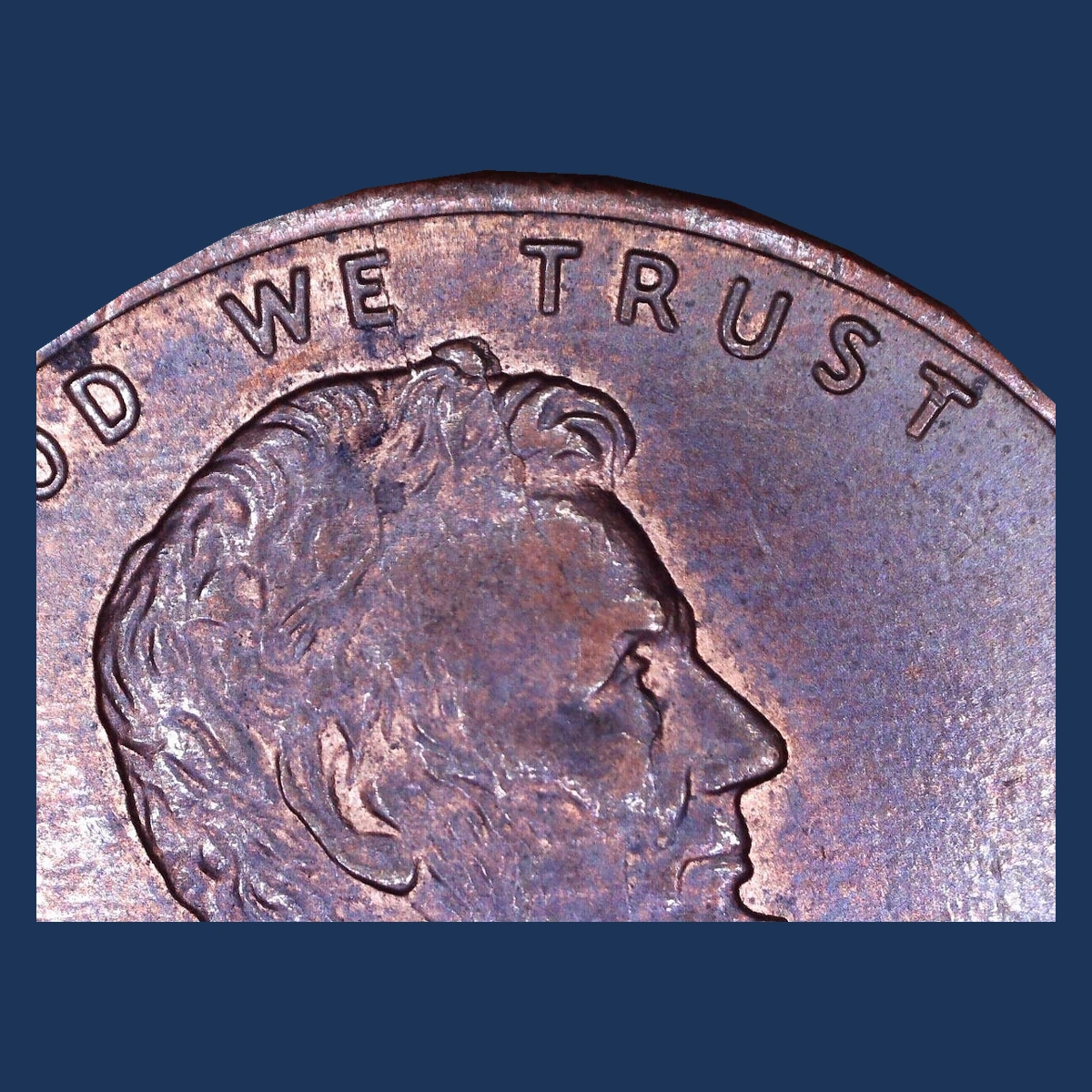
Raised metal takes several forms on 1995 pennies. Small bars can fill gaps in LIBERTY, while longer lines can cross Lincoln’s head or stretch across a face.
The cause is damage to a die, the steel tool that stamps coins. Cracks and missing pieces allow coin metal into spaces that should not exist.
A cud is a larger raised area joining the rim. If a broken section stays in the tool, a bounded step may retain some design.
Philadelphia and Denver examples exist in different patterns. A BIE bar sits specifically between B and E, not elsewhere in the word.
Estimated Value
An estimated $2–$300 spans tiny letter-gap chips through more obvious rim breaks. A small bar and a large cud should not be assigned one automatic value.
The range compares modern cent tool damage. Size, visibility, and clean surfaces usually matter more than the number of catalog entries describing similar breaks.
A specific shape can interest a specialist without making every matching coin expensive. Added metal, dirt, and coating bubbles do not earn a die-break premium.
How to Identify
Check whether the abnormal metal is a raised line, a solid lump, or a bounded step with design inside. Use a 10× magnifier and side lighting.
For letter-gap chips, identify the actual letters around the bar. For a head crack, trace the whole route instead of assuming every line follows the same path.
An interior lump does not become a cud unless the raised break connects to the rim. Do not poke a possible coating bubble to test it.
Inspect the plain edge, then use a scale and calipers on a loose coin against 2.50 g and 19.05 mm.
Match the exact raised outline and its relationship to letters or the rim to a confirmed example.
4. 1995 Lincoln Memorial Penny Blistered or Peeling Copper (Estimated Up to $400)
A copper-colored bubble or loose flap can stand above the rest of the surface. Gray zinc may appear beneath an area where the thin coat has separated.
This type of plating failure is reported for 1995 cents. The coin is copper-coated zinc, not a solid bronze piece splitting into thick layers.
A coating problem can begin during production, but corrosion can also lift copper later. The surrounding surface needs to support the explanation.
This differs from a coin that never received its copper coat. A raised or peeling layer shows that copper was present at the affected place.
Estimated Value
For confirmed mint-made coating separation, estimate $5–$400. Tiny bubbles usually have modest value, while a larger intact separation can attract more interest.
This range compares plated Lincoln cents with similar defects. It does not assign an auction result to an unverified 1995 blister.
Keep the flap attached, since its boundary helps explain the defect. Corrosion, heating, or chemical damage can lift extensive copper without creating the collector value of a genuine production error.
How to Identify
Inspect the coating without pressing or peeling it. A 10× magnifier can show whether the surface rises as a thin skin or forms a solid metal lump.
Look for white corrosion, pits, or heat discoloration near the lifted area. Those signs may explain a post-mint problem.
Check both faces and the normally plain edge. The transition from copper to gray zinc is especially useful, but it should remain untouched.
Use a scale and calipers on a loose coin against 2.50 g and 19.05 mm. Minor coating loss may not change an ordinary scale’s reading.
Locate a thin copper layer lifting from zinc, then separate poor original bonding from corrosion or later treatment.
5. 1995 Lincoln Memorial Penny Struck-Through Errors (Estimated Up to $400)
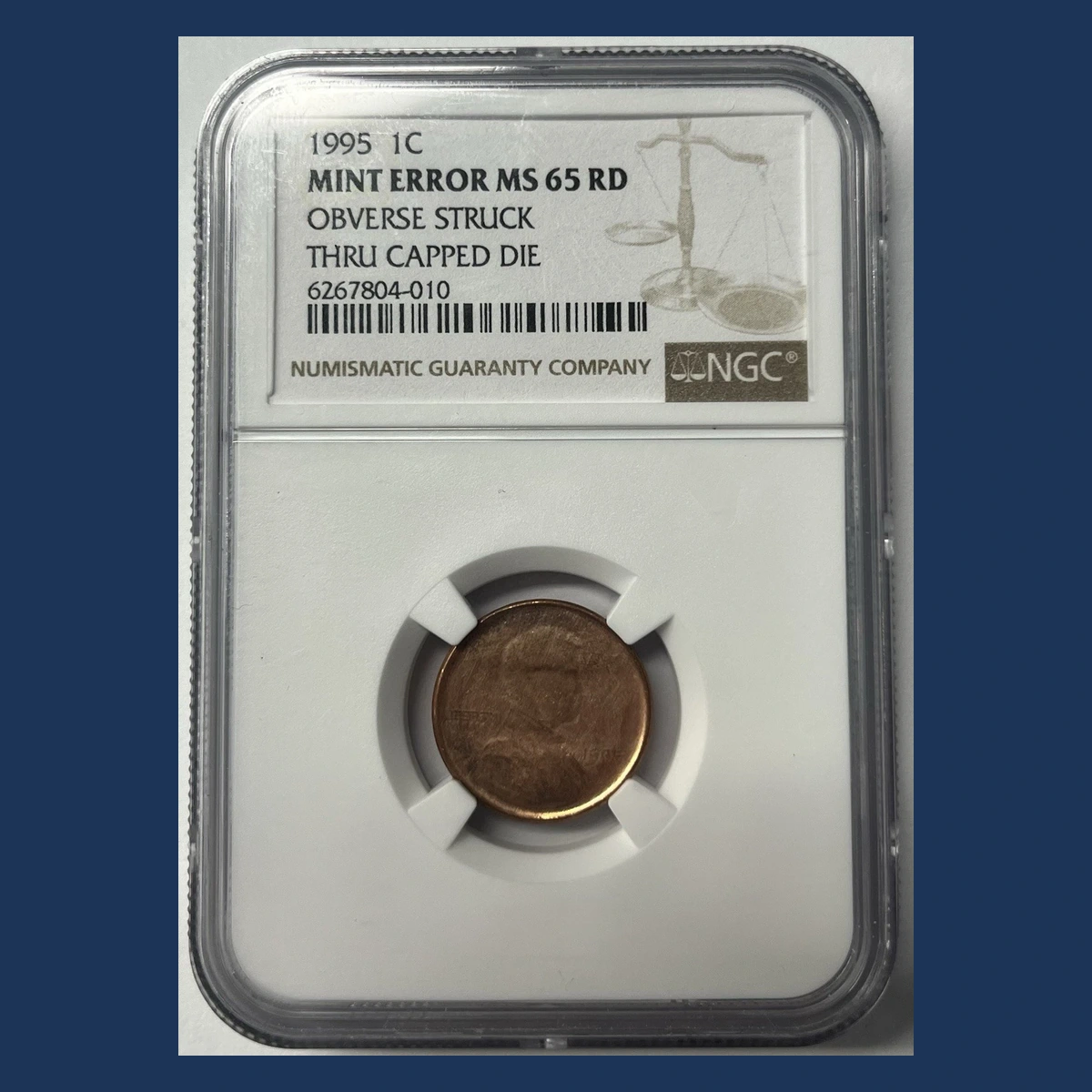
Lincoln’s portrait can look faint even when the coin has little wear. A thin coin stuck over the stamping tool may have softened the design reaching the next piece.
The struck coin beneath that barrier is a capped-die strike. It is different from the cup-shaped coin that became the cap.
A 1995 late-cap strike graded PCGS MS65 Red is recorded. Other struck-through 1995 reports describe blocked areas or impressions without identifying one particular material.
Grease, fibers, and metal pieces can cause different effects in general. Their mention should not turn every weak 1995 penny into a separately confirmed material-specific error.
Estimated Value
The documented 1995 late capped-die strike sold for $180 in March 2025. Its PCGS MS65 Red grade describes an unworn coin retaining copper color.
An estimated $10–$400 covers minor blocked detail through clearer cap effects or object impressions. The actual obstruction and preserved surface help determine the amount.
A vaguely weak portrait should not automatically receive the recorded coin’s price. Wear, corrosion, or later smoothing can remove detail without involving an object in the press.
How to Identify
Look at how the design fades rather than only at which letter is missing. A thin cap can transmit a soft portrait, while another object can leave a clearer boundary.
Use a 10× magnifier to compare the affected surface with nearby sharp details. Check for abrasion or corrosion that could explain the weakness.
Inspect the opposite face and the plain edge before deciding the coin’s overall condition. General wear affects different areas from a local obstruction.
For a loose cent, compare 2.50 g on a scale and 19.05 mm with calipers. Normal dimensions do not identify the blocking material.
Find an undamaged blocked or softly transmitted design that matches a confirmed cap strike or other struck-through example.
6. 1995 Lincoln Memorial Penny Broadstrike and Partial Collar (Estimated Up to $400)
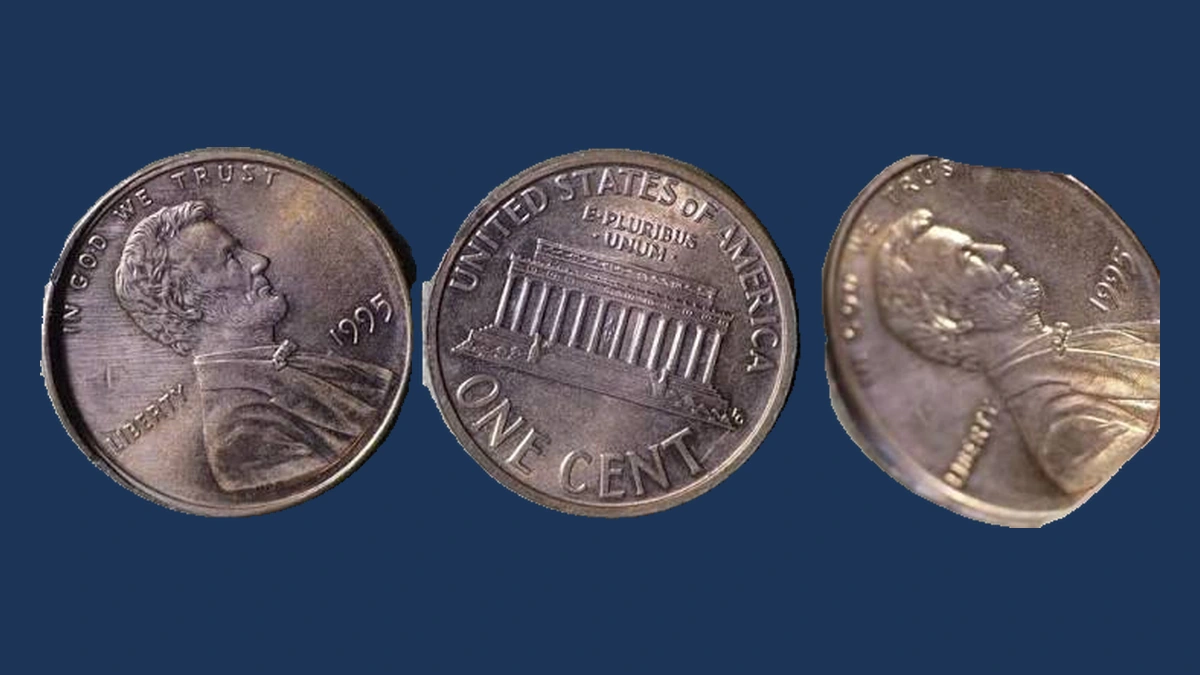
A 1995 penny can look almost nickel-sized while still carrying its complete design. A collector’s broadstrike example shows this large outward spread.
The collar is the retaining ring that normally controls the edge during striking. Without full restraint, metal can spread farther than intended.
A partial-collar report describes a related effect: only part of the coin’s thickness contacts the ring. The edge can then develop two levels.
The distinction is visible in the design and edge. An off-center strike loses part of its design, while later flattening can damage letters as it expands an ordinary coin.
Estimated Value
An estimated $20–$400 covers confirmed collar-related errors, with obvious natural spread generally more striking than a small edge step. Surface quality also affects demand.
A 1999 broadstrike graded PCGS MS65 Red sold for $67 in March 2023. That is a different-year comparison within the same Memorial design.
The larger 1995 collector example should be assessed on its own appearance. A widened coin with crushed lettering from later pressure does not qualify for the same estimate.
How to Identify
Check the outer lettering on both faces before measuring the coin. A broadstrike should preserve the complete designs despite the extra spread.
Use a 10× magnifier along the plain edge to look for a step from partial ring contact. Later edge rolling can produce a misleading uneven border.
Calipers can record the widest and narrowest dimensions against the normal 19.05 mm diameter. Compare the loose coin on a scale with 2.50 g.
Spreading an intact coin changes its shape rather than automatically removing weight. Inspect for flattened letters and tool marks that suggest later squeezing.
Confirm complete designs with natural expansion, or a clear edge step that fits partial contact with the retaining ring.
7. 1995 Lincoln Memorial Penny Off-Center Strike (Estimated Up to $500)
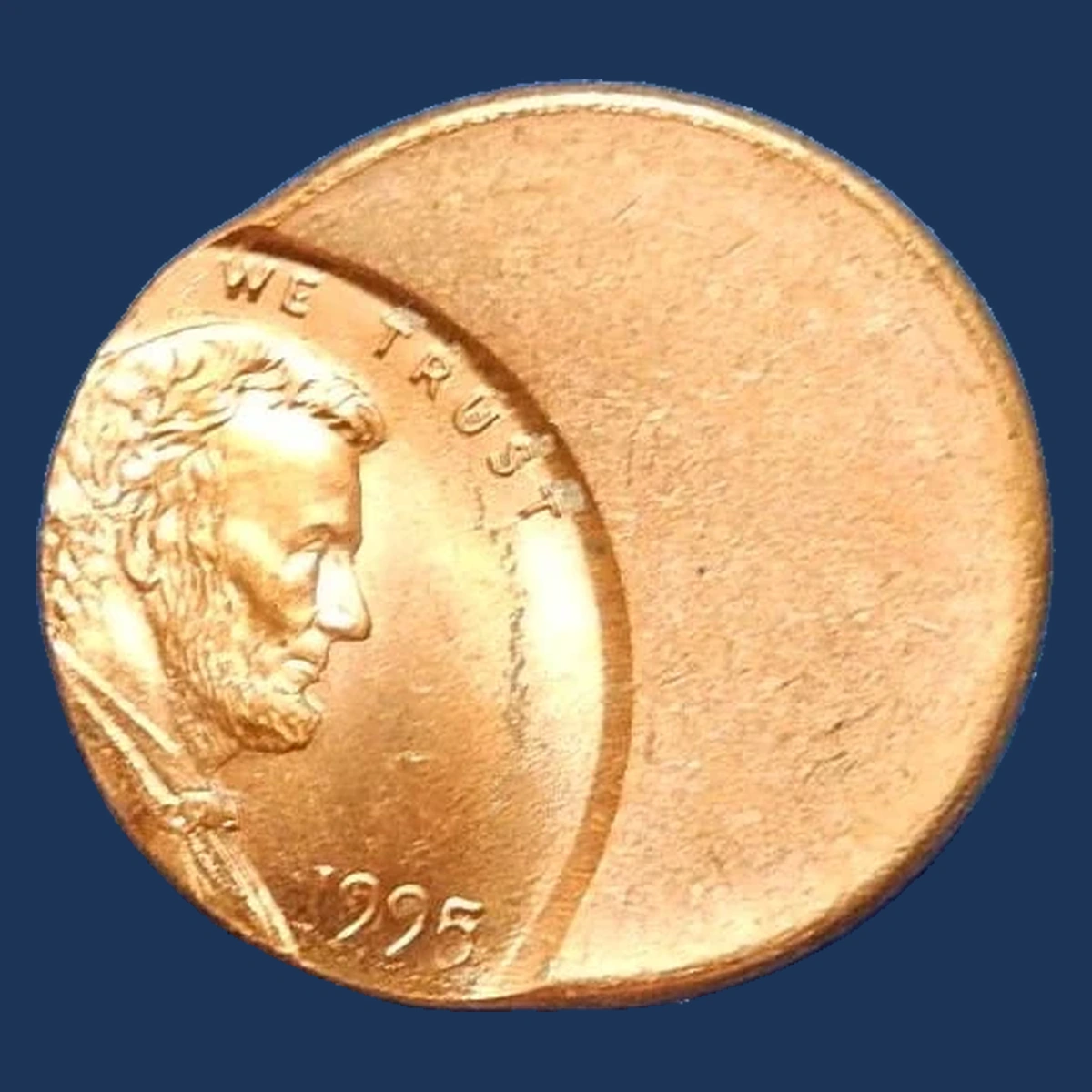
The penny design may occupy only part of the metal disc, leaving a large blank arc. The coin was out of position beneath the stamping tools.
Recorded Philadelphia examples include forty- and fifty-percent off-center strikes. Denver examples include a fifty-five-percent strike and another described as sixty-five percent toward nine o’clock.
Those percentages belong to separate pieces. They are not stages of one coin or thresholds every genuine error must meet.
A readable date and D, when present, help identify the example. A blank area can retain copper coating, so exposed zinc is not required for this error.
Estimated Value
Use an estimated $15–$500 for date-visible examples, with the amount of displacement and preserved surface affecting the value. A dramatic strike is easier to appreciate when its year remains clear.
A 1999 ten-percent off-center cent graded PCGS MS64 Red sold for $47 in March 2023. It offers a modest same-design comparison.
The listed 1995 examples have their own shapes and grades. An unreadable date, heavy scratches, or later cuts can reduce their appeal.
How to Identify
Find the readable part of 1995 and any D before comparing the displacement. Photograph both faces with the coin kept in the same physical orientation.
A 10× magnifier helps inspect the boundary between blank copper and struck design. Look for natural transitions rather than grinding, sawing, or scraping.
Weigh a loose coin against the normal 2.50 g and record its dimensions with calipers against 19.05 mm. The strike may distort the outline without removing metal.
Check the plain edge and whether both faces agree with the displacement. A centered back can indicate a different alignment problem.
Find matching missing design and an untouched blank arc on both faces, keeping the date visible for identification.
8. 1995 Lincoln Memorial Penny Missing Copper Plating (Estimated Up to $800)
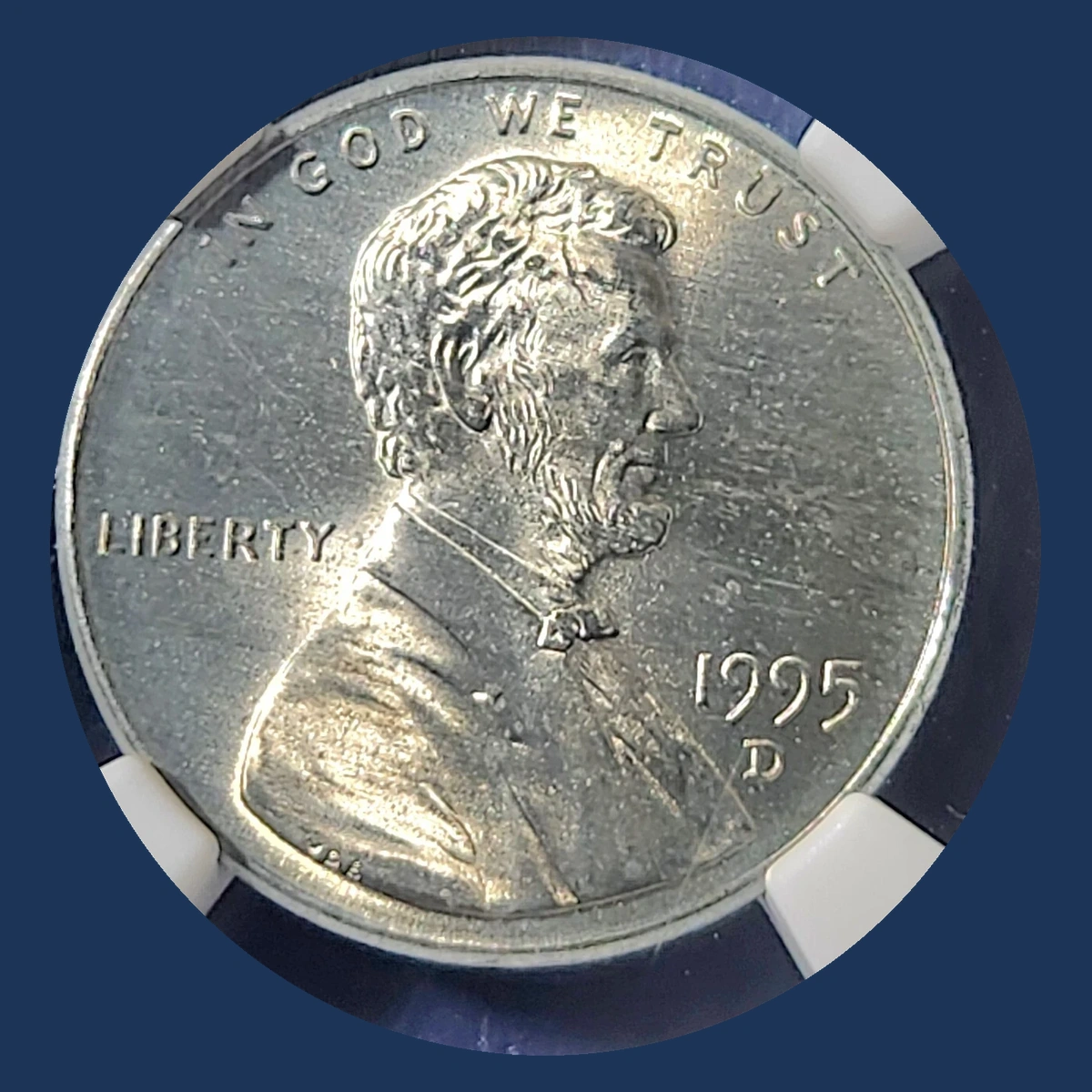
A penny may be gray all over or show only scattered copper-colored areas. It was struck on zinc with some or all of its usual copper coat missing.
Philadelphia and Denver examples are recorded. One historical Philadelphia description specifies ninety-five percent missing on the front and complete absence on the back.
That coverage belongs to the particular example, not to every gray coin. A partially unplated Denver piece is also reported.
Chemical stripping can remove the same coat after minting. A genuine unplated coin therefore needs original struck surfaces and evidence that the missing copper was a production error.
Estimated Value
A Philadelphia 1995 unplated cent graded NGC MS67 sold for $660 in January 2023. A 1995-D graded PCGS MS63 brought $180 that March.
An estimated $25–$800 covers partial missing coverage through attractive fully unplated examples. Those two results show that condition makes a substantial difference.
The historical percentages do not create automatic prices. A chemically stripped or heavily corroded cent remains different from an authenticated coin that lacked its copper coat when struck.
How to Identify
Compare the gray and copper-colored areas under a 10× magnifier. Look for original struck detail continuing naturally across any remaining coating boundary.
On a fully gray coin, inspect both faces for pitting, residue, and softened details from later chemical treatment. Do not clean the surface to make it brighter.
Use calipers against the normal 19.05 mm diameter and a scale against 2.50 g. A thin missing coat can cause only a small weight difference, so weight alone is not decisive.
Check the plain edge and keep the candidate away from scratching or acid tests.
Confirm zinc with intact struck surfaces and mint-made absence of copper, rather than accepting gray color as the diagnosis.
9. 1995 Lincoln Memorial Penny Double and Multiple Strikes (Estimated Up to $800)
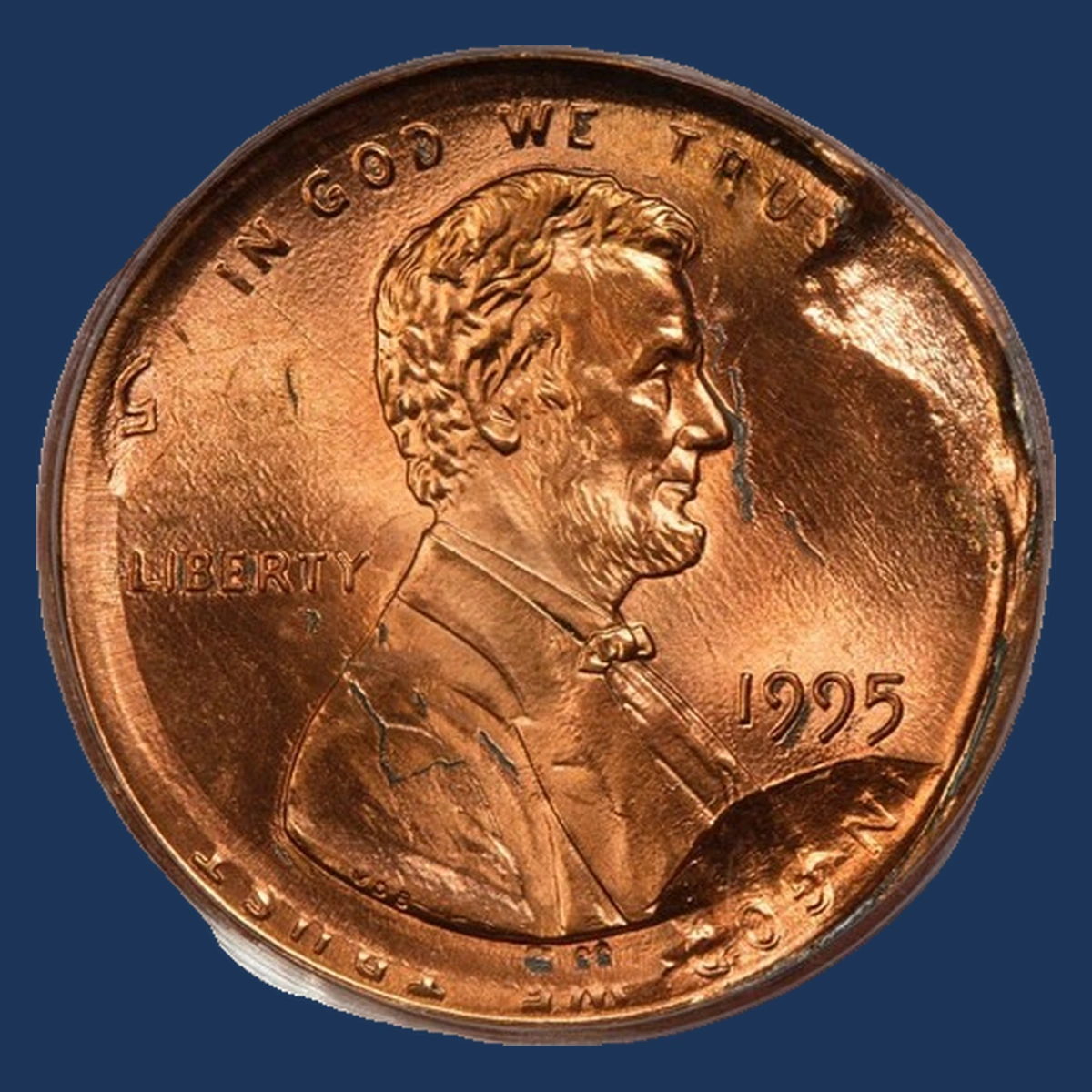
A second set of design details may appear away from the first. The coin returned under the tools instead of leaving after one strike.
Recorded 1995 examples include shifted strikes, a half-turn before the next blow, and a flip that brings opposite-face designs together. Other pieces stretch or curve during the extra strike.
One documented coin has two separate off-center areas, both struck without a normal front design. Another has a cup-like curve toward the back.
These are different specimens. A repeated outline does not by itself reveal whether the coin rotated, flipped, or was partly covered during striking.
Estimated Value
For authenticated repeated strikes, estimate $40–$800. The visibility of the separate designs matters more than simply counting how many blows a seller claims.
A 1999 flipover double strike with an expanded outline sold for $159 in March 2023. Its PCGS MS65 Red grade and different date make it a comparison, not a 1995 result.
Strong, readable overlaps can bring more. A minor doubled edge produced by movement during one strike does not qualify as another complete strike.
How to Identify
Map the surviving parts of each design before deciding what happened. A 10× magnifier can help connect separate letters, dates, and portrait fragments.
Look for a genuine change of design position. A flip can put Lincoln and the Memorial on the same face, while a half-turn keeps the same design facing the tool.
Inspect both faces and the plain edge for later impressions or bending. Do not infer an exact blow count where later strikes erased the earlier surface.
Use a scale against 2.50 g and calipers against a normal 19.05 mm outline for a loose coin. Record expansion or curvature without forcing it flat.
Identify distinct struck-design positions that explain the overlap or distortion, rather than a shelf beside one letter.
10. 1995 Lincoln Memorial Penny Foldover Strike (Estimated Up to $1,000)
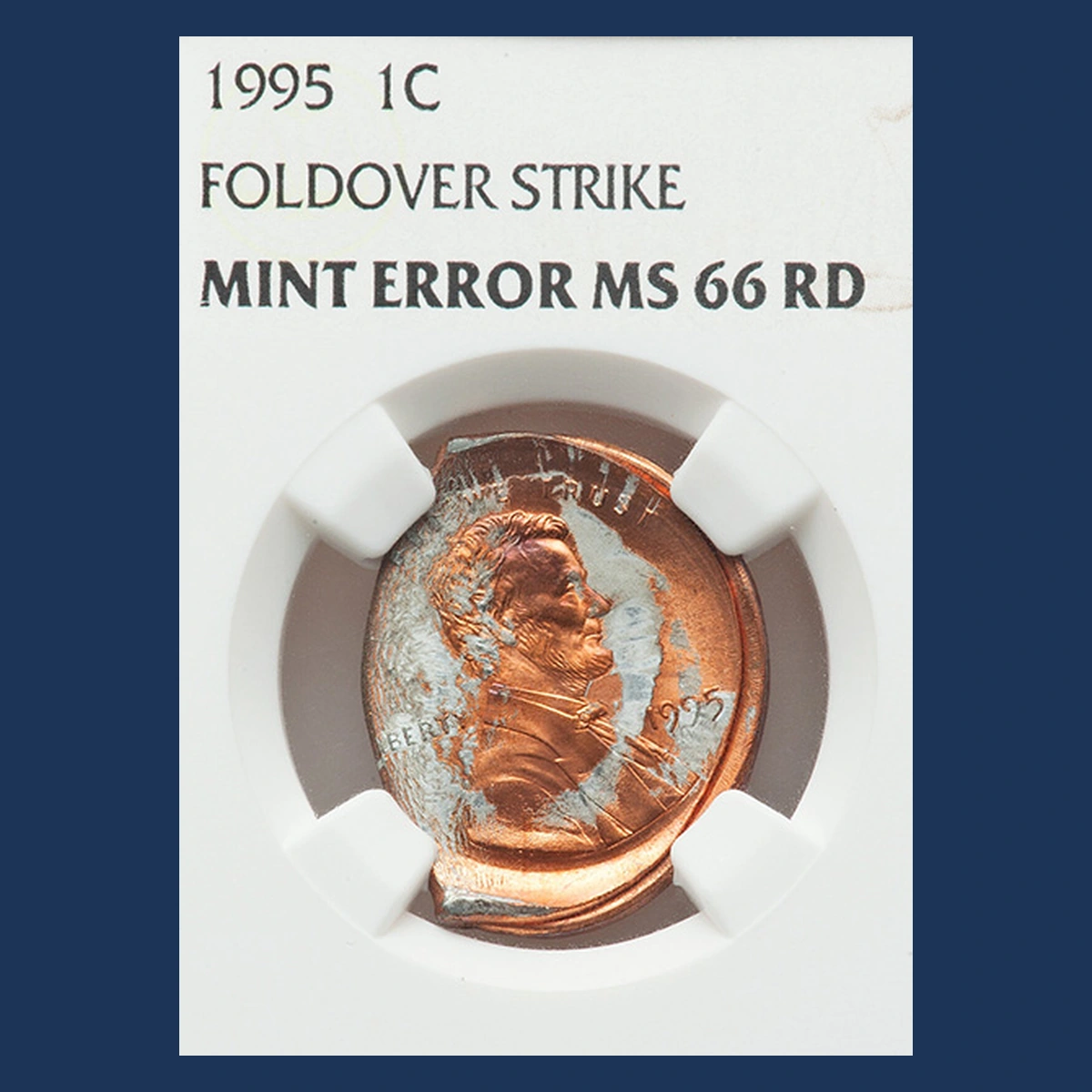
The metal can fold over itself, leaving an overlapping section instead of a normal flat coin. The doubled thickness helps distinguish a fold from a shallow curve.
A foldover begins when a disc meets the stamping tools in an abnormal position and collapses during the strike. Parts of the design can form across the folded metal.
The type is reported for 1995 cents. Its mint and exact fold direction need to come from the individual piece.
A coin wrapped around a tool as a cap is a different history. Later folding can also imitate the outline of a genuine foldover.
Estimated Value
For a confirmed foldover strike, an estimated $200–$1,000 uses comparable folded modern cents. A readable date and a clear relationship between the fold and struck design increase appeal.
The 1995 report does not provide a verified original sale used in this estimate. Authentication matters because a finished penny can be folded with tools.
An attractive original error and a later bent coin should not be priced alike. Keep the folded layers untouched so their evidence remains available.
How to Identify
View the edge and find where one section of metal overlaps another. Do not try to open the fold or press it flatter.
With a 10× magnifier, inspect how struck design approaches and crosses the folded area. Tool marks and crushed finished lettering can reveal later bending.
Use calipers gently to record the changed thickness and outline of a loose piece. The original disc was about 19.05 mm across, with a plain edge.
A scale provides a comparison with the normal 2.50 g weight. Folding changes the shape without necessarily removing metal.
A specialist should confirm that the strike occurred as part of the folding event. Look for an overlapping metal fold with compatible original design, not merely a bent finished penny.
11. 1995 Lincoln Memorial Penny Obverse Die Cap (Estimated Up to $1,500)
Lincoln’s remaining portrait sits inside a cap-like shape, while the side walls turn upward and may curl back. The coin had stuck to the front-design stamping tool.
Further blows changed its shape as it continued receiving pressure. A historical 1995 auction description records a front die cap with folded-back walls.
The object itself was the cap. It should not be confused with a flatter penny struck beneath a cap blocking the tool.
Later bending can create a cup but does not reproduce the full struck history. The stretched design and wall structure must fit a real mint-made cap.
Estimated Value
An estimated $100–$1,500 covers less-developed caps through dramatic authenticated examples. Depth, surviving portrait detail, and surface preservation influence the price.
A 1999 deep front cap graded PCGS MS64 Red sold for $660 in March 2023. That is a nearby-year comparison to a similar shape.
The historical 1995 description is not assigned that selling price. A folded ordinary cent or a shallow curved piece should not receive the same value solely because it resembles a cup.
How to Identify
Inspect the inside of the cup and the walls as one continuous piece. A 10× magnifier helps show stretched design and the transition into the raised sides.
Look for cutting, sharp artificial folds, or tool marks. Do not pull back a curled wall to improve the view.
For a loose coin, compare its weight with 2.50 g on a scale and record its dimensions gently with calipers. The starting cent was 19.05 mm across with a plain edge.
If the piece is sealed, rely on its certification and recorded measurements rather than removing it. The remaining inside design helps identify the cap side.
Confirm a naturally stretched portrait inside continuous cap walls, not a cup bent from an already finished penny.
12. 1995 Lincoln Memorial Penny Struck on a Dime Blank (Estimated Up to $1,500)
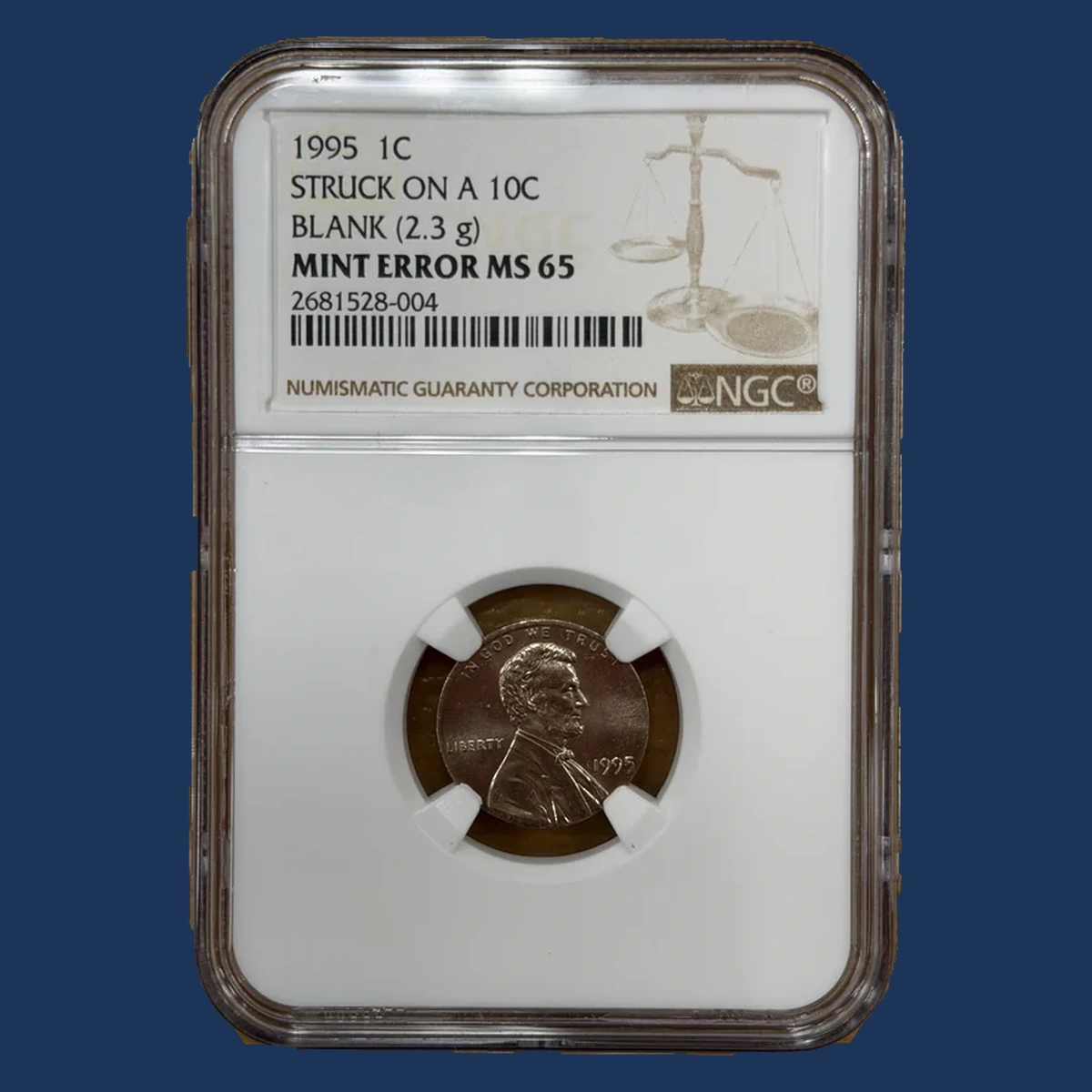
The cent design can be too large for its silver-colored metal disc, leaving outer letters cut off. A blank intended for a dime entered the cent press.
A blank is an unused disc, so it has no earlier Roosevelt portrait or torch image. Philadelphia and Denver 1995 examples are recorded.
A separate report describes two cent strikes on the wrong dime blank. That adds repeated design without turning the unused disc into an already struck dime.
The dime metal has bonded outer layers around a copper center. It is different from the copper-coated zinc in a normal penny.
Estimated Value
Use an estimated $400–$1,500 for authenticated cent strikes on dime blanks. Condition and how well the date survives help determine the amount.
A 2007-D example graded PCGS MS66 sold for $600 in March 2023. That different-year sale supplies a same-design comparison.
The reported double-struck wrong blank must also show its second cent strike clearly. Silver color by itself cannot support the estimate, since added coating or removed copper can make an ordinary penny look similar.
How to Identify
Use a scale to compare the loose piece with the dime’s normal 2.268 g and the cent’s 2.50 g. Some reported 1995 examples are rounded to 2.3 g in their descriptions.
Calipers can compare the starting dime diameter of 17.91 mm with the cent’s 19.05 mm size. The strike may expand the smaller blank.
Under a 10× magnifier, inspect outer cent lettering and the edge’s layered metal. An unused dime blank has no preexisting struck edge grooves.
Look for a second cent strike if claimed, and exclude earlier dime design that would change the category.
Confirm dime-type weight and layered metal beneath the cent design, rather than judging the blank by color alone.
13. 1995 Lincoln Memorial Penny Cent Struck Over a Dime (Estimated Up to $3,000)
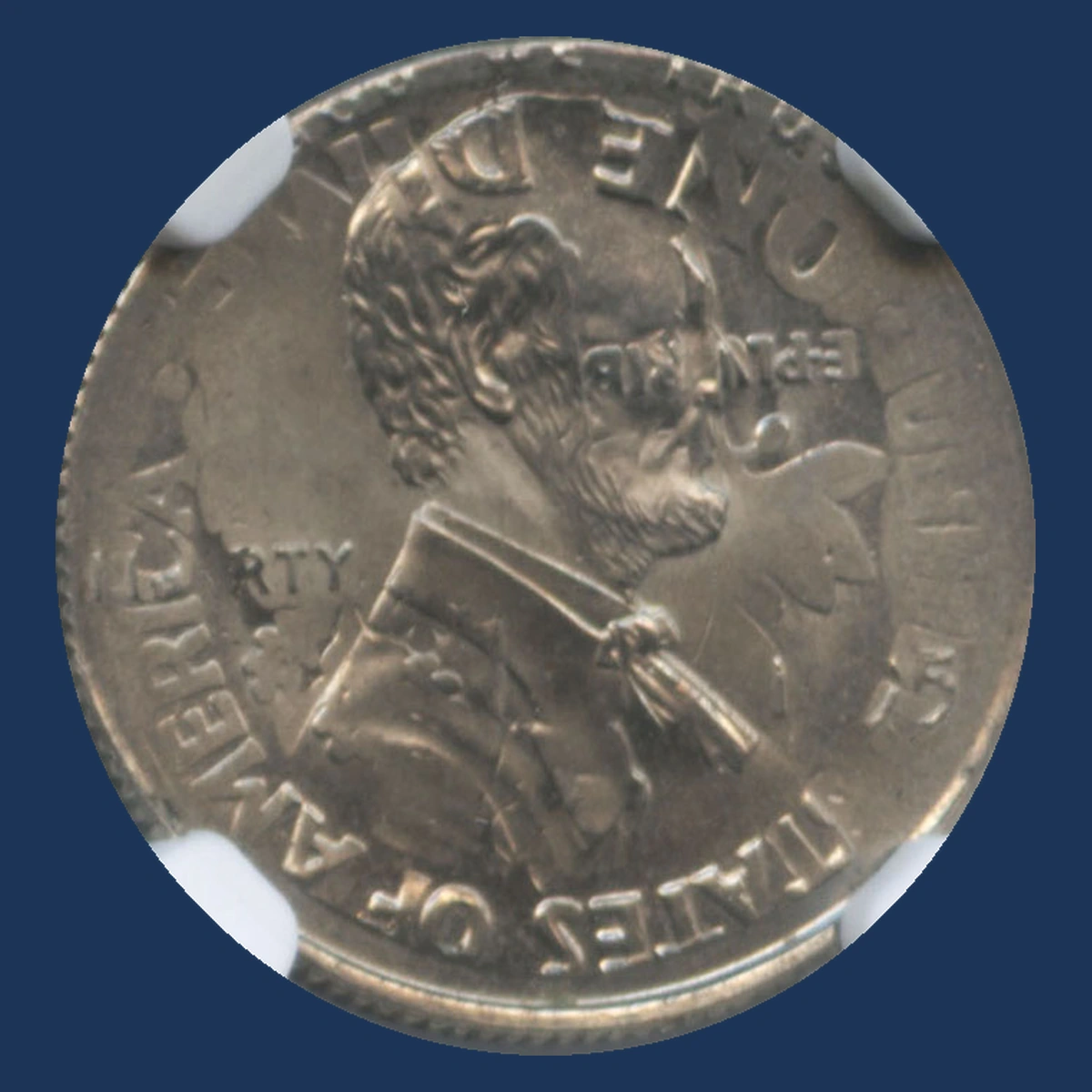
Lincoln’s portrait can sit among traces of Roosevelt, the torch, or dime lettering. An already finished dime received a second design in the cent press.
A documented Philadelphia example was struck over a 1995 dime. Denver examples are also reported with both denominations’ dates readable.
Another Philadelphia piece used a 1991-P dime, leaving older lettering near Lincoln’s forehead and an inverted dime portrait. The four-year difference is part of that individual coin’s identity.
This is a double denomination, with two face values on one object. A wrong unused blank or mismatched pair of stamping tools creates a different pattern.
Estimated Value
An estimated $700–$3,000 reflects authenticated examples with different condition and surviving design detail. Clear traces of both denominations are central to their appeal.
A 2001 cent over a struck 2001-P dime graded PCGS MS66 sold for $1,320 in September 2025. That is a recent comparison from another year.
The 1991-P underlying coin does not make the upper cent a 1991 issue. Buyers should evaluate the actual combined design rather than paying for a confusing double-date label.
How to Identify
Find a recognizable dime feature beneath the cent design before trying to read every date. Use a 10× magnifier on both faces.
Keep the older dime lettering separate from the newer cent details. On the recorded 1991-P example, part of the 1995 cent date survives rather than a fully unobstructed second date.
Compare a loose piece with 2.268 g on a scale, rather than expecting the normal cent’s 2.50 g. Calipers can record expansion from 17.91 mm toward the cent’s 19.05 mm outline.
Examine the edge for surviving or distorted dime grooves and for any joining seam.
Identify a specific earlier dime image beneath an authentic cent strike, supported by the smaller coin’s metal and weight.
14. 1995 Lincoln Memorial Penny Doubled Dies (Estimated Up to $6,000)
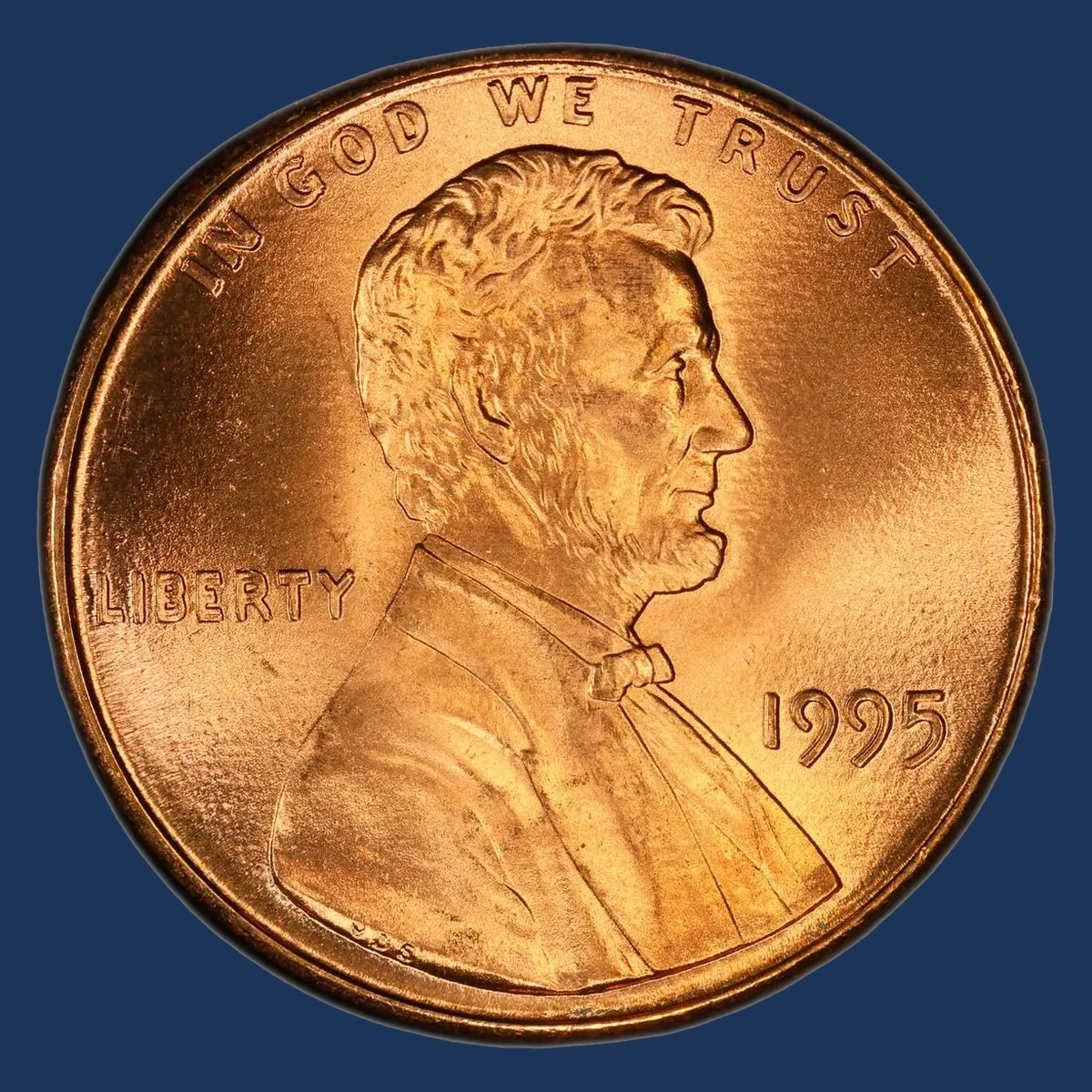
Extra outlines in LIBERTY and IN GOD WE TRUST make Philadelphia’s 1995 doubled die easy to recognize. The date is less strongly doubled on that variety.
The repeated detail was already present in the stamping tool. Other Philadelphia examples have smaller effects around letters, the ear, or the Memorial’s columns.
Denver has separate doubled designs, including FS-103 with prominent motto doubling. Extra edges on its D can belong to the same doubled tool rather than a separately punched mint letter.
Each variety needs its own match. Different small marks and later cracks should not be combined into one imaginary specimen.
Estimated Value
Estimate $5–$6,000 across minor varieties and exceptional examples of the better-known doubled dies. Most ordinary examples are far below the top amount.
PCGS records about $5,053 for a Philadelphia MS69 Red coin in January 2017. Denver’s FS-103 reached $4,200 as an MS67 Red in August 2019.
Those high grades describe unusually well-preserved unworn coins. A small back-side feature or worn Philadelphia example should not receive the same price merely because both are called doubled dies.
How to Identify
For Philadelphia FS-101, begin with LIBERTY and IN GOD WE TRUST rather than demanding strong doubling across all four date digits. Use a 10× magnifier beside a certified comparison.
For Denver FS-103, examine the motto with the D issue’s own photographs. Wexler’s Philadelphia catalog also separates smaller front and back patterns.
Check the appropriate column, letter, or portrait feature without borrowing unrelated tool marks. Different stages can have different small cracks.
A loose coin should be compared with 2.50 g on a scale and 19.05 mm using calipers. Inspect the plain edge and copper coating for damage.
Match the actual separated design shapes to one correct variety, using the mint and affected face to choose the comparison.
15. 1995 Lincoln Memorial Penny Cent Front with Dime Back Mule (Estimated Up to $150,000)
Lincoln and the 1995 date appear on the front, while the back carries the torch and ONE DIME. Two stamping tools from different denominations were paired.
This is called a mule. The documented 1995 example was struck on a dime’s metal disc inside a dime-sized retaining ring.
The larger cent front design crowds that smaller surface. Unlike a cent stamped over a finished dime, the two faces do not need overlapping older designs.
The object is also different from a cent-metal mule. Its metal, size, and tool pairing must be assessed, since joined novelty pieces can imitate the two-design appearance.
Estimated Value
An estimated $50,000–$150,000 treats this as a major authenticated tool mismatch, not a normal silver-colored penny. The range is an appraisal, not a recorded 1995 sale.
For historical comparison, a 1999 cent-front/dime-back mule sold for $138,000 in April 2006. That different-year coin used cent metal, while the 1995 example uses dime metal.
The different disc and condition prevent a direct price match. Expert confirmation is essential before applying this exceptional range to any candidate.
How to Identify
Check the two complete design identities first: Lincoln with 1995 on the front, and the dime’s torch and denomination on the back. Look for separate tool-made designs rather than overlapping earlier images.
A 10× magnifier helps inspect the edge and both faces for seams, solder, or machining. Never scratch the surface to test the metal.
The original dime disc normally measures 17.91 mm and weighs 2.268 g, compared with a cent’s 19.05 mm and 2.50 g. Use a scale and calipers only on a loose piece.
Examine its dime-style edge and layered metal, with professional confirmation of the intact structure.
Confirm one genuine dime-metal coin struck by the mismatched cent-front and dime-back tools, without a joining seam or older overlapping design.
Conclusion
The estimated $2–$150,000 range stretches from small raised chips to an exceptional cent-and-dime mule. For most collectors, the practical starting points are clear doubling, unusual edges, and preserved surface defects.
Keep a missing copper coat, a dime blank, and a previously struck dime separate in your checks. They can share a gray appearance but come from different events.
Photograph each candidate carefully and protect folded, capped, or delicate pieces from further handling.