1996 Penny Error List with Pictures

A penny dated 1996 can preserve a second date from the year before. One 1996-D cent struck over a finished 1995-D dime sold for $2,760 in August 2009.
Not every 1996 penny error involves two coins. Small raised bars, incomplete copper coating, and displaced designs offer other features to examine.
Estimated values below range from $2–$3,500. Follow each coin’s visible clues, keeping earlier auction results separate from the estimates used for comparison.
1. 1996 Lincoln Penny BIE Die Chip (Estimated Up to $75)
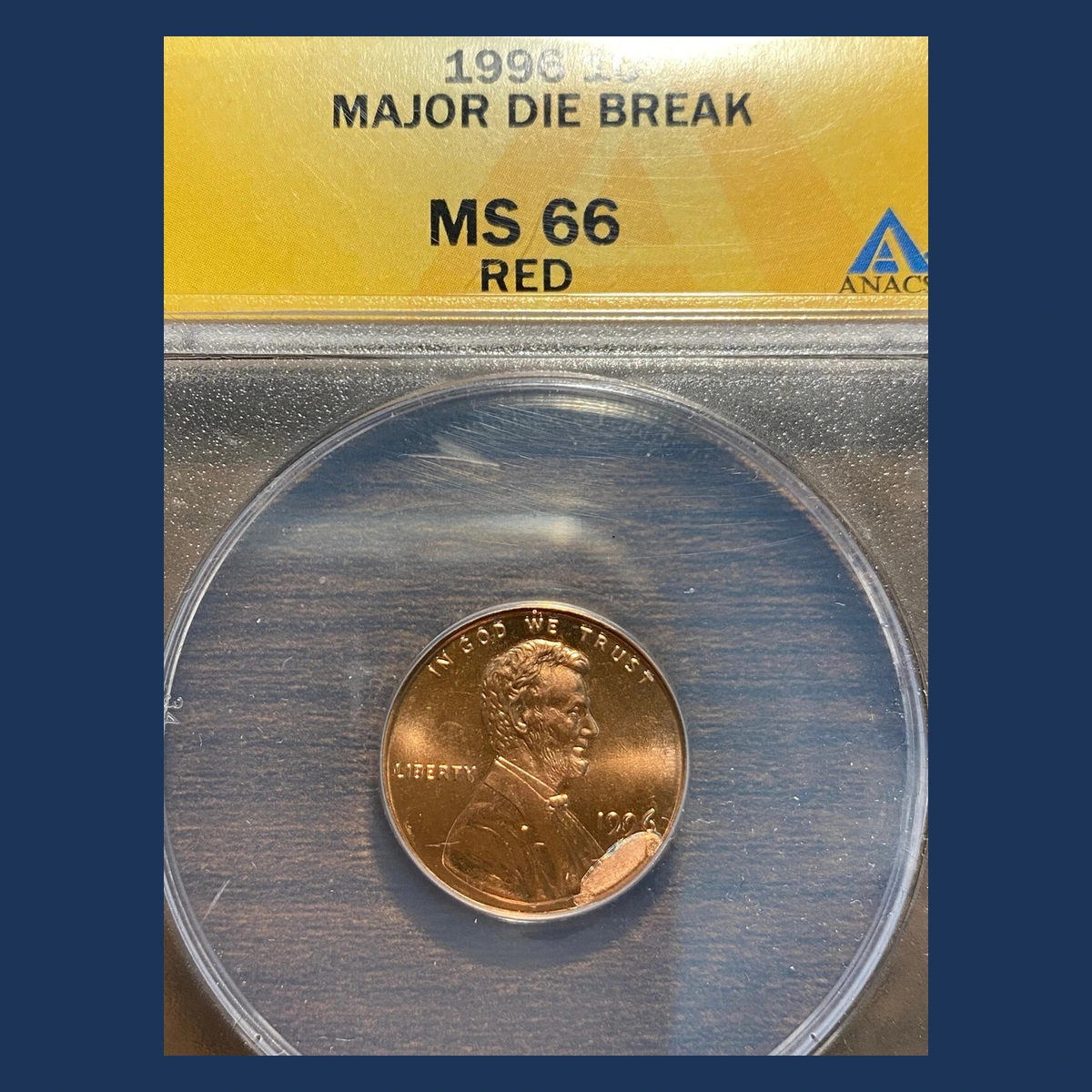
LIBERTY can seem to contain an extra I when a small bar rises between B and E. Collectors use the name BIE for that appearance.
The added shape comes from a small break in the die, the steel tool that stamps the coin. Metal fills the broken space during striking and becomes the raised bar.
The 1996 report identifies this location without establishing one particular mint for every example. The date and actual coin must stay with the close-up.
A deposit or a copper bubble can occupy the same gap. The shape alone still needs a surface check.
Estimated Value
For a clear small BIE feature, estimate $2–$25. A larger, attractive example with clean surrounding letters may support approximately $25–$75.
These ranges compare minor Lincoln cent tool breaks. They are not a recovered auction amount for a particular 1996 coin.
Buyers need to see original raised metal rather than dirt lodged between letters. A dramatic nickname cannot compensate for heavy wear or a feature that disappears when the photograph is viewed without extreme enlargement.
How to Identify
Find the B-to-E gap rather than a random lump somewhere in LIBERTY. A clear photograph should include the surrounding letters so the position is obvious.
Use a 10× magnifier and light from one side to establish that the bar rises from the surface. Do not scrape it to test its attachment.
Look for a split copper bubble or loose material that could imitate the feature. The normal cent has a smooth edge and weighs about 2.50 g at 19.05 mm.
A scale and calipers can check a safely accessible example. Original raised metal forming an I-like bar specifically between B and E is the identifying clue.
2. 1996 Lincoln Penny Struck Through Grease (Estimated Up to $200)
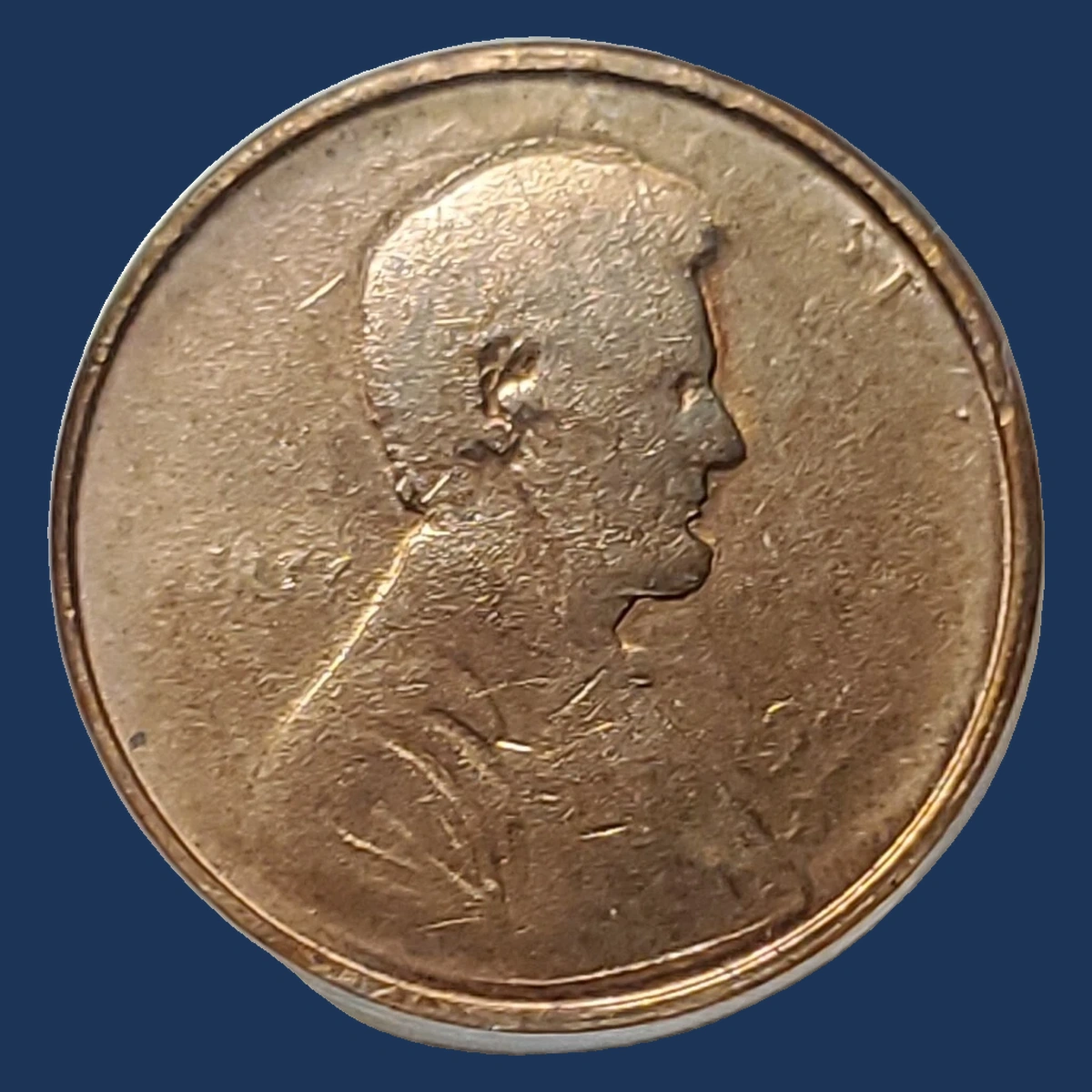
A stamping tool can become clogged with grease or other soft material. The blocked area then transfers less detail to the next blank.
Philadelphia and Denver 1996 examples are recorded. One Philadelphia coin was graded MS62 Red, while a Denver report describes an MS63 Red and Brown.
Those are unworn condition grades, with the color labels describing how much original copper-red surface remains. They do not locate the missing detail on each coin.
The two examples need separate photographs. Their weak areas should not be copied from a different date or assumed to affect the same lettering.
Estimated Value
Estimate $5–$200 for genuine grease-blocked details, depending on the area affected and the coin’s condition. Slightly weak letters generally belong near the lower end.
A 2021-D grease-struck cent sold for $84 in September 2025. That later Shield design is a comparison, not the price of either recorded 1996 example.
One Denver record appeared with another coin in a mixed group. The group’s other variety and its price should not be assigned to this penny.
How to Identify
Choose the affected area from the actual specimen, not from a generic list of letters that can disappear. Inspect the transition from clearer detail into weakness with a 10× magnifier.
Ordinary wear usually affects exposed high points too. A local blocked patch can remain beside sharper original design.
For an accessible penny, a scale and calipers should be compared with 2.50 g and 19.05 mm. Examine the smooth edge and both faces for grinding or corrosion.
Keep Philadelphia and Denver photographs separate, including the mintmark area. The useful first clue is local weakness within an otherwise better-preserved strike, rather than uniformly worn lettering.
3. 1996 Lincoln Penny FS-101 Doubled Die (Estimated Up to $250)
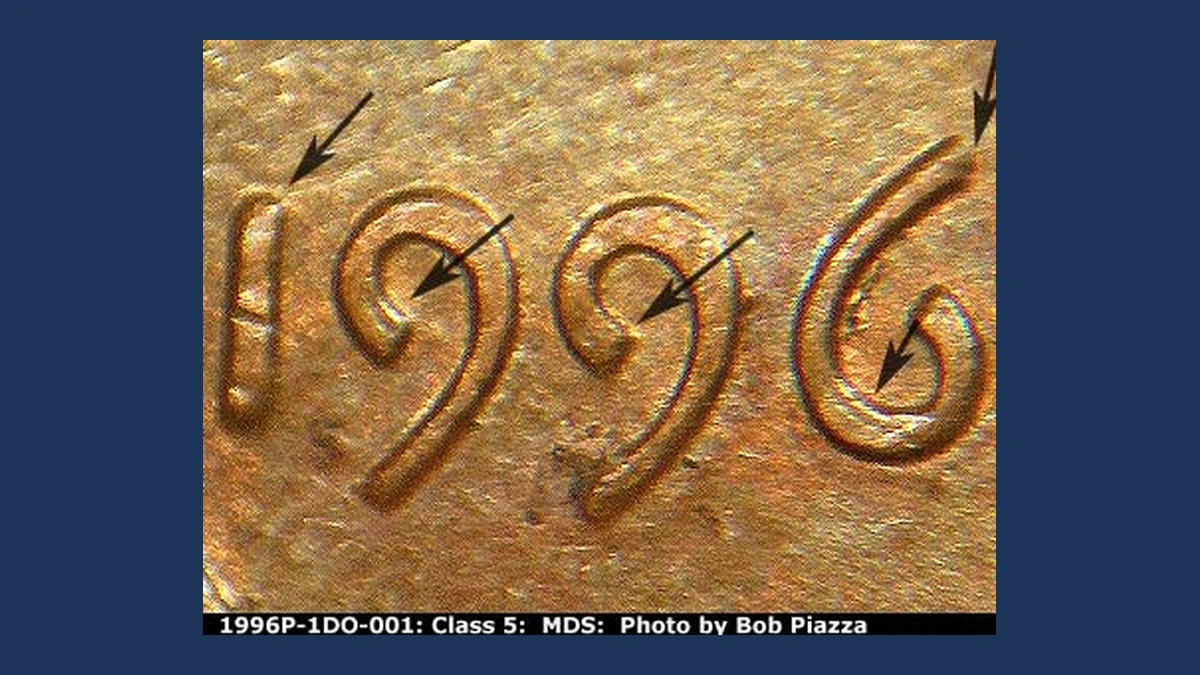
The 1996 FS-101 is a recognized front-side doubled-die variety. Its repeated detail comes from the stamping tool, not from a penny receiving two separate blows.
This variety belongs to Philadelphia circulation cents, normally without a mintmark. Color labels such as red or brown describe the surface rather than different errors.
Year guides direct attention to Lincoln’s eye and nearby front details. Those areas still need comparison with an identified FS-101 image before a coin receives that name.
A flat shelf beside a feature can come from movement during striking. General thickness by itself is also a weak match.
Estimated Value
A working estimate of $15–$250 covers identified FS-101 coins across ordinary collectible conditions. Clear detail and attractive original surfaces support higher values.
PCGS recognizes the 1996 FS-101, but the viewed page gives no auction record to quote. The range therefore uses comparable modest modern Lincoln doubled dies.
The variety name should be established before comparing grades or color. A seller’s claim that Lincoln looks doubled does not put an ordinary penny into this range.
How to Identify
Keep the full date and no-mintmark area in view before examining Lincoln’s face. The recognized FS-101 comparison is for the Philadelphia circulation coin.
Use a 10× magnifier beside an identified example’s photograph. Follow the actual doubled feature rather than expecting every letter or date digit to repeat.
A normal cent is 2.50 g and 19.05 mm with a smooth edge. Check those with a scale and calipers when safely accessible.
Tilt the light to separate a raised design outline from a reflection, flat shelf, or split copper skin. The important confirmation is the same shaped feature in the same location as FS-101, not a general impression of thick lettering.
4. 1996 Lincoln Penny Reported Clipped Blank (Estimated Up to $250)
A clipped blank starts with part of its metal missing. The remaining piece then receives Lincoln and the Memorial during the normal striking process.
This is a reported 1996 category that needs an identified example before a particular mint or clip shape is assigned. It should not be illustrated by an unrelated coin merely sharing the date.
A curved gap can result from overlapping blank punches. A straight gap can begin at the edge of a metal strip.
Later cutting can imitate either outline. The surrounding struck detail must support a gap that already existed in the blank.
Estimated Value
After the error is confirmed, estimate $15–$250 for a 1996 clip across ordinary collectible sizes and conditions. This is a conditional comparison range, not a documented 1996 sale.
A 2021 cent with a five-percent straight clip sold for $114 in September 2025. Its newer Shield design and established clip differ from this year’s unresolved report.
A missing piece alone does not qualify. Filing, cutting, or corrosion after striking should not be priced as a prepared-blank error.
How to Identify
Use a scale before estimating the size of the loss. A genuine missing section can lower the weight from the normal 2.50 g, but a later cut does too.
Calipers should compare an intact span with 19.05 mm. Measuring only across the gap would understate the blank’s original diameter.
With a 10× magnifier, examine both ends of the opening and the surviving smooth edge. Search for tool cuts and for original design formed beside the gap.
The opposite rim may be weak, though that clue is not always obvious. A natural gap integrated with the original struck rim provides the strongest first check.
5. 1996 Lincoln Penny Broadstrike (Estimated Up to $350)
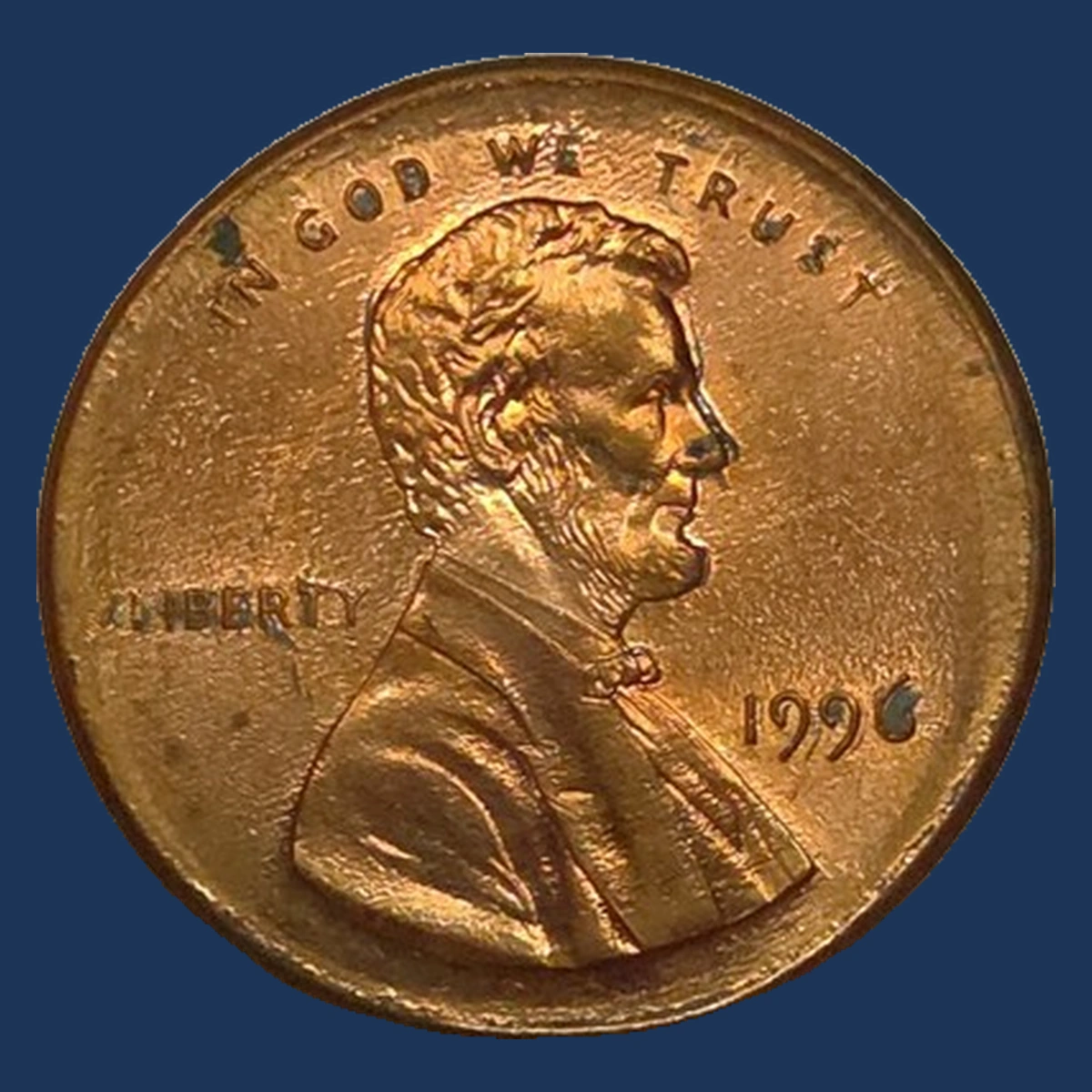
An oversized border can surround a complete portrait and Memorial. That is the usual appearance of a broadstrike, made when the blank spreads without normal restraint.
The collar is the metal ring that normally limits the edge. Without its support, pressure can push the blank farther outward.
One 1996 broadstrike was graded NGC MS67 Red, meaning unworn with very few marks and original copper-red color. It was sold beside a separate off-center penny.
The broadstruck coin retains the intended design. Its partner’s plain crescent and incomplete design do not belong to this example.
Estimated Value
The two-coin lot sold for $204 in December 2025. It contained the MS67 Red broadstrike and an MS68 Red off-center cent.
For the broadstrike alone, estimate $20–$350 using comparable modern cents. The group’s total is not its individual sale price, nor should it simply be divided in half.
Expansion, clear lettering, and condition guide the separate estimate. A slightly wider coin with later damage is not equivalent to the high-grade example in that lot.
How to Identify
Follow the outside words around both faces. They should remain present rather than ending beyond a blank crescent.
Use calipers on an accessible coin to compare several widths with the normal 19.05 mm. A scale reading near 2.50 g supports a blank that kept its metal while spreading.
The smooth edge can become uneven or thinner. Check it with a 10× magnifier for marks from later squeezing.
Look especially at the high points and letters for crushing. A penny flattened afterward can become wider without being broadstruck.
Complete original designs inside natural outward spread distinguish the broadstrike from its separate off-center companion.
6. 1996-D Lincoln Penny Missing Copper Plating (Estimated Up to $500)
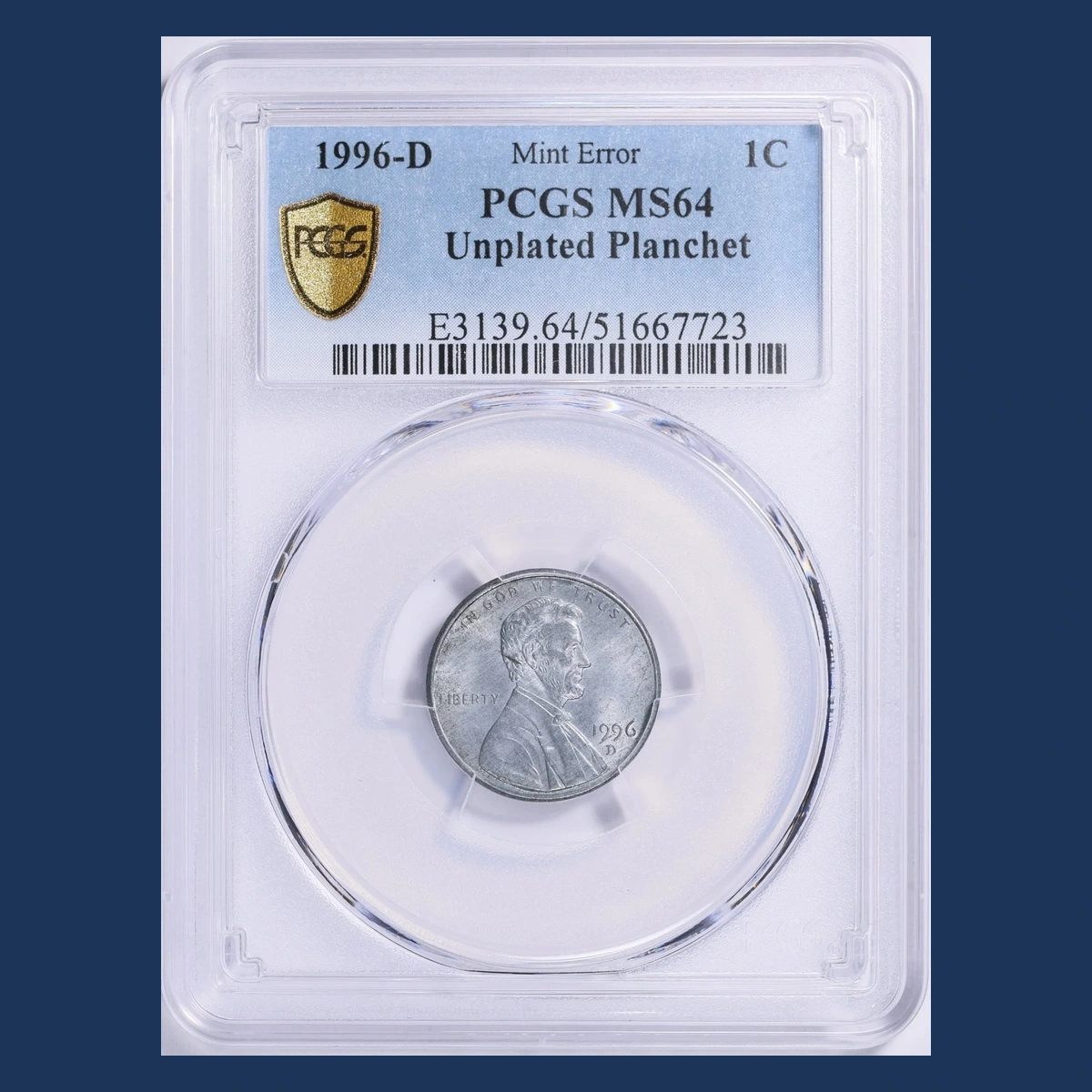
Without its copper skin, a zinc penny looks gray. A certified 1996-D example was struck on an unplated blank, leaving the normal outer coating absent.
A separate market report describes missing copper on parts of both faces. That partial example still needs its cause established and should not inherit the other coin’s certification.
The difference matters. No copper coating before striking is not the same as copper removed later by chemicals or corrosion.
The remaining surface can help show the timing. Normal cents also expose gray zinc when their thin copper skin is damaged.
Estimated Value
The certified 1996-D unplated example sold for $129.25 in November 2014. PCGS graded it MS64, an unworn coin with some marks.
Estimate $75–$500 for confirmed substantial plating omissions. A smaller original partial omission can fit about $20–$200, after its cause is identified.
The partial-plating listing is not a completed sale used here. Chemical stripping is also outside these ranges, regardless of how much gray metal it exposes or how strongly the seller describes it.
How to Identify
Inspect the boundary of any copper that remains using a 10× magnifier. Determine whether the design was struck across that original surface or the coating was damaged later.
Check both faces and the smooth edge for rough corrosion, scraping, or chemical attack. A gray appearance alone cannot settle the cause.
A normal plated cent is 2.50 g and 19.05 mm. Record weight with a scale and width with calipers when safely accessible, allowing for a small loss of coating weight.
Keep the certified fully unplated coin separate from the unconfirmed partial example. The necessary feature is original struck zinc exposed because copper was absent during manufacture.
7. 1996 Lincoln Penny Off-Center Strike (Estimated Up to $500)
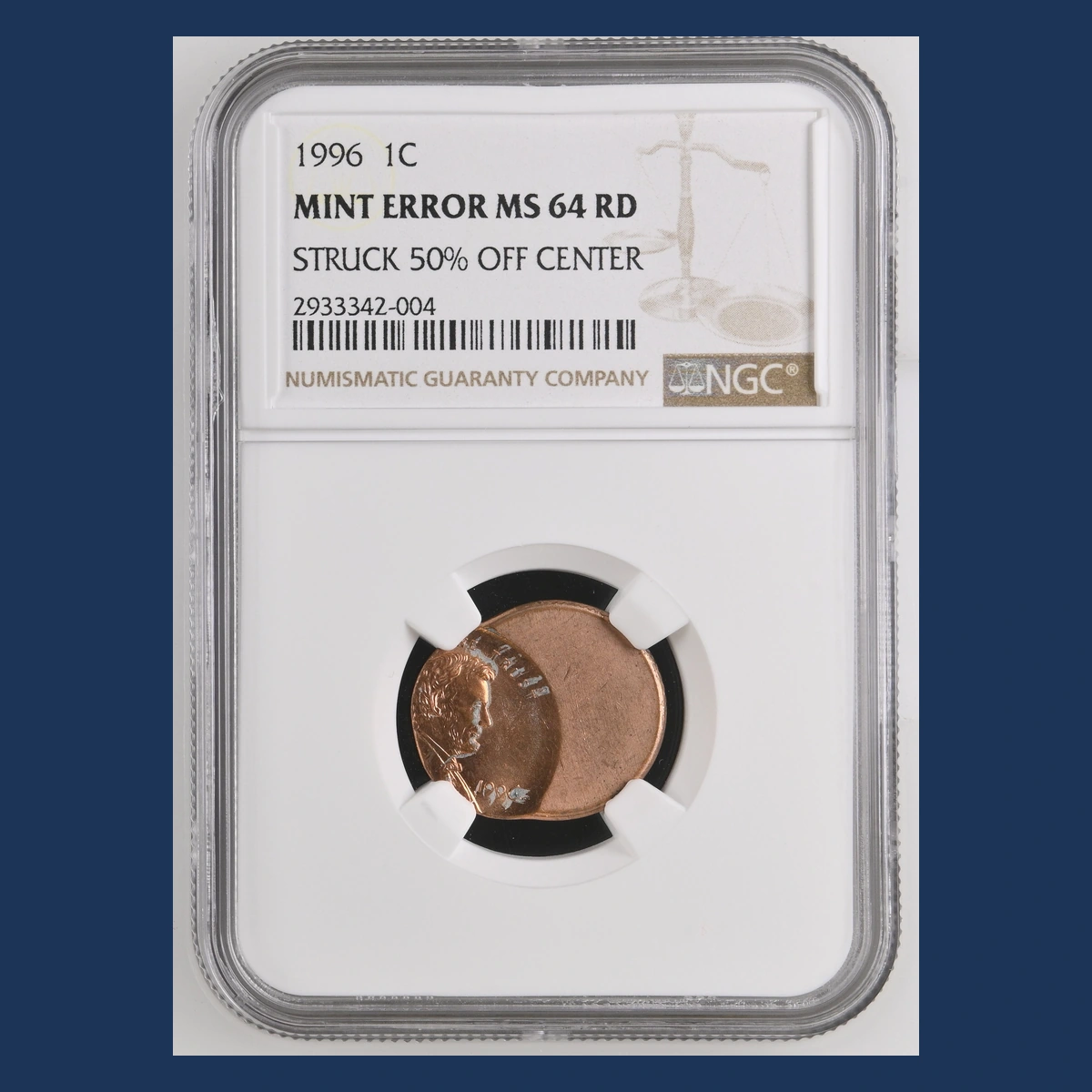
One well-preserved 1996 cent was struck about 35% off center. The misplaced blank left an empty crescent while parts of the intended designs fell outside its metal.
NGC graded that coin MS68 Red, meaning exceptionally well preserved, unworn, and copper-red. It was sold in a lot with a separate broadstrike.
The two shapes need different explanations. A broadstrike keeps the intended design, while an off-center strike loses some of it.
The stated percentage does not establish one clock direction. Both faces and the visible date should be examined on the actual piece.
Estimated Value
Estimate $20–$100 for modest, clearly dated offsets and roughly $100–$500 for stronger attractive examples. Preservation and a readable year help determine the comparison.
The 35% 1996 coin appeared in the $204 two-coin lot from December 2025. That amount also bought the broadstrike, so it is not an individual off-center price.
The estimate remains separate from the combined sale. A dramatic crescent with heavy later damage may appeal less than a cleaner, smaller shift.
How to Identify
Find the 1996 date, then trace the plain crescent all the way around its boundary. Keep the whole outline in the photograph.
Check the back for incomplete design that fits the same misplaced blank. If only one face moved, a shifted tool offers a different explanation.
Use a 10× magnifier to search the plain area for grinding. Examine the normally smooth edge for cuts or added damage.
An accessible example can be weighed and measured with a scale and calipers against the normal 2.50-g, 19.05-mm blank. Its final outline may have expanded.
An untouched crescent beside matching missing design on both faces is the direct off-center feature.
8. 1996 Lincoln Penny Double Strike (Estimated Up to $750)
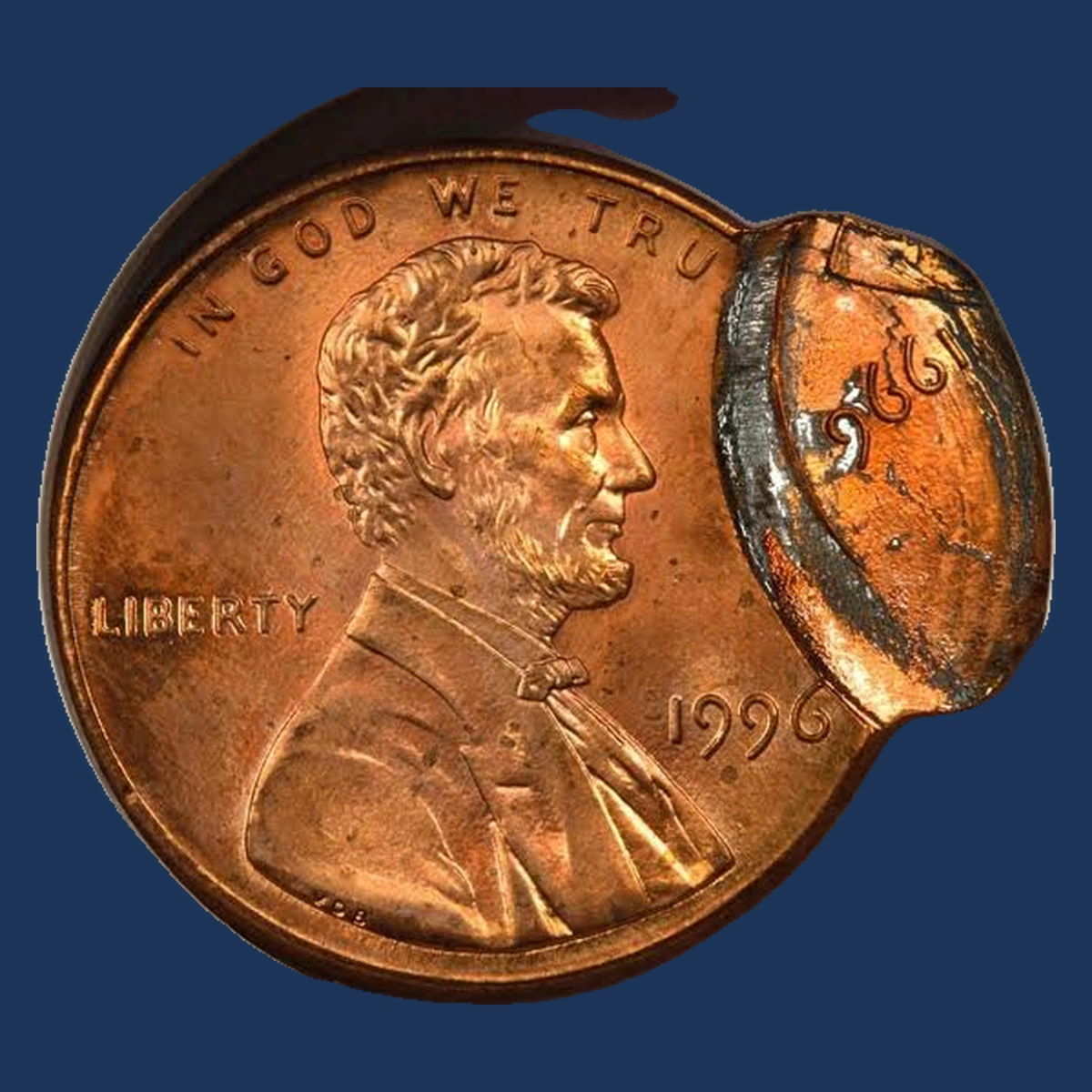
Two sets of design can record a coin’s movement between strikes. The second blow lands in a different position after the first coin fails to leave the press.
A 1996 catalog example has both strikes off center: the first about 50%, the second about 95%. Its first impression lies toward roughly 7:30 on the clock face.
Other examples have different placements. Their movements should be read from the surviving designs rather than copied from this one coin.
A doubled die is different. It repeats a small feature in one tool instead of delivering separate blows to a moving coin.
Estimated Value
Allow an estimated $75–$750 for genuine dated double strikes with recognizable impressions. Clarity, condition, and the amount of surviving date influence the range.
A 1979 cent with its second strike off center sold for $204 in September 2023. It is a related example in older copper-alloy metal, not a 1996 transaction.
The cataloged 50% and 95% combination supplies a specific shape to study, but no completed price is assigned here. Percentages alone do not set value.
How to Identify
Identify separate design elements that belong to each blow. A portrait edge, lettering, or date fragment can show movement more clearly than a general doubled appearance.
Use a 10× magnifier to trace the overlaps and compare both faces. The impressions should fit one piece of metal moving through a believable sequence.
With safe access, use a scale against 2.50 g and calipers against the normal 19.05-mm starting blank. Its final dimensions can differ after repeated striking.
Inspect the smooth edge for later squeezing and tools. Two genuine struck designs in distinct positions provide the useful confirmation, rather than flat shelves along one set of letters.
9. 1996 Lincoln Penny Die Caps and Expanded Brockage (Estimated Up to $1,000)
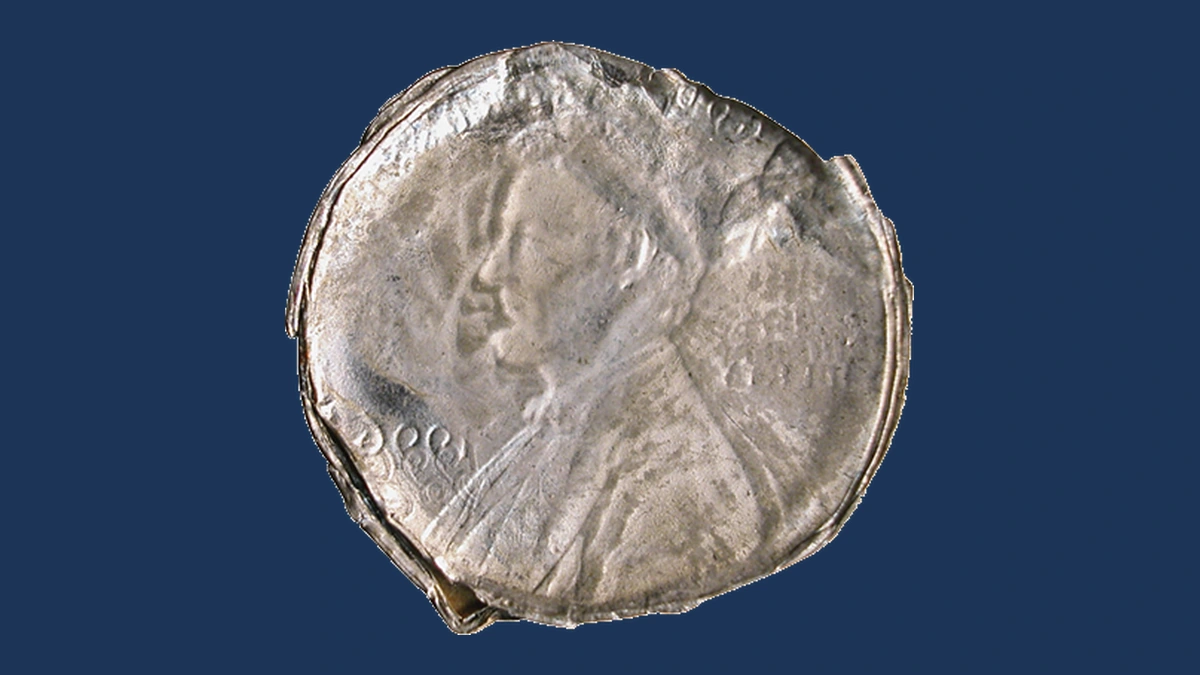
A penny can stick to a stamping tool and wrap around it as more blanks are struck. The trapped piece becomes a die cap, sometimes with a cup-shaped wall.
1996 records include front-tool and back-tool caps. One front cap is unusually flat and stretched, with Memorial detail still visible.
A separate deep cap carries an enlarged backward impression at its bottom. That sunken mirror image is called a brockage and belongs to the same compound error.
The shapes are not interchangeable. A shallow cap need not match the deep example, and the combination does not create two separate coins.
Estimated Value
The flat front cap sold for $126.50 in June 2000. A different deep cap with expanded brockage brought $115 in the same auction.
For current comparisons, estimate $150–$1,000 across genuine 1996 caps with different depth, condition, and added impressions. A 2000 cent die cap’s $312 sale in June 2025 offers a more recent related result.
The combination should be valued as one piece. Do not add a full brockage estimate to a full cap estimate.
How to Identify
Keep the original shape intact. A flattened wall loses much of the information needed to identify a cap.
View the walls from the side with a 10× magnifier, then inspect the design at the bottom. The deep compound example has a backward expanded impression, unlike an ordinary raised portrait.
The starting cent is 2.50 g and 19.05 mm with a smooth edge. A scale and calipers can document an accessible piece without pressing or straightening its walls.
Compare the surviving face with the stated front-tool or back-tool identity where known. Original metal wrapped around the tool, together with its surviving impressions, provides the clearest cap evidence.
10. 1996 Lincoln Penny on a Dime Blank (Estimated Up to $1,500)
A silver-gray 1996 cent was struck on the blank intended for a clad dime. Its metal differs from the copper-plated zinc normally used for pennies.
The recorded example weighs about 2.3 g and was graded NGC MS67, meaning unworn with very few marks. Most of its design remains visible.
The tops of STATES OF AMERICA sit close to the edge. This shows why a smaller blank should not always be described as losing most of the cent design.
The blank had no earlier dime design. That separates it from the double-denomination coins with Roosevelt still showing underneath Lincoln.
Estimated Value
The MS67 dime-blank example sold for $350.75 in January 2008. A different-year 1981-D cent on a clad dime blank brought $372 in September 2025.
Estimate $250–$1,500 for an authenticated 1996 example, depending on condition and strike clarity. The newer result is a comparison, not a resale of the same coin.
A surviving date and readable lettering support identification. A normal penny stripped to gray zinc does not match the recorded clad-metal error.
How to Identify
Compare the weight with a dime’s normal 2.268 g; the auction rounded this example to 2.3 g. A normal penny instead weighs 2.50 g.
Use calipers on an accessible coin to compare the dime blank’s 17.9-mm starting size with the cent’s 19.05 mm. Allow for spreading under the cent tools.
Inspect the edge’s layered metal using a 10× magnifier. The normal cent edge is smooth, and a dime blank does not need grooves already present before striking.
Look at the lettering crowded against the edge, then check for any earlier dime design. Genuine cent detail on identified clad dime metal, without an underlying dime image, distinguishes this blank error.
11. 1996 Lincoln Penny on a Small 2.07-Gram Blank (Estimated Up to $2,000)
Not every small, light 1996 cent is made from dime metal. Mike Diamond described one weighing 2.07 g on a smaller copper-plated zinc blank.
Its foreign purpose was proposed, but no country was established. Naming Malaysia or Singapore would go beyond the identified metal and measurements.
The blank also has an edge appearance associated with an early preparation stage. That appearance does not prove it never passed through a rim-forming machine.
The useful distinction is physical: a small copper-coated zinc piece carrying the cent design. It differs from the silver-gray layered dime blank described above.
Estimated Value
For an authenticated unusual small blank of this kind, use an estimated $300–$2,000 range. The actual metal, size, condition, and identification would guide an individual price.
No sale of Diamond’s 2.07-g example is claimed here. The estimate compares other unusual-blank Lincoln errors while preserving the unknown intended country.
A foreign name should not create a premium before it is established. A normal cent made lighter by chemicals or filing is also outside this error range.
How to Identify
Weigh first, then investigate the cause of the low result. The reported example is 2.07 g rather than the normal cent’s 2.50 g.
Calipers can compare its smaller outline with the usual 19.05 mm, but no exact reduced diameter is assigned here. Inspect the normally smooth edge and copper-coated zinc construction with a 10× magnifier.
Look for filing or chemical damage that could have removed metal from an ordinary blank. A rim’s shape alone cannot prove every step in its preparation.
A professional metal examination should preserve the coin and avoid unsupported country labels. The decisive match is an original cent strike on the measured small plated-zinc blank, not an invented foreign denomination.
12. 1996 Lincoln Penny Struck Over a Finished Dime (Estimated Up to $3,500)
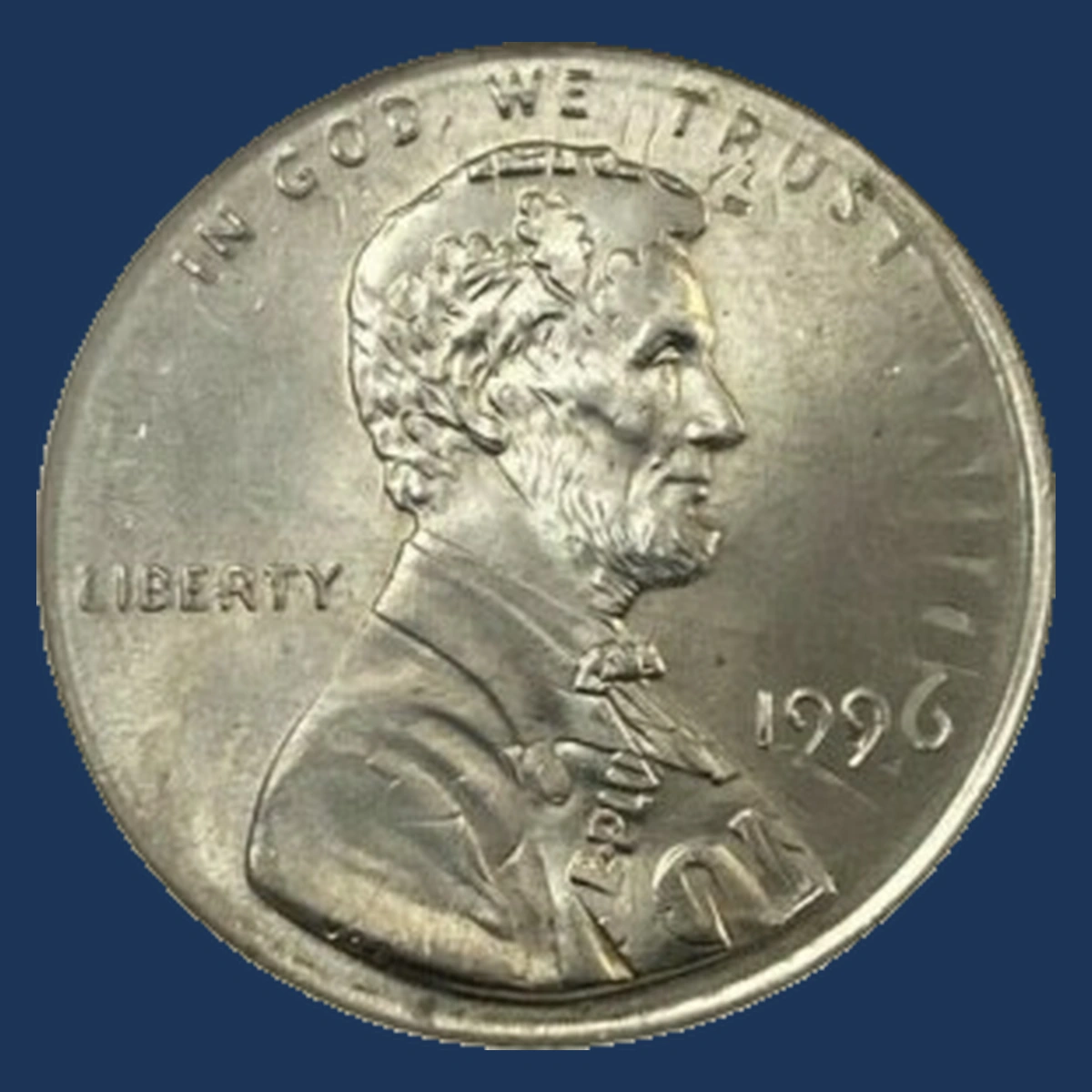
Roosevelt can remain visible beneath Lincoln after a finished dime is struck again with cent tools. This creates a double-denomination error, combining two coin designs on one piece.
Examples include a 1996 cent over a 1996-P dime, a 1996-D cent over a 1995-D dime, and a Philadelphia cent over a 1995-P dime.
Those dates and mints belong to separate specimens. One same-year example places Roosevelt’s ear over Lincoln’s cheek, while the Denver cross-year coin has another orientation.
The earlier dime design is the key difference from a cent struck on an unused dime blank.
Estimated Value
The 1996-over-1996-P example sold for $747.50 in April 2011. The 1996-D cent over a 1995-D dime brought $2,760 in August 2009.
Estimate $750–$3,500 across authenticated combinations, depending on the dates, visible overlap, and condition. These historical sales concern different coins.
A 2001 cent over a 2001-P dime sold for $1,320 in September 2025, providing a more recent comparison. The two face values do not create two separate prices to add together.
How to Identify
Find a real dime feature beneath the cent design, such as Roosevelt’s ear or part of the torch. Inspect the overlap with a 10× magnifier on both faces.
Read each surviving date and mintmark separately. The 1995-P and 1995-D underlying coins are not the same as the recorded 1996-P dime.
A clad dime normally begins at 2.268 g and about 17.9 mm; check an accessible piece with a scale and calipers. Cent tools can expand the final outline.
Unlike the smooth edge of a normal 2.50-g, 19.05-mm cent, earlier dime grooves may survive. Recognizable original designs from both denominations are the defining clue, with their actual dates kept separate.
Conclusion
The two dates on a dime overstrike tell a story that a plain gray penny cannot. Other 1996 errors reveal themselves through a small LIBERTY bar, a displaced design, or the walls of a die cap.
Estimated values range from $2–$3,500. Match the actual feature before comparing the price, and keep two-coin lot totals separate from single-coin estimates.
Careful photographs and untouched surfaces preserve the details needed for that comparison.