1809 Half Dollar Error List with Pictures

Seven stars mark the path of a raised crack on an 1809 half dollar sold for $4,675 in Sheridan Downey’s Mail Bid Sale 45. Other clues sit above Liberty’s cap or behind the eagle’s head.
This guide to 1809 half dollar errors covers five categories with estimated values from $1,500 to $5,500. The examples include repeated strikes and problems in the metal itself.
Read on to compare their shapes, edges, and auction histories without confusing one coin with another.
1. 1809 Capped Bust Half Dollar Double and Flip-Over Strike Errors (Estimated Up to $3,500)
Small sunken triangles form an arc above Liberty’s cap on one cataloged 1809 half dollar. Downey’s Mail Bid Sale 52 describes Henry Hilgard’s explanation that a second strike produced them.
Another coin shows parallel, shield-like lines beneath the chin. Its discoverer identified it as O.105 and reported expert agreement in January 2006 after an in-person examination.
That second coin was described as a flip-over double strike: it turned over between strikes. The report does not supply a grading-service certificate.
These are separate examples. The decorative III marks on the first coin’s lettered edge do not alone prove a second strike.
Estimated Value
Estimate $1,500–$3,500 for an authenticated circulated example with clear evidence of repeated striking. Neither of the two descriptions gives a sale price for its specific coin.
An 1809 struck fifteen percent off-center sold for $3,300 total in Downey’s Mail Bid Sale 57. That major mint error offers a same-year comparison.
It is a different error, not a double-strike sale. The estimate also depends on readable overlapping designs and the coin’s actual condition.
How to Identify
For the cap example, trace the arc from above star seven toward star eight. Look for an organized earlier impression rather than unrelated dents.
On the separate flip-over coin, compare the lines beneath the chin with the shield on the back. The discoverer’s final update describes the examination supporting that reading.
Use a 10× magnifier to separate impressions from scratches. The normal coin has a lettered edge, weighs 13.48 grams before wear, and measures about 32.5 millimeters with a scale and calipers.
Keep the two examples separate. Matching the extra marks to actual design shapes is the decisive starting check for either claim.
2. 1809 Capped Bust Half Dollar Fifteen-Percent Off-Center Error (Estimated Up to $3,800)
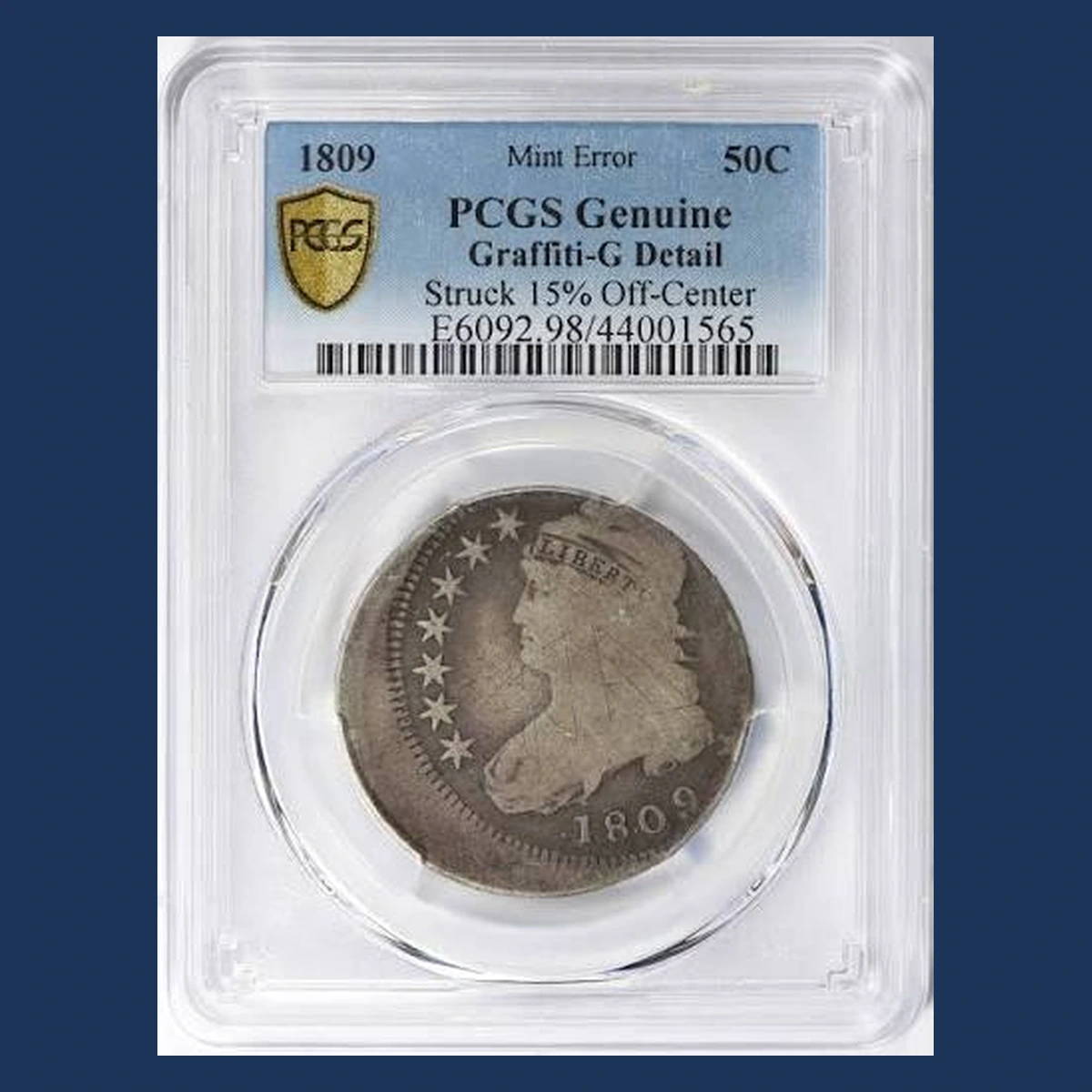
A crescent of unstamped metal sits opposite missing design on the off-center 1809 in Downey’s Mail Bid Sale 57. Its design shifted about fifteen percent beyond the blank’s edge.
PCGS labeled the coin Genuine with Good Details. That means it has heavy wear and a separate condition problem, described here as scratches.
The scratches happened after striking. They do not explain the blank crescent or the partly missing design.
The catalog mentions another fifteen-percent example associated with Hilgard and Link. Matching percentages do not make them the same coin, so their grades and identifying details should remain separate.
Estimated Value
Mail Bid Sale 57 recorded $3,300 total for this coin: a $3,000 winning bid plus the buyer’s fee. It had previously brought $2,644 at GreatCollections in April 2022.
Estimate $2,500–$3,800 for a comparable fifteen-percent off-center example with Good Details and scratches. Both results concern the same coin.
An example without damage would need its own comparison. The estimate keeps the striking error separate from the later surface problems.
How to Identify
Keep the whole coin in view, including the blank crescent. Check the opposite edge for missing design on both faces.
One uneven rim is not enough. The blank area and design loss must fit the same shift.
Inspect the edge lettering and unstamped margin with a 10× magnifier for later grinding or cutting. The scratches can help match the auctioned coin, but they are not mint errors.
A scale checks against the original 13.48 grams, allowing for heavy wear. Calipers record the outline compared with the usual 32.5-millimeter diameter.
Match the surviving date, blank crescent, and opposite missing design for the most direct confirmation of this example.
3. 1809 Capped Bust Half Dollar Mint-Made Drift Mark Error (Estimated Up to $4,000)
A short mark sits behind the eagle’s head on the O.103 example in Downey’s Mail Bid Sale 45. The catalog calls it a mint-made drift mark linked to limitations in early metal refining.
In simple terms, the mark reflects an irregularity in the metal used for the coin. It was not described as a later blow or scratch.
The auctioned coin was graded AU58 with CAC approval. That particular example supplies the comparison.
Color alone is not enough. A dark streak from toning or a shallow scrape can look similar, so the mark’s boundary and surrounding metal also need examination.
Estimated Value
The PCGS AU58 CAC O.103 brought $3,300 total in Mail Bid Sale 45, including the buyer’s fee on a $3,000 bid. AU58 means only slight circulation wear remained.
Estimate $2,800–$4,000 for a similarly preserved example with this described mark. The price covers the attractive coin as a whole.
It does not show a separate value for the flaw. A larger or less appealing metal defect could affect demand differently.
How to Identify
Find the eagle’s head and the short mark immediately behind it. Take a close-up that includes enough surrounding design to locate it on the full coin.
With a 10× magnifier, examine texture rather than darkness alone. A scratch may expose bright metal and leave a sharp groove, while toning can change color without changing the surface.
Check the 1809 date and lettered edge. Normal measurements are about 32.5 millimeters and 13.48 grams before wear, using calipers and a scale.
The cataloged AU58 is the comparison for this particular claim. Matching the mark’s position, shape, and surrounding surface gives the most useful confirmation.
4. 1809 Capped Bust Half Dollar Loose-Die Clash Error (Estimated Up to $5,000)
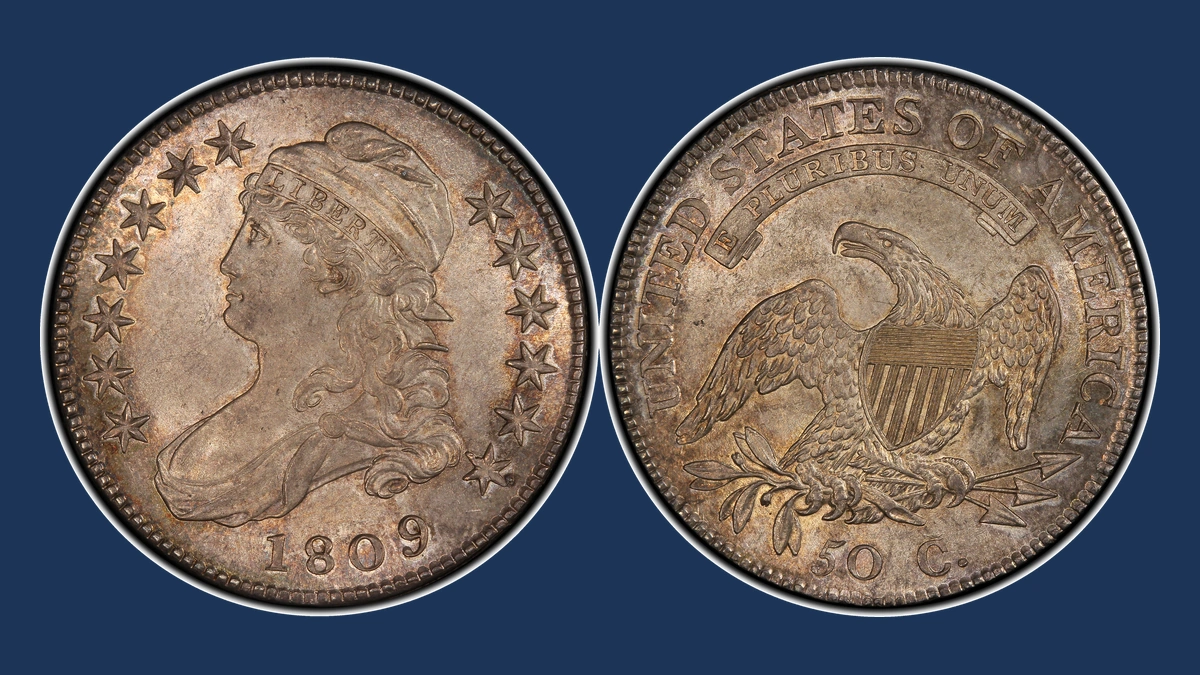
Sunken segments appear on the back of the early O.102 example described in Downey’s catalog. The catalog attributes them to a clash involving a loose die, the steel tool used to stamp coins.
These marks are depressed, not raised. They need comparison with this specific example rather than a general picture of raised clash lines.
The reference coin has XXX decoration on its lettered edge. That is a separate feature from the unusual back marks.
A later scratch or an impression made by squeezing coins together can also leave a hollow mark. The segment arrangement helps distinguish the reported pattern.
Estimated Value
The PCGS AU55 O.102 with XXX edge sold for $4,419 total in Mail Bid Sale 45. Its winning bid was $4,017 before the buyer’s fee.
Estimate $3,500–$5,000 for a comparable coin with that edge variety, light wear, and described clash marks. The unusual edge is an important part of the comparison.
The result does not isolate the clash’s value. An ordinary-edge coin with an unexplained depression should not automatically receive the same price.
How to Identify
Photograph the XXX decoration as part of the full edge lettering. Check the 1809 date and compare both faces with the O.102 catalog example.
A digital scale and calipers provide checks near the original 13.48 grams and 32.5 millimeters, allowing for wear. These measurements support identity, not the cause of the marks.
Use low side lighting and a 10× magnifier to study the sunken back segments. Look for their arrangement rather than expecting raised lines from another kind of clash.
Sharp scraping or marks from pressed-together coins need a different explanation. Matching the segment pattern to the documented O.102 is the useful shortcut, with the edge identified separately.
5. 1809 Capped Bust Half Dollar Stars One Through Seven Die Crack Error (Estimated Up to $5,500)
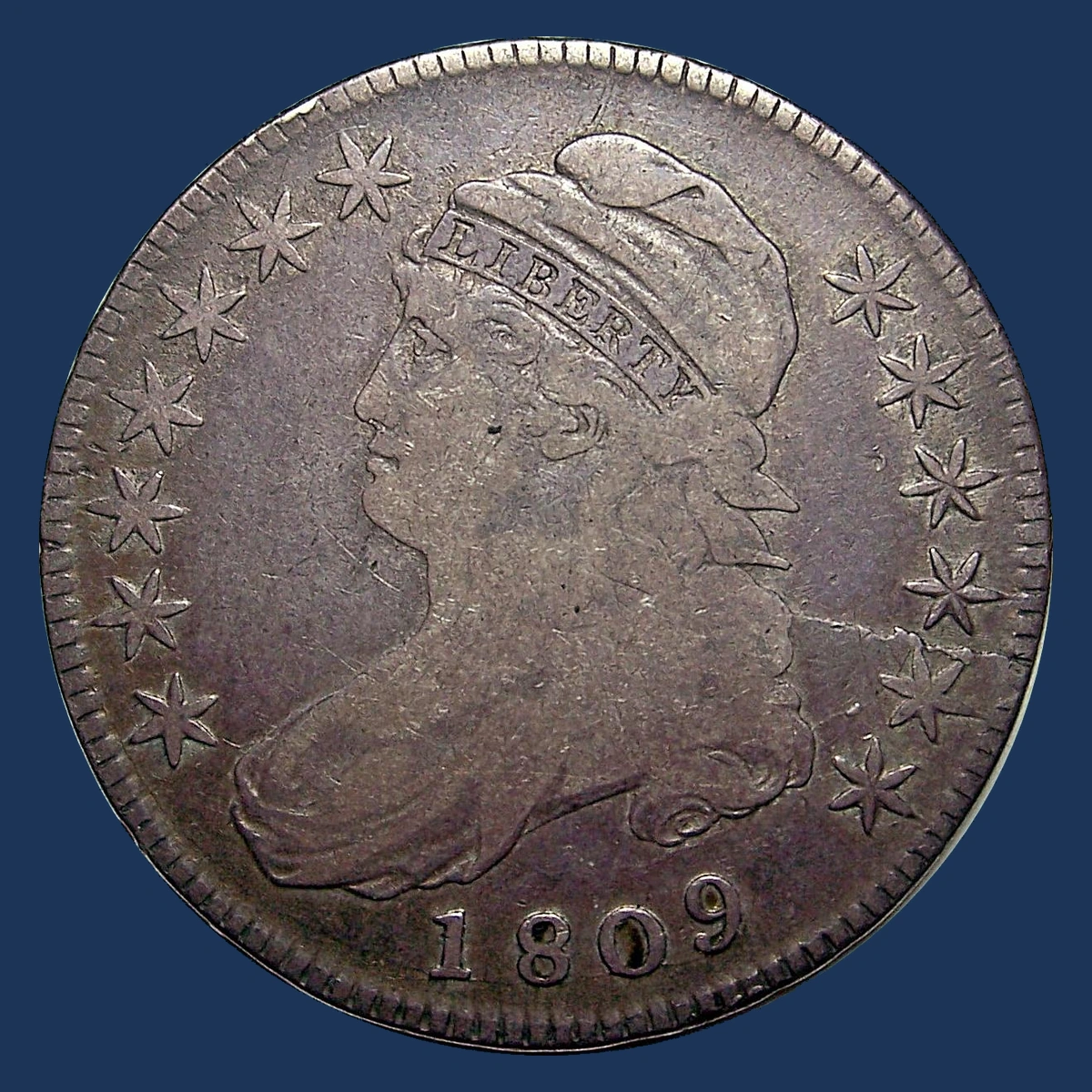
A raised line connects stars one through seven on the left of Liberty’s portrait. The O.106 in Downey’s Mail Bid Sale 45 shows this clear route.
The front stamping tool had cracked. Silver entered the opening when the coin was struck and formed a ridge joining those stars.
A scratch made later would cut into the surface instead. Its raised edges, if present, would sit beside that cut.
The catalog also describes weak detail on the back. That is separate from the front crack, so a soft eagle does not prove or disprove the raised line across the stars.
Estimated Value
The PCGS MS62 O.106 brought $4,675 total in Mail Bid Sale 45, including the fee on a $4,250 winning bid. MS62 describes an unworn coin that can show noticeable surface marks.
An estimated $4,000–$5,500 applies to similarly preserved examples with the matching crack. Attractive surfaces remain important.
A heavily worn coin needs a lower-grade comparison. Sharing the star-to-star line does not give it the same value as the auctioned MS62.
How to Identify
Count the stars from the lower left upward. Follow the line through the first seven with a 10× magnifier, keeping Liberty and the date in the picture.
Change the lamp’s direction. A ridge should remain above the surrounding field, while a scratch usually shows a cut center with irregular edges.
Compare the full front with the O.106 reference. An isolated bright line between two stars cannot establish the whole pattern.
The normal coin has a lettered edge and measures about 32.5 millimeters with calipers. A scale checks the original 13.48-gram weight, allowing for wear; the matching raised route through all seven stars is the key identification check.
Conclusion
The estimated ranges run from $1,500 to $5,500 for these specific 1809 examples and conditions. Each clue needs its own comparison: extra impressions, a blank crescent, a short metal flaw, sunken clash marks, or a raised star-linked crack.
Keep the lettered-edge varieties separate too. The quoted auction totals include the stated buyer’s fee, and their prices cover complete coins rather than an error feature alone.