1814 Half Dollar Error List with Pictures

An 1814 half with one missing leaf sold for $8,812.50 in August 2016. NGC graded it MS62, a grade with no circulation wear.
These 1814 half dollar errors and major varieties have estimated values from $150 to $10,000. The clues include repeated edge words, a hidden 3, and border teeth crossing Liberty’s portrait.
Each tells a different story. Read on to see where these features appear and how to separate a genuine Mint-made mark from later damage.
1. 1814 Capped Bust Half Dollar Repeated Edge Lettering (Estimated Up to $1,000 for Circulated Examples)
Words around the edge were added before an 1814 half received its front and back designs. Repeated edge letters come from another step than a doubled portrait.
A collector reported an 1814 with doubled edge lettering and a strike about five percent off center. The account does not say which letters repeat or how they overlap.
A clear second letter sequence is more useful than one crowded join. Some overlap can occur where the normal edge inscription meets.
The off-center design belongs to the same reported coin. It does not prove that the edge went through the lettering machine twice.
Estimated Value
Estimate $150–$1,000 for a circulated example with a readable second edge inscription. Clear letters and attractive surfaces can support the upper part of that range.
The collector did not report a sale price. A different-year comparison is an 1834 doubled-edge half that sold for $220 in July 2026.
ANACS labeled that coin Fine Details because of cleaning. A genuine extra face-strike error may increase an 1814’s appeal, but both features belong to one whole coin.
How to Identify
Read all the way around the edge, taking overlapping photos as you turn the coin. The normal words are FIFTY CENTS OR HALF A DOLLAR.
Use a 10× magnifier to look for whole repeated letters. One doubled-looking stroke or a crowded join between the normal words is not enough.
Flattening and later engraving can confuse the letters. Compare their shapes and depth with the surrounding edge surface.
The collector’s account concerns a Philadelphia 1814 with no mintmark. A scale and calipers can compare its weight and size with the original 13.48 grams and about 32.5 millimeters.
A second readable sequence of letters is the strongest starting clue.
2. 1814 Capped Bust Half Dollar Reverse Planchet Flaw (Estimated Up to $2,500)
A rough patch runs from the eagle’s body and left-wing junction toward its beak on one 1814/3 half. The surrounding design was struck around that flawed metal.
PCGS graded the coin AU55, meaning only slight wear, and identified a reverse planchet flaw. A planchet is the metal blank used to make a coin.
Sheridan Downey’s catalog describes the roughness as a problem in that blank. It is not described as corrosion that formed later.
The report does not establish a peeling layer. A rough area alone should not be called lamination, which involves metal separating along a weak layer.
Estimated Value
Mail Bid Sale 47, lot 32, estimated this AU55 coin at $1,500–$2,500. It did not sell.
Keep that range as an estimate for a comparable overdate with the documented flaw. The upper figure is not a completed transaction.
The 1814/3 variety and limited wear already make this a valuable coin. Original surfaces and the rough patch’s appearance should be judged together, rather than adding a fixed amount just because the flaw began at the Mint.
How to Identify
Start with the eagle’s body where it meets the left wing, then follow the rough area toward the beak. Compare it with the full photograph of the certified AU55 coin.
Use a 10× magnifier and light from the side to see how the design crosses the texture. Dark toning alone does not show a blank flaw.
Corrosion may leave pits, while later tools can leave cuts or disturbed metal. Keep the overdate visible in photographs so the rough patch stays linked to the correct coin.
The original standard was 13.48 grams and about 32.5 millimeters. Check with a scale and calipers, and inspect the lettered edge for unrelated damage.
The first comparison is the cataloged rough patch running from the wing junction toward the beak.
3. 1814 Capped Bust Half Dollar Strong Die Clash Traces (Estimated Up to $3,000 in Circulated Grades)
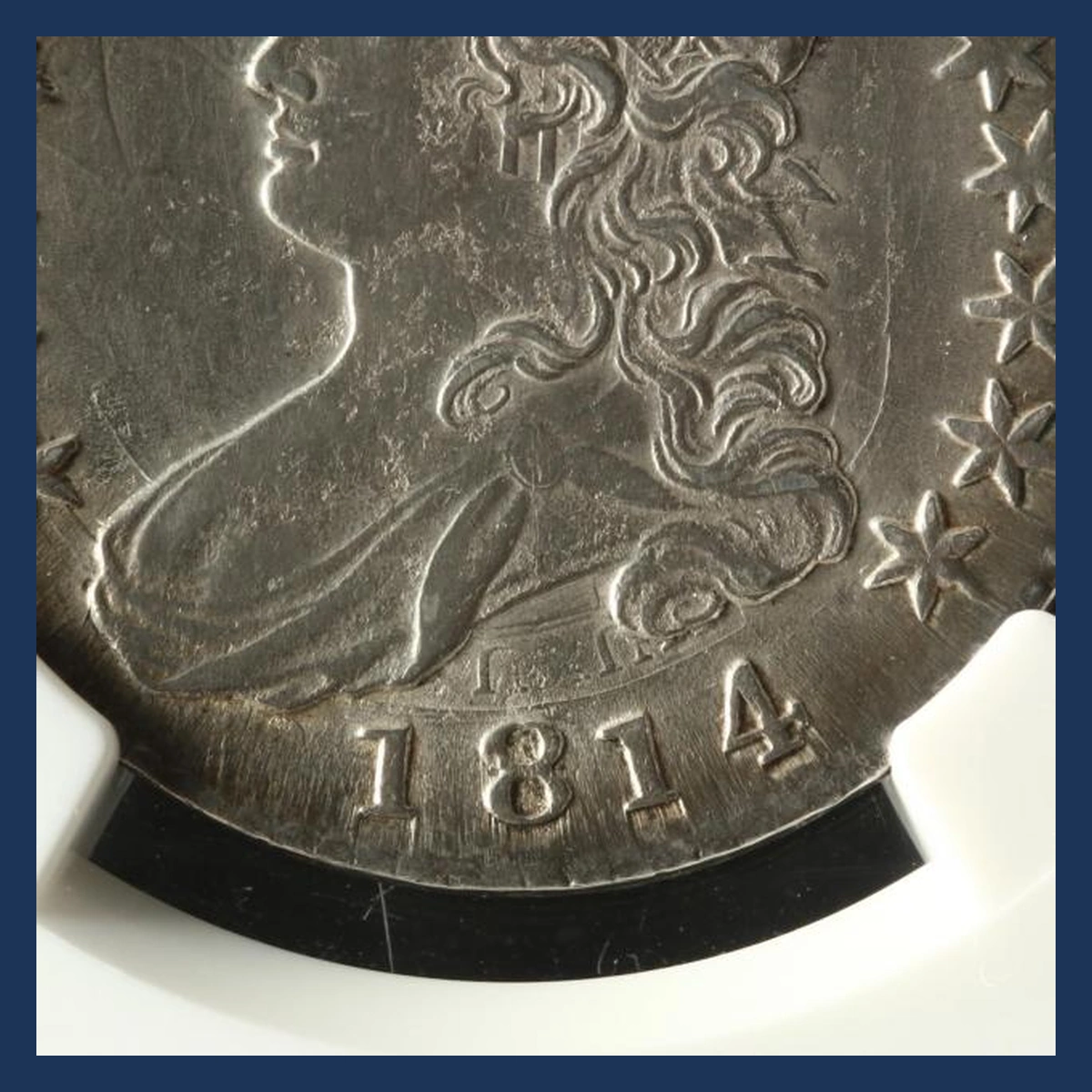
Faint extra shapes can appear around the normal design on an 1814 half. Some match parts of the design from the other side.
These are clash marks. They begin when the two dies, or steel stamping tools, hit each other without a blank between them.
The tools pick up marks from that contact and pass them to later coins. Both ordinary-date and overdate 1814 halves can show strong clashes.
One cataloged coin also has a separate metal streak before Liberty’s nose. A nearby line is not automatically another clash mark; it must match part of the opposite design.
Estimated Value
For circulated examples, estimate $200–$3,000. Mail Bid Sale 47 recorded $732 including the buyer’s fee for a clashed PCGS AU50.
An attractive PCGS AU55 with CAC approval brought $2,861 in the same sale. These prices cover the complete coins, including condition and appeal.
Stronger clash lines do not automatically justify the higher result. A damaged coin with bold marks may bring less than a lightly worn, attractive coin with subtler traces.
How to Identify
Find a shape that resembles part of the opposite design, rather than starting with the deepest line. Compare both sides in photographs, reversing one image to check how the tools met.
A 10× magnifier helps separate that outline from scratches, cracks, and streaks in the metal. The mark before Liberty’s nose was described separately and should not automatically be counted as a clash.
Confirm whether the date is ordinary 1814 or 1814/3. Both kinds appear in the reports.
Check the lettered edge, then compare weight and diameter with 13.48 grams and about 32.5 millimeters using a scale and calipers. The useful first match is a recognizable piece of the other design in the correct position.
4. 1814 Capped Bust Half Dollar 1814/3 Overdate (Estimated Up to $4,000 in Circulated Grades)
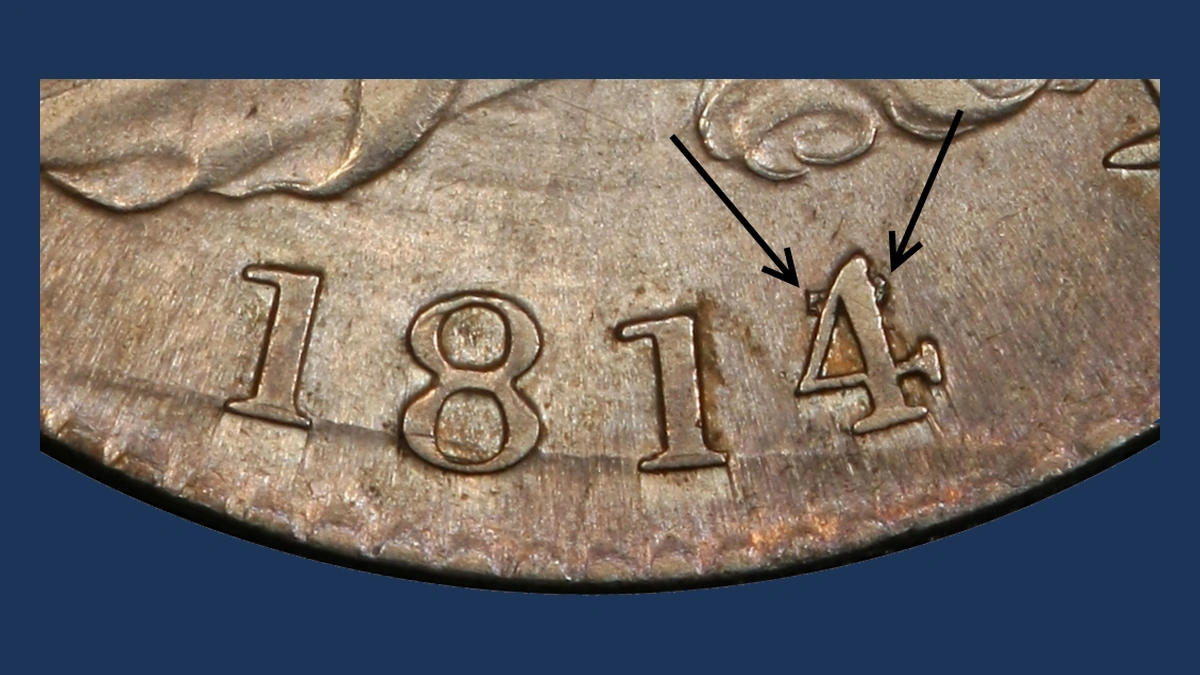
Look closely at the final 4 in 1814. Curved pieces of an earlier 3 remain beneath it on the 1814/3 overdate.
Workers changed the date in the stamping tool. Every coin made from that altered front tool could carry the same old digit.
This did not require striking a finished 1813 coin again. It is a change in the tool, not a second complete design on the coin.
Catalog numbers O-101 and O-101a identify this pairing of front and back tools at different stages of use. Cracks may vary, but the curved 3 beneath the 4 remains the key feature.
Estimated Value
Readable circulated examples through extremely fine have an estimated range of $300–$1,500. Attractive about uncirculated coins can reach $1,500–$4,000.
Those figures price the whole overdate, not an extra charge added to a normal 1814. The AU55 example with the rough back patch above had an unsold $1,500–$2,500 estimate.
It offers a comparison for that specific condition and flaw. Cleaner surfaces or an early example from the same tools may attract different demand.
How to Identify
A Philadelphia 1814 half has a lettered edge and no mintmark. Its original weight was 13.48 grams, with a diameter around 32.5 millimeters.
Record those checks with a scale and calipers before enlarging the date. Keep all four digits in the photograph.
Under a 10× magnifier, look within and around the final 4 for curved parts of a 3. Compare their exact positions with a verified 1814/3 example.
Move the light to separate raised remnants from scratches or added marks. A thick or blurry 4 is not enough.
The curved 3 in the correct relationship to the 4 identifies the overdate, regardless of nearby cracks or clash marks.
5. 1814 Capped Bust Half Dollar Off-Center Strike (Estimated Up to $6,000 for the Compound Example)
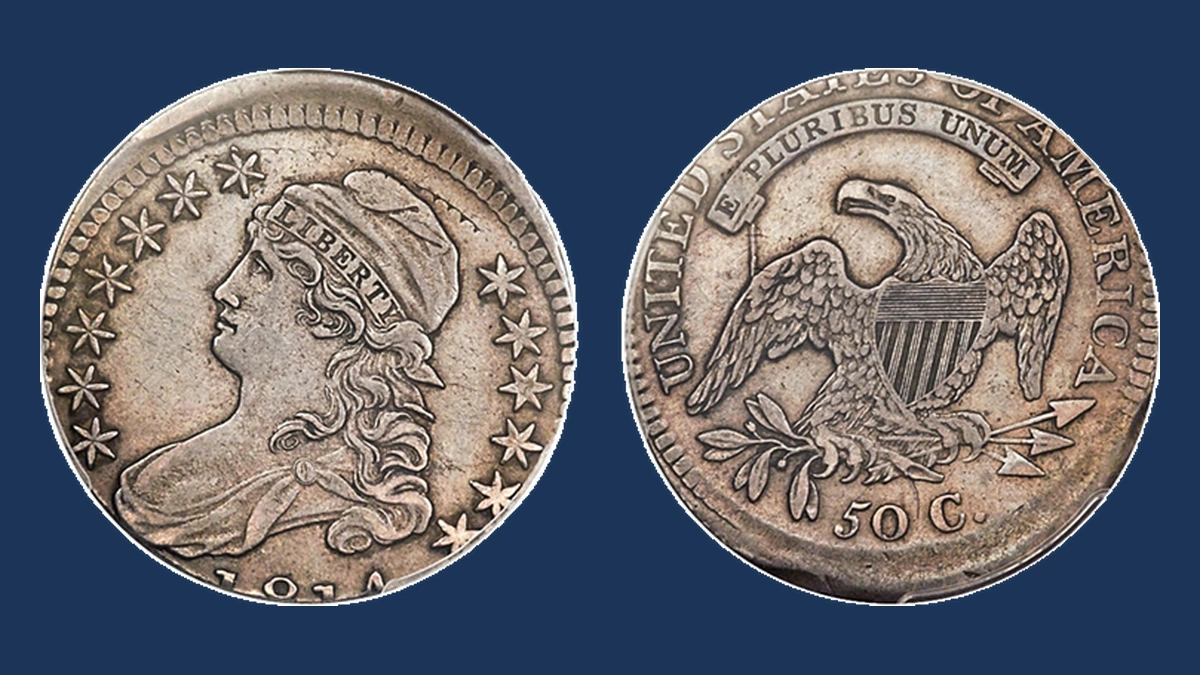
Bare crescents show beside the design on both sides of the 1814 half described by Coin World. Its design sits about five percent off center.
Parts of the date and upper lettering on the back fall beyond the struck area. PCGS graded this coin XF45, meaning extremely fine.
The coin also moved between repeated strikes. The first shift was toward 6:30, followed by strikes toward 5:30.
It is a separate coin from the collector’s reported example with repeated edge letters. A similar amount of offset does not make them the same specimen or give them the same extra errors.
Estimated Value
The PCGS XF45 coin sold for $4,465 at Heritage in April 2017, according to Coin World. Estimate $3,000–$6,000 for a similarly readable coin combining mild off-centering with several strikes.
A mildly off-center 1814 without those repeated impressions has an estimated range of $700–$2,500, depending on condition. The two situations should not share an automatic price.
The $4,465 sale buys the whole coin. Its price cannot be counted again for each extra strike.
How to Identify
Look at the bottom of the date and the top of the lettering on the back. Missing portions should line up with the bare crescents beside the design.
A 10× magnifier can show the border between struck detail and blank metal. A clipped or filed edge removes metal instead of simply leaving it unstruck.
Photograph both full sides. Extra tracks of border teeth show why this coin’s position cannot be explained by one offset alone.
Check the outline with calipers against about 32.5 millimeters and the weight with a scale against 13.48 grams. Inspect the edge words; these coins did not have modern ridges.
Bare crescents and matching lost lettering on both faces are the clearest first clues.
6. 1814 Capped Bust Half Dollar Multiple Strikes (Estimated Up to $6,500)
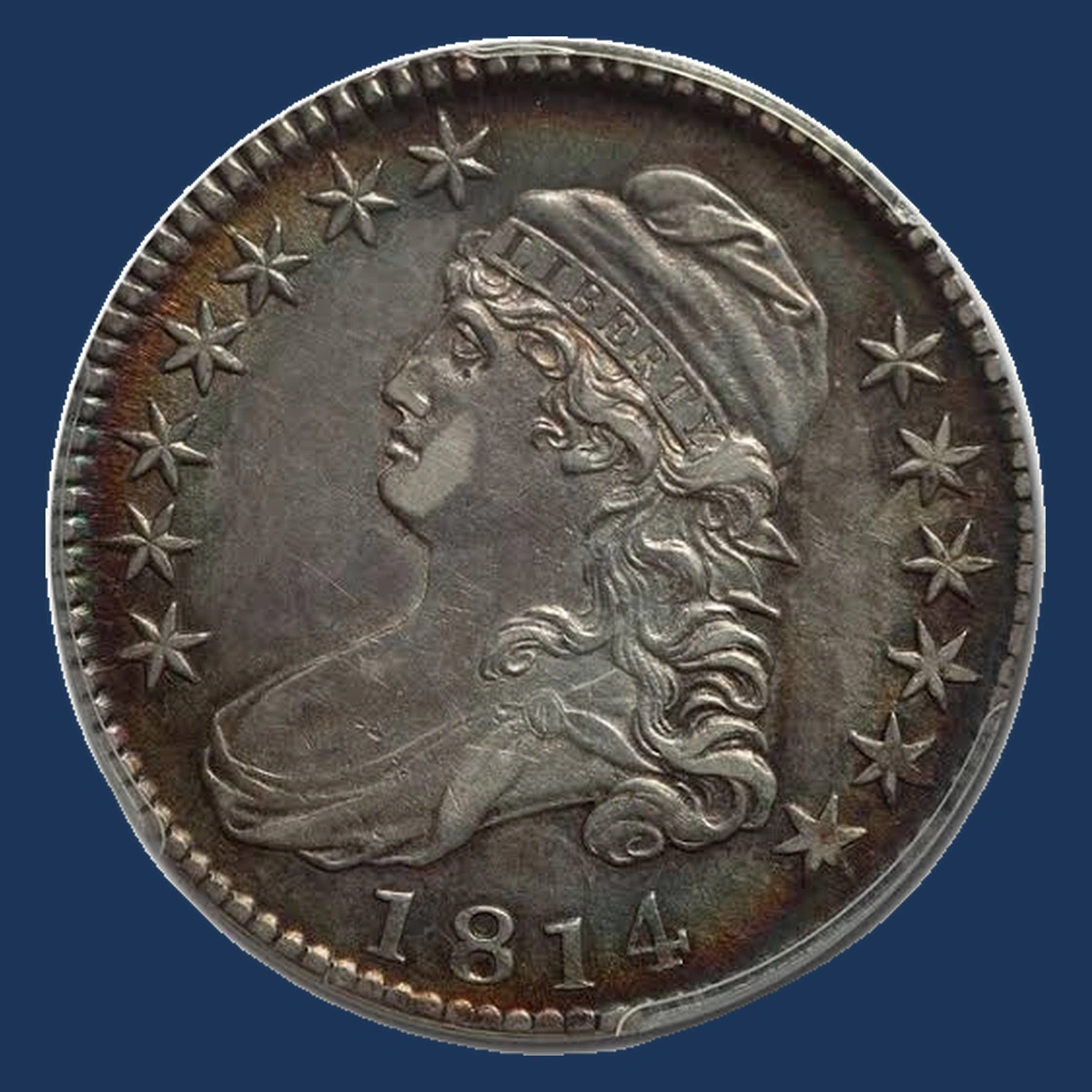
A row of small border teeth crosses the upper part of Liberty’s portrait on this 1814 half. It comes from an earlier strike that moved out of place before another blow.
The border teeth are called dentils. More repeated teeth near the top edge help show that the coin received at least three strikes.
Later blows flattened or erased much of the earlier design. Three complete portraits or dates do not need to survive.
This is the same PCGS XF45 coin with an off-center design discussed above. Its bare crescents show the offset; the repeated teeth show the extra strikes.
Estimated Value
Estimate $3,000–$6,500 for an extremely fine example with similarly clear evidence of several strikes. Coin World reported $4,465 for this PCGS XF45 in April 2017.
That is the same sale discussed under off-center strikes. It is not a second transaction.
The repeated design must be visible enough to follow. Simply calling a worn coin triple struck does not justify the upper estimate if photographs cannot show the surviving impressions.
How to Identify
Find the arc of border teeth across Liberty’s upper portrait. Compare their spacing and shapes with the normal teeth at the edge through a 10× magnifier.
Then examine the repeated teeth near the top of the front. Together, these two areas show more than one earlier impression.
Do not count every tooth as a separate strike. A row of teeth can all belong to the same blow.
Side lighting helps reveal earlier flattened detail beneath the final design. The overall weight and size should be compared with 13.48 grams and about 32.5 millimeters using a scale and calipers.
Inspect the lettered edge too, then follow the inner arc and upper repeat as two connected pieces of evidence.
7. 1814 Capped Bust Half Dollar E Over A in STATES (Estimated Up to $8,000 for Choice AU)
The E in STATES has pieces of an earlier A beside it on the E/A variety. A worker first punched the wrong letter into the back stamping tool, then corrected it.
Parts of the A survived the correction. They appear on coins made from that tool.
This is not evidence that each finished coin was struck twice. The extra letter was already present in the tool.
NGC describes the correction, and O-108 is the catalog number for this major variety. Wear or a weak strike can hide the small traces, while scratches beside a normal E can imitate them.
Estimated Value
Estimate $350–$1,500 for very fine through extremely fine examples. Especially attractive about uncirculated coins can reach an estimated $5,000–$8,000.
Mail Bid Sale 47 recorded $539 including the buyer’s fee for a PCGS VF35 E/A. A later Sheridan catalog cites $7,500 for a PCGS AU58 at Heritage’s August 2024 sale.
The large gap reflects condition as well as the variety. Original shine, sharp details, and clean surfaces can change the price substantially.
How to Identify
Find STATES on the back and enlarge its E with a 10× magnifier. Look beside the E for strokes that fit pieces of an A.
Compare those strokes with a clear E/A photograph. The NGC date reference explains the corrected letter punch.
Turn the light to check that the extra strokes are part of the raised metal. Dirt, scratches, and the normal ends of letters can create misleading dark shapes.
The coin should otherwise match a Philadelphia 1814 half with a lettered edge. Use a scale and calipers against its original 13.48 grams and about 32.5 millimeters.
The retained A-shaped strokes beside the E are the deciding feature.
8. 1814 Capped Bust Half Dollar Single Leaf Variety (Estimated Up to $10,000 in Mint State)
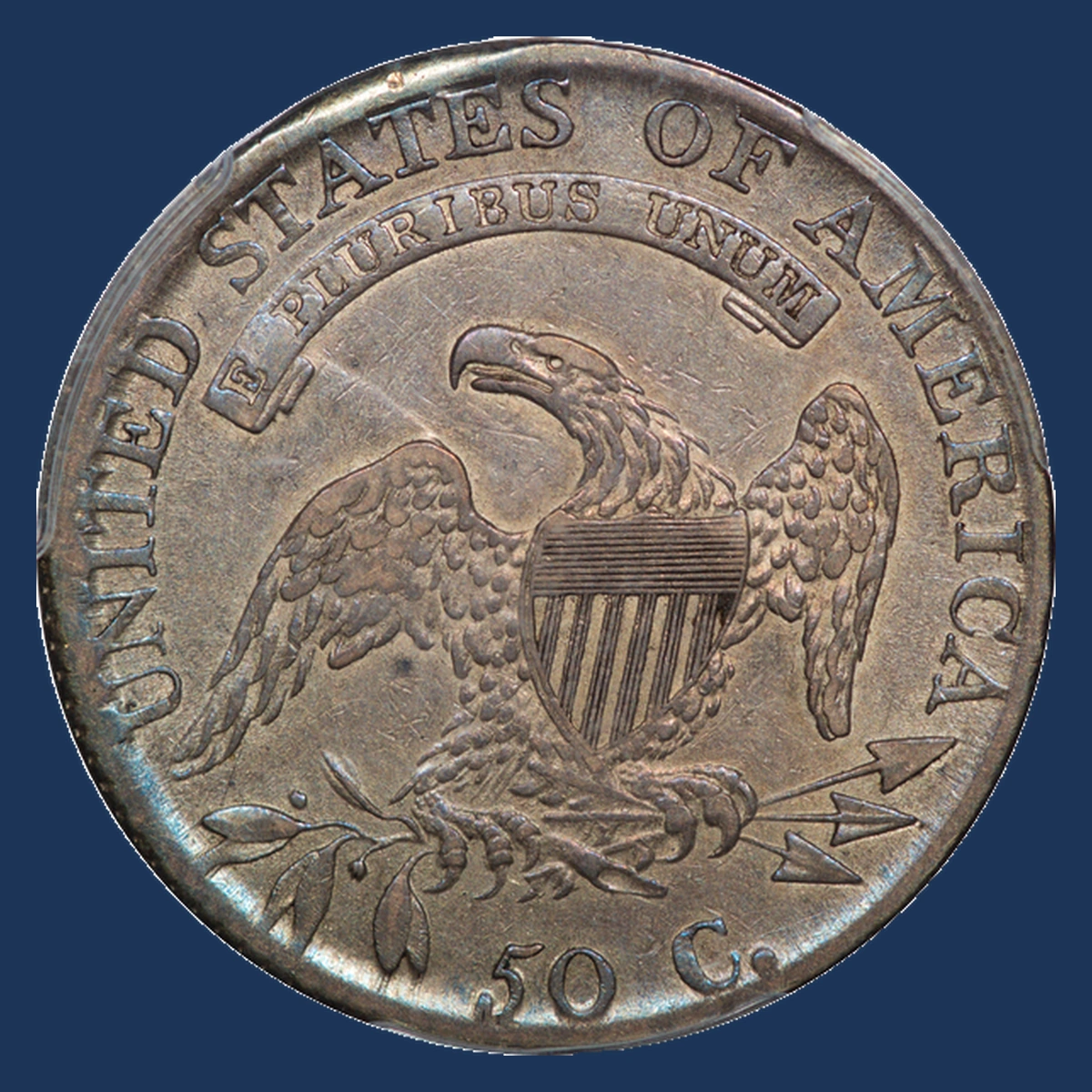
One leaf stands out where a normal 1814 half shows a pair beneath the eagle’s wing. This small part of the olive branch gives the Single Leaf variety its name.
PCGS recognizes it as O-105a. Auction catalogs list examples with wear as well as uncirculated coins.
A faint leaf on an ordinary worn half is not enough to identify it. The surrounding branch and wing must match the known variety.
The name describes what collectors can see. It does not prove exactly how the leaf disappeared, so identify the pattern before trying to explain what changed in the stamping tool.
Estimated Value
An NGC MS62 Single Leaf sold for $8,812.50 at Heritage in August 2016. Comparable uncirculated examples have an estimated range of $7,000–$10,000.
For extremely fine coins, estimate $1,000–$2,200. Mail Bid Sale 47 recorded $1,430 for PCGS XF45 and $1,595 for PCGS XF40.
The lower numerical grade brought more in those two sales. Surface appeal and bidding can matter as much as a small difference in grade.
How to Identify
Compare the branch below the wing with both an ordinary paired-leaf reverse and a known O-105a. Keep all three images at the same enlargement.
A 10× magnifier helps you use the stem and wing to find the same spot. Do not compare different leaf groups by mistake.
Look at the nearby feathers and branch for wear. If those details are also faint, the second leaf may simply be worn or weakly struck.
Move the light to check for dirt covering a leaf, without scraping it. Confirm the date and lettered edge, and check about 13.48 grams and 32.5 millimeters with a scale and calipers.
A match to the known leaf-group pattern is stronger than one faint leaf on its own.
Conclusion
Estimated values for these 1814 errors and varieties run from $150 to $10,000. Repeated edge words, an old digit under the date, and a missing leaf each need a different check.
Keep the full coin in view while examining the small details. The off-center, triple-struck example has one $4,465 sale price, even though several features survive.
Condition and the strength of those visible features help explain the wide range.