2000 Penny Error List with Pictures

One 2000 penny design sits on top of a Virginia state quarter, leaving traces of both coins. That unusual piece brought $26,400 in November 2022.
Most discoveries in this 2000 penny error list are much less expensive. A small gap in AMERICA, a misplaced strike, and missing copper each tell a different story.
Estimated ranges run from $5–$30,000. Start with the visible feature below, then compare the correct metal, condition, and kind of error.
1. 2000 Lincoln Penny Doubled Die (Estimated Up to $150)
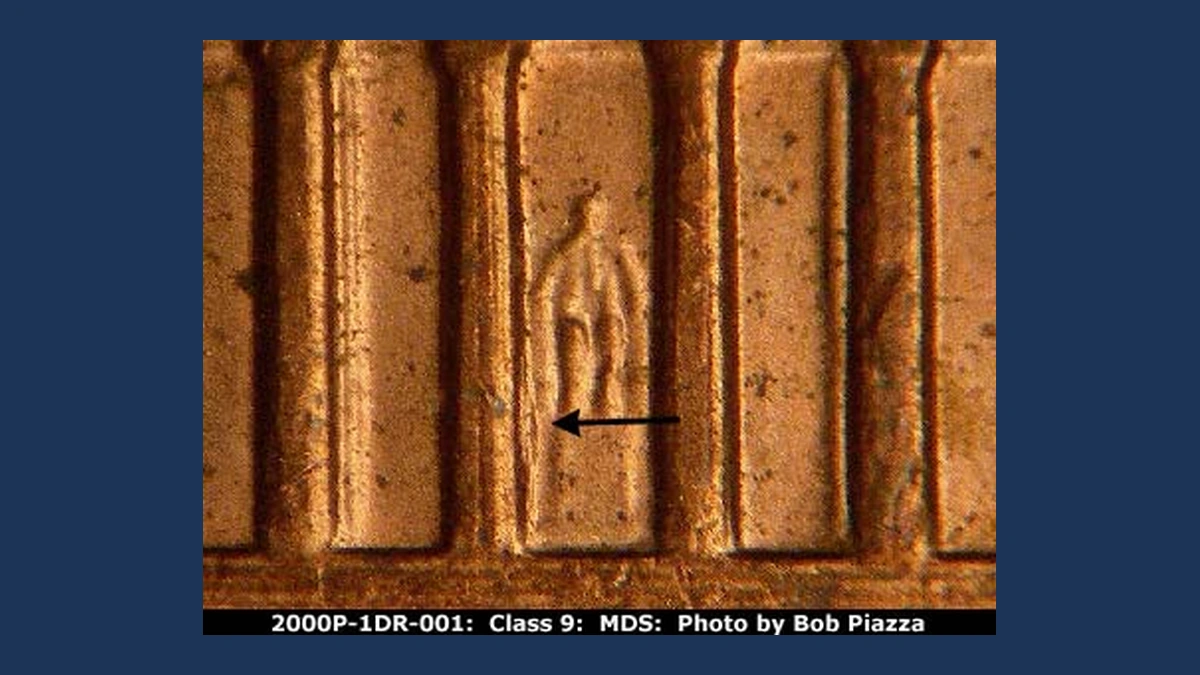
Two edges beside one letter can make a penny look as though it was struck twice. A doubled die has a different origin: the repeated detail is already in the stamping tool.
That tool is called a die. Coins made from it can carry the same extra shape in the same place.
Variety catalogs list 2000 Philadelphia and Denver entries, with front and back patterns considered separately. One catalog entry should not borrow another’s lettering or portrait features.
Flat shelves, worn tools, and damaged plating can imitate doubling. A recognizable repeated outline is more useful than general thickness.
Estimated Value
For minor matched varieties, estimate $5–$30. Stronger, clearly separated details on attractive coins can support roughly $30–$150.
These prices compare modest modern Lincoln doubled dies. They do not apply the famous 1955 doubled-date premium to a small feature on a 2000 cent.
Both the exact pattern and the surface condition affect interest. No single auction amount is assigned to all the catalog entries, and unrelated front and back estimates should not be added together.
How to Identify
Choose the correct mint before choosing a close-up. Philadelphia cents normally have no letter below the date, while Denver uses D.
Compare the suspected feature with the same variety in the Memorial-cent doubled-die catalog. Use a 10× magnifier to trace its raised shape rather than relying on a bright reflection.
An accessible normal cent weighs 2.50 g and measures 19.05 mm; check using a scale and calipers. Its edge is smooth.
Look for flat steps from movement during striking or exposed gray zinc beside split copper. A repeated raised contour matching the exact face and mint is the useful identification check.
2. 2000 Lincoln Penny Struck-Through Error (Estimated Up to $250)
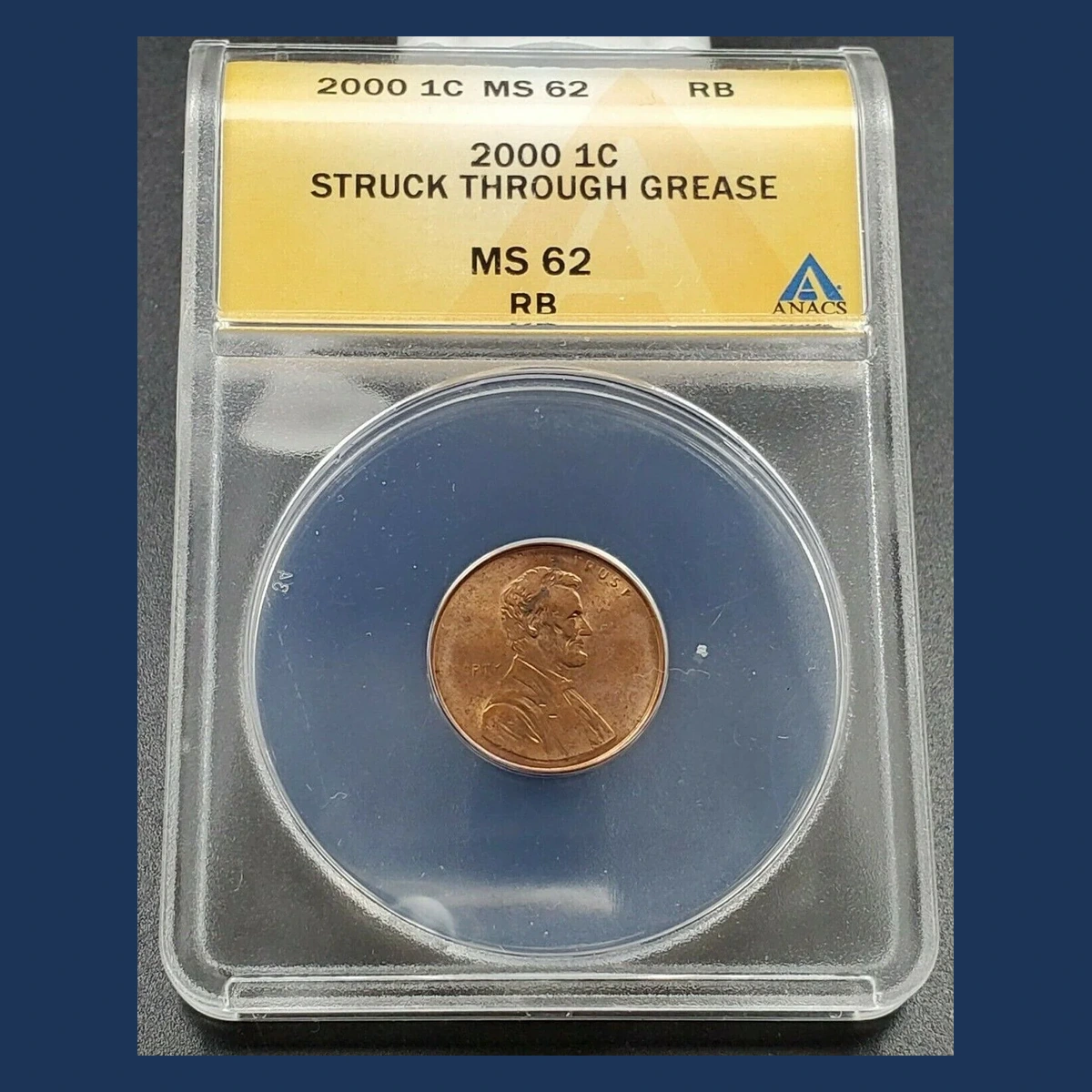
A narrow impression can remain after a piece of material comes between the blank and a stamping tool. The design forms around or beneath the obstruction.
A collector reported finding this kind of 2000 Philadelphia cent in a Mint set. The account describes a line-shaped struck-through feature rather than a certified identification of its material.
Its exact position needs to be checked on the actual example. A line should not automatically be called cloth, wire, or retained material.
A scratch made later can look similar. How the impression meets the original design helps separate the two events.
Estimated Value
Estimate $10–$250 for a genuine line-shaped struck-through error on a 2000 cent. Size, clear boundaries, and the amount of surviving design influence that range.
A 2021-D cent struck through grease sold for $84 in September 2025. That later Shield coin gives a general comparison for an obstruction during striking, not an exact match for a line impression.
The Mint-set discovery report supplies no sale amount. A later scratch remains outside this production-error estimate.
How to Identify
Follow the line into a letter or part of Lincoln’s design using a 10× magnifier. Note how the struck detail stops or changes at its boundary.
A later scrape can slice across finished details and push metal along the edges. An original obstruction can interrupt the design as it forms.
Check an accessible coin with a scale and calipers against 2.50 g and 19.05 mm. Inspect the smooth edge for related damage.
Keep photographs of both faces, including the 2000 date, so a close-up does not lose its identity. Leave any attached material in place.
The useful clue is a line-shaped impression formed with the design, rather than a fresh cut through it.
3. 2000 Lincoln Penny Improper Copper Plating (Estimated Up to $300)
A penny can receive copper plating unevenly rather than lose all of its coating. Areas of different coverage may remain visible after the design is struck.
An auction record identifies a 2000 cent on an improperly copper-plated blank. NGC graded it MS63, meaning unworn with noticeable marks.
That description is different from a fully unplated zinc cent. It does not establish that every gray area follows the same pattern or sits on one particular face.
The surface needs careful examination. Corrosion and chemicals can also disrupt copper after a normal penny has left the Mint.
Estimated Value
For confirmed original plating defects, estimate $20–$300. The affected area, its appearance, and the preservation of the surrounding design guide the comparison.
The recorded 2000 MS63 example establishes the category, but no selling amount is used for that particular coin here. The range compares similar modern copper-plated cents.
An uneven original coating can interest collectors without being a fully unplated blank. Stripping or corrosion after minting should not be priced as the same manufacturing error.
How to Identify
Compare areas of remaining copper with the exposed or differently coated surface. A 10× magnifier can show whether nearby details were struck across the original uneven coating.
Look for rough chemical damage, corrosion, or scrape marks. A change in color alone does not reveal when the coating became uneven.
The normal plated coin is 2.50 g and 19.05 mm with a smooth edge. Record measurements with a scale and calipers when safely accessible.
Thin plating changes may have only a small effect on weight. Keep a certified example sealed and match its written error description.
Original struck detail meeting an uneven copper layer is more helpful than simply calling the coin silver-colored.
4. 2000 Lincoln Penny Off-Center Strike (Estimated Up to $500)
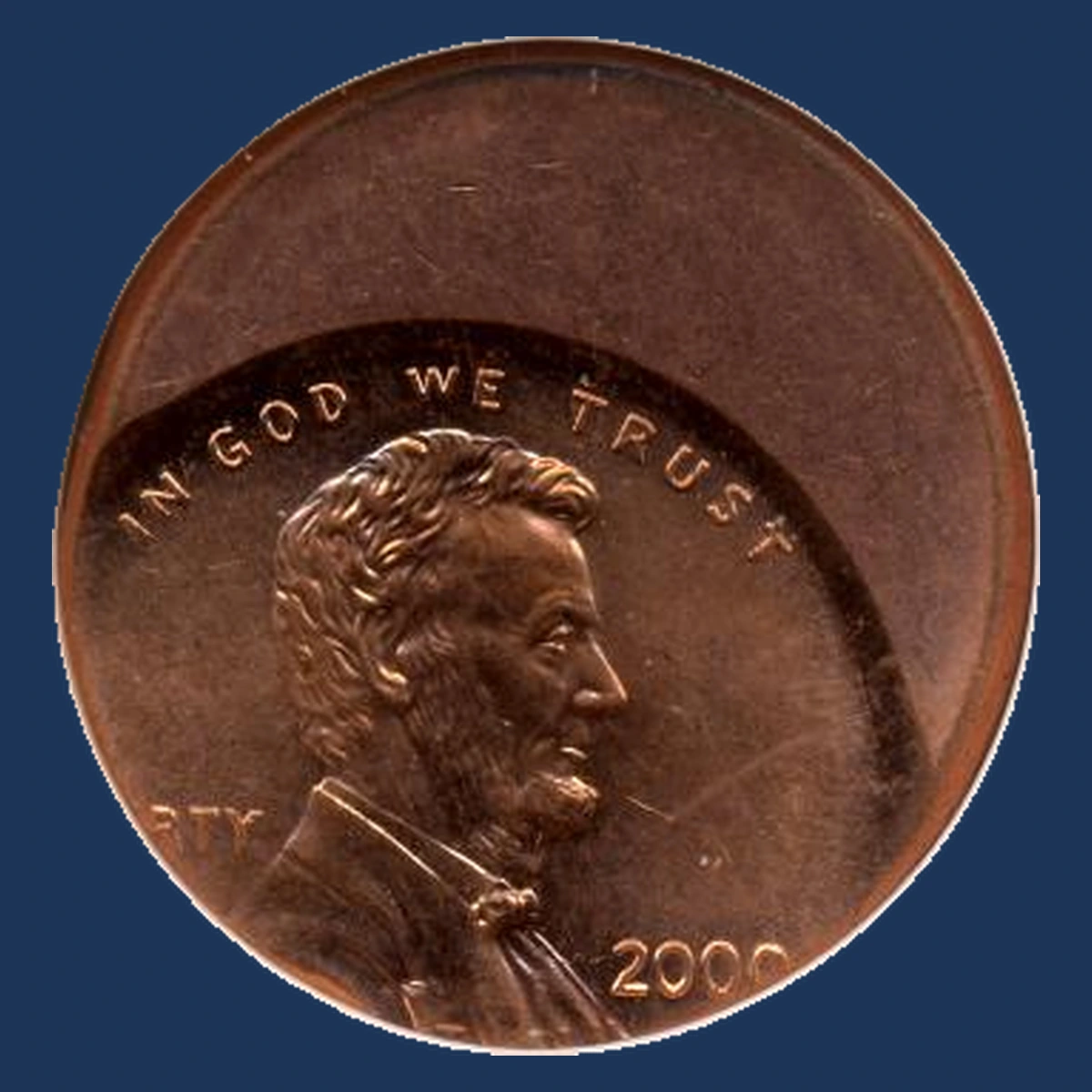
An empty crescent can sit beside the portrait while some of the intended design is missing. The blank was not centered between the tools when they struck it.
The same placement affects the Memorial side. This separates a misplaced blank from a tool that moved on only one face.
Reports and collector examples support off-center 2000 cents without one universal amount or direction of movement. A readable year remains important.
The plain area still contains metal. A clipped blank has part of its metal missing before the strike, so it needs a different examination.
Estimated Value
Smaller, clearly dated shifts can be estimated at $20–$100. Larger attractive examples may fit roughly $100–$500, particularly when 2000 remains readable.
The figures compare modern Lincoln off-center errors. They are not a sale record for every collector example shown under this year.
A broad blank crescent creates visual appeal, but a badly damaged surface can reduce it. The date and the amount of recognizable design matter alongside the degree of displacement.
How to Identify
Photograph the complete shape before taking close-ups. Include the date and any mintmark that actually received a strike.
Turn the coin over to compare how both designs meet the unstruck part. One centered face behind one shifted face suggests a different alignment problem.
Under a 10× magnifier, inspect the plain area for grinding or polishing. The edge is normally smooth, but later cutting can leave fresh marks.
A scale and calipers can compare an accessible coin with the normal 2.50-g, 19.05-mm blank. Allow for its changed outline after striking.
The clearest off-center check is an original plain crescent beside matching incomplete designs on both faces.
5. 2000 Lincoln Penny Reported Unplated Blank (Estimated Up to $500)
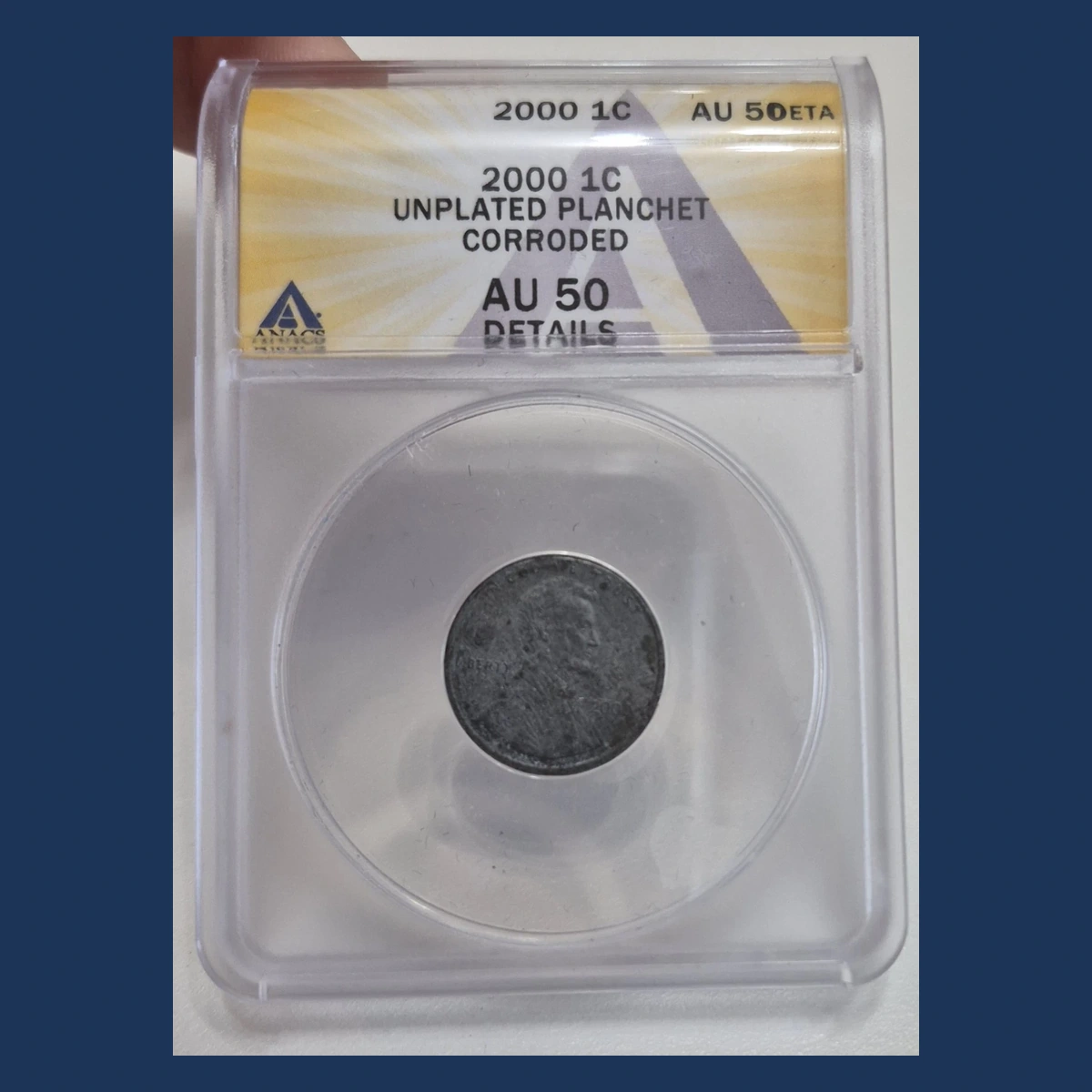
A completely unplated penny would show its zinc center without the usual copper skin. The copper would have been absent before the blank received its design.
This remains a reported 2000 category requiring an identified specimen. It should not be treated as confirmed merely because a gray penny carries that date.
The recorded improperly plated 2000 cent is a different example. Uneven coating does not prove a fully unplated blank.
Chemical stripping can expose the same gray zinc later. That is why both the surface and the timing of the missing copper need examination.
Estimated Value
For an authenticated fully unplated 2000 cent, use a conditional estimate of $100–$500. This compares original plating omissions on modern zinc cents.
The range applies after the manufacturing cause is identified. It does not assign the same value to chemically stripped pennies or to the separately recorded uneven-plating coin.
No completed sale of a confirmed fully unplated 2000 example is claimed here. Original surface condition and a clear professional identification are central to the price comparison.
How to Identify
Look at the whole surface and edge before naming the metal. Gray zinc is the normal center of a copper-plated penny; it is not silver.
A normal plated cent is 2.50 g and 19.05 mm with a smooth edge. Use a scale and calipers on an accessible coin, allowing for the small missing coating weight.
Under a 10× magnifier, inspect for corrosion, rough chemical stripping, or tiny protected remnants of copper. The absence of obvious scrape marks does not by itself prove a Mint omission.
A professional examination must establish that the blank lacked copper when struck. Original design formed on an unplated surface, rather than coating removed afterward, is the essential distinction.
6. 2000 Lincoln Penny Struck Through a Die Cap (Estimated Up to $600)
The back of a penny can become distorted when another coin covers the stamping tool. Instead of receiving the normal Memorial directly, the next blank is struck through that trapped coin.
The covering coin is called a die cap. The new piece is a capped-die strike, not the cap itself.
A sales group included a 2000 back-side capped-die strike graded MS67 Red by NGC. That grade means unworn with very few marks and original copper-red color.
The same group contained a different-year die cap. The two pieces should not be confused when comparing their shapes.
Estimated Value
Estimate $50–$600 for genuine capped-die strikes on 2000 cents. Distinctive distortion and an attractive surviving face support the higher prices.
The reported MS67 Red example appeared in a group of five error coins. A group price should not be presented as the sale price of that single penny.
This range instead compares similar modern capped-die errors. The exact appearance and condition still matter, since a faintly blurred design can be less striking than a strongly altered face.
How to Identify
Compare the Memorial side with the clearer opposite face. A cap can change one side’s design while leaving the other more recognizable.
Use a 10× magnifier to inspect the softened or distorted original details. Ordinary wear usually affects exposed high areas rather than producing the same covered-tool pattern.
An accessible cent can be checked with a scale and calipers against 2.50 g and 19.05 mm. Examine the normally smooth edge for signs of later pressing.
Keep the 2000 identity tied to this coin rather than another member of a sales group. The key distinction is a coin struck through a covering cap, without being the cup-shaped cap itself.
7. 2000 Lincoln Penny Broadstrike with an Indent (Estimated Up to $600)
One coin can spread wider and receive an indentation during the same press incident. A partly overlapping blank can block the strike in one area while leaving a depression.
A 2000 example sold as part of a pair shows this combination. The first coin has an expanded outline and an indent near its upper front edge.
NGC graded it MS63 Red, meaning unworn with noticeable marks and copper-red color. Its partner received a second strike about 80% off center.
The pair records related contact between two pieces. The partner’s extra strike should not be assigned to the indented coin.
Estimated Value
Allow an estimated $75–$600 for a single genuine broadstruck cent with a clear indent. The depth, placement, and surviving design affect that range.
The 2000 pair has added interest because the coins can explain a shared event. A matched-pair price cannot be divided automatically into two identical individual prices.
No separate auction amount is claimed for the first coin here. Value the combined broadstrike and indent on that piece together, rather than adding two full error estimates.
How to Identify
Locate the upper front depression, then compare its boundary with the wider outline. It should fit contact during the strike rather than a dent punched into finished detail.
Use a 10× magnifier to follow where the surrounding design stops. Look for later tool marks or displaced metal from an impact.
The normal blank starts near 2.50 g and 19.05 mm, with a smooth edge. A scale and calipers can record an accessible example’s weight and expanded dimensions.
If the pair is together, compare both pieces while keeping their separate designs straight. An original overlapping-blank impression within the expanded first coin is the feature to establish.
8. 2000 Lincoln Penny Die Cap (Estimated Up to $750)
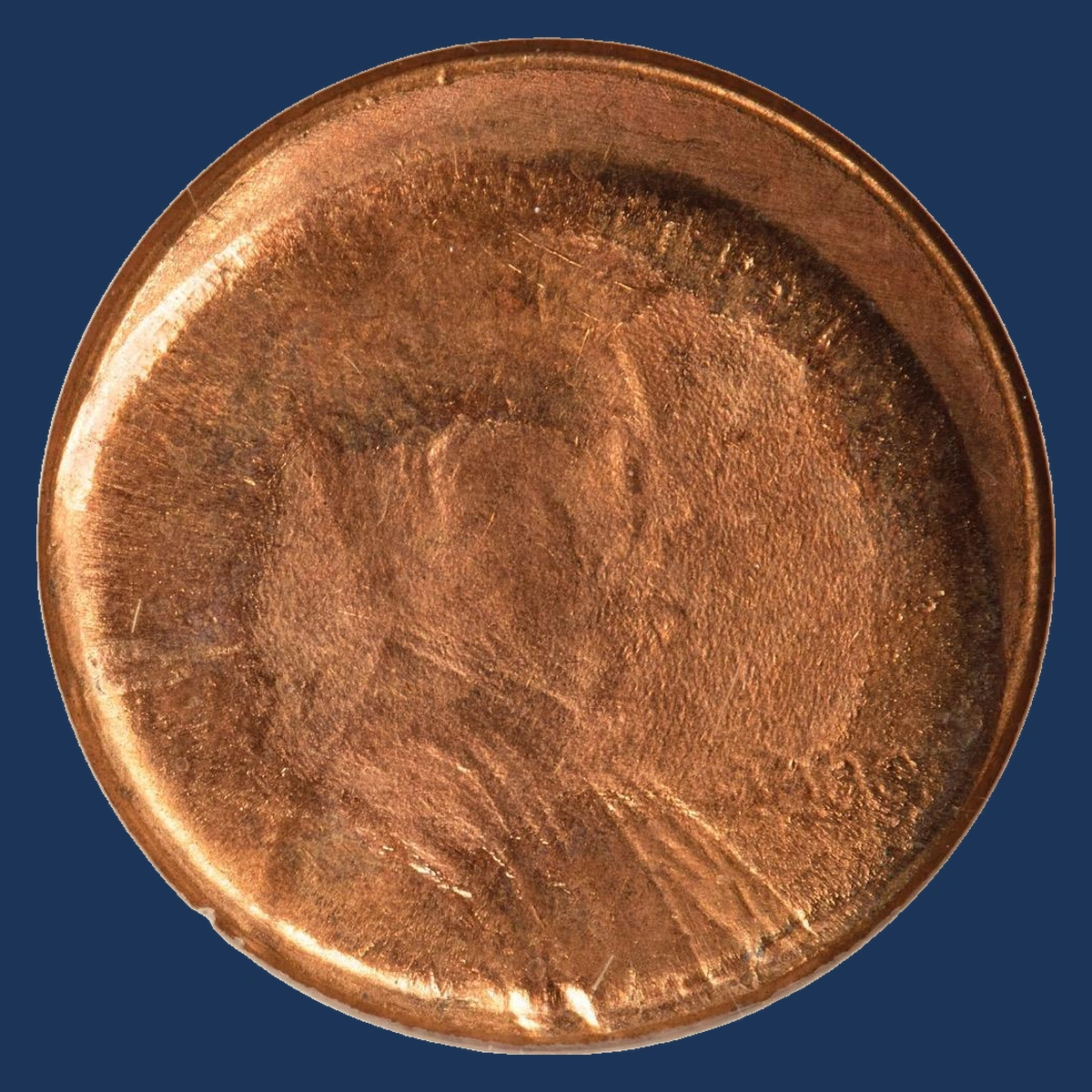
A die cap can look more like a small cup than a flat penny. A struck coin remains attached to a stamping tool and is struck again as new blanks arrive.
Repeated pressure spreads its metal around the tool, building a raised wall. This is the trapped coin itself, not one of the flatter pieces struck beneath it.
A 2000 front-side die cap is recorded in PCGS MS64 Red condition. That means unworn with some marks and copper-red color.
The shape preserves part of the press sequence. Flattening the wall would destroy an important identifying feature.
Estimated Value
The recorded 2000 die cap sold for $312 in June 2025. Its actual sale gives a same-year comparison for the cup-shaped error.
Estimate $150–$750 across genuine examples with different wall height, completeness, and preservation. A more dramatic shape is attractive when its original surface survives.
The range is not a promise that every bent 2000 penny has cap value. Later bending and damage must be excluded before using the auction result as a comparison.
How to Identify
Examine the wall from the side without pressing it. A cap’s curved metal should fit repeated striking around the tool rather than a simple fold made later.
Use a 10× magnifier at the wall’s base and the surviving portrait-side detail. Keep the full shape visible in photographs.
A normal cent blank weighs 2.50 g and starts at 19.05 mm across, with a smooth edge. Weigh an accessible piece with a scale; calipers should record its altered dimensions without squeezing the cup.
A grading service can assess the relationship between the wall and the original strike. The rising original wall around the trapped coin is the direct cap feature.
9. 2000 Lincoln Penny Wide AM (Estimated Up to $800)
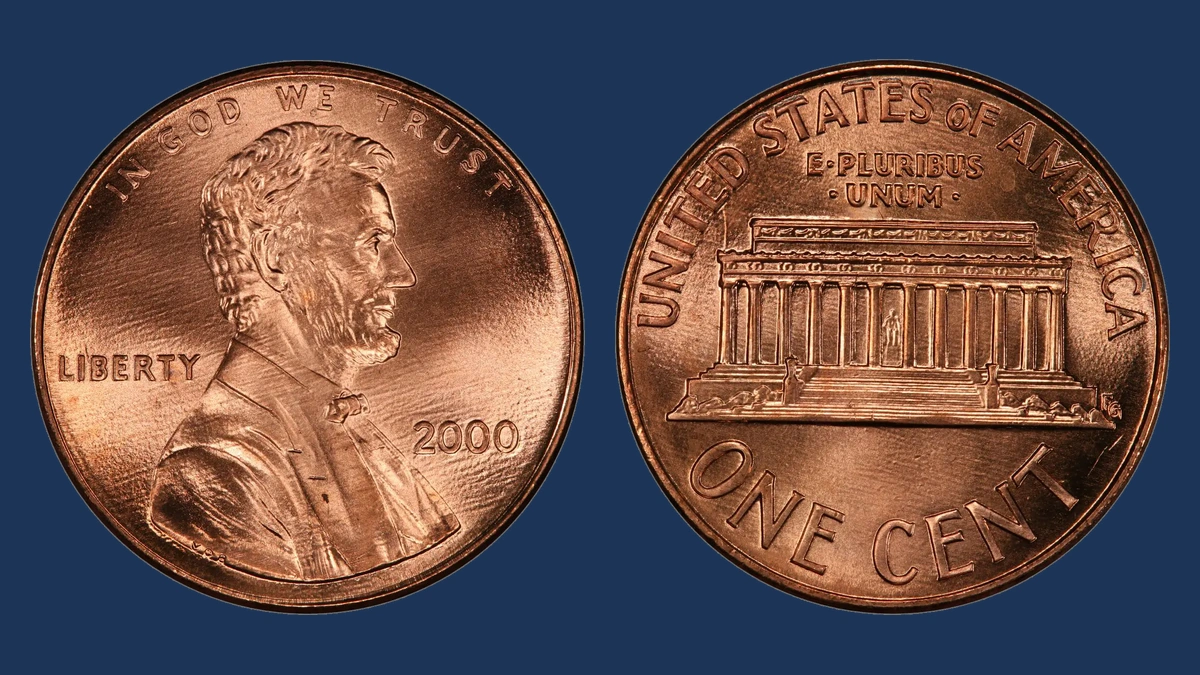
On an ordinary 2000 circulation penny, A and M in AMERICA sit close together. A visible gap identifies a different back design known as Wide AM.
That spacing normally belongs to the collector Proof design. A Proof is a specially made coin, generally with a mirrorlike background and sharp details.
The error here concerns Philadelphia circulation coins struck with the other back design. A normal 2000-S Proof already has Wide AM and is not the same error.
The FG initials beside the Memorial provide another comparison. The design pairing matters, rather than the gap viewed without the full coin.
Estimated Value
Worn and ordinary unworn Wide AM examples can be estimated around $5–$100. Exceptional, highly preserved red coins can reach a much higher $100–$800 comparison range.
PCGS lists an $800 eBay result from April 2012 for an MS68 example. That is an exceptionally high condition grade, not a typical pocket-change coin.
The sale is historical. It should not be transferred to a worn Wide AM or an ordinary S Proof.
How to Identify
First check the front: this comparison concerns a Philadelphia circulation penny with no mintmark. An S below the date points to the normal Proof context instead.
Under a 10× magnifier, inspect the gap between A and M in AMERICA. Compare the FG initials and their relationship to the Memorial with an identified Wide AM.
The usual specifications remain 2.50 g and 19.05 mm, with a smooth edge. A scale and calipers can check a safely accessible coin.
Do not use a blurred photograph where reflections hide the letter edges. A clear AM gap on the correct circulation version, supported by the matching back design, identifies the variety.
10. 2000 Lincoln Penny Double Strike (Estimated Up to $1,000)
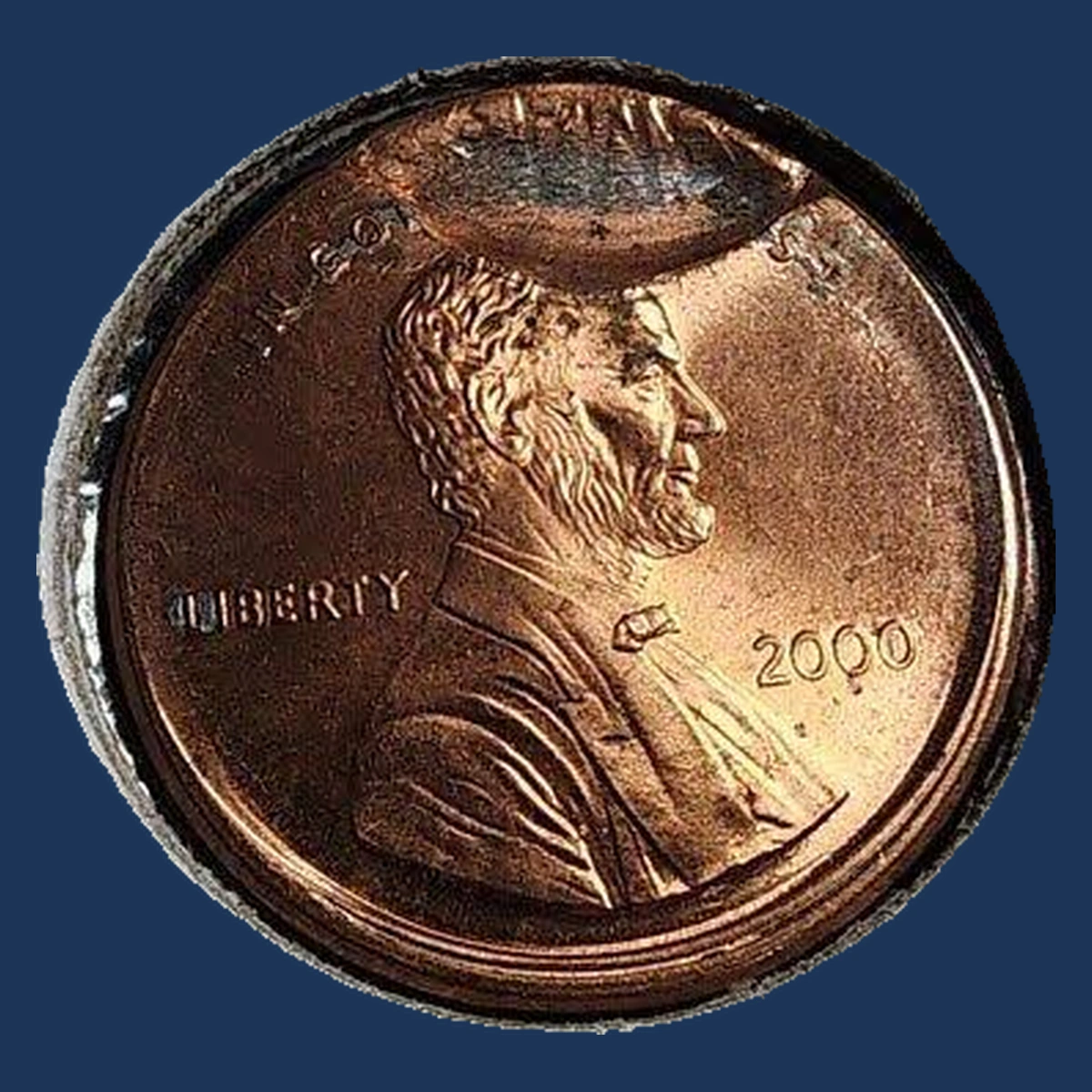
A coin that fails to leave the press can receive a second impression in a new position. If it also turns over, parts of the portrait and Memorial can end up on the same face.
An auctioned 2000 example shows that flipover combination, with its second strike about 80% off center. NGC graded it MS64 Brown: unworn with some marks and brown surfaces.
The percentage describes that example rather than all double strikes from the year. The order of impressions needs to fit both faces.
This is separate from doubled details already present in one stamping tool.
Estimated Value
A genuine dated double strike can be estimated at $75–$1,000. Clear separate impressions and a readable year support stronger prices, especially when the coin flipped between strikes.
A 1979 cent with its second strike off center sold for $204 in September 2023. Its older copper alloy differs from the plated-zinc metal of 2000.
That sale offers a related comparison rather than a price for the recorded 80% flipover example. The latter’s own selling amount is not assigned here.
How to Identify
Find two recognizable struck impressions before deciding how the coin moved. A second date, portrait edge, or Memorial section can help establish separate blows.
For the flipover type, use a 10× magnifier to trace portrait and building detail sharing a face. Check the opposite face for a consistent sequence.
Use a scale and calipers if the coin is accessible, comparing with the original 2.50-g, 19.05-mm blank. Repeated striking can change its final width and shape.
Inspect the smooth edge for later pressing or tool damage. Two original struck designs fitting the same coin’s movement are more convincing than a vague doubled outline.
11. 2000 Lincoln Penny Brockage (Estimated Up to $1,000)
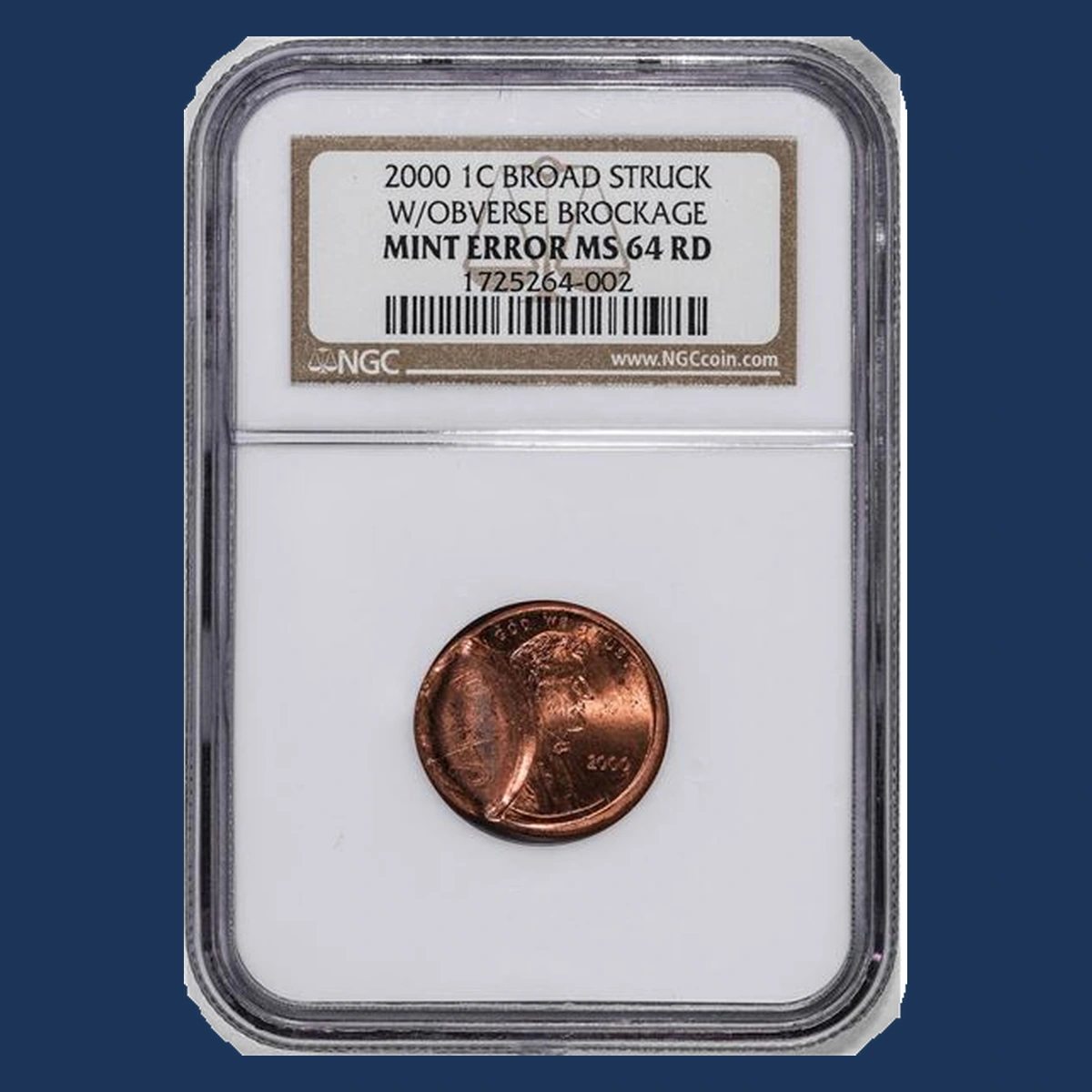
Backward, sunken lettering can form when a struck coin presses into another blank. Its raised surface acts as the stamp that makes a brockage.
The result differs from the raised overlapping details of a flipover double strike. The copied design sinks into the new coin and reads as a mirror image.
A collector’s recorded example also has a broadstruck shape. Its label places 2000 in parentheses, meaning the date is assigned rather than fully readable on the coin.
That distinction should stay with the example. An inferred year is not the same as a clearly surviving 2000 date.
Estimated Value
Estimate $100–$1,000 for a genuine brockage with suitable condition and identification. Coverage and clarity of the backward design influence where a coin fits.
An undated Lincoln cent with a full front-design brockage sold for $192 in March 2025. That is a comparison for the mechanism, not a sale of the collector’s assigned-year example.
If one coin is also broadstruck, assess the combined appearance. Do not add another complete broadstrike range to the brockage estimate.
How to Identify
Choose a readable letter and check its direction under a 10× magnifier. A brockage should copy the design backward and below the surface.
Compare the other face for the normal struck design. If the label shows an assigned date in parentheses, keep that distinction in photographs and descriptions.
Normal cent metal starts at 2.50 g and 19.05 mm, with a smooth edge. Use a scale and calipers where accessible, allowing for expansion if the coin is also broadstruck.
Later squeezing between coins can imitate a backward image, so the original surface matters. A genuine mirror-image impression formed during striking is the necessary feature.
12. 2000 Lincoln Penny on a Dime or Quarter Blank (Estimated Up to $15,000)
The stamping tool does not resize Lincoln to fit a wrong blank. A dime blank can lose outer cent details, while a quarter blank leaves extra metal outside the cent-sized design.
Both are recorded for 2000. These blanks had not already received dime or quarter designs when the cent strike occurred.
One dime-blank example was graded PCGS MS64. A quarter-blank example received MS65; both grades describe unworn coins, with fewer marks expected at the higher grade.
The metal is copper-nickel clad, with layers unlike a normal copper-coated zinc cent. Silver color alone cannot establish that construction.
Estimated Value
The 2000 dime-blank cent brought $184 in August 2003. The much larger quarter-blank example sold for $14,400 in October 2021.
Use estimated ranges of $250–$1,500 for the dime-blank type and $8,000–$15,000 for a comparable quarter-blank rarity. Condition and the actual blank must match.
These different records show why one generic wrong-metal price is misleading. A 1981-D dime-blank cent’s $372 sale in September 2025 offers a more recent comparison for the smaller type.
How to Identify
A dime blank starts around 2.268 g and 17.9 mm; a quarter blank is about 5.67 g and 24.26 mm. Compare these with a normal 2.50-g, 19.05-mm cent using a scale and calipers.
Allow for spreading during the wrong-denomination strike. Inspect the layered metal at the edge with a 10× magnifier.
A normal cent edge is smooth; an unstruck dime or quarter blank does not require the grooves of a finished coin. Look for filing or stripped copper that could imitate size or color.
No earlier dime or quarter design should define these blank errors. Identified clad metal, appropriate measurements, and a genuine 2000 cent strike form the useful combination.
13. 2000 Lincoln Penny Struck Over a Dime or State Quarter (Estimated Up to $30,000)
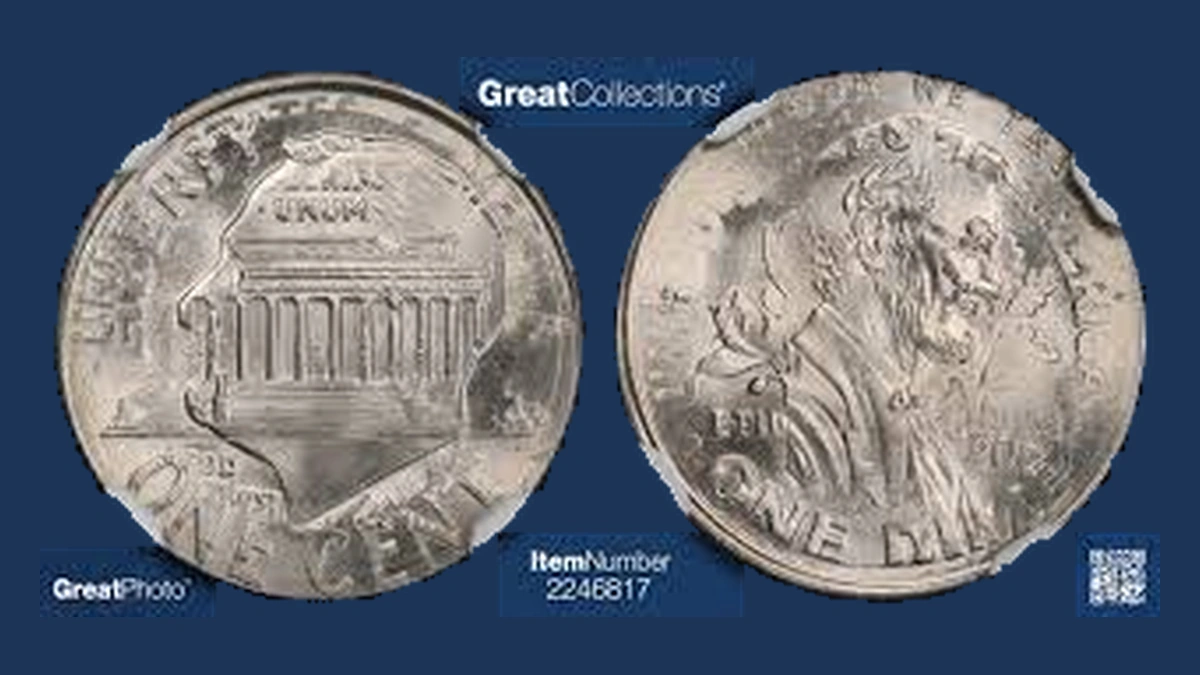
Two denominations can share one piece of metal when a finished coin enters a different press. The later cent strike overlaps a design already on that coin.
Recorded 2000 examples include cents struck over 2000-P dimes and over New Hampshire or Virginia quarters. Traces of Roosevelt, Washington, the torch, or a state design identify the earlier coin.
This is called a double-denomination error. It differs from using a blank that never carried another design.
The New Hampshire and Virginia examples are separate coins. Their orientations and prices should not be combined into one imagined specimen.
Estimated Value
A New Hampshire-quarter overstrike sold for $9,400 in January 2016. The Virginia-quarter piece later brought $26,400 in November 2022.
For planning comparisons, estimate $1,000–$4,000 for authenticated dime overstrikes and $9,000–$30,000 for comparable state-quarter examples. The dime figures are estimates, not a recorded sale used here.
Heritage’s archive separates the individual quarter coins and their sales. Judge the visible overlap and preservation of each piece.
How to Identify
Search for original details belonging to the earlier coin, such as part of Roosevelt or a state-quarter design. A silver-colored cent without those details is not enough.
Use a 10× magnifier to follow how the cent strike overlaps the earlier raised images. Both impressions must belong to the same genuine piece.
A dime begins near 2.268 g and 17.9 mm, a quarter near 5.67 g and 24.26 mm. Compare using a scale and calipers where accessible, allowing for later spreading.
A normal cent is 2.50 g, 19.05 mm, and smooth-edged; earlier edge grooves may survive on an overstruck dime or quarter. Recognizable remains of both denominations provide the fastest distinction from a wrong blank.
Conclusion
The estimated $5–$30,000 span includes everyday-search varieties and dramatic double-denomination rarities. A Wide AM gap is a different kind of find from a cent impressed onto a finished state quarter.
Keep those identities clear before comparing prices. Look for original design overlap, check the actual metal, and distinguish the cup-shaped die cap from coins struck beneath one.
The best close-up answers a specific question about how the coin was made.