1843 Half Dollar Error List with Pictures

A long raised line almost divides the eagle side of one 1843 half dollar. That Philadelphia coin sold for $3,407.50, while a dealer separately asked $6,500 for a coin struck twenty-five percent off-center.
The six 1843 half dollar errors below have estimated values from $250 to $7,500. Their clues range from tiny extra date strokes to a broad blank crescent.
Follow each comparison to see how the visible feature, mint, and condition fit the price—and which figure was an asking price.
1. 1843 Liberty Seated Half Dollar Clashed Dies (Estimated Up to $600)
Unwanted contours can hide among the normal folds beneath Liberty’s elbow. Bugert’s Philadelphia reference identifies clash marks in that area on 1843 half dollars.
A clash happens when the two dies, the steel tools that stamp the coin, touch without a metal blank between them. Parts of one design can leave impressions on the opposite tool.
Later coins copy those transferred shapes alongside the normal design. They are not random scratches made after striking.
The shape is the clue. Compare the whole group of folds, because one extra-looking line in a small photograph may simply belong to Liberty’s clothing.
Estimated Value
Estimate $250–$600 for circulated Philadelphia examples with readable clash marks. Clear detail and surfaces without damage support the upper part of the range.
Ordinary 1843 XF sold listings include $310 in June 2025 and $425 in April 2026. XF describes light circulation wear.
Those same-year sales offer general coin comparisons. Neither is presented as a sale of the elbow-area clash, so they do not establish a separate price for that feature.
How to Identify
Photograph Liberty’s elbow with all the folds beneath it. Compare a normal Philadelphia coin first so ordinary drapery is not counted as an extra mark.
Then use a 10× magnifier and several lighting angles to inspect the suspected transferred shape. A scratch cuts through the design rather than repeating part of the opposite face.
Check the 1843 date and lack of an O mintmark. A scale and calipers should show about 13.36 grams before wear and 30.6 millimeters, with a ridged edge.
A repeatable extra contour matching the documented folds beneath the elbow is the shortest path to identifying this clash.
2. 1843 Liberty Seated Half Dollar Doubled Die Obverse (Estimated Up to $800)
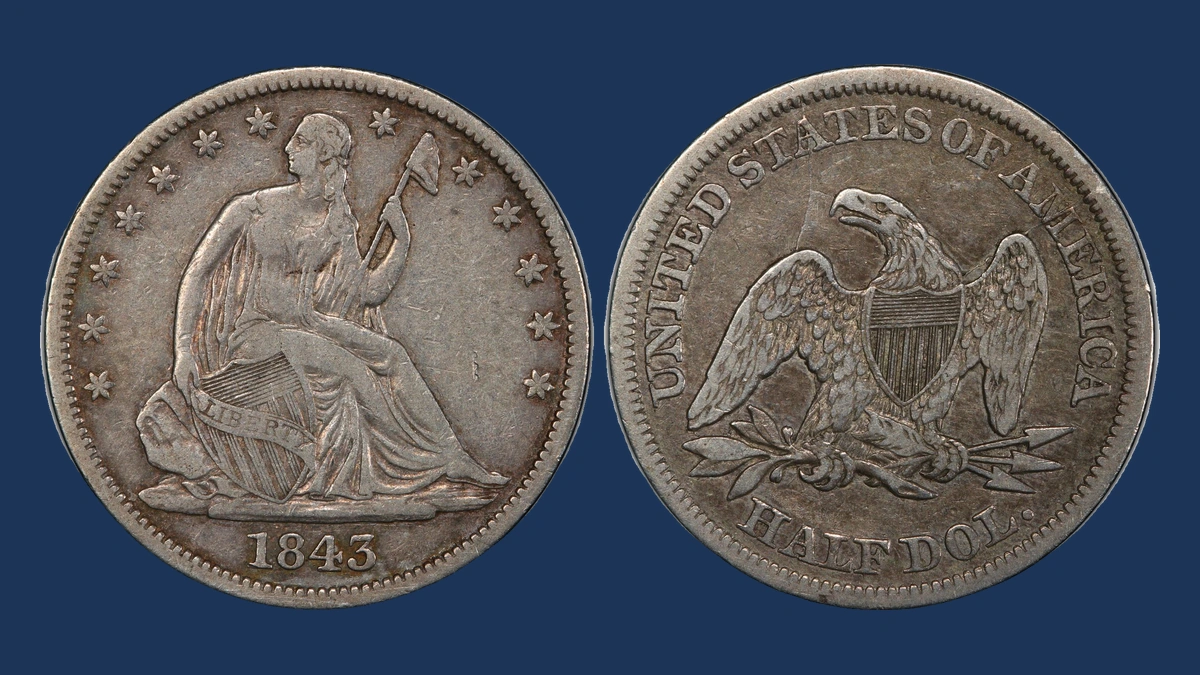
Repeated design outlines on the front can come from a doubled die. The extra shapes were already in the stamping tool, so coins made with it copied the same pattern.
Bugert’s 1843 Philadelphia table records doubled front tools. Obverse is the collector’s term for that front face.
This differs from a tool slipping during one strike. That movement can create flat ledges rather than a second rounded design impression.
An extra stroke on a date digit also needs separate checking. Repunching the date does not by itself prove that the wider front design was doubled during tool preparation.
Estimated Value
An identified circulated example has an estimated range of $300–$800. Clear repeated shapes and useful remaining detail are important at every grade.
Recent ordinary Philadelphia XF sales around $310–$425 give a same-year starting point. They are not auction records for this specific doubled front.
The upper allowance assumes an appealing coin with easy-to-show duplication. Heavy wear or cleaning can reduce the comparison even when enough detail remains to identify the stamping tool.
How to Identify
Use the Philadelphia reference to choose an identified front image. Its table records the variety without giving one universal location or direction for the doubling.
Compare the same area through a 10× magnifier at equal image size. Follow each extra contour where it meets the main design.
A flat ledge, a scratch, or repunching limited to the date can have another cause. Confirm 1843 and the Philadelphia back without a mintmark.
Calipers and a scale check about 30.6 millimeters and the original 13.36 grams, with a ridged edge. A matching repeated contour on the reference coin is the decisive first comparison.
3. 1843 Liberty Seated Half Dollar Date-Area Cud (Estimated Up to $1,500)
A broad raised patch joins the rim beside the date on this Philadelphia variety. Bugert’s table records it as a cud.
A cud forms when part of a stamping tool breaks away at its edge. Silver flows into the empty space and leaves a mound where normal design should appear.
The patch can obscure nearby detail. It differs from the narrow raised line made by a small tool crack.
The connection to the rim matters. A dent can push metal upward, and material added after striking can form a lump, but neither automatically has the same original shape or surface.
Estimated Value
Estimate $400–$1,500 for circulated examples with a clear date-area cud. Ordinary Philadelphia XF sales around $310–$425 provide the starting coin comparison.
The higher allowance concerns a substantial, clearly identified break on an attractive coin. It is not a recorded sale price for Bugert’s reference example.
Smaller visible damage to the tool, heavier wear, or later surface problems can lower the comparison. The range does not apply equally to every rim lump beside an 1843 date.
How to Identify
Keep the date, raised patch, and rim in one photograph. Their relationship is more useful than an isolated close-up of the lump.
The edge normally has ridges; follow them around the defect for signs of bending. A scale checks the original 13.36 grams, while calipers compare the outline with the usual 30.6-millimeter diameter.
Now inspect the raised patch through a 10× magnifier. Solder may leave a seam or different texture, while an impact often crushes nearby detail.
The patch should belong to the original struck metal.
Match its broad boundary and date-side rim connection with the reference image for the key first distinction from later damage.
4. 1843 Liberty Seated Half Dollar Repunched Date (Estimated Up to $3,500)
A small extra stroke sits below the crossbar of the 4 on the Philadelphia variety. Bugert calls the digit repunched south, meaning its earlier position was lower.
The New Orleans example in the Newtown collection has a separately described double-punched date. Its marks should not be assigned the Philadelphia coin’s direction without comparison.
Both features began when the date punch was applied more than once to a stamping tool. Later coins copied any surviving earlier strokes.
The year still reads 1843. This is repeated placement of the same date, rather than evidence that another year was changed to it.
Estimated Value
An identified 1843-O in XF40 brought $366 in July 2026. The Newtown MS63 CAC coin had previously sold for $3,290 in January 2015.
These support an estimated $300–$3,500 across circulated examples and comparable unworn coins. MS63 describes no circulation wear, though surface marks can remain.
The recent doubled-date sale is the more useful worn-coin benchmark. A visible extra date stroke alone does not give every example the older MS63 result.
How to Identify
Check the mint before choosing a close-up. Philadelphia has no mintmark; an O below the eagle requires the separate New Orleans date comparison.
For Philadelphia, use a 10× magnifier immediately below the 4’s horizontal bar. Keep the other digits visible to locate the earlier stroke accurately.
On an O-marked coin, follow the actual extra date contours shown by that mint’s reference. Rounded repeated strokes differ from flat ledges caused by movement during striking.
The normal ridged-edge half weighs 13.36 grams before wear and measures about 30.6 millimeters with a scale and calipers. The matching remnant below the Philadelphia 4 is its quickest specific check.
5. 1843 Liberty Seated Half Dollar Die Cracks (Estimated Up to $4,000)
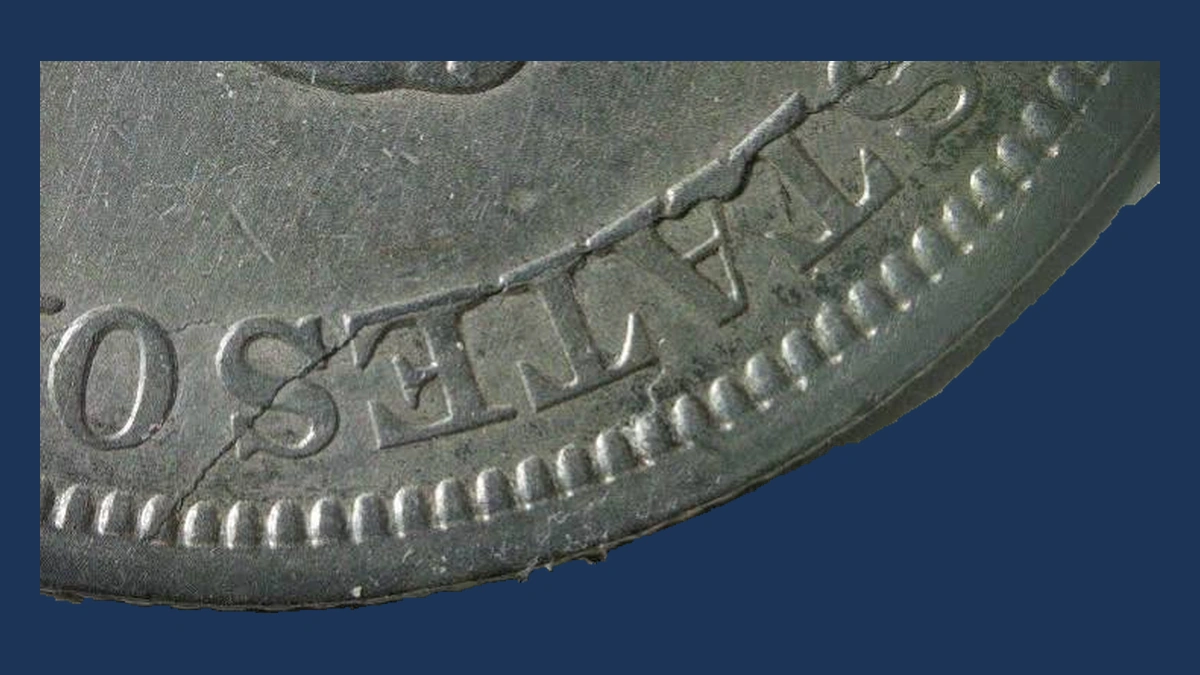
A nearly vertical raised line crosses the back of the Newtown collection’s Philadelphia coin. The long crack gives the eagle side a different appearance from a short line inside lettering.
The collection’s New Orleans coin instead has cracks within HALF DOL. A separate O-mint report describes lines around DO and D ST, plus one near the rock support and lower left shield.
These are different examples. Their crack maps should not be combined into one imaginary coin.
Each ridge formed as silver entered a crack in a stamping tool. A later scratch would cut into the coin’s surface instead.
Estimated Value
The Newtown catalog records $3,407.50 in May 2018 for Philadelphia MS64 CAC and $3,290 in January 2015 for New Orleans MS63 CAC. Both prices cover complete unworn coins.
Estimate $300–$4,000 from readable circulated examples through similarly attractive unworn pieces. The long line helps identify the Philadelphia coin.
Its condition and CAC approval also matter. The sale does not establish the crack’s value apart from the coin carrying it.
How to Identify
Under low side light, inspect the line with a 10× magnifier. Look for raised metal rather than a groove with disturbed edges.
For Philadelphia, follow the near-vertical line across the back. New Orleans examples need their own HALF DOL comparison or the separately documented DO, D ST, and rock-support paths.
Do not require every path on one coin. A scale and calipers check the original 13.36 grams and about 30.6 millimeters, with an intact ridged edge.
The mintmark selects the correct reference. A continuous raised line matching that reference is the most direct confirmation, rather than any line that happens to cross the eagle.
6. 1843 Liberty Seated Half Dollar 25% Off-Center Strike (Estimated Up to $7,500)
A large blank crescent accompanies missing design on the 1843 listed by error dealer Fred Weinberg. The description calls it twenty-five percent off-center and identifies an NGC VG8 example.
VG8 means the coin has heavy circulation wear. No Motto describes its normal back design without IN GOD WE TRUST.
The blank sat outside its intended position when struck. Some design missed the metal, while an area elsewhere remained unstamped.
That is different from an uneven rim alone. Both faces and the complete outline are needed to see whether the metal blank, rather than one stamping tool, was out of position.
Estimated Value
Weinberg’s historical dealer listing asked $6,500 for the NGC VG8 example. That was an advertised price, not a completed auction result.
Estimate $5,000–$7,500 for an authenticated 1843 with comparable displacement and a readable date. The same-year offering provides the reference for this range.
Remaining detail, overall appearance, and damage can change the comparison. Two equally worn coins may not have equally clear or attractive off-center designs.
How to Identify
Look for design missing at one edge and an unstamped crescent elsewhere. Compare both faces so the shift can be explained on the whole coin.
If only one face is displaced, a misaligned tool may be the cause. Use a 10× magnifier to inspect the blank area and its boundary.
Filing or edge damage removes metal rather than merely leaving it unstamped. A scale checks the original 13.36 grams, while calipers record the outline against the usual 30.6-millimeter diameter.
Inspect surviving edge ridges as well. A readable 1843 date joined to matching displaced designs and original blank metal gives the essential first confirmation.
Conclusion
Estimated values run from $250 to $7,500 across the 1843 examples described. Tiny date remnants, transferred drapery shapes, broad rim patches, and major strike displacement each need their own close-up.
Keep Philadelphia and New Orleans references separate. The $6,500 off-center figure was a dealer’s asking price, while the documented unworn-coin auction results reflect the complete coin’s condition as well as its visible feature.