1846 Half Dollar Error List with Pictures

A sideways 6 hides beneath the upright digit on one famous 1846 half dollar variety. A well-preserved MS65 example sold for $15,862.50 at Heritage in October 2014.
Other 1846 half dollar errors include doubled front detail and two raised patches along the rim. Estimated prices across the examples below range from $150–$16,000.
Read on to spot the extra number strokes, check the rim, and separate three different ways the dies changed.
1. 1846 Liberty Seated Half Dollar Doubled Die Obverse Error (Estimated Up to $700)
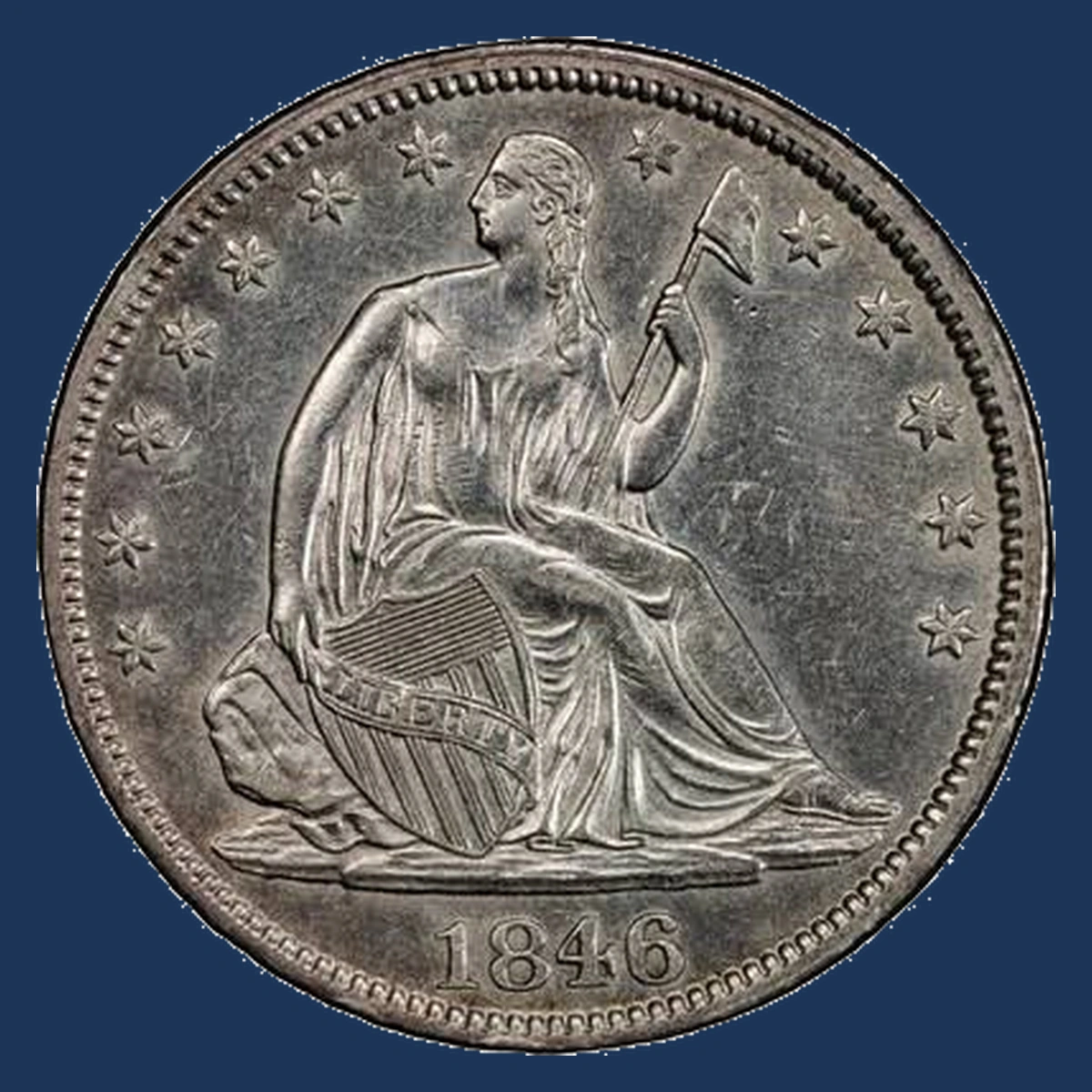
A doubled die can leave repeated detail on the front of a coin. The die is the steel tool that stamps the design, and the repeated image is in that tool.
PCGS lists an 1846 Medium Date doubled front design under the catalog name WB-10. An older 1986 advertisement also described an 1846 doubled obverse, meaning the front face.
The older ad does not identify a particular doubled letter or prove that it was WB-10. The modern variety needs its own matching example.
Extra strokes in the date can have a different cause: a date punch applied more than once.
Estimated Value
An AU55 in the PCGS WB-10 category sold for $504 in May 2022. AU55 describes a lightly worn coin with much of its detail remaining.
An estimated $350–$700 suits similar examples with the same identified variety. Cleaning and other surface damage can lower the price.
The 1986 advertisement is not the basis for this estimate. Match the coin’s variety and condition before treating the $504 sale as a useful comparison.
How to Identify
Compare the front with an identified WB-10 example. Use a 10× magnifier to find the same repeated detail, rather than guessing that any extra line proves doubling.
A low, flat shelf beside a letter can come from movement during striking. A scratch or impact can also create an extra edge, but it will not match the full variety pattern.
Check the 1846 date and Philadelphia identity before using the Medium Date reference. Repeated date digits alone do not settle the doubled-die question.
A normal unworn coin weighs about 13.36 g and measures 30.6 mm; check with a scale and calipers. Inspect the grooves around the edge.
A specialist match to the actual WB-10 design gives the fastest reliable answer.
2. 1846 Liberty Seated Half Dollar Double Rim Cud Error (Estimated Up to $8,500)
Two raised patches connect to the rim below 846 on a documented 1846 half dollar. These patches are called cuds.
A cud forms when a piece breaks from the edge of the die, the steel tool used to stamp coins. Silver fills the missing space during striking and leaves a raised patch on the finished coin.
Heritage described both cuds on an MS62 horizontal-6 example in June 2020. The date error and the rim breaks came from different events.
They can appear on the same coin. That does not mean the coin should receive two separate full valuations.
Estimated Value
Estimate $6,000–$8,500 for an MS62 horizontal-6 coin with the documented cuds. MS62 is a grade for a coin without circulation wear but with visible imperfections.
A comparable MS62 horizontal-6 example brought $7,762.50 in August 2011, though that price record does not specify cuds. The June 2020 coin’s description confirms both patches, but its price is hidden.
This estimate values the combined coin. Adding another full date-error price would count it twice.
How to Identify
Keep the rim in view. A photograph of the date alone can hide the connection that makes each raised patch a cud.
Use a magnifier and side lighting to study both patches beneath 846. Compare their outlines with the documented horizontal-6 example, then check the date feature separately.
A later hit usually flattens or pushes metal and may damage the edge grooves. A genuine cud should match the shape made by the broken die.
Check the normal 13.36 g weight with a scale and the roughly 30.6 mm diameter with calipers. Wear can reduce the weight.
Matching both rim-connected patches beneath the same digits gives the quickest confirmation.
3. 1846 Liberty Seated Half Dollar Repunched Date and Horizontal 6 Error (Estimated Up to $16,000)
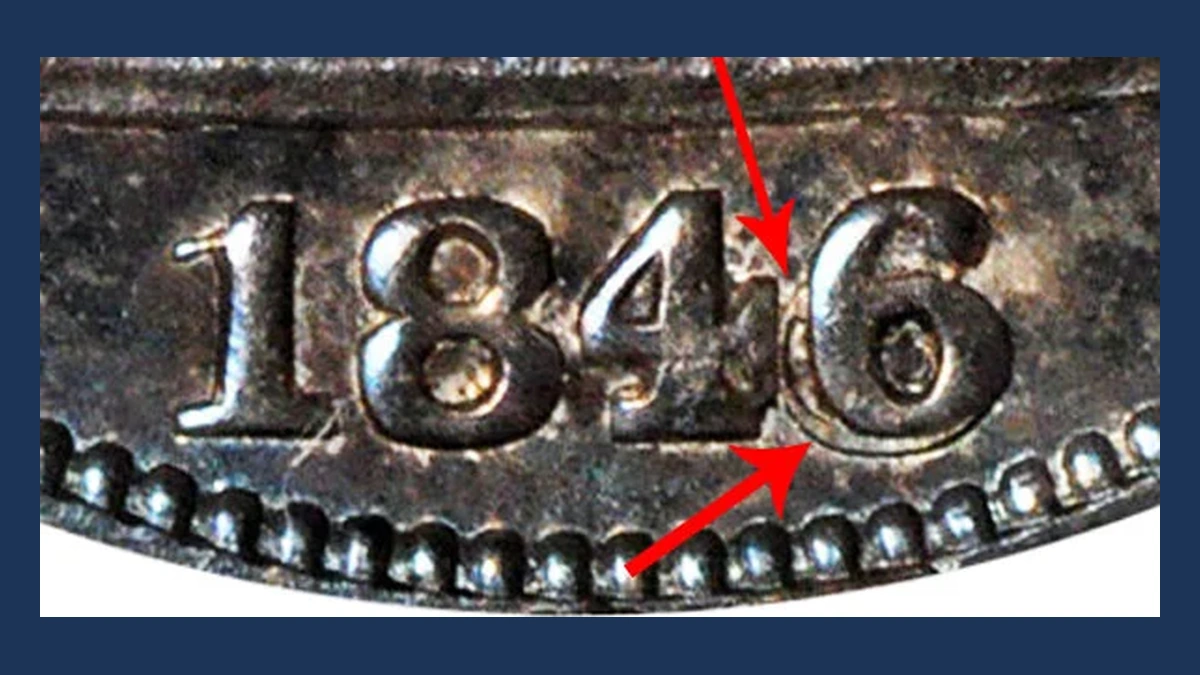
Part of a sideways 6 remains underneath the normal upright digit. The first punch was turned ninety degrees clockwise before the worker corrected it.
The second impression covered much of the mistake but left enough to see. This is a repunched date: the same digit was applied again in a different position.
Other 1846 coins show smaller repeated strokes. New Orleans Medium Date examples involve the 1 and 6, while Philadelphia Tall Date reports concern the 1 and 4.
Compare each with the correct version. A sideways 6 is still a 6, not part of an earlier year.
Estimated Value
The MS65 horizontal-6 example brought $15,862.50 in October 2014. Estimate $12,000–$16,000 for similarly well-preserved coins without circulation wear.
Ordinary worn New Orleans repunched-date coins have a separate estimated range of $150–$500. A documented XF Details repunched-6 example shows the type at a lower, problem-designated grade, but its sale amount is not public.
The two ranges describe different coins and condition levels. Stronger date strokes do not erase the effect of wear or damage.
How to Identify
Look for the shape of the earlier 6, not just a thick final digit. A magnifier should reveal curves that fit a number turned clockwise beneath the upright one.
For the other dates, match the mintmark and digit style. The 1846-O Medium Date example is a New Orleans comparison, not a substitute for the Philadelphia sideways 6.
Reject flat shelves or bumps that do not fit another digit. Inspect the edge grooves and check an unworn coin with a scale and calipers against 13.36 g and about 30.6 mm.
The quickest confirmation is a matching earlier-digit outline on the correct mint and date style.
Conclusion
The sideways 6 is easy to remember, but it is not the only feature to check. Doubled front detail and rim cuds have different causes, and the cuds can share a coin with the corrected date.
Estimated prices span $150–$16,000 across the versions and grades discussed. Compare the complete coin once, using its exact date style, mintmark, and condition rather than adding separate full prices for coexisting features.