1859 Half Dollar Error List with Pictures

An 1859-S half dollar with a repunched date sold for $360 at Stack’s Bowers in June 2021. Look closely: an extra curve beside a digit can reveal an earlier date impression.
The 1859 half dollar errors below have estimated values of $80–$500 in the conditions discussed. Read on to find extra mintmark lines, stray digits, and faint marks copied from the opposite side.
1. 1859-S Liberty Seated Half Dollar Repunched Mintmark Error (Estimated Up to $160)
A second curve beside the S may come from an earlier mintmark position. The S below the eagle identifies the San Francisco Mint.
Workers added this letter by hand to a die, the steel tool that stamps coins. If the punch moved between blows, part of its first impression could remain.
Later coins would show both outlines. A dealer lists a worn 1859-S with this feature, but gives no direction for the extra curve.
A large S alone proves nothing. Its size and a second impression are different features.
Estimated Value
A worn example graded Fine has an estimated value of $80–$160. The dealer’s March 21, 2026 inventory asks $108 for one such coin.
That is a selling offer, not a completed auction. The range applies to the whole coin in similar condition.
Clear extra curves and an undamaged surface help support the upper end. A larger main S does not, by itself, add an error premium.
How to Identify
Turn the coin over and find the S below the eagle. A 10× magnifier lets you inspect its curves without mistaking a nearby scratch for part of the letter.
Tilt the coin under a lamp. Look for a raised line shaped like an earlier S, rather than a flat shelf or a random bump.
Check the rest of the coin with a scale and calipers. Its original standard was 12.44 grams and 30.6 millimeters across; wear can reduce the weight.
Inspect the grooves around the edge for filing or other damage. For a quick check, match the extra S curve to a confirmed 1859-S example.
2. 1859-O Liberty Seated Half Dollar Misplaced Date Error (Estimated Up to $350)
A stray piece of 9 can appear outside the main date. One reported 1859-O has it among the small border teeth below the digits.
Another example has a 9 in the rock above the main 9. These are separate positions on separate coins.
The mistake began when a worker placed the date punch in the wrong spot on a steel stamping tool. Part of that first impression remained after the correct date was added.
The unusual location matters. Thick digits within the normal date do not, by themselves, show this error.
Estimated Value
An example graded XF, meaning lightly worn with much detail remaining, has an estimated value of $200–$350. The dealer asks $260 for the coin with a 9 in the rock.
That offer supports a range for a similar coin, not a recorded sale. The example with a 9 below the date needs a separate match.
Applying the same range to that placement is an estimate; it does not prove both coins bring identical prices.
How to Identify
Start by finding the O below the eagle on the back. It identifies New Orleans, the mint connected with these reported stray digits.
With a 10× magnifier, inspect the rock above the main 9 and the small border teeth below the date. Keep the whole date in view.
An extra raised curve should resemble part of a 9. A scratch cuts into the surface and may push loose metal along its sides.
Use calipers to check about 30.6 millimeters across and a scale to compare with the original 12.44 grams. Inspect the edge grooves for damage.
To check quickly, compare the stray curve and main date with a confirmed coin showing that same placement.
3. 1859 Liberty Seated Half Dollar Obverse Die Clash Error (Estimated Up to $450)
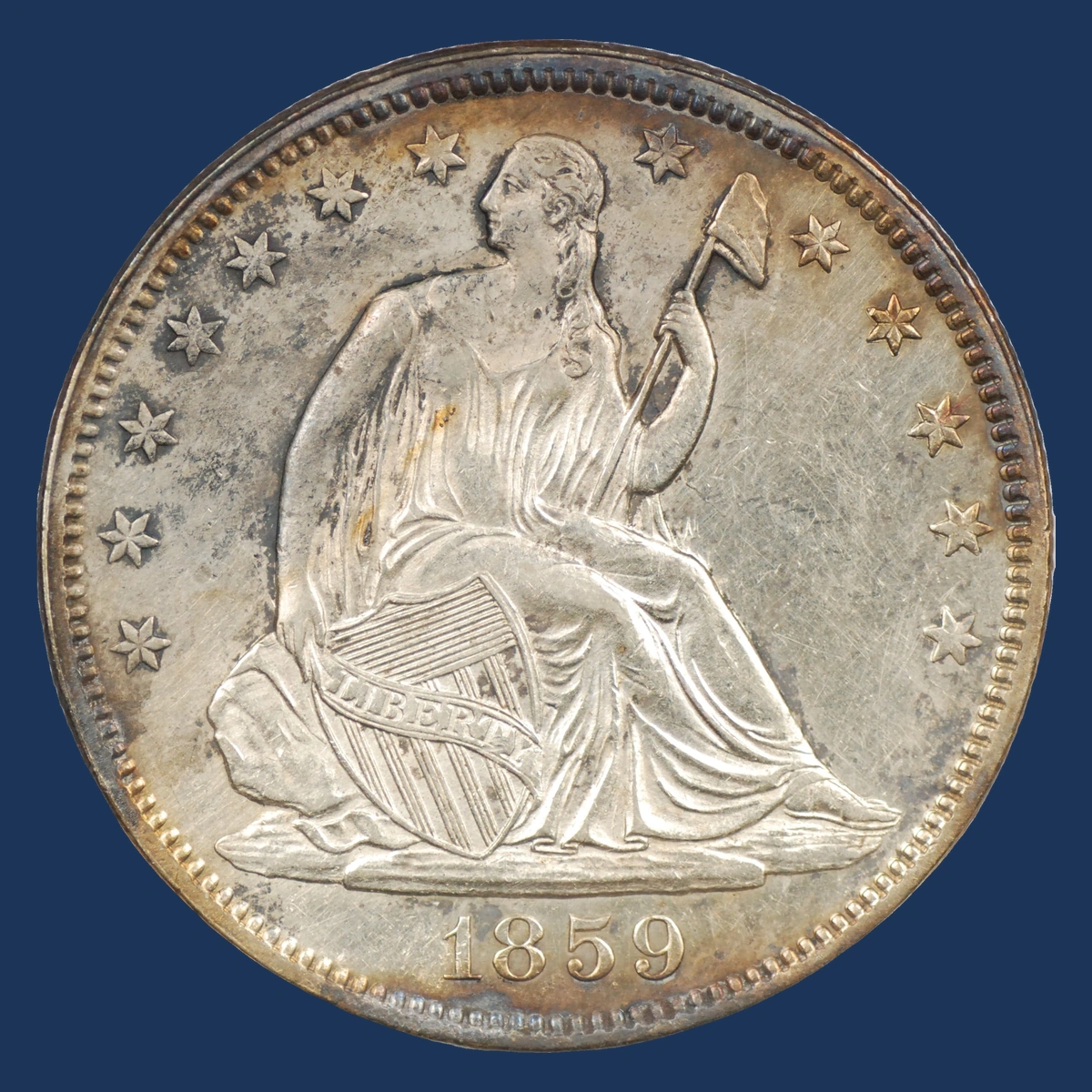
Faint pieces of the back design can appear on the front of a clashed coin. They may look out of place beside Liberty.
The two steel stamping tools normally strike a metal disc between them. If they hit each other with no disc present, one tool can pick up marks from the other.
Those marks may appear on coins struck afterward. A dealer describes a lightly worn Philadelphia 1859 half dollar with this front-side error.
No exact location is given for its marks. A random line near Liberty is not enough to identify a clash.
Estimated Value
The dealer asks $340 for the clashed Philadelphia coin in AU condition, meaning it has only slight wear. A similar example has an estimated value of $275–$450.
This is a whole-coin range based on an asking price. It is not a completed auction result.
Clear transferred shapes can make the error easier to appreciate. Wear, cleaning, and dull surfaces still affect the price, even when the clash is real.
How to Identify
Compare pictures of both sides before focusing on a single line. A genuine clash should echo a shape from the opposite side of the coin.
A 10× magnifier and low light can help show whether a mark is raised or cut into the silver. Scratches often cross nearby details without following the back design.
This Philadelphia issue has no mintmark below the eagle. Check about 30.6 millimeters with calipers and compare its weight with the original 12.44 grams on a scale.
Look around the edge grooves for damage, too. To test a suspected clash quickly, match its shape and position with a confirmed 1859 example and the opposite-side design.
4. 1859-O and 1859-S Liberty Seated Half Dollar Repunched Date Error (Estimated Up to $500)
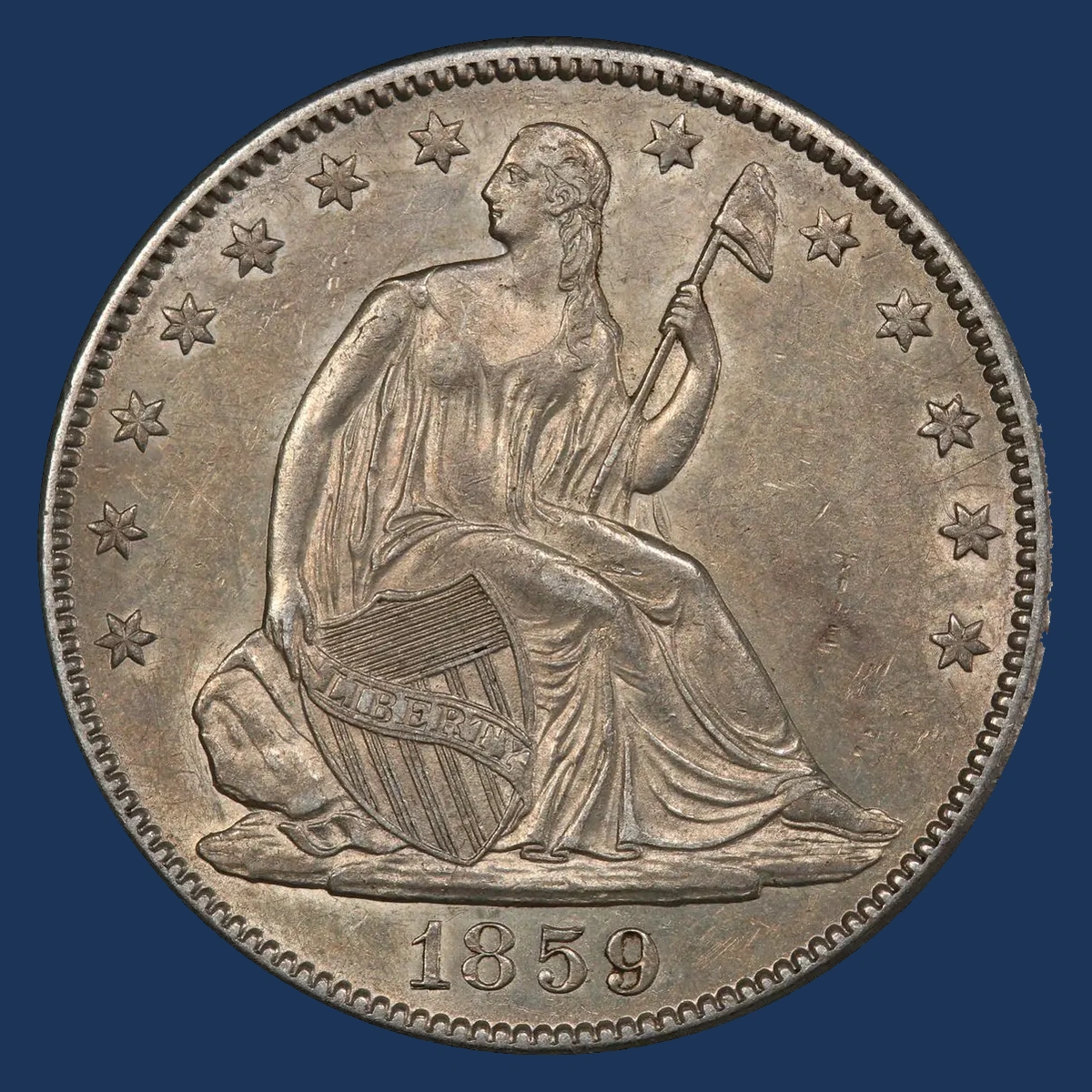
Extra pieces of a numeral beside the date can show where the date punch first landed. The final impression did not always erase those earlier lines.
Both New Orleans and San Francisco examples are recorded for 1859. Collectors use WB-9, FS-301 for one New Orleans variety and WB-1 for a San Francisco variety.
These names identify different sets of stamping tools. Their extra date lines need not look alike.
The San Francisco listing also says Large S. That describes the size of the mintmark on the back, not an extra date impression.
Estimated Value
An 1859-S WB-1 graded PCGS XF40 sold for $360 at Stack’s Bowers in June 2021. Similar circulated examples around that lightly worn grade have an estimated value of $250–$500.
The sale was for the San Francisco coin. Applying this range to a New Orleans example is an estimate, not a sale record for that variety.
Visible extra lines help, but cleaning or heavier wear can lower the price.
How to Identify
Choose the right comparison first: find the O or S beneath the eagle. An O-mint date should not be checked against an S-mint date photograph.
Under a 10× magnifier, follow each raised extra line beside the four digits. It should form part of a numeral, rather than an isolated scratch or a flat, smeared edge.
Weigh the coin on a scale and measure it with calipers. Compare with the original 12.44 grams and 30.6 millimeters, allowing for wear.
Check the edge grooves for alteration. Finish by matching the date lines to WB-9 FS-301 for New Orleans or WB-1 for San Francisco; that is the quickest useful check.
Conclusion
The estimated $80–$500 range covers worn 1859 half dollars with four different features. Start with the extra mark’s location: beside the S, outside the date, beside a date digit, or among the front design.
Keep the mint and condition in mind when comparing prices. The $108, $260, and $340 figures are dealer offers; the $360 repunched-date example actually sold at auction.