1863 Half Dollar Error List with Pictures

A missing part of the S, faint marks near Liberty’s knee, and peeling metal can all deserve a closer look. An 1863 half dollar described with lamination, or layer separation, recorded $925 at auction in January 2018.
This guide covers four 1863 half dollar errors, with estimated values from $200 to $1,500. Start with the visible shape, then use the checks below to decide whether the clue belongs to the design or the metal itself.
1. 1863-S Liberty Seated Half Dollar Die Clash Error (Estimated Up to $400)
Faint extra marks appear near Liberty’s knee and right forearm on the 1863-S variety called WB-4. Bill Bugert’s reference identifies those two areas as places to look.
The marks came from a die clash. Dies are the steel tools that stamp the two faces of a coin.
When they hit each other without a metal blank between them, one design can leave traces on the opposite tool. Later coins may carry those traces alongside their normal design.
This example has light marks. Good lighting helps, but a scratch beside the knee is not enough to identify a clash.
Estimated Value
Estimate $200–$400 for a circulated example with clear clash marks and detail around XF, meaning lightly worn. Strong surfaces can help it reach the upper part of that range.
A normal 1863-S graded ANACS XF45 Details sold for $216 at Heritage on March 12, 2025. Its label noted cleaning.
That sale compares the year, mint, and general condition. It does not establish a separate price for the WB-4 clash marks.
How to Identify
Place a lamp low beside the coin so light crosses Liberty’s knee and right forearm. Look through a 10× magnifier, keeping both areas in view.
Compare them with the WB-4 illustration in Bugert’s reference. The marks should relate to parts of the opposite design, rather than random scratches.
Check for the S below the eagle and ridges around the edge. A scale and calipers provide basic checks against 12.44 grams before wear and about 30.6 millimeters.
Take a full front photograph as well as close-ups. Agreement at both the knee and forearm is the most useful quick check for this particular clash.
2. 1863-S Liberty Seated Half Dollar Incomplete Small S Error (Estimated Up to $500)
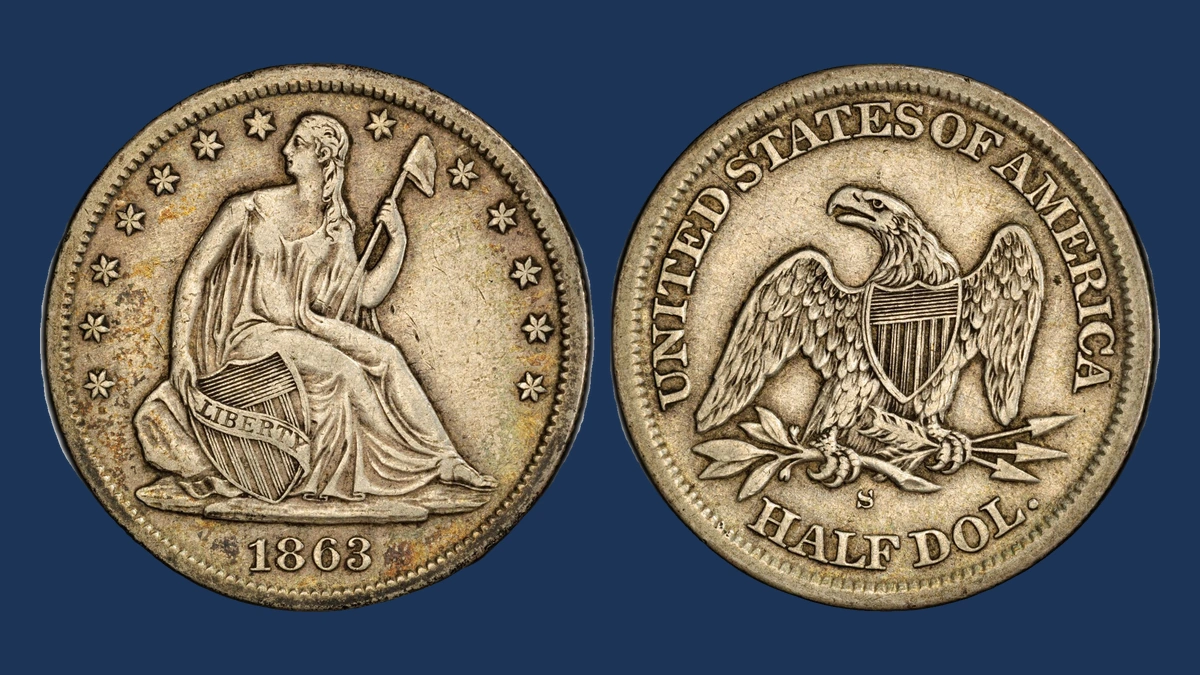
The upper part of the small S can be partly or completely missing. Its lower curve remains important because it identifies a San Francisco coin, not a Philadelphia coin with no mintmark.
Specialist pictures show the different incomplete shapes on 1863-S half dollars. Compare the surviving letter before deciding what caused its appearance.
Wear can hide detail too. A filled or partly covered letter may also seem incomplete in a photograph.
The recognized variety depends on its outline, rather than a claim that the mintmark punch broke while the coin was being struck. The remaining lower S should be readable.
Estimated Value
For a circulated example around XF detail, use an estimated $200–$500. A clearly matched mintmark and attractive surfaces support the higher portion.
The March 2025 Heritage sale at $216 provides a same-year, same-mint comparison. That XF45 Details coin had cleaning damage.
Its catalog did not identify an incomplete S. The range therefore remains an estimate for the variety, rather than the sale price of a confirmed example.
How to Identify
Keep the lower curve of the S visible while studying the top. If the entire letter is blurred or worn flat, the picture cannot show a distinctive incomplete shape.
Place a normal small S beside the suspected variety at equal image sizes. A 10× magnifier helps reveal cuts or polishing where the top should be.
Check neighboring detail for similar wear. General loss across the eagle and letters can explain a faint mintmark.
The standard is 12.44 grams and about 30.6 millimeters, checked with a scale and calipers, with a ridged edge. Match the surviving lower S and the upper boundary to a cataloged example without cleaning the area.
3. 1863 Liberty Seated Half Dollar Philadelphia Die Crack Error (Estimated Up to $600)
A thin line standing above the surface may come from a crack in the stamping tool. PCGS reports die cracks on Philadelphia 1863 half dollars without naming one fixed path.
Silver entered the crack when the coin was struck. The result is a raised line rather than a cut into the coin.
That distinction matters. A scratch removes or pushes metal on the finished surface, while a split in the coin’s own metal has another cause.
Examine the line present on your coin. A crack map from a San Francisco example cannot identify a Philadelphia coin made with different tools.
Estimated Value
The estimated range is $250–$600 for a Philadelphia example with visible raised cracks and lightly worn XF detail. Clear surfaces and the strength of the lines affect the comparison.
Heritage sold a regular 1863 in NGC XF Details for $312 on February 14, 2023. The grading label noted cleaning.
That is an ordinary-coin comparison, not a recorded crack premium. A fine line should not be priced as a large missing section of the stamping tool.
How to Identify
Verify that there is no S below the eagle. The PCGS discussion of the 1863 Philadelphia issue provides the relevant background.
Under a 10× magnifier, turn the coin slowly through a narrow beam of light. A true ridge remains above the surface as the lighting changes, unlike a scratch with a recessed center.
A line may branch or change thickness, but neither is required. Check the full coin for bending, splits, or other damage before judging a single close-up.
A scale and calipers check about 12.44 grams and 30.6 millimeters, with a ridged edge. Establishing that the line is genuinely raised is the key first test.
4. 1863 Liberty Seated Half Dollar Planchet Lamination Error (Estimated Up to $1,500)
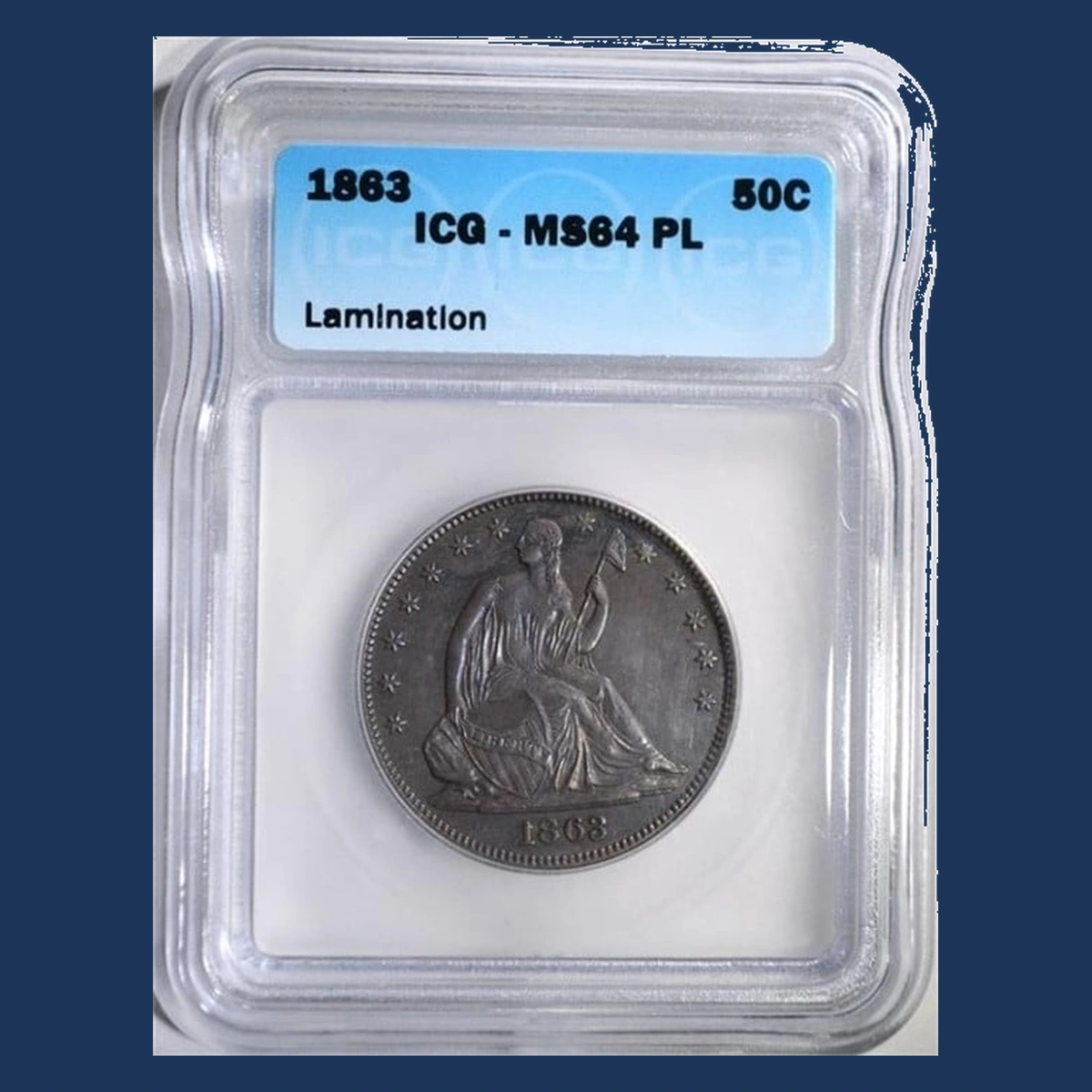
A peeling layer or shallow missing patch can show that the coin’s metal separated. Collectors call this lamination, a problem inside the metal blank rather than in the stamping tool.
Silver City Auctions described an 1863 example with lamination in January 2018. Its grade was ICG MS64 Prooflike, meaning unworn with reflective surfaces.
Prooflike does not mean Proof. Proof coins were specially made for collectors, while this label describes how the surface looks.
The brief catalog does not name the affected face or position. Photographs of the actual coin are needed to show the layer boundary.
Estimated Value
The January 23, 2018 listing records $925, below the $2,500–$3,500 presale estimate. It separately lists a 17.5% buyer’s fee without saying whether the displayed result includes it.
Use an estimated $800–$1,500 for a comparable example. That range follows the recorded result, not the higher prediction made before the sale.
The grade, reflective surfaces, and appearance of the separated layer all matter when comparing another coin.
How to Identify
Leave any loose flap in place. Lifting or scraping it can destroy the surface evidence.
With a 10× magnifier and side lighting, look for a shallow boundary where one layer separates from another. Corrosion pits and later gouges can remove metal without producing the same layered structure.
Photograph both faces and the holder because the catalog does not locate the feature. A scale checks the original 12.44-gram standard, although weight alone cannot prove lamination.
Calipers should show about 30.6 millimeters; inspect the ridged edge for later cutting. Match a genuine layer boundary and the full coin to the auctioned ICG example for the most direct confirmation.
Conclusion
The estimated ranges here run from $200 to $1,500. A faint transferred design, an incomplete S, a raised line, and a separating metal layer each need a different close-up.
For the lamination example, the recorded $925 sale is more useful than the higher presale estimate. Keep Prooflike appearance separate from Proof manufacture, and check the surviving shapes before attaching an error name to the coin.