2006 Penny Error List with Pictures

A four-percent shift was enough to give one 2006 penny a visible mint error—and a $39 sale in March 2025. Bigger changes are possible, but size alone does not explain their value.
The six groups in this 2006 penny error list span estimated values of $2–$1,500. They include extra lettering, a bare copper-coating boundary, and a cent design on a dime blank.
Compare the feature itself below, then check the coin’s metal and condition before choosing a price.
1. 2006 Lincoln Penny BIE Die Chip (Estimated Up to $75)
The gap between B and E in LIBERTY can fill with a short raised bar. It looks like another I, giving collectors the nickname BIE.
The bar was not engraved as a new letter. A small piece broke from the die, the steel tool that stamps the design.
Coin metal filled the resulting space during striking. More than one penny can carry the same feature when the damaged tool keeps working.
The 2006 report does not fix one mint or finish. A random bump elsewhere in the word is not the same letter-gap feature.
Estimated Value
Minor BIE bars can be estimated at $2–$25. Strong, well-defined examples on attractive pennies can fit approximately $25–$75.
This compares small modern-cent tool chips rather than assigning a verified sale to the reported 2006 example. The feature’s visibility matters more than a dramatic nickname.
A few tiny marks do not make an expensive rarity automatically. The whole coin’s condition and the clarity of the bar should guide the price, especially when grading fees could exceed its premium.
How to Identify
Find B and E before enlarging the photograph. The extra bar belongs between those letters, rather than beside any convenient upright stroke.
A 10× magnifier and low side light help show whether the feature rises from the metal. A scratch can push metal aside without reproducing an original tool chip.
Check for dirt and rounded copper bubbles around the gap. Do not scrape or press a raised feature to test it.
Use a scale and calipers on an accessible coin, comparing with 2.50 grams and 19.05 mm. The normal edge is smooth.
A solid original I-like bar directly between B and E is the practical BIE check.
2. 2006 Lincoln Penny Doubled Front Design (Estimated Up to $200)
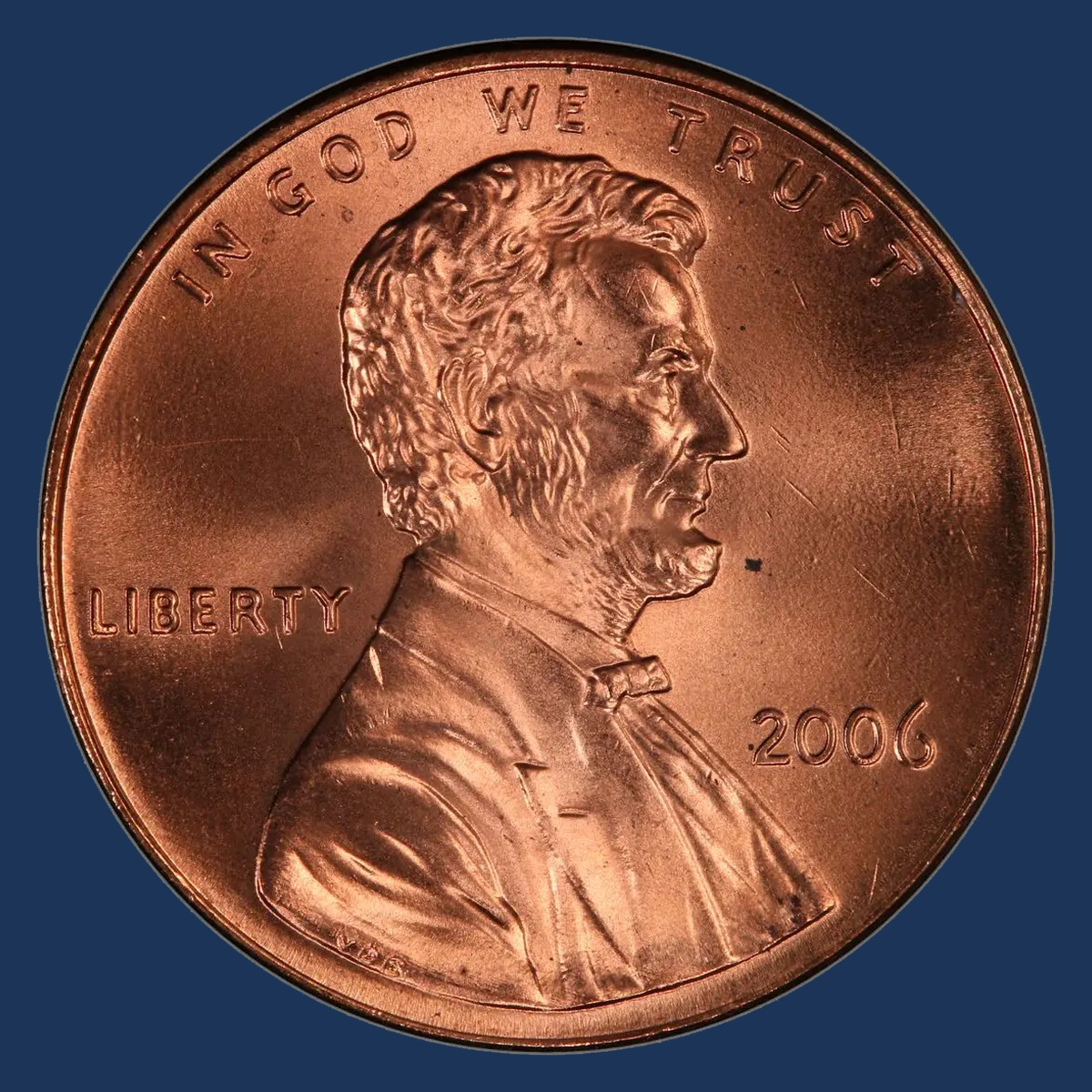
The final 6 in 2006 can draw attention when its edge appears repeated. LIBERTY and the front motto are other areas named in the Philadelphia report.
A doubled die already carries the repeated detail before it strikes the blank. Several coins from that tool can therefore share the same extra outline.
This differs from a second blow moving the entire design. The feature is part of the tool, not a second full strike on one penny.
The reported areas are not one guaranteed pattern on every coin. Ordinary strike movement and split copper plating can also produce extra-looking edges.
Estimated Value
For minor identified front varieties, estimate $5–$40. Clearer separation on a well-preserved penny can fit roughly $40–$200.
These estimates compare modern Lincoln doubled dies rather than a confirmed 2006 auction record. A precise matching feature is more useful than generally thick lettering.
Philadelphia produced ordinary coins and satin-finish set coins in 2006. The correct finish needs its own comparison, so an attractive collector surface should not be mistaken for stronger doubling or a different kind of error.
How to Identify
Choose a normal 2006 penny of the same finish for comparison. Satin-finish set coins have a different surface from ordinary circulation strikes.
With a 10× magnifier, examine the 6 and the reported lettering areas. Compare the actual extra contour with an identified variety instead of joining several unrelated bright edges.
A flat shelf may come from movement during striking. A pale line beside a letter may be exposed zinc where the copper coat split.
The normal cent is 2.50 grams and 19.05 mm with a smooth edge. A scale and calipers can check an accessible example.
The useful match is the same physical repeated outline on the same mint and finish, visible beyond one lighting angle.
3. 2006 Lincoln Penny Partial Copper-Coating Loss (Estimated Up to $250)
A pale band can appear just inside the front rim where copper coating is missing. A 2006 Philadelphia example appears in an error-coin auction catalog with that description.
The location is useful, but it does not establish exactly when the copper disappeared. Original incomplete coating and splitting during the strike require different surface checks.
A modern penny has a zinc center under a thin copper coat. Gray metal at the boundary is therefore not proof of a silver coin.
Later rubbing or chemicals can expose the same zinc. The intact surrounding design helps distinguish the possible causes.
Estimated Value
A mint-made coating defect can be estimated at $10–$250, depending on its extent and surface preservation. The range compares partial plating problems on modern cents.
The catalog description identifies a front inner-rim feature without supplying a realized price used here. An auction listing should not turn a suggested amount into a completed sale.
The estimate also does not assume that the blank was never coated. The specific cause must fit the boundary and original design before the price comparison applies.
How to Identify
Look just inside the front rim, keeping the entire date and portrait visible. Use a 10× magnifier to follow the copper-to-gray boundary.
Check whether sharp struck details continue across that boundary. Rubbing on high points, chemical roughness, or a lifted flap can suggest different explanations.
Inspect both faces and the smooth edge rather than treating the pale band as the whole story. Do not scrape through remaining copper.
An accessible ordinary cent can be compared with 2.50 grams on a scale and 19.05 mm using calipers. A small coating loss may barely affect weight.
An undisturbed boundary near the inner rim is the starting clue, followed by establishing when and how the copper was lost.
4. 2006 Lincoln Penny Broadstrike (Estimated Up to $350)
A penny can spread wider while keeping every part of its design. That is the important starting point for a broadstrike.
The collar, a ring around the blank during striking, normally prevents this outward movement. Without its usual restraint, the metal can expand farther.
The 2006 report does not establish one mint or finish for every example. Its actual design and surface should supply that identity.
A broadstrike can be uneven, so a perfectly round expanded border is not required. Flattening a finished penny later can also enlarge it, but usually changes the letters and high points.
Estimated Value
An estimated $20–$350 covers genuine broadstrikes from modest spreading through stronger examples with attractive original detail. The amount of expansion and the remaining condition both matter.
A 1999 broadstrike graded MS65 Red sold for $67 in March 2023. That older Memorial cent offers a same-design comparison, not a sale of the reported 2006 type.
The range assumes a coin that expanded during minting. A hammered penny should not receive the same premium merely because it is larger than normal.
How to Identify
Follow the outside lettering on the front and back. A complete broadstrike keeps the intended designs on the coin despite the larger outline.
Use calipers to compare several widths with the normal 19.05 mm. Weigh an accessible example against 2.50 grams with a scale; spreading alone does not remove its metal.
A 10× magnifier can reveal crushed letters or scraped surfaces from later pressure. Inspect the smooth edge for tool marks as well.
Compare satin-finish and ordinary coins separately, since their normal surfaces differ. Do not identify the mint from a cropped border photograph.
Complete original design within natural outward spread is the feature that supports a broadstrike.
5. 2006 Lincoln Penny Off-Center Strike (Estimated Up to $500)
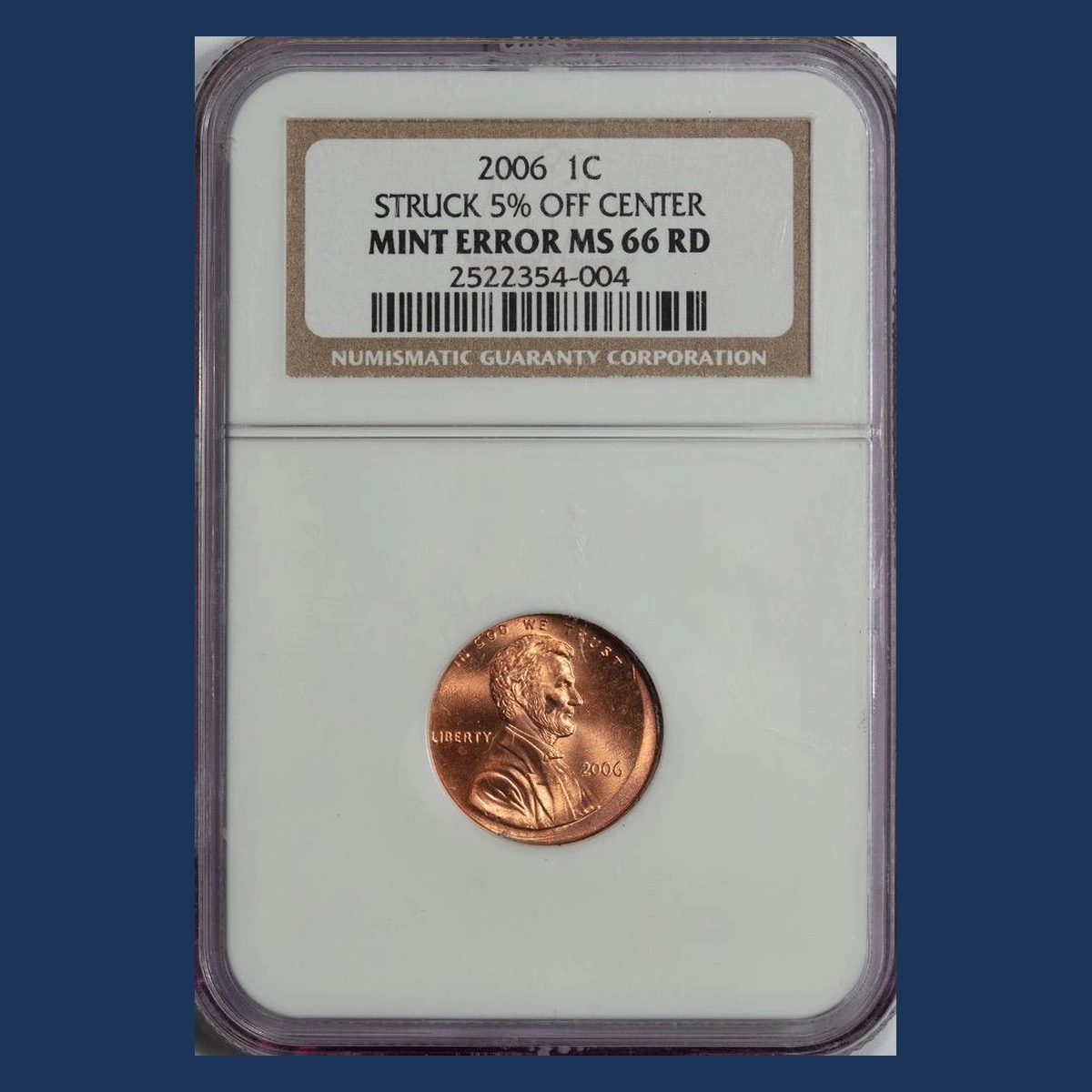
Lincoln’s design can run beyond one side while an unstruck area remains on the other. The blank was out of position when the tools came together.
The Memorial side should reflect the same placement. A shift confined to one face points toward a different alignment problem.
A recorded 2006 example is four percent off center. Philadelphia and Denver errors are reported more broadly, without every coin sharing that percentage.
The blank area still contains its metal. It should not be confused with a clipped section that was already missing before striking, or a design ground away afterward.
Estimated Value
The four-percent 2006 example sold for $39 in March 2025, graded PCGS MS64 Red. It was unworn with some marks and original copper-red color.
Estimate $15–$500 for genuine examples across different displacements and conditions. Small shifts usually fit lower, while stronger errors with a readable year can attract more.
The recorded sale is one comparison, not a fixed price for every percentage point. The date and surface still matter.
How to Identify
Keep the full outline visible and find the 2006 date. Then compare both faces to see whether the incomplete designs meet the same plain area.
Under a 10× magnifier, inspect the transition from struck design to blank metal. Grinding or polishing can leave a false empty-looking patch.
Check an accessible coin’s weight against 2.50 grams with a scale. Use calipers to document its changed outline against the normal 19.05-mm diameter.
Inspect the smooth edge for cuts or filing. A complete design inside a wider border belongs in the broadstrike comparison instead.
The useful combination is original unstruck metal beside matching design loss on both faces, with enough date to identify the year.
6. 2006 Lincoln Penny Struck on a Dime Blank (Estimated Up to $1,500)
The same Lincoln design can look too large when it lands on a dime blank. Some outer lettering may fall beyond the smaller metal disc.
The 2006-D report concerns this wrong-blank error. The blank was intended for a dime but had not yet received Roosevelt’s portrait or the torch design.
Its metal is copper-nickel clad, meaning outer layers bonded around a copper center. That differs from the copper-coated zinc of a normal penny.
Philadelphia wrong-blank reports need their own specimen checks. A gray color or small diameter alone cannot establish the original blank, mint, or production finish.
Estimated Value
For an authenticated cent on a dime blank, use an estimated $400–$1,500. Readable identity, metal confirmation, and condition determine the closest comparison.
A 2007-D cent on a dime blank graded PCGS MS66 sold for $600 in March 2023. That unworn coin with few marks has the same Memorial design but a different date.
This is not a recovered transaction for the reported 2006-D example. Chemical stripping or a smaller trimmed penny does not qualify for the same error range.
How to Identify
A scale should be compared with the dime blank’s normal 2.268 grams, rather than only the cent’s 2.50 grams. Calipers can record size against the dime’s 17.91 mm and cent’s 19.05 mm.
Allow for spreading during the cent strike. Inspect the layered metal at the edge with a 10× magnifier, while checking for filing or stripped copper.
An unused dime blank does not already have the grooves of a finished dime. It also lacks an earlier Roosevelt or torch design.
A professional metal examination can test that identity without scraping. Keep certified examples in their holders.
Identified dime-type metal beneath only the cent design is the useful distinction, supported by weight and the smaller starting size.
Conclusion
The $39 off-center sale shows that an identifiable 2006 error can remain affordable. Other examples differ greatly, especially when the cent design sits on metal intended for a dime.
Estimated values span $2–$1,500. Start at the place that changed: the B-to-E gap, a repeated letter corner, an expanded border, or missing copper.
A clear view of both faces and the edge makes those differences easier to explain and compare.