2009 Penny Error List with Pictures

An extra finger helped a 2009-S proof sell for $2,600 in July 2009, according to Wexler’s variety catalog. Proofs are specially made collector coins.
The 2009 penny error list also includes doubled cabin details, split metal, and coins struck in the wrong position. Estimated values run from $5–$3,000, with the design, finish, and strength of the error making a big difference.
Explore the features below to learn what to check on each of the four Bicentennial designs.
1. 2009 Lincoln Penny Doubled Front Design (Estimated Up to $125)
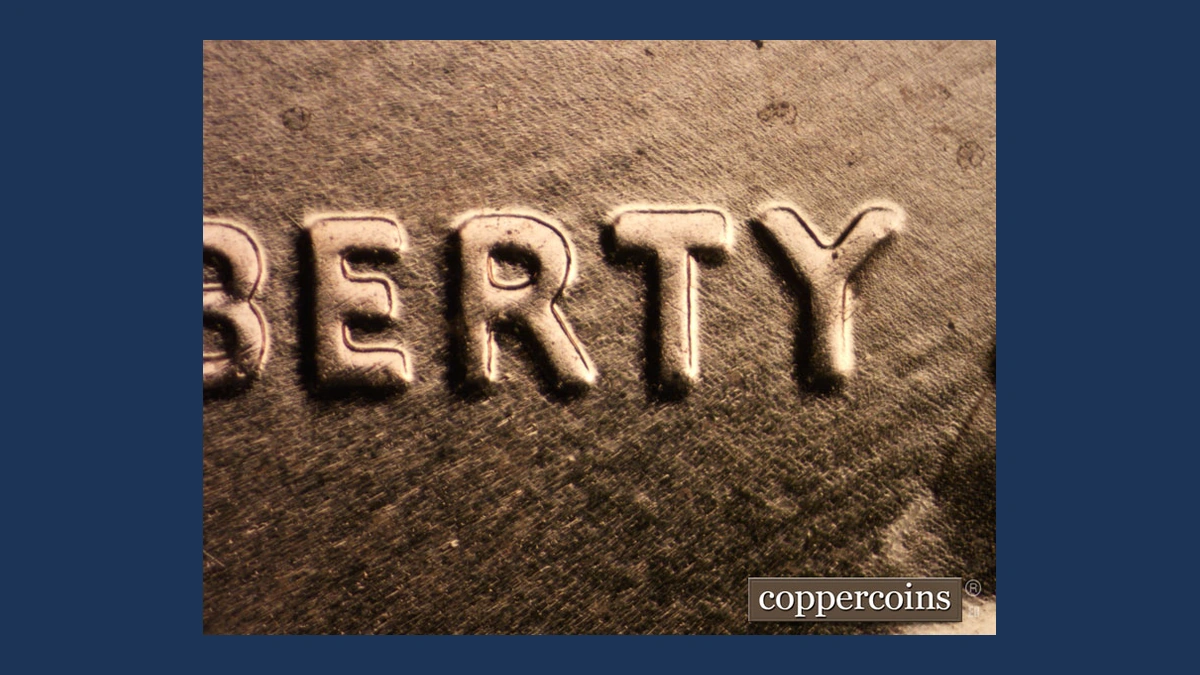
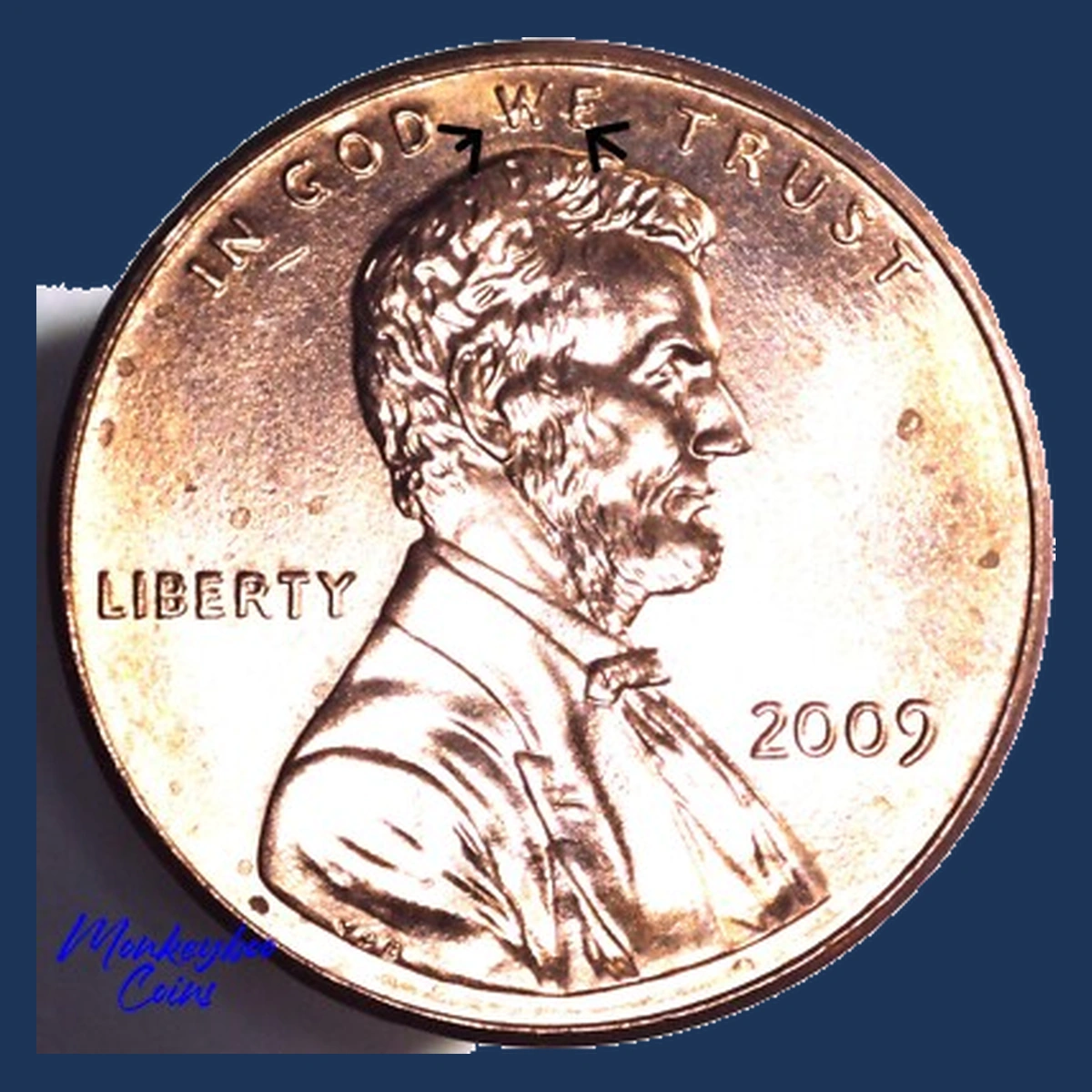
An extra curve below Lincoln’s ear can be small enough to overlook without magnification. Other front varieties show a repeated cheek line or split corners in LIBERTY.
These shapes come from a die, the steel stamping tool, that carries a doubled design. The extra detail repeats on coins made with that tool.
The same portrait appears on all four 2009 designs, but a matching face does not make every variety interchangeable. The back design and mint still matter.
For example, a Philadelphia log-cabin variety has a small extra earlobe. A different variety can show its strongest feature in the lettering.
Estimated Value
A clearly matched minor front variety can fit an estimated $5–$125. Stronger separation and clean, unworn surfaces help a coin reach the upper part of that range.
The year guide suggests $75–$125 for a certified MS64 example. MS64 means no circulation wear, with fairly few marks.
This is a guide range rather than an auction record for every numbered variety. A tiny doubled cheek line and a conspicuous extra earlobe should be compared on their own merits.
How to Identify
Find the back design first: log cabin, reading Lincoln, Illinois State Capitol, or unfinished U.S. Capitol. Then check the front for D, S, or no mint letter.
With a 10× magnifier, inspect the ear, cheek, and LIBERTY for a second outline. Match its exact location to a photograph of the same design and mint.
Flat shelves along a letter can come from movement during striking. They differ from a repeated design already in the tool.
Use a scale and calipers to note the normal 19.05-mm diameter and correct version weight. Ordinary copper-plated zinc cents weigh 2.50 g, while 95% copper satin-finish and proof coins weigh 3.11 g.
The shortest route is an exact match between the extra contour and the pictured variety.
2. 2009 Lincoln Penny Clipped Blank (Estimated Up to $150)
A missing bite from the edge may have existed before the design was struck. A blank cut from the wrong part of the metal strip can overlap an earlier hole.
The result can be a curved clip. Its shape differs from an off-center strike, where unused metal remains beside the design.
Reports cover both reading-Lincoln and log-cabin pennies. Their exact mint letters and clip positions are not established by those reports.
Not every missing piece began at the Mint. Cutting a normal penny later can leave a similar outline, so the edge and surrounding struck details need close inspection.
Estimated Value
Small clips on otherwise ordinary cents can be inexpensive. An estimated $15–$150 covers identified 2009 examples, from modest worn pieces to stronger clips with attractive remaining designs.
The year-specific guides place many collectible clips around $20–$75. A larger missing area may bring more, provided the date and back design remain recognizable.
Clean surfaces help, but a high grade cannot turn a later cut into a Mint error. Compare the clip itself before paying for the holder or label.
How to Identify
Examine the missing edge with a 10× magnifier before deciding how much metal is gone. Look for evidence that the surrounding design formed after the blank was clipped.
The rim opposite a curved clip may be weak because the incomplete blank moved differently during edge preparation. This is useful supporting evidence, not a feature that every clip must show equally.
Photograph the whole coin, including the date and identifiable back design. Compare the surviving width with 19.05 mm using calipers.
A scale can show reduced weight relative to the correct 2.50-g or 3.11-g version. Saw marks or a freshly squeezed cut need another explanation.
Check the missing edge together with nearby struck detail and any opposite-rim weakness.
3. 2009 Lincoln Penny Rim-Connected Die Break (Estimated Up to $300)
A thick patch touching the rim can replace part of the normal design. A piece of the stamping tool broke away, leaving an empty space for the coin’s metal to fill.
This rim-connected patch is called a cud. It is more substantial than a thin line made by a crack in the tool.
The 2009 report lists this error without fixing a mint or one of the four back designs. The actual coin must establish those details.
Edge damage can also leave a large bump. A genuine tool break must fit the struck surface and the missing design underneath it.
Estimated Value
Estimate $20–$300 for identified examples, with a small worn rim patch near the lower end. Larger patches that remove recognizable design can interest more collectors.
This range is a working estimate for the mechanism, not a price from a confirmed 2009 auction lot. The reported category does not establish a particular size or position.
Preservation of the remaining date and design also matters. Severe damage elsewhere may offset the appeal of a large raised patch.
How to Identify
Follow the raised patch to the coin’s rim under a 10× magnifier. It should represent an area where the stamping tool could no longer form the normal design.
Turn the coin over and look opposite that patch. Weakness there can support the explanation, although its visibility depends on the size and shape of the break.
Check for squeezed edges or metal pushed over the surface by a blow after minting. A single thin crack reaching the rim is not enough.
For loose coins, use a scale and calipers to identify the version against 19.05 mm and either 2.50 g or 3.11 g. Preserve the plain edge.
A solid raised patch joined to the rim, replacing design rather than covering it with damaged metal, is the key first feature.
4. 2009 Lincoln Penny Raised Die-Crack Lines (Estimated Up to $350)
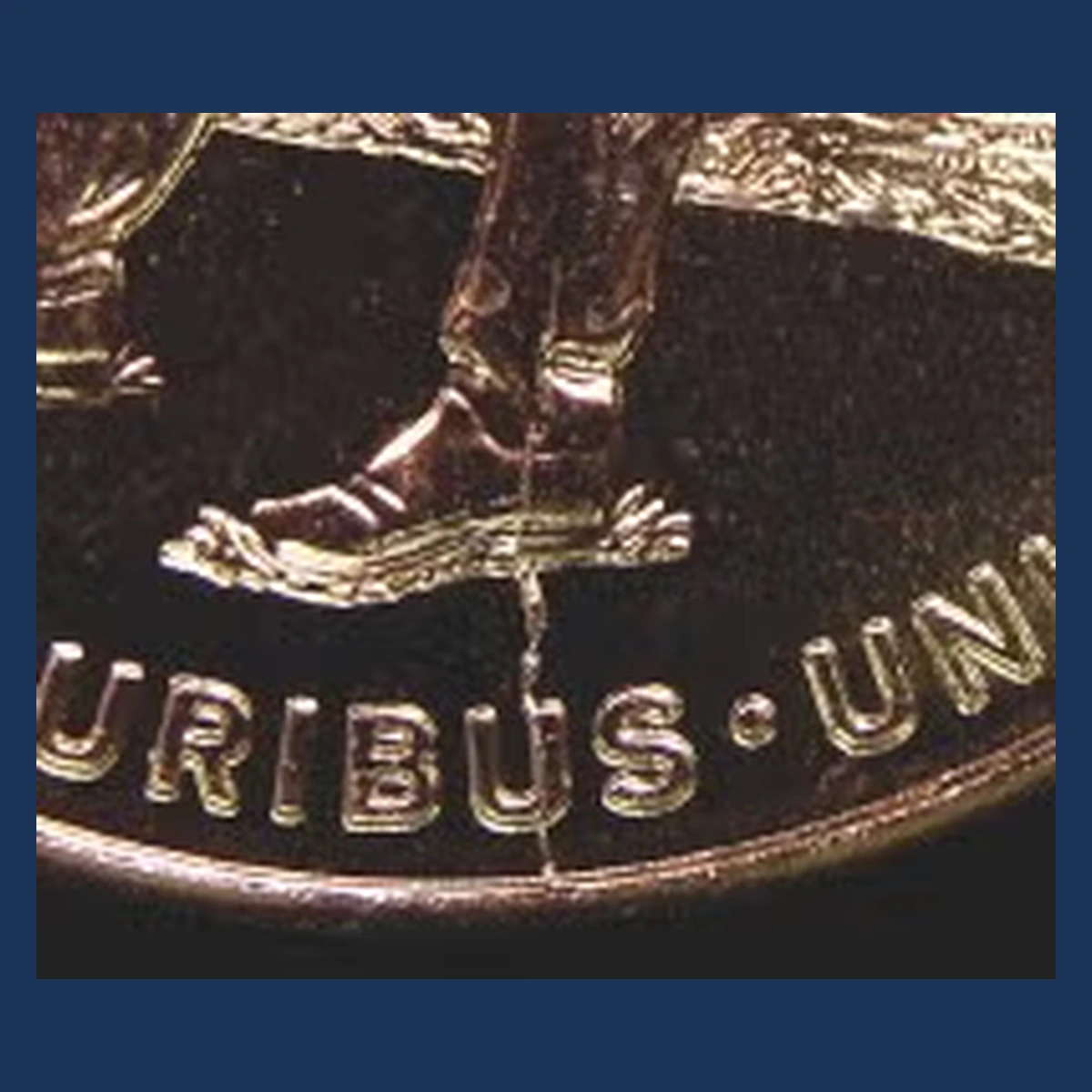
A fine ridge near Lincoln’s boot can look like an added line in the design. Metal entered a split in the stamping tool and copied that split onto the coin.
Reading-Lincoln pennies have reported boot-area cracks. Other cracks occur on different tools, so lines around a sleeve or mallet need their own comparison.
A separate Philadelphia log-cabin report describes cracking on both faces. It does not establish one shared path for all 2009 pennies.
The coin itself has not necessarily cracked. A raised ridge records damage to the tool, while an actual split through the coin requires a different explanation.
Estimated Value
A small crack often adds only a modest amount, even when it is easy to see. Use an estimated $5–$350 as the working range for identified examples.
At the stronger end, a conspicuous line crosses a main feature on an attractive unworn coin. The guide reports $630 for a two-sided log-cabin example, but its original sale is not established here.
That reported high is not the basis for pricing every boot crack. Compare line strength and preservation first.
How to Identify
Under a 10× magnifier, start at the reported boot area on the reading design. Follow the ridge past nearby details to see whether it is continuous.
On the log-cabin report, examine both faces separately. Two cracks need not have equal length, thickness, or direction.
Tilt the coin under a lamp to distinguish a raised ridge from a scratch cut into the metal. Do not drag a fingernail across the surface.
Use a scale and calipers to record 19.05 mm and the appropriate normal weight: 2.50 g for ordinary cents, 3.11 g for copper collector versions. A tool crack does not remove metal from the coin.
Look first for a continuous raised line, rather than a groove or an opening through the penny.
5. 2009 Lincoln Penny Peeling Plating or Split Metal (Estimated Up to $400)
A lifting flap can reveal the gray zinc beneath a normal penny’s thin copper covering. The reported Denver reading-design coin has a front separation described as lamination.
That word needs care on a plated cent. A loose copper covering differs from a split within the thicker metal of the blank.
The edge of the flap helps show which part separated. A bubble beneath intact copper is another appearance that should be examined separately.
Corrosion can also lift or destroy copper plating after minting. Rough zinc and powdery deposits do not, by themselves, show that the separation began during production.
Estimated Value
For an identified Mint-made separation, estimate $10–$400. A tiny damaged-looking spot attracts less interest than a clear, original peel with the surrounding design preserved.
The guide reports $410 for a 2009-D reading-design example graded MS60, meaning unworn with substantial marks. That is a reported comparison near the top of this estimate.
Do not pay the same premium for zinc corrosion. The cause of the loose covering matters more than the amount of exposed gray metal.
How to Identify
Leave any loose flap in place. A 10× magnifier and side lighting can show its thickness and the surface exposed beneath it.
Check the back for the reading figure and the front for D. This report concerns an ordinary Denver coin, whose copper-plated zinc construction normally weighs 2.50 g.
Use a scale to record any weight loss, and calipers to compare the normal 19.05-mm width. A very thin missing coating may cause only a small difference.
Inspect for corrosion deposits, scraping, or punctures that could have opened the covering later. Normal 95% copper collector coins need a different metal comparison.
The useful first view shows whether a thin covering has lifted or a deeper split runs into the coin’s metal.
6. 2009 Lincoln Penny Die Gouges and Scrape Ridges (Estimated Up to $550)
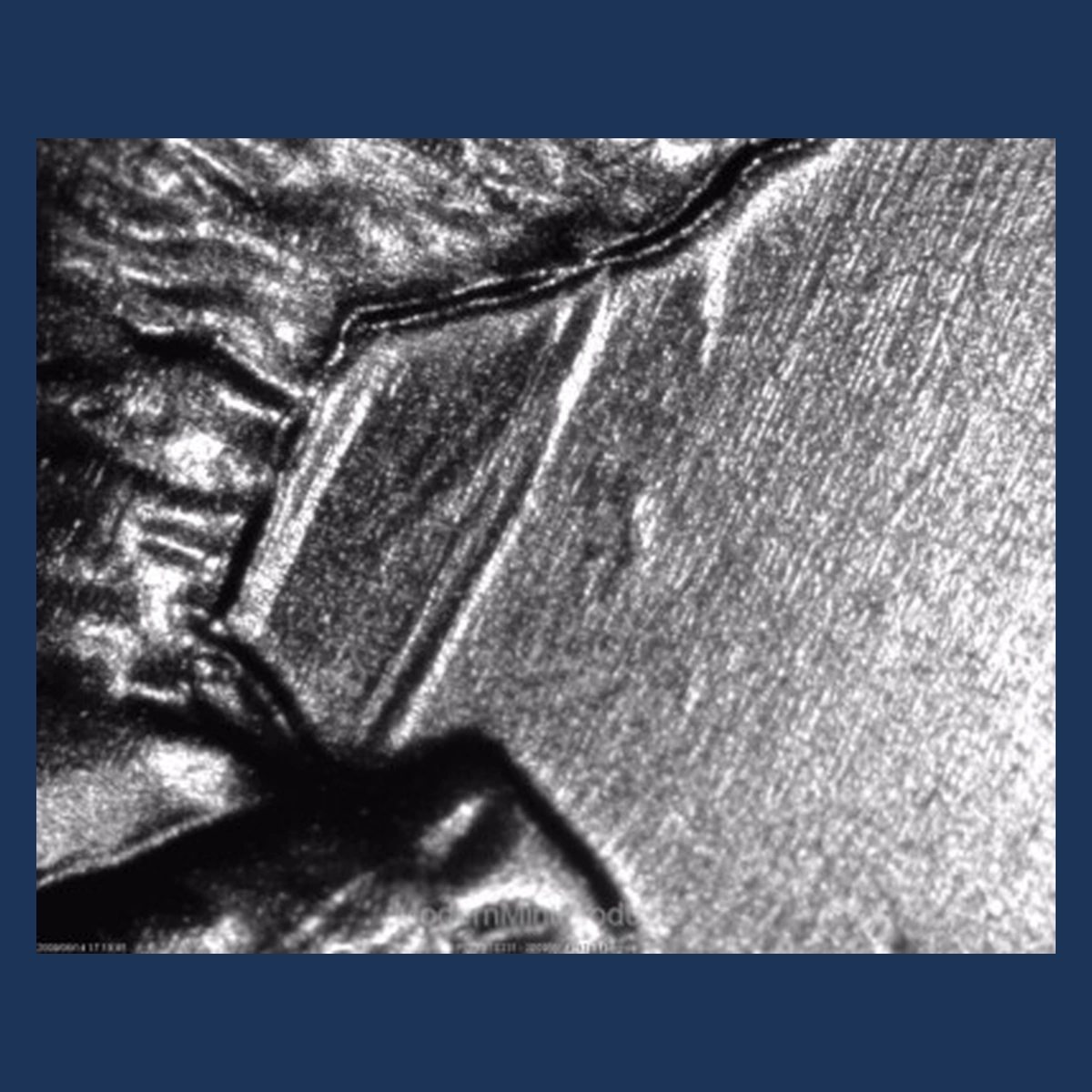
A raised extra line can begin as a groove cut into a stamping tool. During striking, metal fills that groove and takes its shape.
The Denver Presidency report concerns a front gouge. A separate Philadelphia Professional Life report describes parallel marks linked to a feeder.
Parallel ridges can come from a machine part scraping the tool. That is different from an object being pressed directly into the coin.
The reported paths are not precise enough to assign a fixed line across Lincoln or a building. A straight mark alone does not establish either cause, and later scratches must be excluded.
Estimated Value
A single small raised line can fit the lower part of an estimated $10–$550 range. Bold ridges crossing an important feature may appeal more on an unworn coin.
The guide reports $520 for the Denver gouge and $710 for the separate Philadelphia feeder-related example. Those descriptions are not independently matched to original auction lots here.
Compare the actual lines rather than treating the two reports as interchangeable. Parallel scratches cut after minting do not receive the same premium.
How to Identify
Let light pass across the suspect line from the side while viewing it through a 10× magnifier. Determine whether the whole line rises above the surface or forms a cut with metal pushed along its edges.
For parallel marks, compare their spacing and how they meet the design. Raised ridges copied from a damaged tool need not identify which moving part caused the damage.
Keep the two reports separate by checking the back design and mint. Both ordinary versions normally measure 19.05 mm and weigh 2.50 g.
Use calipers and a scale for those checks, without scraping the raised lines. A matching pattern on another coin is the quickest support for damage carried by the stamping tool.
7. 2009 Lincoln Penny Opposite-Design Clash Marks (Estimated Up to $600)
A faint shape beside Lincoln’s portrait may echo the reading figure, book, or log on the back. The two stamping tools touched each other when no blank separated them.
Their contact left marks that later appeared on coins. A clash therefore connects shapes from opposite sides rather than adding a random scratch.
The Philadelphia reading-design report concerns marks on the front. Their identity depends on a match to the back design in the correct position.
The four different 2009 backs cannot be used interchangeably for this check. A cabin outline would not explain a clash on a reading-design penny.
Estimated Value
How easily a collector recognizes the opposite design helps determine value. For identified 2009 reading-design clashes, an estimated $15–$600 spans faint worn traces through strong unworn examples.
The guide reports $615 for a Philadelphia coin graded MS60, with substantial marks but no circulation wear. That reported price sits just above the working estimate.
A vague line should not be priced like a recognizable book or figure fragment. Preservation around the mark helps show whether it belongs to the original strike.
How to Identify
Place clear photographs of both faces side by side. Find the back-design shape that might explain the extra line on the front.
Use a 10× magnifier to follow the line under changing light. Check whether its position fits contact between the two tools, rather than forcing a match to a familiar shape.
Look for scratches or pressed-in damage around the outline. Clash marks should not be classified by a rule that they must always be sunken.
The reported ordinary Philadelphia coin has no mint letter and normally weighs 2.50 g. A scale and calipers can confirm the general size against 19.05 mm.
Begin with an identifiable part of the reading design appearing where opposite-tool contact could place it on the front.
8. 2009 Lincoln Penny Broadstrike (Estimated Up to $650)
A penny can spread wider than usual while keeping the full design. This happens when the collar, the ring that normally limits expansion, does not contain the blank during striking.
The reported example is a Denver Presidency penny with the unfinished Capitol on the back. Its expanded outline is the important feature.
A plain edge proves nothing here. All normal Lincoln cents already have smooth edges rather than grooves.
Metal can spread unevenly, so perfect roundness is not required. Crushing a normal penny later also widens it, but usually damages the design and surrounding surface.
Estimated Value
An estimated $30–$650 covers identified examples, with the amount of spreading and remaining surface quality affecting the comparison. A barely wider worn coin belongs near the lower end.
The guide reports $650 for a 2009-D Presidency coin graded MS65, meaning unworn with relatively few marks. Its original auction record is not established here.
The complete design helps collectors recognize the error and the Bicentennial issue. Later flattening does not have the same origin or value.
How to Identify
Use calipers to compare the outline with the normal 19.05-mm diameter. Measure more than one direction if the shape is uneven.
Inspect both faces through a 10× magnifier. A broadstrike retains the full design, while its expanded rim area shows how the metal spread beyond normal limits.
Check for flattened high points, scraped surfaces, or squeezed edges that suggest later crushing. An enlarged diameter alone cannot settle the cause.
The reported ordinary Denver blank began at about 2.50 g. A scale can check whether the coin still retains that expected amount of metal.
Confirm D and the unfinished Capitol, then look for full designs inside an expanded outline with original struck surfaces.
9. 2009 Lincoln Penny Misaligned Die (Estimated Up to $700)
A border that grows wide on one side and thin on the other may reflect a stamping tool shifted sideways. The two faces need not show the same displacement.
Two 2009 reports need separate treatment: an S proof and an ordinary Denver Presidency penny. The proof’s back design is not specified.
Mild misalignment can leave the whole design visible. Stronger movement requires examination of what reaches the edge, not a rule that nothing can ever be missing.
This is also different from a rotated back. Sideways displacement changes where the design sits, while rotation changes which way it points.
Estimated Value
Ordinary small shifts can fit an estimated $10–$300. A clearly identified collector proof with a stronger error can justify the broader $10–$700 working range.
The guide reports $620 for the Denver Presidency example in MS65, an unworn grade with relatively few marks. It should not be used as a completed sale for the separate S proof.
Compare displacement on both faces and the remaining surface. A slightly uneven border alone is a weak basis for a large premium.
How to Identify
Photograph each face straight on so camera tilt does not make one border appear wider. Compare the design’s center with the coin’s outline on both sides.
Under a 10× magnifier, inspect the narrow border for damage and the wider one for original surface. A shift mainly affecting one face points toward tool alignment.
Identify the finish before weighing. The ordinary D coin normally weighs 2.50 g, while an S proof normally weighs 3.11 g.
Use a scale and calipers to compare the correct weight and 19.05-mm diameter. Check sealed coins through their records rather than removing them from protective holders.
The clearest initial clue is unequal design centering between the two faces, not simply one narrow border.
10. 2009 Lincoln Penny Off-Center Strike (Estimated Up to $850)
An empty crescent beside an incomplete design shows where part of the blank missed the striking area. The coin entered the press away from its intended position.
One report describes a Philadelphia Professional Life cent about 30% off center. A separate report lists the log-cabin design without a measured displacement.
The readable back design helps distinguish these coins. A small surviving part of a building should not automatically be assigned to the wrong Bicentennial scene.
The front date is also important. The cabin’s 1809 inscription marks Lincoln’s birth year, whereas the coin’s minting date is 2009 on the portrait side.
Estimated Value
Keeping both the date and a recognizable back design can strengthen collector interest. An estimated $25–$850 ranges from small worn shifts to dramatic, attractive examples.
The guide reports $812 for the Philadelphia Professional Life coin, described as MS63 with about 30% displacement. MS63 means unworn with noticeable marks.
The log-cabin report does not establish that same percentage or price. Compare the actual blank area, remaining design, and surface quality before applying the stronger example’s reported amount.
How to Identify
Locate the 2009 date on the front before studying the unstruck area. On a cabin coin, do not use the separate 1809 birth inscription as the minting year.
Examine both faces with a 10× magnifier. Original blank metal should lie beside the incomplete impressions, rather than a normal design removed by grinding.
Compare the shape with a normal 19.05-mm penny using calipers. Weigh it on a scale against the appropriate version, usually 2.50 g for the reported ordinary coins.
A copper collector version normally weighs 3.11 g and needs its own comparison. The missing design does not mean an equal amount of metal is gone.
Look for matching incomplete impressions beside original unstruck metal, with enough date and back design to identify the issue.
11. 2009 Lincoln Penny Off-Center Double Strike (Estimated Up to $1,500)
Two sets of details can overlap when a penny receives another blow after moving. The second strike may land partly off center and leave portions of the first impression visible.
The 2009 report lists this combination without a fixed mint, back design, or displacement. Those details belong to the actual coin rather than the error name.
This is larger movement than the tiny repeated outlines of a doubled die. The whole coin was struck again, instead of receiving one impression from a tool with doubled details.
A normal proof’s special striking process is not itself an accidental displaced double strike.
Estimated Value
Two clearly readable impressions provide the main attraction. For an identified 2009 example, estimate $150–$1,500, depending on displacement, preservation, and how much of each design remains visible.
This is a type-based estimate rather than a confirmed 2009 auction result. The year report does not identify a particular specimen to price more closely.
Damage or a lost date can weaken the comparison. A dramatic second strike is more useful to collectors when the first impression can still be understood.
How to Identify
Try to trace one complete set of surviving letters before following the second. A 10× magnifier helps where the two impressions overlap.
Look for metal reshaped by the second blow. A design pressed onto a finished coin later can leave different damage or a mirrored impression.
Find the date and any mint letter within the surviving details. Identify the back scene only where enough of it remains.
A scale should compare the coin with the correct starting weight of 2.50 g or 3.11 g. Calipers can document expansion from the normal 19.05-mm blank.
The strongest immediate clue is two separate struck impressions occupying different positions, with one extending into an off-center strike.
12. 2009 Lincoln Penny Wrong Blank (Estimated Up to $2,000)
A 2009 penny weighing 3.11 g can be entirely normal. The Mint used 95% copper blanks for satin-finish sets and proofs while ordinary cents used copper-plated zinc.
This makes finish and origin essential when checking a suspected wrong blank. Weight alone cannot turn a normal collector coin into an error.
The year reports include wrong-blank candidates but do not establish a specific donor denomination. A dime or nickel blank should not be assigned simply because a list uses it as an example.
A genuine wrong blank must conflict with what was intended for that particular coin’s production type.
Estimated Value
A provisional $150–$2,000 estimate gives a comparison range for a confirmed wrong-blank error of this general kind. The exact blank, striking details, and condition would determine where an example belongs.
That range is not a sale record or a claim that a particular 2009 specimen has been authenticated. Normal 3.11-g collector pennies do not receive this error premium.
Before considering a purchase, require an explanation of why the blank is wrong for the identified version.
How to Identify
Begin by establishing ordinary, satin, or proof production. The Mint described its satin-finish set cents as 95% copper, so a heavy no-letter or D coin can be normal.
Use a precise scale and calipers: ordinary cents are about 2.50 g, copper collector cents about 3.11 g, and both about 19.05 mm. A 10× magnifier helps examine the finish and any exposed metal.
Do not cut or file the edge. A nondestructive composition test and a specialist’s examination can help identify an unusual blank.
Separate later coatings, corrosion, and material loss from production differences. The essential first check is whether weight and metal conflict with the coin’s actual finish and issue.
13. 2009 Lincoln Penny Doubled Back Design and Extra Fingers (Estimated Up to $3,000)
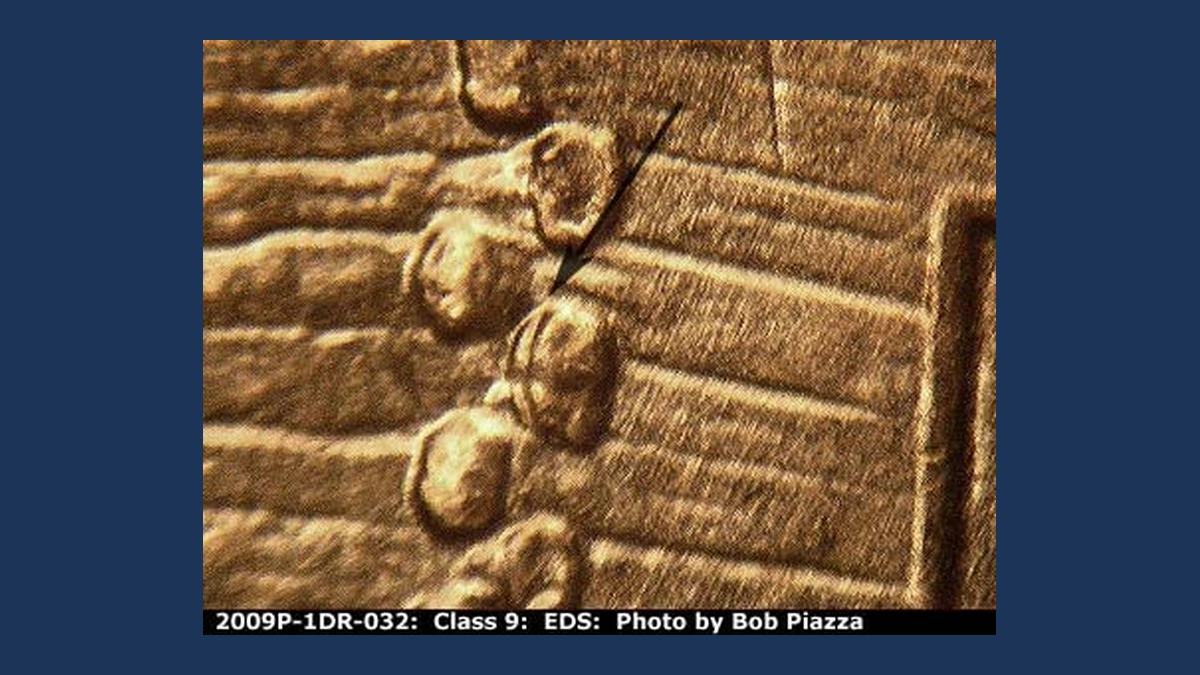
An extra finger beside Lincoln’s book is the best-known 2009 doubled back feature. A tool carrying doubled detail can also add small shapes to buildings on the other designs.
Cabin varieties may repeat the ends of stacked logs. Professional Life varieties can show extra window detail, while Presidency varieties may thicken parts of the unfinished Capitol.
The reading design has several different extra-finger and book patterns. One pattern does not identify all of them.
Philadelphia, Denver, satin-finish, and S proof listings must stay separate. A proof variety cannot be identified merely by finding something similar on an ordinary penny.
Estimated Value
Estimate $5–$3,000 across minor examples and exceptional collector varieties. The wide range covers very different coins, not one standard extra-finger price.
A Formative Years FS-802 graded MS67 Red sold for $823.50 in May 2026. That grade indicates an unworn coin with very few marks and original red color.
Wexler separately records a $2,600 sale in July 2009 for the S proof WDDR-001. That historical proof price should not be applied to every circulation variety.
How to Identify
On the reading design, inspect the hand holding the book with a 10× magnifier. Compare the extra finger’s position, size, and connection to the book with the correct variety photograph.
For the cabin, inspect the log ends beside the window. On the two building designs, focus on the cataloged window or wall detail rather than assuming every thick line is doubled.
Wexler’s S proof examples illustrate why similar extra fingers still need separate matches. SF means satin finish, not San Francisco.
Check 19.05 mm with calipers and the correct 2.50-g or 3.11-g weight with a scale. Match the mint and finish too.
The quickest useful match combines the exact extra shape with the correct back design, mint, and production finish.
Conclusion
Keep the four back designs and two normal metal recipes in mind as you search. A heavy collector penny can be perfectly normal, while a tiny extra finger can identify a genuine doubled design.
Estimated values range from $5–$3,000. Match the visible feature, mint, and finish before comparing prices, and protect loose flaps or broken edges from further handling.